
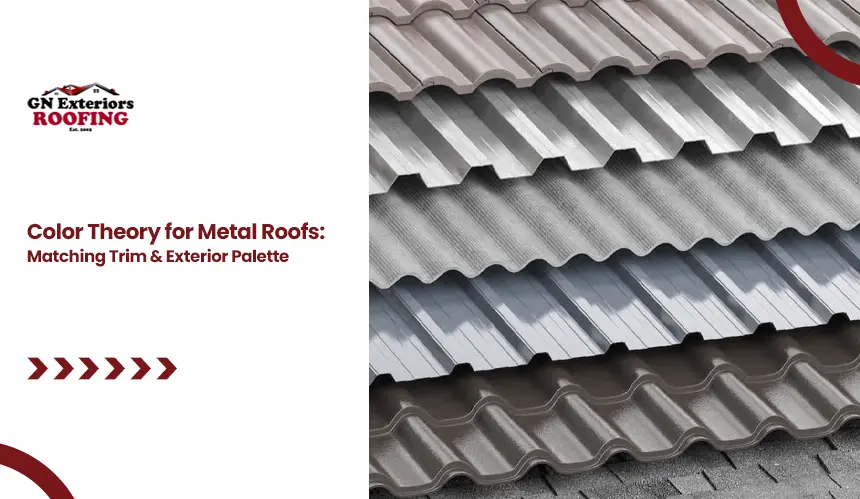
Color choices play a defining role in how a metal roof integrates with the rest of a home’s exterior. Unlike other roofing materials, metal surfaces reflect light differently, making color relationships more noticeable from the street and more sensitive to surrounding elements.
A roof color that feels right in isolation can feel overpowering or disconnected once paired with trim, siding, and architectural details. This article focuses on how color theory specifically applies to metal roofs, with an emphasis on aligning trim and the broader exterior palette.
Before selecting trim or siding colors, it is important to understand how color behaves on metal roofing surfaces specifically. Metal panels interact with light, scale, and finish in ways that can amplify color intensity or subtly shift its appearance depending on conditions.
Quick Insight: On sunny summer days, conventional roofing surfaces can reach temperatures of 150°F or higher. While metal roofing reflects heat more efficiently than many materials, darker colors still absorb more solar energy. This makes color and finish selection important not just for appearance, but also for overall exterior performance. |
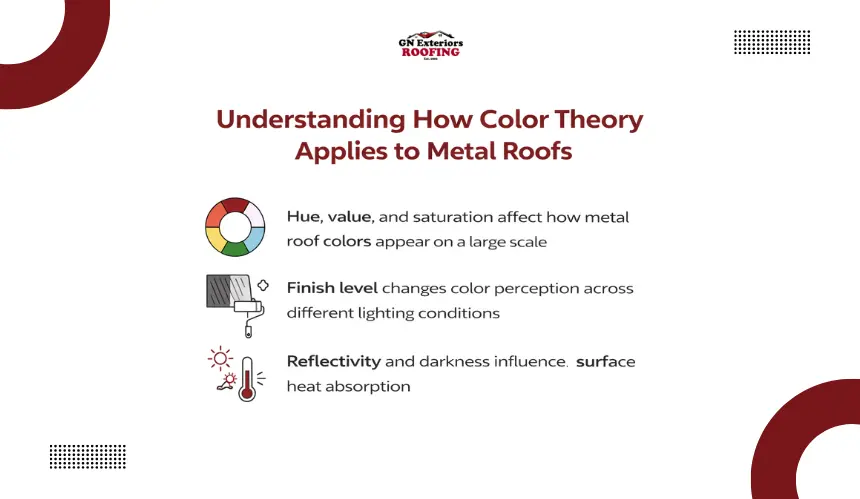
Hue determines the basic color family of a metal roof, such as gray, brown, or green, but value and saturation often have a greater visual impact. Darker values make a roof feel heavier and more dominant, especially on homes with steep pitches or large roof spans.
Lighter values tend to visually reduce roof mass and can make a structure feel more open and balanced. Saturation controls how bold or muted the color appears, and highly saturated roof colors often draw attention upward, which can either enhance or disrupt exterior harmony depending on the home’s proportions.
Metal roof finishes influence how color is interpreted throughout the day. Matte and low-sheen finishes absorb more light, resulting in softer, more consistent color perception across changing weather conditions. Glossier finishes reflect sunlight more aggressively, which can brighten colors in direct sun and deepen them in shade.
This reflectivity makes metal roofs more dynamic than other materials, requiring color selections that account for shifting light rather than static samples viewed indoors.
Did you know? Studies have shown that reflective roofing surfaces can remain 50 to 60 degrees cooler than darker, non-reflective roofs under the same conditions. This temperature difference influences how siding and trim colors age over time, especially on elevations exposed to direct sun. |
Once the behavior of color on metal surfaces is understood, trim becomes the next critical design element to address. Trim frames, windows, doors, and roof edges, guiding the eye and visually connecting the roof to the rest of the exterior. When trim colors are chosen with intention, they help balance the visual weight of a metal roof rather than competing with it.
Important: Massachusetts experiences long winters with frequent snowfall, and areas like Greater Boston average nearly 50 inches of snow per year. Snow-covered surroundings dramatically increase reflected light, which can make darker metal roof colors appear brighter and higher contrast during the winter months. This seasonal effect is one reason metal roof colors should be evaluated beyond a single lighting condition. |
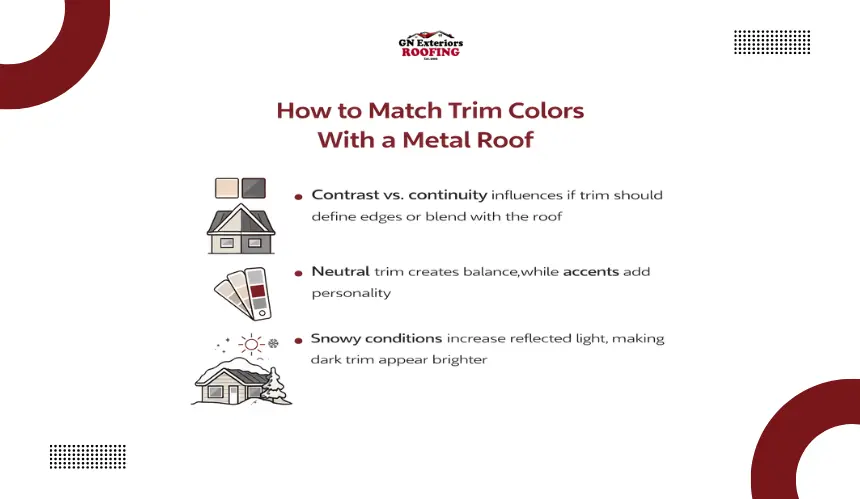
Contrast-driven trim works best when the goal is to define architectural lines and add clarity to the home’s shape. Dark trim against a lighter roof emphasizes edges and creates a crisp, structured appearance, often suited to modern or contemporary designs.
Visual continuity, on the other hand, relies on trim colors that sit closer to the roof’s value range, allowing transitions to feel smoother and more cohesive.
This approach reduces visual fragmentation and supports traditional or transitional exteriors where subtlety matters more than bold definition.
Neutral trim colors such as soft whites, warm creams, or muted grays provide stability when paired with a metal roof. They prevent the roof from overpowering the façade and allow siding materials or textures to remain visually relevant.
Accent trim introduces more personality but requires restraint, as strong trim colors can quickly compete with the roof’s presence. When used selectively around focal points, accent trim can add depth without disrupting the overall exterior palette.
A metal roof should never be evaluated independently from siding and trim. Exterior harmony depends on how all three elements interact visually, especially since the roof often occupies the largest surface area. This section focuses on creating a unified palette where each component supports the others without blending together or competing for attention.
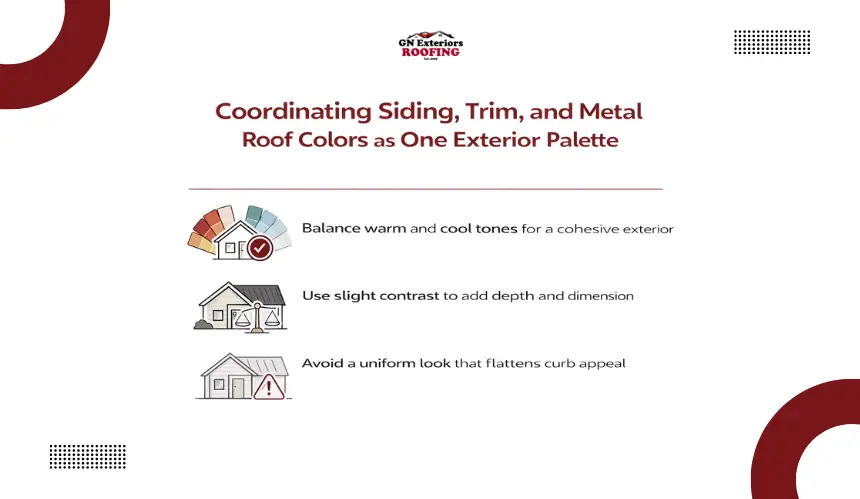
Every exterior color carries an underlying temperature that influences how it feels next to other materials. Warm-toned metal roofs pair more naturally with siding colors that include subtle browns, tans, or creamy undertones, creating a cohesive and grounded appearance.
Cool-toned roofs work best alongside crisp grays, blues, or cooler whites that reinforce clarity rather than contrast. When temperature alignment is ignored, exteriors often feel visually unsettled, even when individual colors appear appealing on their own.
Perfect color matches across roofing, siding, and trim may seem safe, but they often remove visual depth from the home’s exterior. Slight variation in value or tone allows each element to remain distinguishable while still feeling intentional.
Controlled contrast creates dimension, helps architectural features stand out, and prevents the exterior from appearing washed out or overly uniform. Thoughtful coordination relies on balance, not duplication.
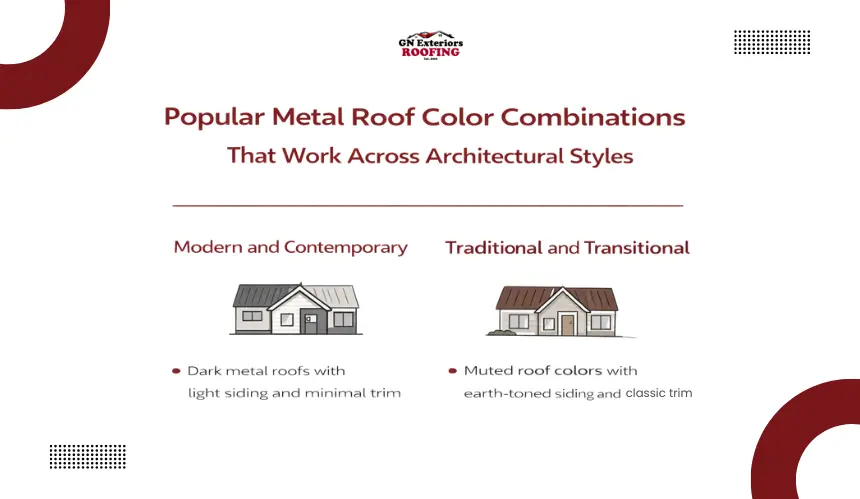
After aligning siding and trim with a metal roof, many homeowners look for real-world color combinations that have already proven effective. A trusted metal roofing company can help identify pairings that perform well across different architectural styles, lighting conditions, and exterior materials by accounting for scale, finish, and long-term visual balance rather than short-term trends.
Modern and contemporary exteriors often rely on strong contrast and restrained color palettes. Dark metal roof colors such as charcoal, matte black, or deep bronze pair well with lighter siding and minimal trim, creating sharp visual lines and a clean silhouette.
These combinations emphasize form and geometry, allowing the roof to act as a defining design feature without overwhelming the structure. Neutral trims in black, gray, or soft white help maintain visual order while supporting a sleek, intentional exterior appearance.
Traditional and transitional homes benefit from softer contrasts and warmer color relationships. Metal roofs in muted browns, weathered grays, or subtle greens blend naturally with earth-toned siding and classic trim colors. These combinations feel familiar and grounded, allowing the roof to complement architectural details rather than dominate them.
Slight variation between roof, siding, and trim values adds depth while preserving the timeless character these styles rely on for long-term appeal.
After evaluating color relationships, trim coordination, and exterior balance, the final step is committing to a metal roof color with confidence. Metal roofs are durable and highly visible, so color decisions should support the home’s identity for decades, not just current preferences.
Metal roofing colors should be assessed for how well they age visually over time. Neutral and moderately saturated colors tend to remain appealing as exterior trends evolve, while extreme or highly stylized choices may feel dated more quickly.
Longevity is also influenced by finish consistency and fade resistance, both of which affect how the roof integrates with trim and siding years after installation. Choosing colors that maintain balance rather than demand attention helps protect long-term curb appeal.
Every home communicates a design language through its form, materials, and detailing. Metal roof colors should reinforce that architectural intent rather than contradict it. A roof that aligns with the structure’s proportions and stylistic cues feels intentional and resolved, even when viewed from a distance.
When roof, trim, and exterior colors work together to support the home’s character, the result feels cohesive and emotionally satisfying rather than visually forced.
Choosing the right metal roof color is about more than appearance. It is about creating an exterior that feels balanced, intentional, and built to last. If you want expert guidance tailored to your home’s architecture and materials, GN Exteriors helps turn color theory into confident design decisions. A thoughtful exterior starts with the right conversation, and the right team makes all the difference.
Most exteriors perform best with three distinct color roles rather than an excessive mix. One color anchors the metal roof, another defines the main wall surfaces, and a third is reserved for trim or architectural accents.
Adding more colors often creates visual noise instead of depth, especially with metal roofing, where surface reflectivity already adds variation throughout the day.
Roof pitch significantly affects visibility and perception. Steeper pitches expose more roof surface to direct view, making color choice more impactful from curbside angles. Lower slopes reduce visual dominance, allowing slightly bolder colors without overwhelming the exterior. This difference is often overlooked during early planning stages.
Metallic finishes require more careful coordination because they reflect surrounding colors, sky tones, and landscaping. Instead of behaving as a fixed color, metallic roofs visually shift depending on lighting and environment. This makes restrained trim and siding choices especially important to avoid unintended color clashes.
Exterior lighting can dramatically alter roof appearance after dark. Warm lighting may soften cooler roof tones, while bright white lighting can intensify contrast and reflectivity.
Considering nighttime appearance helps prevent surprises, especially for homes with visible rooflines or accent lighting.
Accent elements do not need to match the metal roof directly, but they should respect the overall color hierarchy. Accents work best when they complement the trim rather than compete with the roof. This keeps the roof visually dominant while allowing smaller elements to add personality without disrupting balance.