

Exterior design has moved beyond single-material choices toward intentional contrast. Homeowners and designers now look at roofing and siding as a connected system, where durability, curb appeal, and long-term value work together rather than compete.
Combining a metal roof with cedar and Hardie siding reflects this more thoughtful approach. Each material plays a clear role, blending strength, warmth, and consistency to create an exterior that feels modern, balanced, and built to last.
This article explores how and why these combinations work, helping readers understand the design logic, performance considerations, and planning decisions behind mixed-material exteriors.
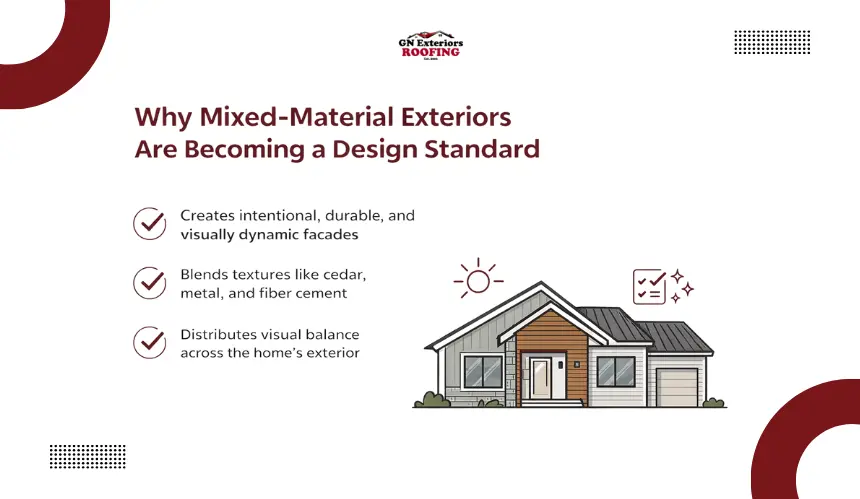
Exterior design expectations have evolved beyond uniform finishes. Homeowners now want exteriors that communicate intention, durability, and visual depth at first glance. Mixing materials answers this demand by allowing each surface to serve a defined role while contributing to a cohesive architectural story.
Using multiple exterior materials helps distribute visual weight across the structure instead of concentrating attention on a single surface. Metal roofing introduces clean lines and sharp definition at the top of the home, while cedar and fiber cement siding soften vertical planes with texture and proportion.
This balance prevents façades from feeling flat or oversized and allows architectural features such as rooflines, entry volumes, and window groupings to stand out naturally.
Single-material exteriors often struggle to meet modern expectations for both longevity and character. Materials that excel in durability may lack warmth, while visually rich options can require higher maintenance.
Combining materials allows homeowners to avoid this compromise. Metal roofing addresses weather exposure and lifespan concerns, while cedar and Hardie siding provide controlled contrast, color stability, and surface variation where visual impact matters most.
Today’s exterior choices often mirror how homeowners think about function inside the home. Just as interiors use different finishes for kitchens, living areas, and transitions, mixed-material exteriors apply the same logic outdoors.
Each material supports a specific performance need or aesthetic goal. This approach aligns with modern architecture trends that emphasize intentional zoning, long-term performance, and personalized design rather than uniformity for simplicity’s sake.
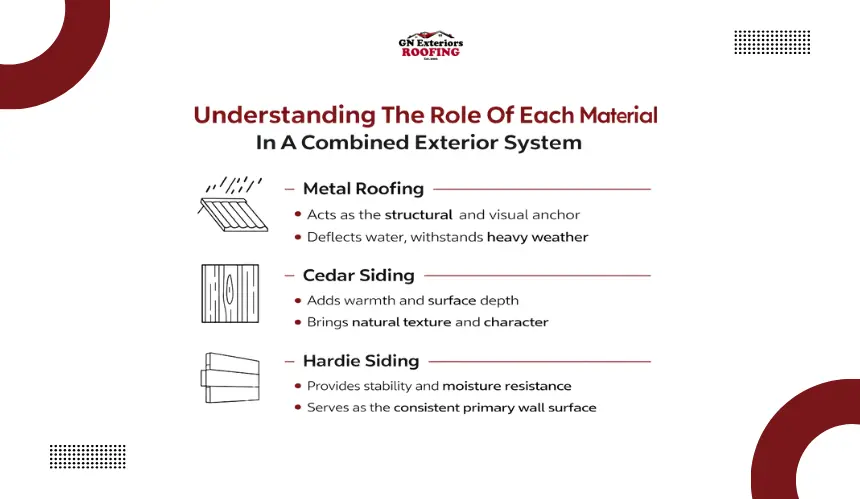
A successful mixed-material exterior starts with clarity around what each material is meant to do. When metal roofing, cedar siding, and fiber cement panels are selected with defined roles in mind, the exterior feels deliberate rather than decorative.
Metal roofing serves as the most exposed and performance-driven component of the exterior envelope. It is designed to manage heavy rainfall, wind uplift, snow loads, and long-term UV exposure with minimal degradation.
Visually, metal roofing establishes strong horizontal lines that frame the structure and create a crisp transition between roof geometry and wall surfaces. This clarity makes it easier for secondary materials to introduce texture without competing for dominance.
In projects where performance and longevity are priorities, working with an experienced Metal Roofing Company ensures the roof system is selected and detailed to handle long-term environmental exposure without compromising design intent.
Cedar siding introduces organic variation that engineered materials cannot replicate. Its natural grain, tonal shifts, and tactile surface soften rigid architectural lines and make large wall sections feel more inviting.
Because cedar responds to moisture and sunlight over time, it is typically reserved for areas where visual character is prioritized over constant exposure. When used intentionally, cedar adds emotional warmth and craftsmanship to the exterior without overwhelming the structure.
Professional cedar impression siding installation helps achieve the look of natural wood while maintaining greater consistency, making it easier to control visual warmth in mixed-material exterior designs.
Hardie siding provides consistency where uniform performance and appearance are critical. As a fiber cement product, it resists moisture absorption, insect damage, and fire exposure while maintaining predictable dimensions. This stability allows it to serve as the primary wall surface that visually connects cedar accents and metal rooflines.
Its controlled texture and color retention help anchor the exterior, ensuring the overall composition remains balanced as natural materials age. Consulting a Hardie plank siding expert helps ensure fiber cement panels are used strategically to provide uniformity, moisture resistance, and long-term visual stability across large wall surfaces.
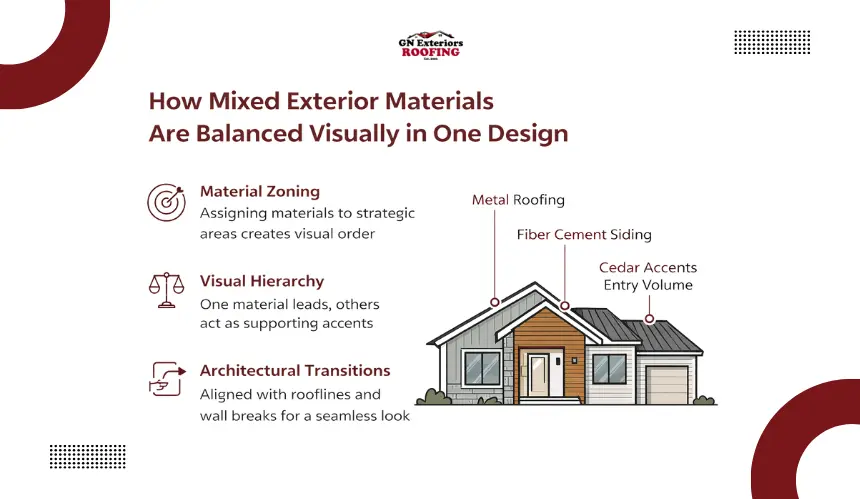
Once the functional role of each material is defined, the next challenge is visual coordination. This section explains how metal roofing, cedar siding, and fiber cement siding are arranged so the exterior feels cohesive instead of fragmented.
Material zoning is the practice of assigning specific materials to intentional architectural areas rather than distributing them evenly across the exterior. Metal roofing typically establishes the upper boundary of the structure, while fiber cement siding forms the primary wall surface.
Cedar is then used in limited, strategic zones such as entry volumes or accent walls. This controlled distribution creates visual order and prevents competing textures from overwhelming the façade.
Visual hierarchy ensures that one exterior material leads while others support it. In most designs, the metal roof acts as the dominant element due to its strong lines and elevated position.
Fiber cement siding reinforces continuity across wall planes, allowing cedar to function as a deliberate accent rather than a dominant feature. This hierarchy keeps the exterior calm, balanced, and architecturally intentional.
Transitions between materials feel most natural when they align with structural changes in the building. Roof overhangs, vertical offsets, and recessed wall sections provide logical breakpoints for switching materials.
These architectural cues allow metal roofing, wood siding, and fiber cement panels to meet cleanly without abrupt visual shifts. The result is an exterior that feels integrated and thoughtfully composed.
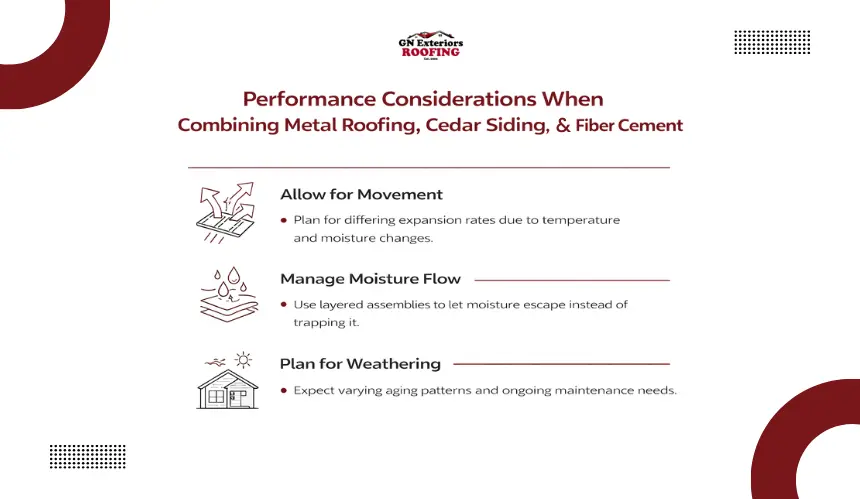
Beyond appearance, mixed-material exteriors must perform as a unified system under real environmental stress. Each material responds differently to moisture, temperature changes, and long-term exposure.
Metal roofing, cedar siding, and fiber cement expand and contract at different rates due to temperature and humidity changes. Metal reacts quickly to thermal shifts, cedar responds to moisture absorption and release, and fiber cement remains relatively stable.
When these differences are anticipated during planning, movement is absorbed through proper spacing and detailing rather than transferred into visible stress, cracking, or warping across the exterior.
Moisture management becomes more complex when materials with different permeability levels share the same exterior envelope. Cedar naturally breathes, fiber cement resists absorption, and metal sheds water rapidly.
Effective assemblies allow moisture to exit rather than trapping it behind siding transitions. This layered approach protects wall systems from long-term damage while preserving the appearance of each material.
Each material ages at its own pace, which directly affects how the exterior looks over time. Metal roofing retains its form and color consistency, fiber cement maintains a stable finish, and cedar gradually develops a weathered patina.
Understanding these timelines helps homeowners accept change as part of the design rather than viewing it as deterioration. When aging patterns are planned intentionally, the exterior continues to look balanced years after installation.
Maintenance expectations vary significantly between metal roofing, wood siding, and fiber cement. Metal typically requires minimal upkeep, fiber cement benefits from periodic inspections, and cedar may need refinishing depending on exposure and finish choice.
Planning for these differences prevents uneven aging and helps homeowners maintain visual consistency without unnecessary effort or expense.
Successful mixed-material exteriors are rarely the result of last-minute decisions. They perform best when planning begins early and every material choice supports a clear design and functional goal.
Material selection should reinforce the home’s architectural style rather than override it. Clean-lined structures benefit from restrained cedar accents paired with dominant metal roofing and consistent fiber cement surfaces.
Proportion matters more than variety, and limiting where each material appears keeps the exterior visually controlled.
Planning should account for how sun, wind, and moisture interact with different elevations. Highly exposed areas are better suited for metal roofing and fiber cement siding, while cedar performs best in sheltered zones. Matching materials to exposure conditions improves durability and reduces long-term upkeep.
Instead of spreading higher-cost materials across all surfaces, design planning works best when investment is concentrated in prominent areas. Entryways, front elevations, and architectural focal points benefit most from cedar accents, while larger wall sections remain practical and consistent with fiber cement.
Each material carries different maintenance needs, and planning should align with homeowner expectations. Understanding upkeep requirements early prevents uneven aging and ensures the exterior remains cohesive years after completion.
Not every home or project benefits equally from combining multiple exterior materials. This approach delivers the most value when it aligns with the structure, goals, and long-term expectations of the property.
Understanding where mixed-material exteriors make practical sense helps homeowners avoid overdesigning or misapplying materials.
Homeowners who value long-term durability without sacrificing visual character tend to benefit the most. Those planning to stay in their home for many years often appreciate how metal roofing and fiber cement reduce maintenance demands while cedar adds warmth in highly visible areas. This combination supports both everyday performance and emotional connection to the home.
New construction offers the greatest flexibility for material coordination. Rooflines, wall breaks, and elevation changes can be designed specifically to support clean material transitions. Builders and designers can integrate metal roofing, cedar accents, and fiber cement siding from the start, ensuring structural logic and visual balance without retrofitting limitations.
Exterior renovations benefit when mixed materials are used to correct or elevate existing designs. Adding a metal roof can modernize the structure while improving weather resistance. Introducing cedar in targeted zones such as entry features or vertical sections can refresh curb appeal without requiring full siding replacement. Fiber cement helps unify older surfaces and extend service life.
Properties designed with intentional material combinations often maintain stronger visual relevance over time. Durable materials reduce visible aging, while natural elements add character that does not feel trend-driven. This balance appeals to future buyers who value performance, craftsmanship, and thoughtful design rather than short-term aesthetics.
In some cases, yes. Insurers may view metal roofing favorably due to its fire resistance and wind performance, which can positively influence premiums.
Cedar and fiber cement are generally accepted materials, but coverage terms often depend on local risk factors and installation quality rather than material combinations alone.
Approval depends on how closely the design aligns with neighborhood guidelines rather than the number of materials used. Many HOAs allow mixed exteriors if colors, finishes, and architectural style remain consistent with surrounding homes. Submitting clear elevation plans and material samples often improves approval outcomes.
When planned correctly, mixed-material exteriors can actually provide more flexibility. Defined material zones make it easier to extend sections of the home or update specific areas without redesigning the entire exterior. Poorly planned combinations, however, can complicate future changes, which is why early planning matters.
Appraisers typically focus on overall condition, durability, and market appeal rather than material count. Well-executed mixed-material exteriors are often seen as upgrades, especially when they enhance curb appeal and reduce long-term maintenance. Consistency and workmanship carry more weight than material variety alone.
Repair costs depend on which material is affected rather than the mixed design itself. Metal roofing and fiber cement often require fewer repairs, while cedar damage may be more localized and visible. Having clearly defined material zones can actually simplify repairs by limiting affected areas instead of impacting the entire facade.