

A Quick Answer: Reflective metal roof coatings outperform traditional paint finishes in energy efficiency, heat control, and long-term surface protection, while paint is better suited for basic cosmetic enhancement. |
As roofing technology evolves, reflective coatings have become a preferred solution for reducing heat absorption, improving emissivity, and supporting cooler building interiors.
These coatings use advanced pigments and high-albedo materials that help manage thermal loads on metal panels.
On the other hand, traditional paint finishes remain popular for those seeking color customization or simple aesthetic upgrades without expecting measurable cooling benefits.
This article guides readers through the differences in composition, performance, lifespan, environmental impact, cost behavior, and application methods.
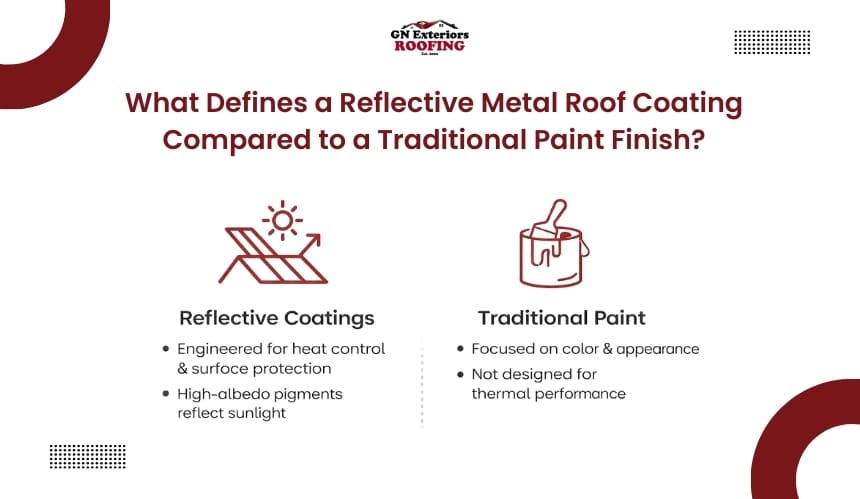
Choosing between reflective metal roof coatings and traditional paint finishes often begins with understanding what each product is designed to do. Their composition, purpose, and performance characteristics are fundamentally different.
A reflective coating is engineered to manage heat, protect metal panels, and improve solar reflectance. These coatings use specialized polymers, IR blocking pigments, and high albedo materials that help redirect sunlight away from the roof.
Their chemistry focuses on reducing thermal stress, enhancing emissivity, and forming a flexible protective membrane that adapts to temperature shifts.
A traditional paint finish is developed to deliver color, surface uniformity, and basic protection. Its formulation emphasizes visual appeal through resins, colorants, and gloss-controlling additives.
While paint can offer short-term resistance to weather exposure, it is not designed to reduce heat gain or manage surface temperature. Its purpose is aesthetic first, functional second, which is why many roofs with paint often need more frequent touch-ups and surface maintenance.
Once the basic definitions are clear, the next concern is real-world performance. People want to understand how these two finishes behave when exposed to heat, sunlight, moisture, and changing weather.
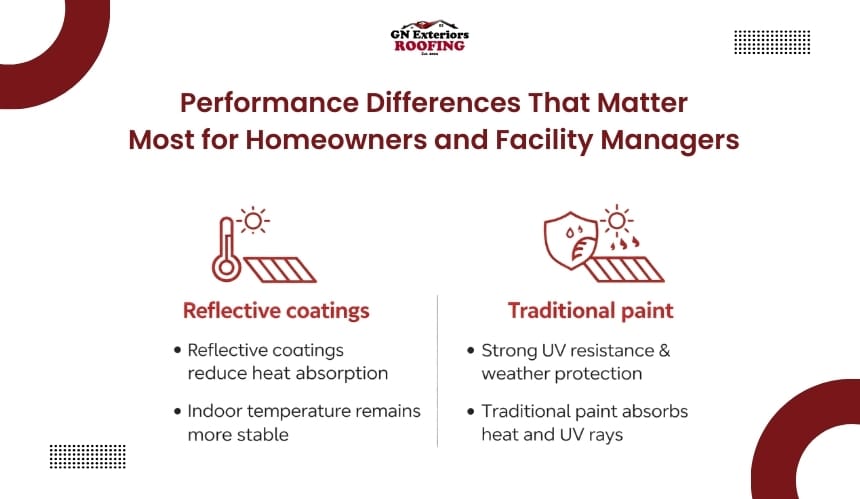
Reflective roof coatings are created to reduce heat absorption by increasing solar reflectance and improving emissivity. These coatings help lower interior temperatures by limiting radiant heat transfer and easing thermal loading on roofing panels.
Many homeowners notice calmer indoor temperatures during peak summer hours after switching to reflective systems. Traditional paint finishes do not offer measurable heat rejection because their pigments and binders absorb more infrared energy.
A reflective coating forms a UV-stabilized layer that helps reduce photodegradation and surface fatigue caused by long-term exposure. Its flexible membrane structure supports better color retention and film integrity in harsh sunlight.
Traditional paint finishes typically break down faster when exposed to UV rays. Chalking, fading, and surface brittleness appear sooner because aesthetic formulas lack the advanced stabilizers used in reflective systems.
Reflective coatings help limit moisture penetration by forming a thicker, more resilient barrier that slows oxidation on metal surfaces. The hydrophobic nature of these coatings supports better rust prevention and reduces the risk of trapped moisture between fasteners or seams.
Traditional paint provides lighter moisture protection because its film is thinner and more prone to micro-cracking as it ages. Once paint begins to split or lift, corrosion can spread quickly on exposed metal panels.
After understanding performance, many homeowners want to know how long each finish will last and what type of upkeep it requires. The longevity of a roof surface can influence replacement costs, repair planning, and overall peace of mind.
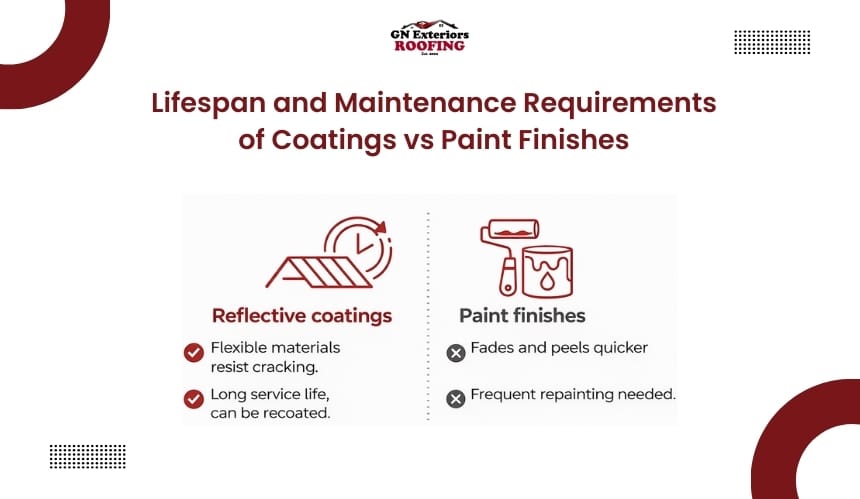
A reflective coating often provides a longer service life because its flexible film adapts to temperature shifts without cracking. Many systems maintain their protective qualities for extended periods when applied at the correct thickness and over a properly prepared substrate.
The coating can be refreshed when its reflectance values begin to decline, which helps homeowners maintain energy benefits and surface protection.
Paint finishes tend to lose adhesion sooner because they react more sharply to thermal expansion. Sudden temperature swings create stress that leads to microcracks, chalking, and early surface fatigue.
As the film becomes brittle, the underlying metal receives less protection, which speeds up deterioration. This shorter lifespan results in more frequent repainting cycles for homeowners who rely on paint for surface coverage.
Reflective coatings usually require routine cleaning to maintain their brightness and reflective properties. Simple washing helps remove dirt that can interfere with solar reflectance.
Paint finishes need more involved maintenance because peeling or flaking must be addressed promptly to prevent moisture intrusion.
Homeowners often feel more pressure to monitor paint surfaces, especially when visible aging appears earlier than expected.
Many property owners want roofing solutions that help reduce environmental strain while supporting long-term building efficiency. The environmental footprint of each finish can influence energy use, indoor comfort, and compliance with modern sustainability expectations.
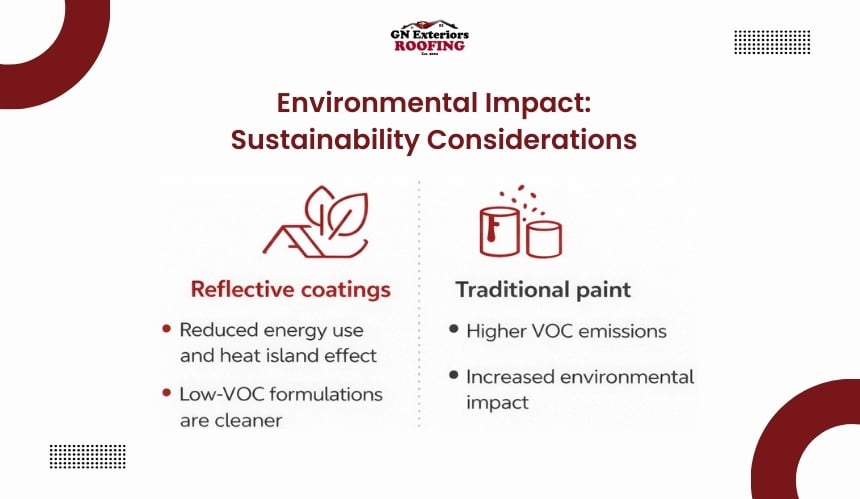
Reflective roof coatings play an important role in lowering indoor cooling demand by redirecting more sunlight away from the surface. This reduction in heat absorption helps buildings rely less on air conditioning during warm seasons, which supports long-term energy conservation.
These coatings also contribute to cooler surroundings in dense communities by reducing localized surface temperatures. This creates a more comfortable outdoor environment and lowers the strain on nearby structures during heat waves.
Reflective coatings are often produced with low VOC ingredients that release fewer emissions during application and curing. Many formulas meet strict environmental standards because they rely on polymers that minimize off-gassing.
Paint finishes vary widely in their VOC content, especially when older or non-compliant products are used. Higher VOC levels contribute to air pollution and may create health concerns for sensitive occupants during application. Readers who prioritize environmental safety often feel more confident choosing finishes with cleaner formulations.
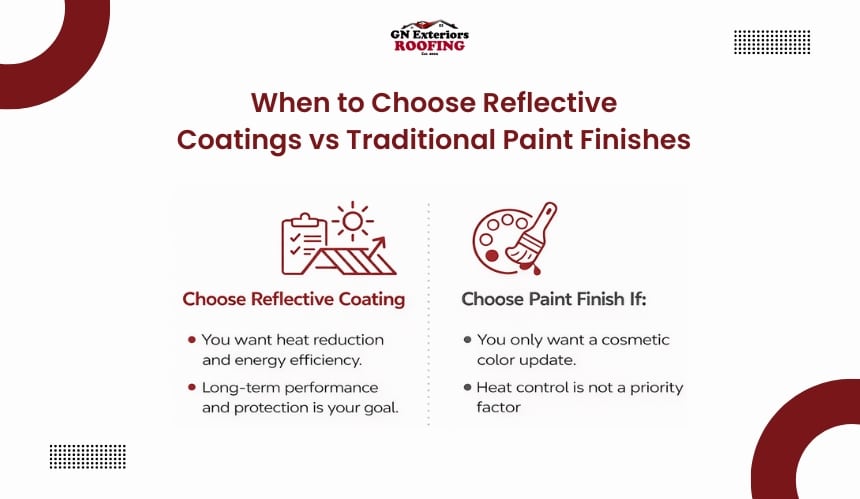
Homeowners often want a clear path toward the finish that aligns with their goals. This section provides simple decision-based guidance that helps readers choose confidently without revisiting earlier concepts.
Use Reflective Metal Roof Coating If:
Use Traditional Paint Finish If:
Reflective coatings can slightly reduce noise by adding a thicker, more elastic surface layer that absorbs part of the vibration created by rainfall or light impacts. This added film creates a dampening effect that softens the echo often associated with metal roofs. While it will not silence storms, it can make interior spaces feel calmer during periods of heavy rain.
Reflective coatings absorb less solar radiation, which means they transfer less warmth to snow resting on the roof. As a result, snow may melt more slowly on coated surfaces. This can help lower the chances of ice refreezing around fitments, seams, or overhangs.
In colder regions, slower melt cycles can reduce strain on the roof and help maintain more predictable runoff patterns.
Many reflective coating systems are formulated to stretch and level over small imperfections such as shallow grooves, light wear marks, or subtle uneven textures.
When applied at the recommended thickness, these coatings can create a smoother membrane that masks minor surface inconsistencies. This quality makes them useful for aging roofs that still have structural integrity but require improved surface uniformity.
Roof orientation influences how much solar exposure a surface receives, which directly affects performance outcomes. Coatings on south and west-facing slopes often show the largest drop in surface temperature because they receive intense sunlight during the hottest hours of the day.
East-facing surfaces may benefit during morning hours, while north-facing slopes experience minimal change due to limited UV exposure.
A fresh paint finish can sometimes enhance resale appeal in areas where exterior style and color coordination play a strong role in home selection. Buyers tend to notice roofs that appear clean, well-maintained, and visually aligned with neighboring properties.
Although paint does not add performance benefits, an updated roof appearance can help create a positive first impression during home showings.
Professionals often rely on tools such as IR scanners, reflectance meters, and gloss measurement devices to evaluate coating performance.
These instruments detect temperature variations, confirm reflectivity levels, and help identify early signs of wear before issues become visible. This type of inspection provides building owners with accurate data about how well the coating continues to function over time.