

Metal roofing is highly sustainable, being both made of significant recycled content and 100% recyclable at the end of its life. It can contribute to multiple LEED credits from the U.S. Green Building Council by supporting energy efficiency, responsible material sourcing, and heat island reduction.
This combination makes metal roofing a strong choice for property owners who want to meet modern sustainability goals while improving long-term building performance. This article explores how recyclability, recycled content, reflective coatings, and heat-reducing surface properties support LEED certification pathways.
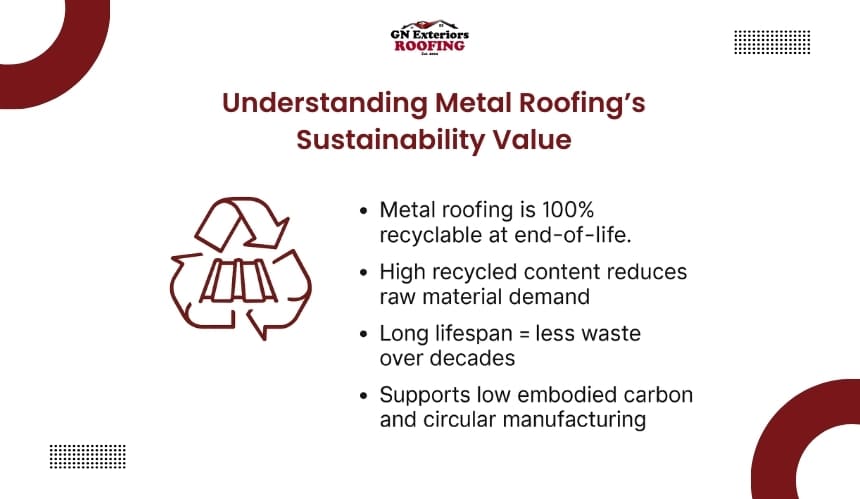
Metal roofing is recognized for its strong environmental performance, and its sustainability benefits begin with how the material behaves over its entire lifecycle. Property owners in Massachusetts often want a clear understanding of why metal stands apart from other roofing options when considering long-term ecological impact.
Metal roofing keeps its value even after removal because the panels can be fully processed and reused without losing structural quality.
Steel and aluminum systems incorporate high levels of post-consumer and post-industrial recycled content, which supports circular manufacturing and reduces dependence on raw material extraction.
This contributes to lower embodied carbon and promotes a closed-loop cycle that other roofing materials struggle to match.
Metal roofing demonstrates stronger environmental performance because it generates significantly less waste throughout installation and replacement cycles. Studies from national recycling associations consistently show that steel and aluminum roofing have some of the highest recovery rates among construction materials.
Metal panels maintain structural integrity for decades, which allows them to be recycled repeatedly without degrading in quality.
Asphalt shingles behave very differently. They contain petroleum-based binders that limit reuse, and most shingles removed from homes are transported directly to landfills. These materials break down slowly and add substantial volume to construction waste streams.
Wood and synthetic roofing also face challenges because they often contain adhesives, treatments, or composite layers that make clean recycling difficult.
Metal roofing avoids these barriers by offering a material that is both durable and highly recoverable. This advantage reduces long-term environmental impact for Massachusetts projects and supports property owners who want to choose materials that align with responsible waste reduction practices.
Recycling facilities across Massachusetts process steel and aluminum roofing through smelting, separation, and refinement systems that preserve material quality for future use. These methods allow removed panels, trims, and hardware to be transformed into new construction materials with minimal resource loss.
Local scrap metal programs make responsible disposal easier, which strengthens the environmental value of metal roofing and encourages continued participation in sustainable building practices.

Metal roofing plays an important role in LEED v4.1 projects because it supports multiple credit categories related to materials, energy performance, and environmental quality.
Builders in Massachusetts often explore how roofing choices influence certification outcomes, especially in projects focused on reducing energy demand and improving sustainability.
The Materials and Resources category evaluates how responsibly sourced and recyclable materials are used throughout a building. Metal roofing aligns well with these expectations because it commonly contains recycled content and can be recovered efficiently at the end of its service life.
Credits related to raw material sourcing, life-cycle impact reduction, and material ingredient reporting may apply when manufacturers provide documentation such as Environmental Product Declarations or Health Product Declarations. These verified reports help teams demonstrate measurable sustainability improvements during LEED assessments.
Many Massachusetts communities experience rising urban temperatures, which increases interest in materials that help mitigate heat absorption. Cool metal roofing contributes to the Heat Island Reduction credit by offering higher solar reflectance and thermal emissivity compared to darker roofing materials.
These properties limit heat buildup on rooftops and support better temperature control in surrounding spaces. A surface with a strong Solar Reflectance Index rating helps buildings remain cooler, which can reduce energy use during warm seasons and improve performance metrics related to LEED scoring.
Energy efficiency is a major focus in LEED v4.1, and metal roofing can assist with credit pathways that reward improved heating and cooling performance. Reflective coatings help reduce heat gain in warmer months, while proper insulation and underlayment techniques support better heat retention during Massachusetts winters.
This combination allows energy modeling reports to demonstrate reductions in overall energy demand. When project teams can show measurable improvements through these simulations, metal roofing becomes a valuable component in meeting energy optimization goals.
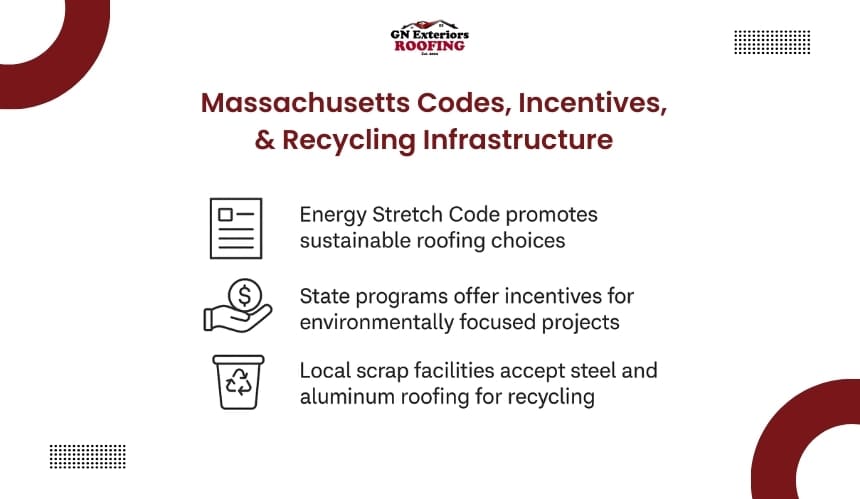
Sustainable roofing decisions in Massachusetts are shaped not only by material performance but also by state-level policies and resource networks that guide environmentally responsible construction.
Understanding these regional factors helps property owners and project teams make informed choices that align with both compliance requirements and long-term sustainability goals.
The Massachusetts Stretch Code encourages higher energy performance by setting stricter standards for building envelopes and overall efficiency. Roofing materials play an important role in meeting these expectations because they affect heat transfer, ventilation quality, and cooling loads.
When metal roofing is paired with proper insulation and reflective surface treatments, it supports compliance with performance pathways used in many municipalities that have adopted the stretch code. These upgraded requirements help push residential and commercial projects toward more energy-conscious construction practices.
Recycling access is an essential part of sustainable roofing, and Massachusetts provides multiple facilities that accept steel and aluminum roofing components. Local scrap metal centers, municipal recycling programs, and certified recyclers process panels, fasteners, and trims using established material recovery systems.
These facilities help property owners dispose of old roofing responsibly and ensure that usable materials return to manufacturing cycles. The availability of these resources strengthens the environmental benefits of selecting metal roofing for renovation or replacement projects.
Massachusetts offers several programs that encourage sustainable construction and energy-efficient upgrades. Initiatives such as Mass Save provide pathways for energy improvement incentives that may apply when roofing projects enhance thermal performance or contribute to reduced energy consumption.
Some municipalities also support green building upgrades through local grants or sustainability programs. Exploring these options helps property owners identify financial advantages that complement the long-term environmental value of metal roofing.
Important: Metal roofing reflects up to 70 percent of solar radiation when finished with high-reflectivity coatings. |
Selecting the right metal roofing system becomes an important step for builders and property owners who want to maximize LEED credit opportunities. Each roofing product varies in recycled content, performance technology, and documentation support, which means careful evaluation is necessary for projects targeting measurable sustainability outcomes.
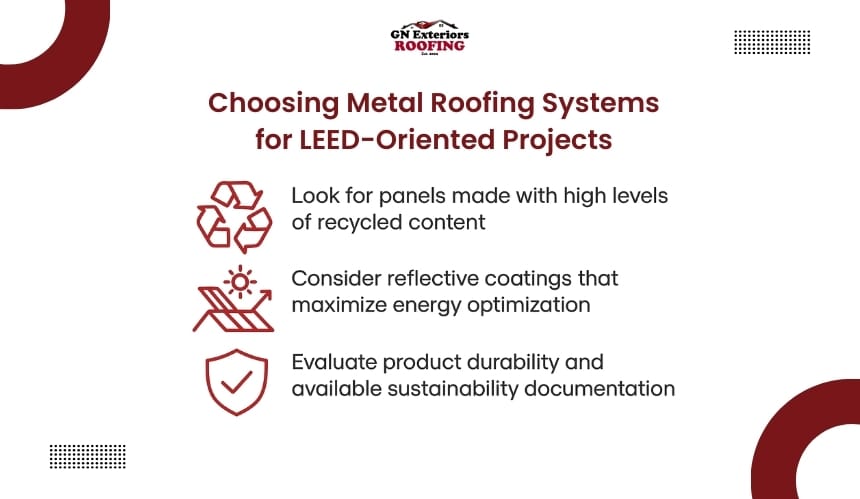
Recycled content plays a major role in qualifying for LEED Materials and Resources credits. Steel and aluminum roofing often include both post-consumer and post-industrial recycled material, but percentages vary by manufacturer. Higher recycled content strengthens eligibility for sourcing credits and reduces environmental impact during production.
Buyers can request Environmental Product Declarations or Health Product Declarations to verify these values, which helps confirm that the chosen roofing system supports LEED contribution goals.
Reflective technologies help buildings reduce heat gain and maintain better temperature control. Coatings with strong solar reflectance and emissivity ratings support LEED Heat Island Reduction credits and contribute to improved cooling efficiency during warm weather.
Many metal roofing products offer cool roof finishes that meet or exceed Solar Reflectance Index requirements commonly used in LEED scoring. Evaluating these coatings helps buyers select a system that enhances both energy performance and sustainability documentation.
Material durability influences LEED outcomes because long-lasting products reduce the frequency of replacements and lower overall environmental impact. Metal roofing provides extended service life with minimal deterioration, which helps reduce waste and supports life-cycle impact reduction goals.
Buyers who consider warranty length, expected lifespan, and maintenance needs gain a clearer understanding of how each product aligns with long-term sustainability expectations in Massachusetts.
Important information: Massachusetts winter temperatures can drop below zero, and snow loads in western MA can exceed 60 pounds per square foot. This shows why Massachusetts roofing must perform under significant snow and temperature stress. |
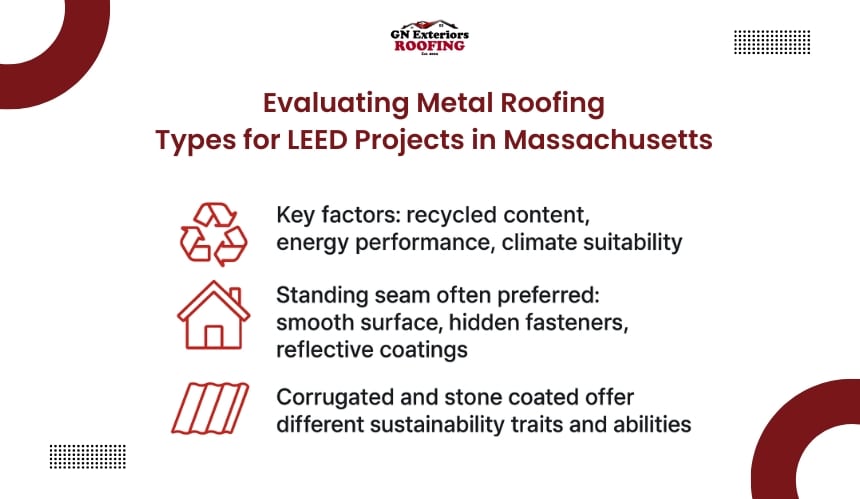
Metal roofing systems vary widely in their sustainability characteristics, and not all profiles contribute equally to LEED certification efforts. In Massachusetts, selecting the right system means looking beyond aesthetics or durability. It requires understanding how recycled content, energy performance, recyclability, and climate suitability come together in each product.
For LEED projects, certain performance attributes carry more weight than others. Recycled content is one of the first factors to consider, as systems with high post-consumer and post-industrial material percentages may help earn Materials and Resources credits. Manufacturers often provide Environmental Product Declarations (EPDs) or Health Product Declarations (HPDs), which document these values and ensure alignment with LEED criteria.
Another essential feature is thermal performance. Reflective coatings that offer high Solar Reflectance Index (SRI) values contribute to Heat Island Reduction credits and lower cooling loads in warmer months.
In Massachusetts, where both summer efficiency and winter durability matter, it’s also important to choose roofing that integrates well with insulation systems and maintains structural stability in fluctuating conditions.
Did you know? Cool metal roofs can lower rooftop temperatures by up to 60 degrees Fahrenheit on hot days. |
Reflective technologies help buildings reduce heat gain and maintain better temperature control. Coatings with strong solar reflectance and emissivity ratings support LEED Heat Island Reduction credits and contribute to improved cooling efficiency during warm weather.
Many metal roofing products offer cool roof finishes that meet or exceed Solar Reflectance Index requirements commonly used in LEED scoring. Evaluating these coatings helps buyers select a system that enhances both energy performance and sustainability documentation.
Each metal roofing profile offers a distinct sustainability profile:
Did you know? Massachusetts winter temperatures can drop below zero, and snow loads in western MA can exceed 60 pounds per square foot. This highlights the importance of choosing roofing systems that can withstand heavy seasonal stress while maintaining structural stability, energy performance, and long-term reliability in colder regions. |
Cold weather performance becomes a central factor for Massachusetts properties. Standing seam roofs often excel in winter conditions because their smooth, interlocking panels shed snow efficiently and reduce ice accumulation along the roof surface.
Corrugated roofing also performs well, although its deeper ridges may hold snow longer in certain areas. Stone coated systems offer good traction for snow but may retain more buildup due to their textured finish.
By comparing these characteristics, buyers can select a roofing system that balances cold climate performance with sustainability goals.
While LEED credits provide measurable benchmarks, metal roofing offers additional environmental advantages that extend beyond formal certification. In Massachusetts, where seasonal changes and extreme weather events affect long-term building performance, these benefits contribute significantly to energy efficiency, durability, and ecological impact.
Metal roofing interacts uniquely with a building’s thermal envelope, helping stabilize interior temperatures across fluctuating Massachusetts seasons. Its reflective surfaces reduce heat gain during warm months, lowering cooling loads, while proper insulation beneath the panels minimizes heat loss in winter.
These combined effects reduce reliance on HVAC systems, which not only lowers energy bills but also decreases greenhouse gas emissions associated with electricity consumption.
Massachusetts frequently experiences storms, heavy snow, and high winds. Metal roofing systems resist uplift, moisture penetration, and structural damage more effectively than asphalt or composite materials.
Because of their durability, metal panels require fewer replacements over decades, which reduces construction waste and the environmental impact of material production. Storm resilience also prevents emergency repair needs that could otherwise generate additional debris and emissions.
By combining longevity, recyclability, and energy performance, metal roofing contributes to sustainable construction practices in Massachusetts. Its extended lifespan minimizes raw material demand, while its recyclability ensures that old panels re-enter manufacturing cycles.
These attributes make it a practical solution for property owners who want to align with broader sustainability initiatives, reduce environmental footprints, and participate in green building strategies beyond formal certification programs.
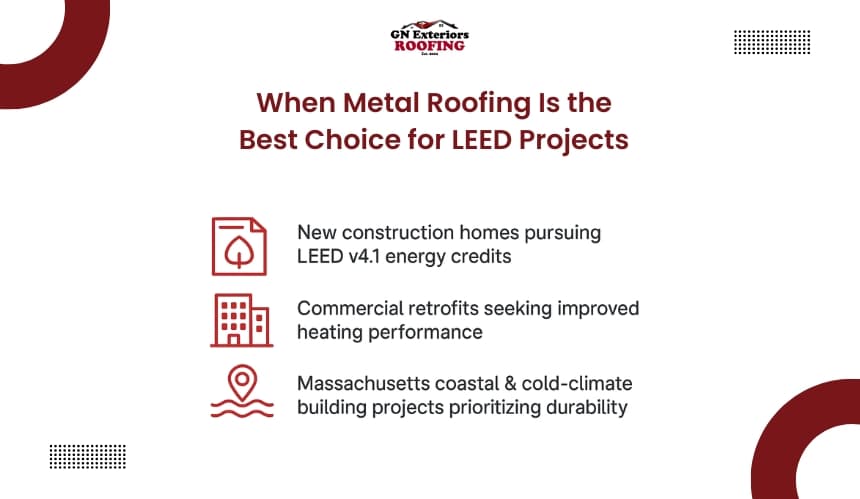
Metal roofing becomes a strategic advantage in sustainable construction when project goals extend beyond basic compliance. In Massachusetts, where climate conditions and energy expectations play a significant role in planning, metal roofing often aligns naturally with the needs of high-performance buildings.
Working with an experienced Massachusetts metal roofing company helps project teams evaluate these benefits with greater accuracy and confidence.
New construction offers an ideal environment for metal roofing because architects can design the building envelope to complement the roof’s thermal and structural characteristics.
This integration allows the roofing system to contribute more effectively to energy modeling, air sealing strategies, and long-term efficiency planning.
Metal roofing also supports streamlined documentation for LEED submissions when sustainable materials and performance criteria are considered early in the design phase.
Retrofits in Massachusetts often aim to correct energy loss, outdated ventilation, or insufficient structural performance. Metal roofing can address these challenges by offering a lightweight system that integrates easily with existing framing and insulation upgrades.
This makes it a practical solution for older properties seeking improved efficiency without major structural modifications. The ability to pair the roof with modern underlayments and ventilation components helps enhance building performance in ways other materials may not support as effectively.
The state’s combination of snow, wind, coastal exposure, and rapid seasonal transitions favors roofing systems that maintain stability under varied conditions. Metal roofing handles these shifts with dependable structural performance, helping maintain consistent interior comfort and reducing the risk of climate-related damage.
By supporting long-term resilience, metal roofing contributes to sustainable building practices that align with LEED objectives focused on durability and reduced environmental impact.
If you want a roofing solution that delivers long-term performance and supports your sustainability goals, GN Exteriors is ready to help. Our team guides property owners through material selection, LEED planning needs, and installation practices that strengthen energy efficiency.
Modern metal roofing systems include underlayments and structural components that reduce sound transmission. When installed correctly, they often create quieter indoor environments because the layers beneath the panels absorb vibration and soften outdoor noise.
Many metal roofing profiles support direct solar mounting without penetrating the roof surface. This helps maintain water resistance and allows homeowners to add renewable energy systems with fewer installation challenges. The long lifespan of metal roofing also pairs well with solar panel durability.
Coastal regions in Massachusetts can expose roofing to salt spray, but metal systems are available with protective coatings that resist corrosion. These finishes help maintain panel strength and appearance in marine environments where other materials may deteriorate more quickly.
Lighter shades reflect more sunlight, while darker colors absorb heat. Selecting a color that aligns with energy goals helps improve comfort throughout the year. Many manufacturers offer advanced pigments that increase reflectivity without limiting design choices.
Most metal roofing systems require minimal upkeep. Simple inspections, light cleaning, and monitoring of flashing or fasteners usually keep the system performing well. The low maintenance needs contribute to the long-term value metal roofing provides.