

Snow and ice loads play a defining role in how low-slope metal roofs perform during winter conditions. Buildings in colder regions face fluctuating weather patterns that place significant pressure on roof systems, and this makes accurate load planning an essential part of long-term structural reliability.
Many property owners only consider snow as weight, but engineers evaluate how it settles, shifts and responds to heat changes within the building. These behaviors influence the decisions made during design and inspection, especially for metal roofing systems.
This article explains the principles behind snow and ice load engineering for low-slope metal roofs and guides readers through the factors, risks and technical considerations that shape safe performance throughout the winter season.
Understanding how snow behaves on low-slope metal roofs helps readers grasp why engineering analysis is essential. This section focuses on the science behind load behavior and the core factors professionals rely on when evaluating winter performance.
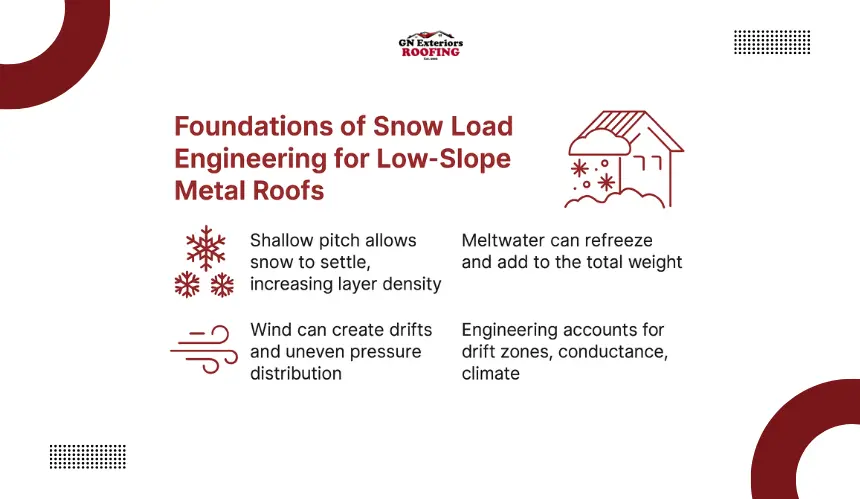
Snow behaves differently on low-slope metal roofs because it tends to settle in thicker, more uniform layers. The shallow pitch slows natural shedding, which allows snow to compress and increase in density over time.
As temperatures shift, meltwater can refreeze on the surface and contribute to added weight. Wind exposure also shapes the way snow accumulates, creating patterns that change the distribution of pressure across the roof.
These conditions require engineers to account for drift zones, surface friction, material conductivity and expected climate ranges to determine safe load levels.
Engineers rely on established codes and standards to determine the loads low-slope metal roofs must safely support. ASCE 7, IBC requirements and regional ground snow data serve as the foundation for calculation.
These frameworks outline exposure categories, risk levels, thermal conditions and load conversion methods that align roof design with local winter hazards. Without these standards, roof systems would lack the structural benchmarks needed to handle varying snow climates.
Several environmental and structural variables influence how snow interacts with a low-slope metal roof. Roof geometry plays a role in how snow settles, while building height and wind orientation shape drift formation.
Material temperature, insulation quality and interior heat loss affect melt behavior across the roof surface. Engineers evaluate these combined factors to predict how much weight the roof will carry during peak winter conditions.
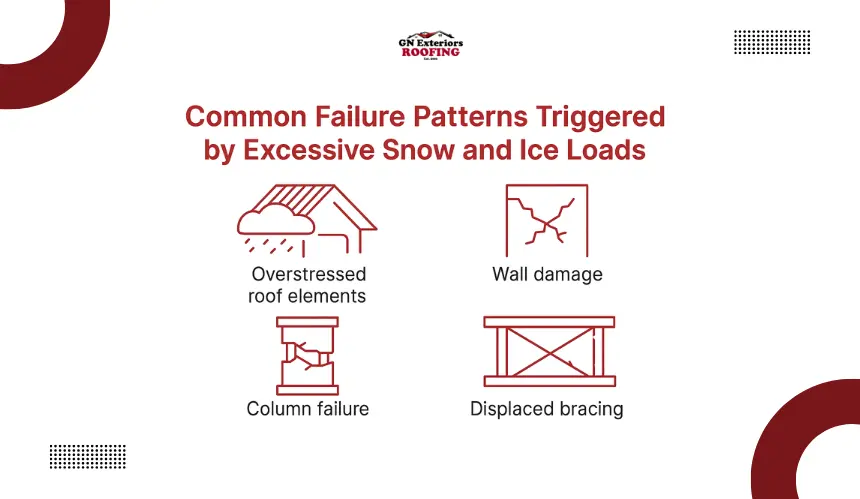
Snow and ice can influence low-slope metal roof performance in ways that are not always visible at first glance. When snow loads surpass what a low-slope metal roof was designed to handle, the structure begins to show stress through progressive deformation.
Panels may start to bow as weight increases, and supporting members can shift under the pressure. Fasteners may loosen as the system absorbs repeated cycles of winter loading.
As load distribution becomes uneven, areas of concentrated stress appear along seams or joints. These conditions can weaken the roof system and raise the likelihood of structural fatigue during long snowfall periods.
Did you know? Insurance data reveals that snow drifts account for about 75% of past U.S. snow-related roof failures is credible. |
Ice presents a different kind of challenge because it develops through repeated cycles of melting and refreezing. As water cools on the surface, it forms heavy layers that settle along roof edges or near drainage points. These layers can block natural water flow and increase the pressure placed on underlying materials.
Ice can also trap meltwater against the roof surface, which encourages saturation in areas that are already under winter stress. Engineers consider these factors when evaluating long-term winter performance.
Buildings often show subtle clues when a roof is struggling under winter weight. Interior doors may stick as framing shifts, and small changes in ceiling lines can point to structural deflection. Some roofs produce cracking sounds during periods of high load.
Visible sagging along panel spans or unexpected leaks can also signal that the system is no longer distributing weight evenly. These symptoms help building owners understand when it is time to seek a professional evaluation.
Important: Wet snow from rain-on-snow or melt cycles compacts existing layers, boosting density and total load by factors of 3-7 times for equivalent depth, per forensic reports and code guidelines. |
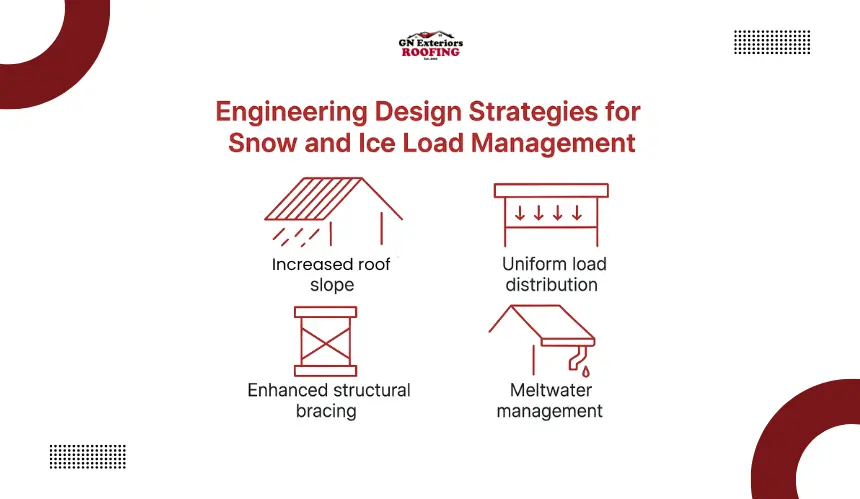
Snow and ice management begins long before winter arrives. Engineers rely on specific design choices to improve how low-slope metal roofs handle seasonal weight and moisture. Let’s explore the methods and components that strengthen roof performance during colder months.
Structural reinforcement is one of the most reliable ways to help a low-slope metal roof withstand heavy winter loads. Engineers begin by confirming that the roof meets the minimum design snow loads required by building codes, which are based on factors such as ground snow accumulation, elevation, and exposure.
A qualified structural engineer evaluates the building’s load capacity and verifies that the support system aligns with these requirements. Metal roofs, often formed from steel or aluminum, benefit from a corrugated profile that increases rigidity and improves load distribution.
Engineers also assess how the slope factor, known as CsC_sCs, influences snow retention. Low-slope roofs, typically below a 2:12 pitch, use a slope factor of 1.0, which means the roof must support the full load because snow does not shed naturally. As the slope increases, this factor is reduced due to improved shedding potential.
Roof assemblies designed for winter climates use components that help stabilize snow and ice across the surface. Standing seam panels provide secure attachment points, while concealed fasteners reduce exposure to moisture.
Snow retention systems slow the movement of snow to help prevent sudden slides. Ice-resistant materials and high-performance underlayments create a protective barrier that manages surface conditions during changing temperatures.
Thermal and moisture control systems help reduce the conditions that lead to ice buildup. Air sealing prevents warm indoor air from escaping into the roof assembly, while insulation upgrades support consistent temperatures across the surface.
Vapor management layers keep moisture from entering roof cavities where it can refreeze. Heated cable systems may also be used in strategic areas to maintain clear water pathways. These measures work together to stabilize the roof environment during cold weather.
Effective drainage helps guide meltwater away from the roof so that it does not pool or refreeze in sensitive areas. Tapered insulation adds subtle directional flow, and scuppers or internal drains remove water from low points.
Gutters and collector boxes support managed water movement as temperatures fluctuate. When drainage systems are integrated properly, they reduce the likelihood of ice buildup along edges and improve the overall resilience of the roof during winter conditions.
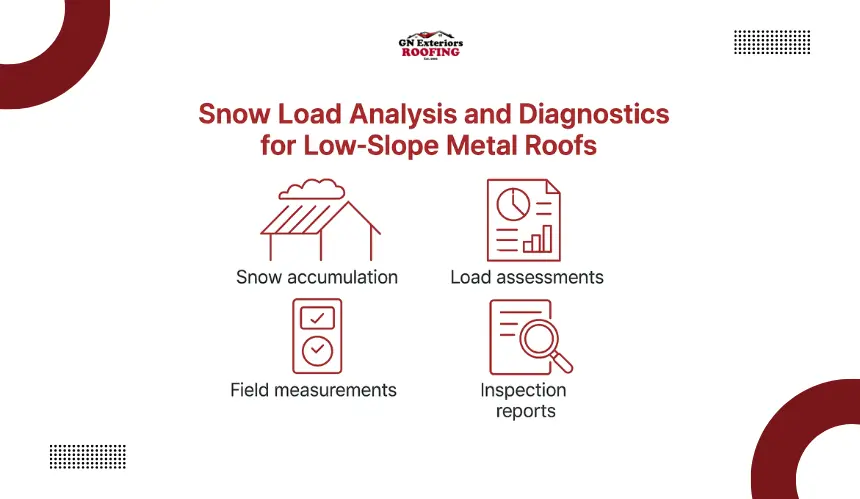
Accurate snow load evaluation helps building owners understand how their roof performs during winter conditions. Let’s discuss the methods, tools and monitoring practices used to measure load levels and identify potential issues before they escalate.
Professionals rely on field-tested methods to determine how much weight has accumulated on a low-slope metal roof. Snow density is measured through sampling to understand how compacted the layers have become.
Moisture content is evaluated to identify how much water is stored within the snowpack. Infrared imaging is used to locate temperature variations that show where melting or refreezing is occurring. These techniques help produce an accurate picture of winter load conditions.
Modern engineering tools help predict how snow will behave under different winter scenarios. Building information modeling platforms allow specialists to simulate the way snow distributes across low-slope surfaces.
Finite element analysis programs model structural response under increasing weight. Climate data tools incorporate regional snowfall patterns to forecast seasonal load variations. These technologies allow engineers to make informed decisions during design and maintenance planning.
A consistent monitoring plan allows building owners to stay aware of changes in winter load conditions. Roof sensors measure real-time weight levels and send alerts when thresholds approach safe limits.
Scheduled inspections allow professionals to document early signs of stress, while seasonal maintenance tasks keep drainage paths clear for meltwater. These practices support safer roof performance throughout colder months.
Once winter conditions begin affecting a low-slope metal roof, building owners can rely on targeted actions that reduce stress and improve safety. This section outlines the practical steps used to manage snow and ice buildup and the situations that call for professional intervention.
Safe snow removal begins by choosing tools and techniques that protect both the roof surface and the workers involved. Professionals use non-abrasive equipment to prevent panel damage and rely on controlled clearing patterns to avoid shifting loads suddenly.
Access points are selected to reduce slip hazards, and teams follow established safety protocols that limit the risk of falls. These precautions help maintain the integrity of the roof while reducing winter load levels.
Structural reinforcement becomes necessary when a roof shows signs that it may not support future snowfall safely. Engineers may recommend stronger support members or improved connection systems when load tolerance is too low.
Roof upgrades are also considered when materials reach the end of their service life or when snow accumulation patterns have changed due to modifications around the building. These decisions help prepare the structure for more demanding winter conditions.
Selecting the right metal roofing specialist involves reviewing the credentials and experience of firms that work with winter load engineering. Professionals who focus on cold-climate structures use advanced modeling tools and provide detailed documentation during the evaluation process.
Building owners often choose firms with a clear record of designing or assessing low-slope metal roofs in seasonal regions. This ensures that the roof receives guidance based on proven winter performance standards.
If your building needs a winter-ready roofing plan, GN Exteriors is here to help with expert guidance and dependable solutions. Our team can assess your roof, strengthen its performance, and prepare it for the toughest snow seasons. Reach out today to protect your property with confidence.
Regional climate patterns continue to evolve, and some areas now experience fluctuations in snowfall intensity that were not common in past decades. Engineers review updated climate projections to anticipate potential increases in winter loads. This helps ensure that low-slope metal roofs remain prepared for long-term environmental changes.
A building’s orientation influences how sunlight, shading, and wind patterns interact with the roof. These factors can change the way snow melts or settles across the surface. Engineers consider orientation when analyzing winter performance to create more accurate expectations for seasonal behavior.
Insulated metal panels help maintain stable surface temperatures, which reduces the likelihood of uneven melting that can contribute to winter stress. Their thermal consistency supports better control over moisture movement within the roof system. This contributes to steadier performance in colder climates.
Digital monitoring systems offer real-time data that helps property owners stay informed about changing winter load conditions. Sensors track weight levels and temperature shifts that affect roof performance. These systems support faster decision-making during severe weather.
Adjacent buildings can create wind channels or sheltered areas that change how snow accumulates or drifts. These microenvironment conditions can affect roof load distribution throughout the season. Engineers evaluate surrounding structures to better understand winter behavior patterns.