
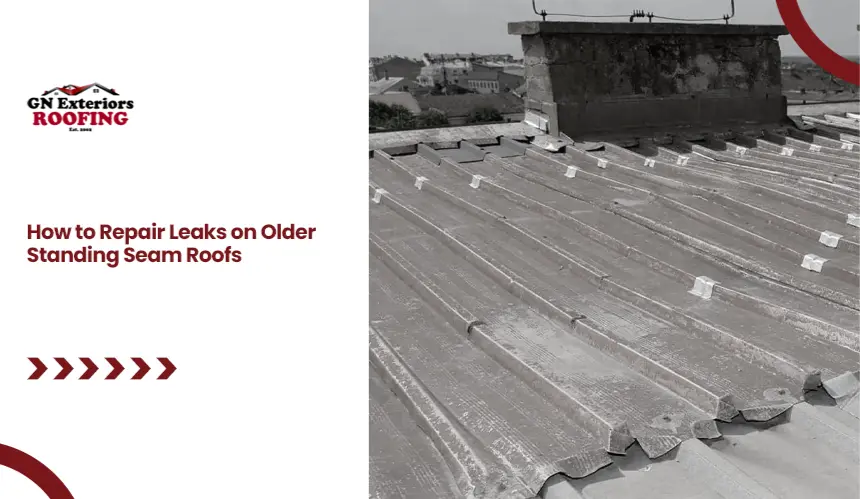
Older standing seam roofs are often trusted because of their durability and long service life, which makes leaks feel especially frustrating when they appear. In many cases, these leaks are not the result of sudden failure but of slow, cumulative changes that occur as the roof ages.
Metal panels expand and contract for decades, sealants harden, and connections loosen in ways that are not immediately visible from the surface. This guide explains how to repair leaks on older standing seam roofs by focusing on age-related failure points, proper diagnosis, and system-compatible repair methods.
Standing seam roofs are engineered for longevity, but time introduces stresses that are unique to metal roofing systems. Unlike surface-level damage seen on other roof types, leaks on older standing seam roofs usually stem from gradual system changes rather than sudden breakage.
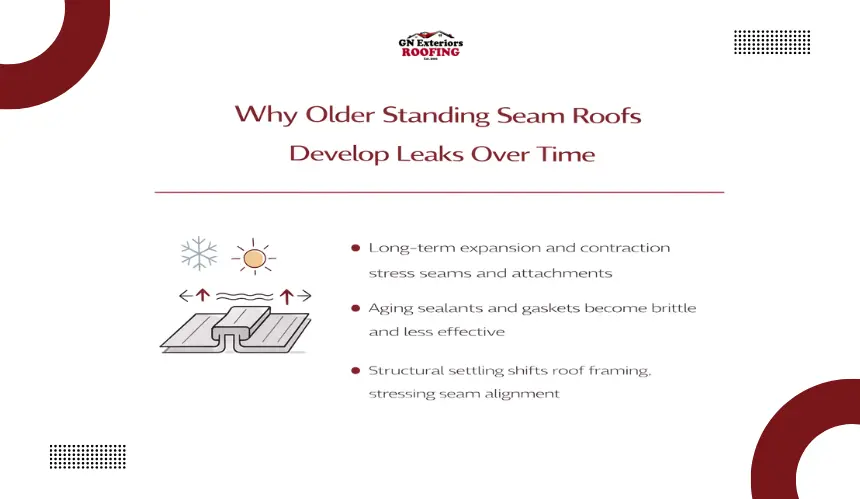
Metal panels expand and contract every day in response to temperature changes. Over decades, this constant thermal cycling places stress on seams, clips, and connection points.
As movement accumulates, seams can loosen microscopically, and attachment components may no longer hold panels as tightly as intended. These small shifts create pathways for water intrusion during heavy rain or wind-driven storms, even when panels appear intact.
Sealants, closure strips, and gaskets used in older standing seam systems are exposed to ultraviolet radiation, moisture, and temperature extremes year after year. As these materials age, they harden, shrink, or crack, reducing their ability to flex with panel movement.
Once flexibility is lost, even properly installed components can allow water to bypass protective barriers and enter the roof assembly.
Buildings naturally settle and shift as they age, and standing seam roofs must adapt to these subtle structural changes. When roof framing moves unevenly, stress concentrates at seams, penetrations, and transitions.
This movement can pull components out of alignment, creating stress points where water can collect or migrate beneath the metal panels.
Older standing seam roofs were often designed using materials and installation standards available at the time. As weather patterns intensify, increased rainfall, higher winds, and more frequent temperature swings place additional demands on aging systems.
Components that once performed adequately may no longer provide sufficient resistance, allowing leaks to develop under conditions that were previously manageable.
As standing seam roofs age, leaks tend to appear in predictable locations rather than randomly across the surface. In Massachusetts, seasonal temperature swings, coastal moisture, and winter snow loads accelerate stress at specific roof components.
Knowing where leaks most often develop allows property owners to focus inspections and repairs where they matter most, especially on older systems installed decades ago.
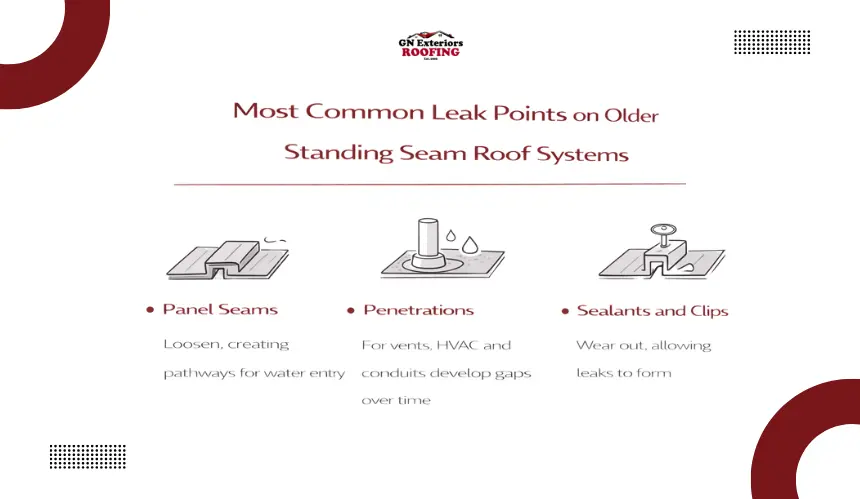
Panel seams are designed to lock tightly while still allowing controlled movement. Over time, repeated expansion and contraction can weaken seam engagement, particularly on longer roof runs common on commercial and multi-family buildings. In areas like Quincy, Weymouth, and
Dorchester, where wind-driven rain is frequent, even minor seam separation can allow water to travel upward and enter the roof assembly. These leaks often appear intermittent, surfacing only during heavy storms rather than light rainfall.
Penetrations added after the original installation are one of the most common leak sources on older standing seam roofs. HVAC units, plumbing vents, and electrical conduits are often retrofitted without systems designed to accommodate metal movement. As panels shift, rigid flashing materials crack or pull away, creating gaps.
This issue is especially common on buildings in Hanover and Hingham where mechanical upgrades have occurred years after the roof was installed.
Sealants and closure strips play a critical role in sealing transitions, ridges, and eaves. On older roofs, these materials gradually lose elasticity due to ultraviolet exposure and temperature extremes.
Once hardened, they can no longer flex with panel movement, allowing water to bypass seams and collect beneath the metal. In colder Massachusetts winters, freeze-thaw cycles further stress these materials, accelerating failure.
Although standing seam systems conceal most fasteners, internal clips still experience movement and fatigue over time. As clips loosen or shift, panels may lift slightly under wind pressure, creating capillary paths for moisture.
This condition is often overlooked because there are no visible holes or surface damage. In towns like Milton and Randolph, where older commercial structures are common, clip-related leaks are frequently discovered only after interior water staining appears.
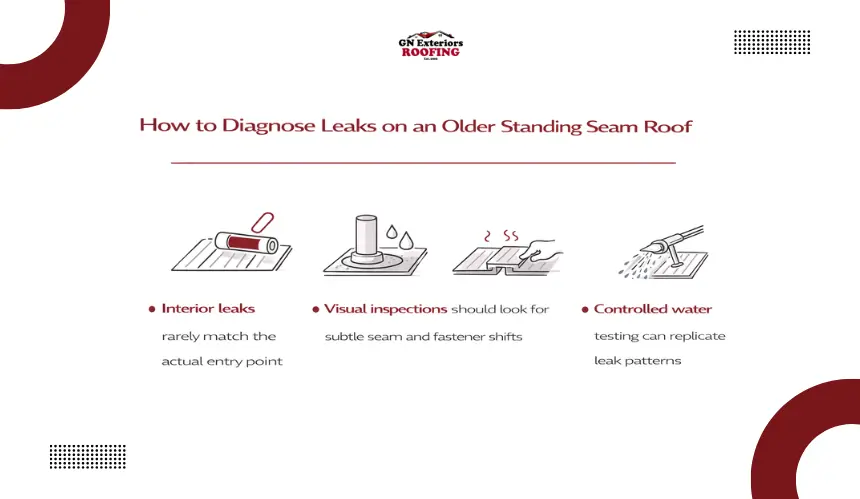
Before any repair work begins, accurate diagnosis is critical. Leaks on older standing seam roofs rarely appear directly above the interior damage, which makes surface-level assumptions risky. In Massachusetts, where driving rain, snow buildup, and freeze-thaw cycles are common, water often travels along panels, seams, or structural members before becoming visible indoors.
Water entering a standing seam roof system can migrate significant distances before it drips into occupied spaces. Metal panels, underlayment layers, and structural framing all influence how moisture moves once it breaches the exterior.
Interior stains in ceilings or walls may appear far from the actual failure point, especially in larger buildings across areas like Dorchester or Quincy with long roof spans.
A proper visual inspection focuses on change rather than obvious damage. Inspectors look for subtle seam distortion, panel misalignment, deteriorated sealants, and irregular panel movement rather than punctures or cracks.
On older roofs, even small inconsistencies around penetrations, ridge transitions, or edge details can signal deeper issues that allow water intrusion during storms.
When visual inspections do not reveal a clear source, controlled water testing becomes a valuable diagnostic tool. This process isolates roof sections and introduces water gradually to replicate rainfall patterns.
Unlike random hose spraying, controlled testing helps identify precise entry points without overwhelming the system. This method is often used on commercial and multi-unit properties in Weymouth and Hingham where roof complexity increases the chance of concealed leaks.
Standing seam roofs behave differently from other roofing materials, particularly as they age. Diagnostic mistakes often occur when inspectors unfamiliar with metal systems misinterpret movement-related gaps or rely on methods suited for shingle roofs.
Proper diagnosis by a metal roofing company accounts for panel expansion, concealed clip systems, and aging components working together rather than treating leaks as isolated surface failures.
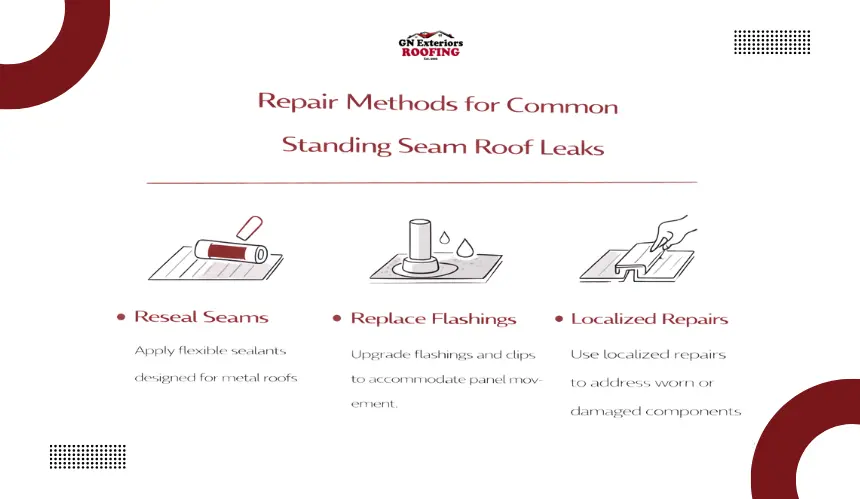
Once the source of a leak has been accurately identified, repairs must be matched to the specific failure mechanism. Older standing seam roofs require repair methods that respect panel movement, original system design, and material compatibility.
In Massachusetts, where roofs endure wide temperature swings and seasonal weather extremes, repairs that ignore these factors often lead to recurring leaks rather than lasting results.
Seam resealing is appropriate when leaks originate from minor separation or loss of sealant rather than structural seam failure. Specialized metal roof sealants designed to remain flexible under thermal movement are applied after careful surface preparation.
This approach works best when seams are still mechanically sound but have lost watertight integrity due to age-related sealant degradation. It is commonly used on older commercial roofs where panel replacement would be unnecessarily invasive.
Penetration repairs require flashing systems that can move with the roof rather than resist it. Flexible retrofit flashings are designed specifically for standing seam roofs and accommodate expansion without cracking or pulling loose.
Rigid materials or surface-applied patches often fail quickly, especially on buildings in coastal or wind-exposed areas like Quincy and Weymouth, where panel movement is more pronounced during storms.
When leaks are traced to clip movement or fastener fatigue, repairs focus on restoring proper panel attachment without restricting movement. This may involve stabilizing clips, correcting alignment issues, or selectively replacing fatigued components.
Over-tightening or rigid fastening can worsen the problem by preventing natural expansion, leading to new stress points elsewhere on the roof.
Panel repair or replacement is considered when metal fatigue, corrosion, or physical damage compromises panel integrity. Localized replacement allows damaged sections to be addressed without disturbing surrounding panels.
This approach is often preferred on older roofs in towns like Milton or Randolph, where maintaining existing roof sections can extend overall system life while controlling repair scope and cost.
Not all leak repairs serve the same purpose. On older standing seam roofs, the difference between a short-term fix and a durable solution often determines whether leaks reappear after the next season.
Temporary repair approaches typically focus on immediate containment
Long-term repair solutions address system behavior
Temporary repairs can be useful in urgent situations, but they should be viewed as a bridge rather than a final solution, especially on aging metal roof systems.
There comes a point when repeated repairs no longer provide meaningful value. On some older standing seam roofs across communities like Dorchester, Quincy, and Weymouth, leaks signal broader system decline rather than isolated issues.
Common indicators that repairs may no longer be effective
When these conditions are present, continuing to repair individual leaks can lead to higher long-term costs and ongoing disruption. Evaluating the overall roof condition helps determine whether repair efforts are still practical or if a broader solution should be considered.
Leaks on older standing seam roofs rarely improve on their own. A timely, system-aware inspection from GN Exteriors can help prevent interior damage, reduce repeat repairs, and extend the life of your roof.
If your property in Massachusetts is showing early signs of leakage, we are ready to assess the situation clearly and guide you toward the right next step before small issues turn costly.
The lifespan of a leak repair depends on roof age, material condition, and how well the repair aligns with panel movement. On well-maintained systems, properly executed repairs can remain effective for years, while aging roofs with widespread material fatigue may see shorter performance windows.
Snow accumulation and ice buildup add sustained weight and prolonged moisture exposure to metal roof systems. In Massachusetts, repeated snowmelt and refreezing can force water into concealed transitions, increasing leak risk even when surface panels appear intact.
Coverage depends on the policy and the cause of the leak. Sudden storm-related damage may qualify, while leaks linked to age-related wear or deferred maintenance are often excluded. Inspection reports and repair records play an important role during claim evaluations.
Uncontrolled foot traffic can accelerate wear on older standing seam roofs. Walking outside designated panel zones may stress seams, clips, or attachment points, creating movement-related vulnerabilities that later allow water intrusion.
Older systems benefit from routine inspections, especially following severe weather. Annual evaluations, along with post-storm checks in areas such as Dorchester or Hingham, help identify early changes before they develop into active leaks.