Key Takeaways
|
Roofing inspections are meant to confirm safety, durability, and compliance, yet many fail for reasons that catch property owners off guard. In most cases, the issue is not sudden roof damage but overlooked conditions that develop gradually and become visible under professional review.
Inspectors assess roofing systems through specific criteria tied to performance, water control, structural stability, and installation standards. When those benchmarks are not met, even minor deficiencies can lead to a failed inspection.
This article focuses on the most common inspection failures tied to roofing systems and explains how each can be avoided with informed preparation and timely corrective action.
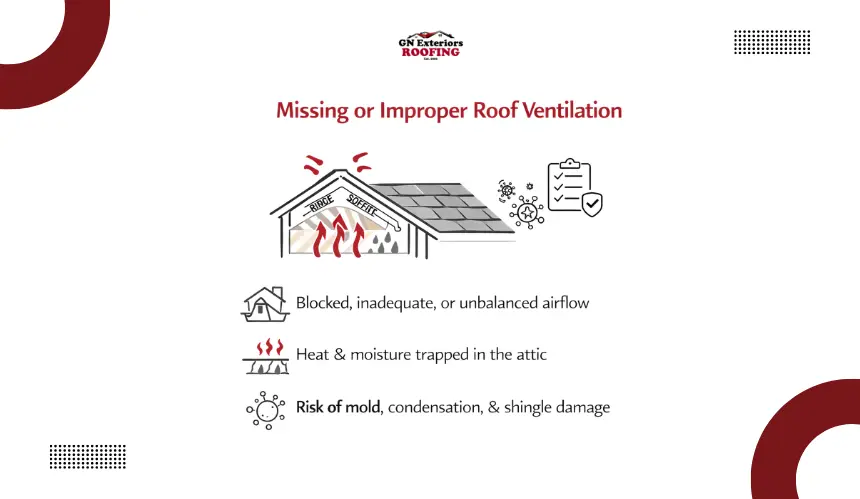
Roof ventilation is one of the first systems inspectors evaluate because it directly affects moisture control and material longevity. A roof can appear intact from the exterior and still fail an inspection if airflow through the attic is restricted or unbalanced.
Inspectors are trained to assess whether heat and moisture are being released efficiently rather than trapped beneath the roof deck.
Inspectors look for clear intake and exhaust pathways, typically through soffit vents, ridge vents, or roof-mounted exhaust systems. Common failure indicators include blocked soffits, insufficient exhaust ventilation, or ventilation systems that do not meet recommended airflow ratios.
Signs such as condensation on attic framing, mold presence, or heat damage to shingles often reinforce ventilation-related concerns.
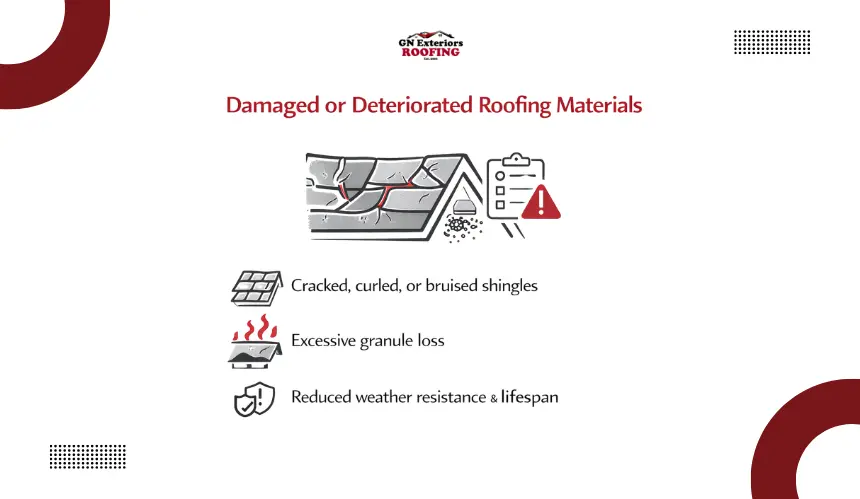
Material condition plays a central role in determining whether a roof is still performing as intended. Roofing inspections prioritize functional integrity over aesthetics, meaning visible wear often signals deeper performance issues. Materials that no longer provide consistent protection are commonly flagged, even if leaks have not yet occurred.
Inspectors document cracked shingles, curling edges, blistering surfaces, and excessive granule loss as indicators of advanced wear.
These conditions suggest reduced weather resistance and shortened remaining service life. Localized repairs or surface patching rarely offset concerns when deterioration is widespread or progressive.
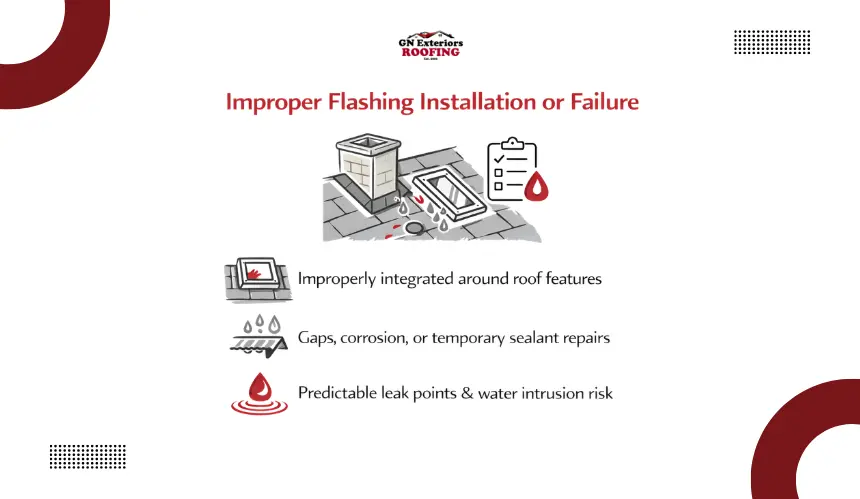
Flashing failures are among the most frequent causes of inspection-related concerns because they represent predictable leak points. Flashing is evaluated not just for presence but for correct integration within the roofing system. Improperly installed flashing undermines water control, regardless of overall roof condition.
Inspectors examine flashing around chimneys, skylights, valleys, and penetrations for signs of separation, corrosion, or sealant-only repairs. Surface caulking without mechanical fastening or layered integration is often cited as a temporary fix rather than a compliant solution. Even small gaps or lifted edges raise red flags due to the high likelihood of water intrusion.
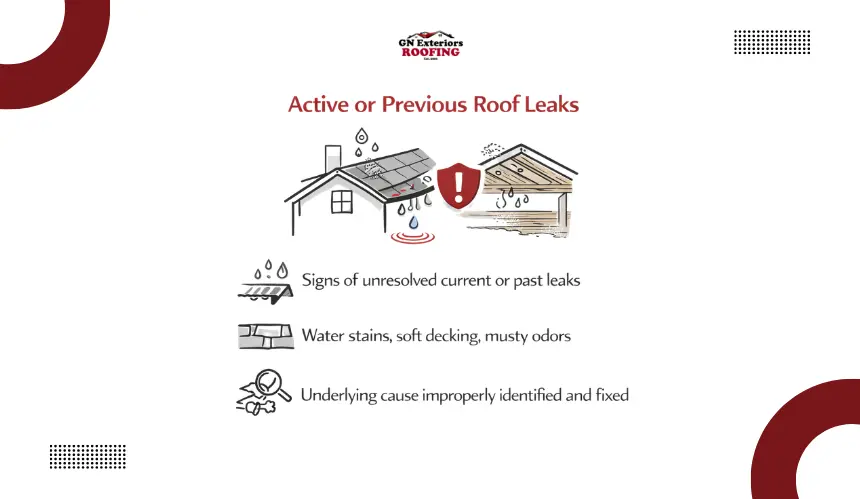
Evidence of leaks carries more weight than homeowner assurances of repair. Roofing inspections account for both current moisture intrusion and historical leak indicators. Even when a leak is no longer active, inspectors assess whether the underlying cause was properly addressed.
Inspectors look beyond the roof surface, checking attic decking, insulation, and interior framing for staining, discoloration, or microbial growth.
Water marks, soft sheathing, or musty odors suggest unresolved moisture exposure. Repairs that address symptoms without correcting the source often lead to inspection failure.
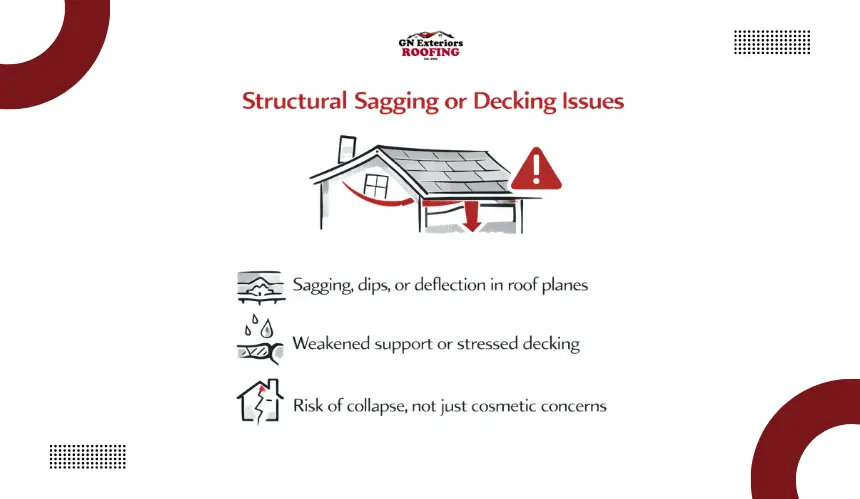
Structural irregularities elevate inspection concerns because they affect load distribution and long-term stability. Sagging rooflines or compromised decking indicate stress that extends beyond surface materials. These issues are treated as structural risks rather than routine maintenance items.
Inspectors assess roof planes for uneven lines, deflection, or visible dips that suggest weakened decking or framing. Causes often include prolonged moisture exposure, inadequate support, or excessive load over time. Cosmetic fixes do not resolve structural deficiencies and are unlikely to satisfy inspection standards.
A roof can fail inspection regardless of age if it was not installed according to recognized standards. Inspectors evaluate workmanship against established guidelines rather than relying on warranty claims or installation dates. Non-compliant installation practices are treated as performance risks.
Common findings include incorrect nail placement, missing underlayment, poor shingle alignment, and inadequate fastening patterns. Inspectors reference established benchmarks such as the International Residential Code and material testing guidelines from ASTM International to assess compliance. Deviations from these standards often result in documented inspection failures.
Water management is a critical performance factor in roofing inspections. When drainage systems fail to move water away efficiently, inspectors view the roof as vulnerable to accelerated deterioration. Drainage issues are evaluated as part of the roofing system rather than a separate exterior concern.
Inspectors assess gutter attachment, slope, capacity, and discharge direction. Clogged gutters, standing water, or overflow near roof edges suggest improper drainage.
Over time, these conditions contribute to fascia damage, shingle deterioration, and moisture intrusion, all of which influence inspection outcomes.
Inspection outcomes are influenced not only by physical conditions but also by verifiable maintenance history. When documentation is missing, inspectors may assume deferred care or unverified repairs, especially in transactional or insurance-driven inspections.
Records of prior inspections, professional repairs, and routine maintenance demonstrate that roofing issues were addressed systematically rather than reactively. In the absence of documentation, inspectors may classify observed conditions as unresolved risks, even if visible damage appears minimal.
Preparing for a roofing inspection is less about last-minute fixes and more about reducing predictable risk. Inspectors evaluate patterns of performance, not isolated touch-ups.
Proactive preparation focuses on visibility, access, and verifiable condition so inspectors can clearly assess how the roofing system is functioning today, not guess how it might perform later.
Start by ensuring inspectors can safely access all relevant areas, including the roof surface and attic space. In many Massachusetts homes, limited attic clearance, older framing, or snow guard systems can restrict access. When access is obstructed, inspectors often increase scrutiny in other areas to compensate.
Conduct a focused visual review with local conditions in mind. Look for shingle damage caused by ice dam formation, flashing separation from repeated freeze thaw movement, and gutter issues related to snow and ice buildup.
Confirm that ventilation openings are clear, as inadequate airflow is frequently cited in MA inspections due to moisture retention during cold months. Gutters should direct water well away from the structure to prevent ice backup along roof edges.
If repairs were completed previously, organize invoices or service records, especially for work addressing storm damage, ice dams, or winter-related leaks.
Massachusetts inspectors commonly request documentation to verify that prior issues were resolved professionally rather than temporarily patched.
Preparation is most effective when it aligns with how local inspectors think. Addressing region-specific failure patterns in advance allows the inspection to focus on overall roof performance under Massachusetts conditions instead of isolated red flags.
If a roofing inspection is on the horizon, the right preparation can make all the difference. GN Exteriors helps homeowners identify inspection risks early, address problem areas correctly, and approach inspections with confidence instead of uncertainty. A proactive evaluation today can prevent costly delays and surprises tomorrow.
Most roofing inspections take between 45 minutes and 90 minutes, depending on roof size, pitch, accessibility, and whether attic areas are included. Larger or complex roof designs often require additional time for documentation and condition verification.
Inspections are typically postponed during heavy rain, snow, or high winds because surface conditions limit visibility and safety. Dry conditions allow inspectors to accurately assess materials, slopes, and transitions without moisture masking underlying performance issues.
Roofing inspections are commonly performed by licensed roofing contractors, certified home inspectors, or insurance-approved professionals. Qualifications matter because inspection reports often influence real estate decisions, insurance approvals, or warranty evaluations.
Most roofing systems benefit from a professional inspection every one to two years, with additional inspections recommended after severe storms or before major transactions. Regular inspections help identify developing issues before they impact compliance or valuation.
Inspection findings can influence coverage decisions, especially during policy renewals or new applications. Insurers may request inspections to confirm roof condition, remaining lifespan, or eligibility for specific coverage terms or endorsements.
A failed inspection typically results in a list of required corrections rather than immediate penalties. Once identified issues are addressed, a reinspection may be requested to verify compliance and clear the report for the intended purpose.