
Key Takeaways:
|
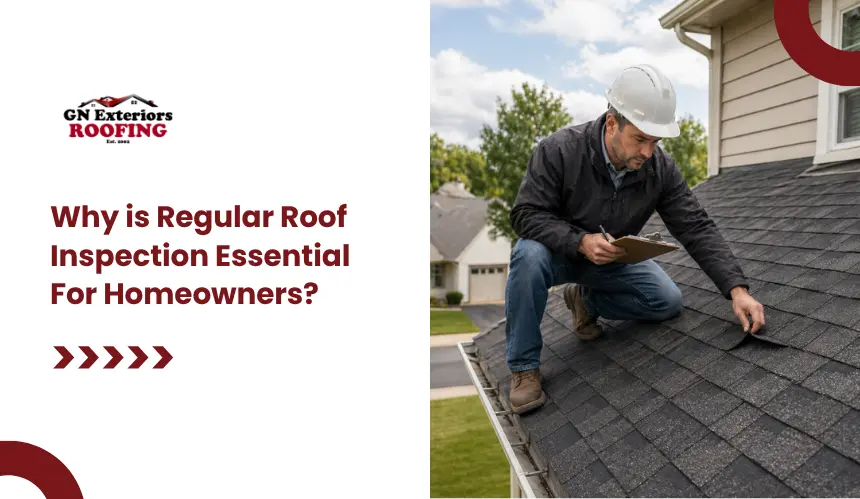
Roof issues rarely start as visible damage. Small cracks, minor leaks, or weakened flashing often develop unnoticed until they impact insulation, ceilings, or structural components. By the time symptoms appear inside the home, repair costs and complexity increase significantly.
A 2024 report cited by Roofing Contractor found that nearly 60% of U.S. homeowners did not inspect their roofs for damage, showing why preventive inspection is often overlooked until problems become visible.
This article explains why consistent inspection is essential and how it protects both the structure and long-term maintenance costs.
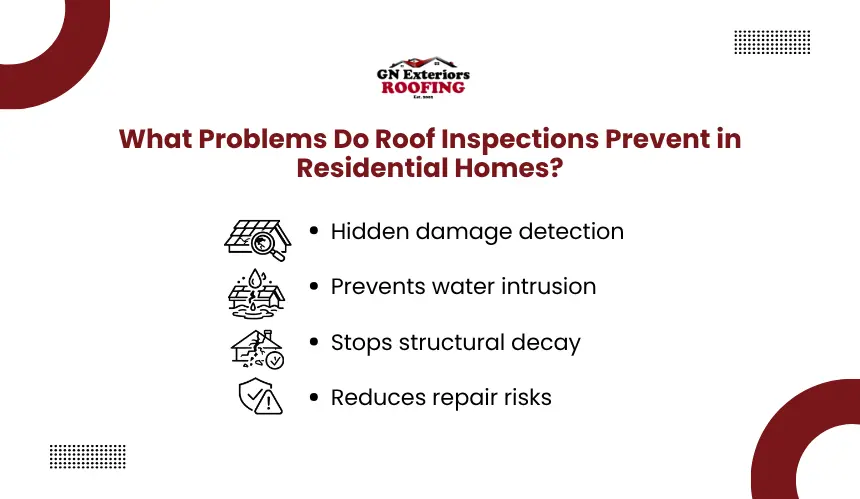
Most roofing failures originate from conditions that remain undetected during early stages. Regular inspection targets these hidden risks before they disrupt structural integrity or interior environments.
Roof systems are continuously exposed to moisture, heat, and mechanical stress. Over time, micro-cracks in shingles, degraded sealants, or loosened flashing allow small amounts of water to penetrate beneath the surface.
This moisture accumulates within underlayment layers and roof decking, gradually weakening structural components. Because this process occurs beneath visible surfaces, damage progresses without immediate external signs.
Unresolved minor defects create pathways for repeated water intrusion. Each exposure cycle increases saturation levels, leading to wood rot, mold growth, and insulation breakdown. As materials lose strength, adjacent components become affected, expanding the damage zone.
What begins as a localized issue can evolve into widespread structural deterioration, requiring more extensive and costly intervention.
External conditions directly influence the rate of roof degradation. Prolonged ultraviolet exposure reduces material flexibility, making shingles brittle and prone to cracking. Temperature fluctuations cause expansion and contraction, stressing joints and sealants.
Wind uplift can displace protective layers, while debris accumulation blocks drainage and retains moisture. These factors collectively accelerate wear, increasing the likelihood of undetected damage if inspections are not performed regularly.
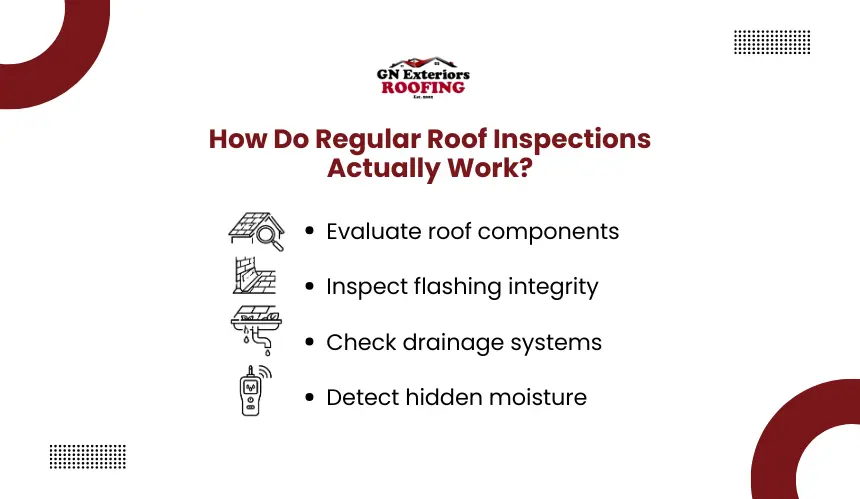
Regular roof inspections work by systematically evaluating all structural and protective components to detect early-stage damage before it becomes visible or disruptive.
A comprehensive inspection examines all components that influence water resistance and structural stability. This includes shingle condition, flashing integrity around penetrations, and drainage pathways such as gutters and downspouts.
The underlayment layer is assessed for signs of moisture intrusion, while attic spaces are checked for ventilation efficiency, heat buildup, and condensation patterns. Each element is evaluated in relation to how it contributes to overall system performance.
Inspection methods extend beyond surface-level observation. Visual assessment identifies displacement, cracking, or material fatigue, while moisture detection tools reveal trapped water within layers that are not externally visible. Infrared scanning can highlight temperature variations caused by hidden moisture accumulation.
Structural checks focus on identifying soft spots or load-bearing inconsistencies, allowing early detection of weaknesses before failure occurs.
Inspection frequency is determined by environmental exposure, roof material, and age. Properties in regions with high temperature variation or frequent storms require more frequent assessments due to accelerated wear cycles.
Newly installed roofs typically require periodic monitoring to ensure installation integrity, while older systems demand closer intervals as material degradation increases. In practical terms, inspections are most effective when scheduled seasonally and after major weather events to capture emerging issues in real time.
Roof systems in areas like Quincy, Randolph, and Weymouth experience accelerated wear due to coastal moisture, freeze-thaw cycles, and seasonal storms. These conditions increase the likelihood of flashing failure, shingle brittleness, and ice dam formation.
As a result, inspection intervals often need to be tighter to detect moisture intrusion and structural stress before winter or post-storm damage compounds.
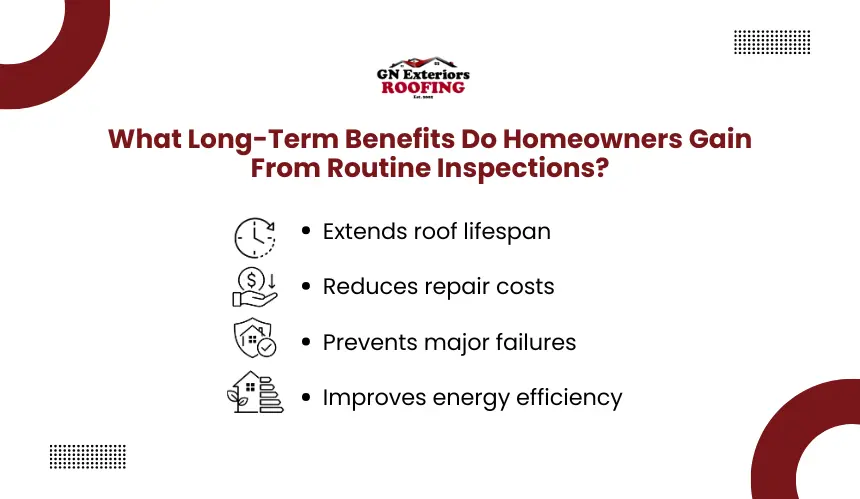
Regular roof inspections deliver measurable long-term benefits by reducing failure risk, stabilizing maintenance costs, and preserving system performance over time.
Routine inspections extend lifespan by identifying wear patterns before they compromise structural layers. Early correction of issues such as loose shingles, degraded sealants, or minor flashing gaps prevents repeated exposure to moisture and thermal stress.
By maintaining the integrity of protective layers, the roof avoids premature aging, delaying the need for full replacement and preserving material performance across its intended lifecycle.
Cost reduction is achieved by preventing damage escalation rather than reacting to failure. Small defects require localized repairs with minimal labor and materials, while delayed detection often leads to widespread structural damage involving decking, insulation, and interior surfaces.
Regular inspection interrupts this progression, converting high-cost emergency repairs into predictable, lower-cost maintenance actions.
Roof performance directly influences indoor climate control and energy usage. Undetected gaps, moisture intrusion, or ventilation imbalance can reduce insulation efficiency and increase heat transfer, forcing HVAC systems to operate under higher load.
Inspections identify these inefficiencies early, allowing corrective adjustments that maintain consistent indoor conditions, prevent moisture-related air quality issues, and reduce long-term energy consumption.
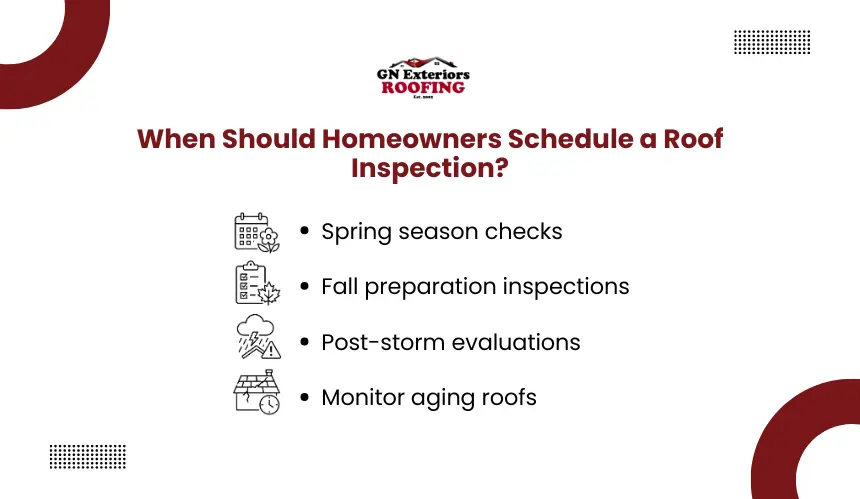
Roof inspections should be scheduled based on seasonal transitions, weather events, and the condition of the roofing system to ensure issues are identified at the right time.
The National Roofing Contractors Association recommends inspecting roofs at least twice a year, typically in spring and fall, and after severe storms.
Inspections are most effective during spring and fall when environmental conditions expose different types of stress. Spring inspections identify damage caused by winter factors such as ice buildup, moisture intrusion, and thermal contraction.
Fall inspections prepare the system for colder months by ensuring drainage paths are clear and protective layers are intact. This timing aligns inspections with peak stress cycles, improving detection accuracy.
Certain conditions demand immediate evaluation due to high failure risk. After severe weather events such as heavy storms or strong winds, inspections are necessary to identify displaced materials or compromised sealing points.
Interior signs like water stains, damp insulation, or sudden temperature inconsistencies indicate active roof-related issues that require urgent assessment. Delaying inspection in these cases increases the likelihood of structural spread.
Inspection frequency increases as the roof ages due to cumulative material fatigue. Newer roofs typically require standard periodic checks to confirm installation performance, while older systems demand closer monitoring as protective layers degrade.
Material type also influences inspection intervals, as asphalt shingles, metal panels, and tile systems respond differently to environmental stress. Aligning inspection frequency with both age and material characteristics ensures accurate maintenance planning and risk control.
Protecting a roof starts before damage becomes visible. GN Exteriors helps homeowners identify hidden wear, moisture risks, and storm-related roof issues before they turn into expensive repairs. For a safer, stronger, and longer-lasting roof, schedule a professional roof inspection and make roof care a proactive part of home maintenance.
Most homeowners should schedule a roof inspection at least twice a year, usually in spring and fall. Older roofs, storm-exposed properties, and homes with previous leak history may need more frequent checks. Post-storm inspections are especially useful because wind uplift, flashing movement, and shingle displacement are not always visible from the ground.
A roof can appear normal from the outside while moisture, weakened decking, or failing underlayment develops underneath. Hidden damage often starts around flashing, vents, valleys, and drainage points. Interior signs such as attic dampness, musty odors, or insulation discoloration may appear before visible roof surface damage becomes obvious.
A roof inspection identifies existing or developing problems, while roof maintenance corrects those issues before they worsen. Inspection focuses on assessment, documentation, and risk detection. Maintenance may include sealing vulnerable areas, replacing damaged shingles, clearing gutters, improving ventilation, or fixing minor flashing defects.
A roof inspection is highly useful before a real estate transaction because it clarifies the roof’s condition, repair needs, and remaining service life. Buyers can avoid unexpected expenses, while sellers can address issues before negotiation. It also helps support pricing decisions and reduces uncertainty during the closing process.
The most failure-prone areas are roof valleys, flashing zones, chimney edges, skylights, vent penetrations, gutters, and low-slope sections. These areas handle high water movement or rely on seals and transitions. Small defects in these zones often create the earliest pathways for leaks and moisture intrusion.
Storm damage can exist without an active leak. Wind can loosen shingles, lift flashing, or weaken fasteners without immediate water entry. Hail may bruise shingles and reduce their protective surface. A post-storm roof inspection confirms whether the system remained intact before the next rainfall exposes hidden vulnerabilities.