
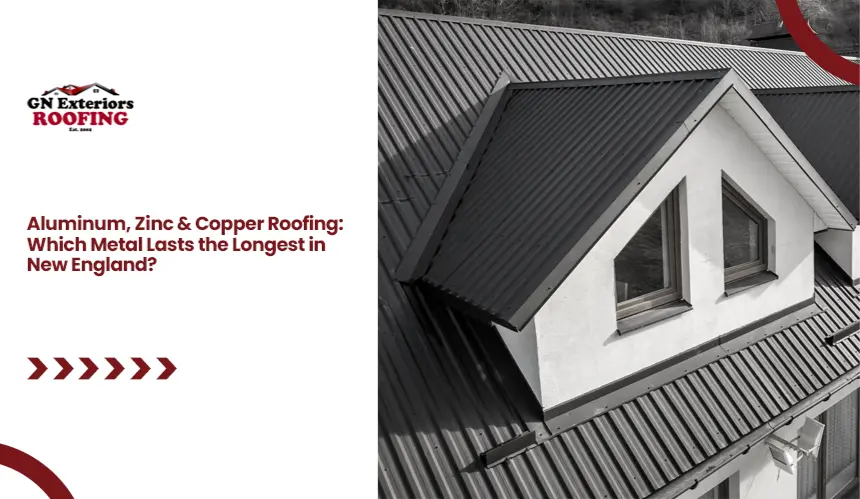
A Direct Answer: All three metals can perform well in the challenging New England climate, which experiences intense winters, frequent freeze cycles, and powerful coastal storms. For the longest lifespan, copper stands out because it naturally forms a protective patina and can remain structurally strong for generations, although it has the highest upfront cost. Zinc comes close in durability and offers self-healing surface properties that help maintain its integrity over time. Aluminum is the most economical option and still provides strong long-term performance, especially in coastal areas where its corrosion resistance becomes a major advantage. |
New England’s weather patterns often push roofing materials to their limits, which makes the composition and behavior of each metal an important factor in long-term performance.
This article explores those differences in a structured and clear way so readers can see which material aligns best with the region they live in, the long-term durability they expect, and the performance traits that matter most for New England homes.
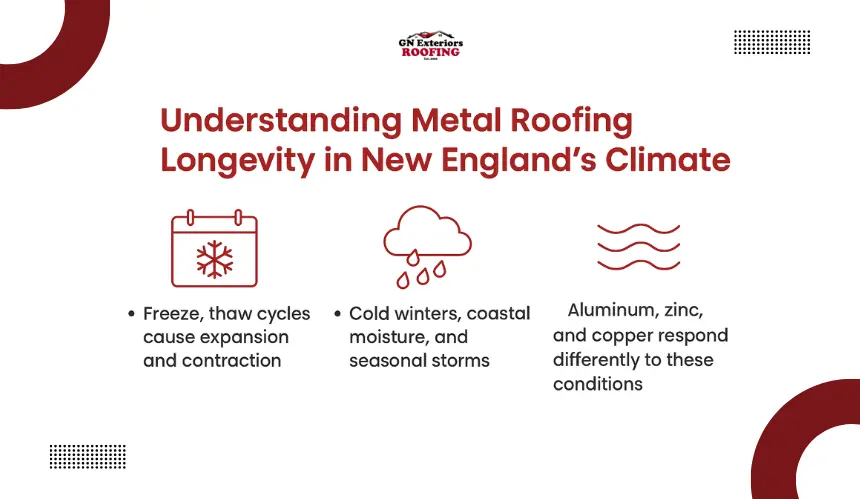
Did you know? Some parts of New England experience more than 60 freeze and thaw cycles per year. This rate is significantly higher than in many other regions in the United States These constant temperature swings create expansion and contraction forces that directly influence how long any metal roof can remain stable on a home. |
New England’s weather combines cold winters, coastal moisture, and seasonal storms that place continuous pressure on roofing materials. Understanding these environmental factors creates a clearer picture of how aluminum, zinc, and copper respond to long-term exposure.
Metal roofs in New England face stress from heavy snowfall, prolonged moisture, fluctuating temperatures, and strong coastal winds. Freeze and thaw cycles can open small gaps in roofing systems while salt-rich air accelerates oxidation in certain metals.
Inland regions see more weight-related stress from snow accumulation, while shoreline towns deal with higher corrosion risk. Each climate factor has a measurable impact on the durability of different roofing metals.
Every metal used in roofing has its own chemical properties that shape how well it resists these environmental pressures. Factors such as alloy strength, corrosion behavior, natural patina development, and thermal movement determine how long the material can perform without degradation.
Some metals form protective surface layers when exposed to moisture, while others depend on inherent resistance to chemical reactions. These differences explain why aluminum, zinc, and copper age at different rates across New England’s varied microclimates.
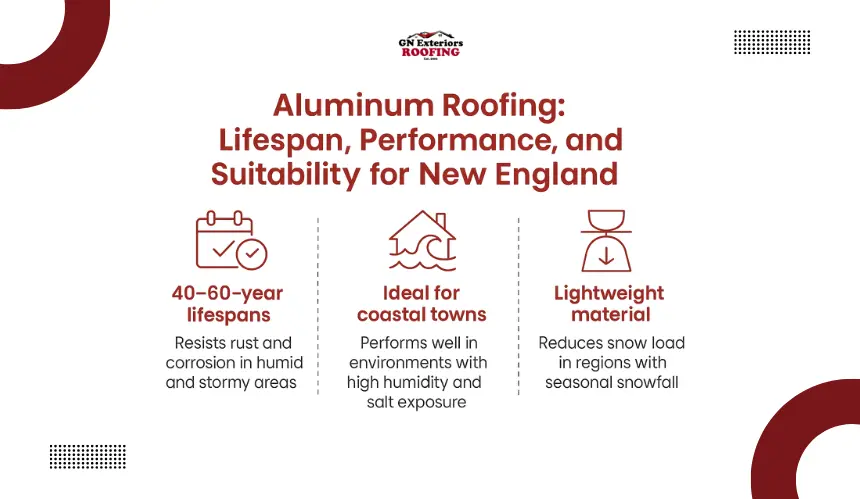
Aluminum roofing is a popular choice for New England homeowners who want long-lasting performance without the premium cost of higher-end metals. Its corrosion resistance and relatively light weight give it steady durability in regions with changing temperatures and consistent moisture exposure.
Did you know? Quincy, MA, and surrounding South Shore communities experience over 110 days of high humidity each year, creating conditions where corrosion-prone metals deteriorate faster. Aluminum’s natural resistance to rust makes it one of the few roofing metals that consistently maintains performance in these environments. |
Aluminum roofing typically lasts between 40 and 60 years in New England when installed by an expert metal roofing company and properly maintained. Its strong resistance to corrosion allows it to hold up well in areas with frequent humidity or seasonal storms.
The material does not rust when exposed to moisture, which helps preserve its structural performance over decades.
Aluminum is especially effective in towns where coastal influence or elevated moisture levels are common. Communities such as Quincy, MA, benefit from aluminum’s natural resistance to salt exposure and humidity.
These areas often experience damp conditions throughout the year, and aluminum’s corrosion-proof behavior helps preserve roof integrity despite these challenges.
Its lightweight profile also reduces structural stress during winter snow accumulation, which is valuable in regions with regular seasonal snowfall.
Although aluminum performs reliably in humid and coastal-influenced areas, it is softer than metals like zinc and copper. This means it may dent more easily during hail events or when struck by falling debris.
Aluminum also experiences more thermal movement compared to harder metals, which increases the importance of proper fastening and installation techniques. Homeowners should consider these factors when deciding if aluminum aligns with their long-term expectations.
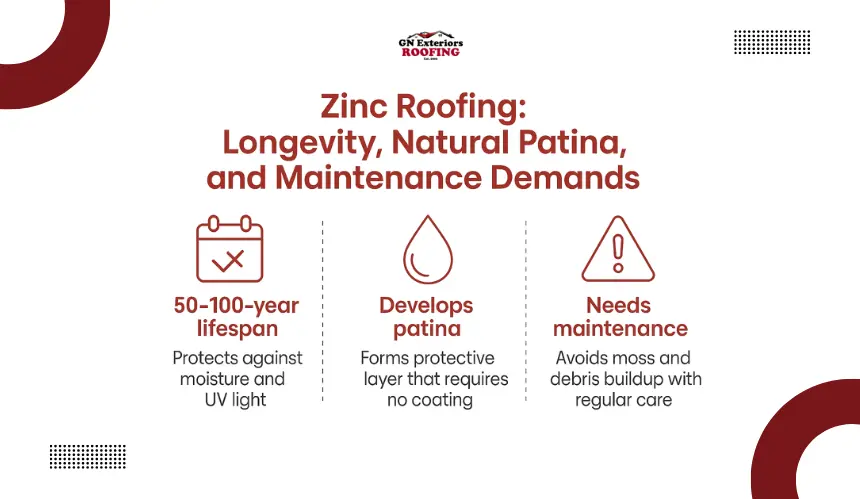
Zinc roofing stands out for homeowners who want a material that becomes stronger over time. Its natural patina helps protect the surface, which allows zinc to achieve lifespans far beyond many traditional roofing systems.
Important: New England sees an average of 40 to 50 inches of annual rainfall, and coastal influence increases moisture exposure even more. These steady moisture levels actually help zinc by supporting patina formation, which strengthens the metal and extends its lifespan well beyond most roofing materials. |
Zinc roofing can last anywhere from 70 to more than 100 years in New England because of its natural ability to form a protective surface layer. This patina develops gradually as the metal reacts with air and moisture, creating a barrier that reduces corrosion and slows down long-term wear.
New England’s cool temperatures and steady humidity help support this protective layer, allowing zinc to maintain its structural strength for several decades without significant degradation.
Zinc has strong resilience in areas with consistent rainfall, morning condensation, and seasonal humidity. Its self-healing surface property allows small scratches to repair themselves as the patina regenerates, which helps preserve the appearance and integrity of the roof.
Towns with frequent moisture exposure benefit from this behavior because zinc is less likely to experience premature surface breakdown or visible weathering.
This makes it a reliable choice for homeowners who want a metal that gradually strengthens under natural environmental conditions.
Zinc requires minimal upkeep compared to many other roofing materials, but it does rely on proper installation and adequate ventilation to achieve its full lifespan.
The metal performs best when paired with compatible underlayment systems that prevent moisture from collecting beneath the panels. Good airflow also helps the patina develop evenly, which improves long-term performance.
Homeowners should ensure any nearby coverings or overhangs do not create uneven moisture exposure, since balanced weathering supports a more consistent and durable protective layer.
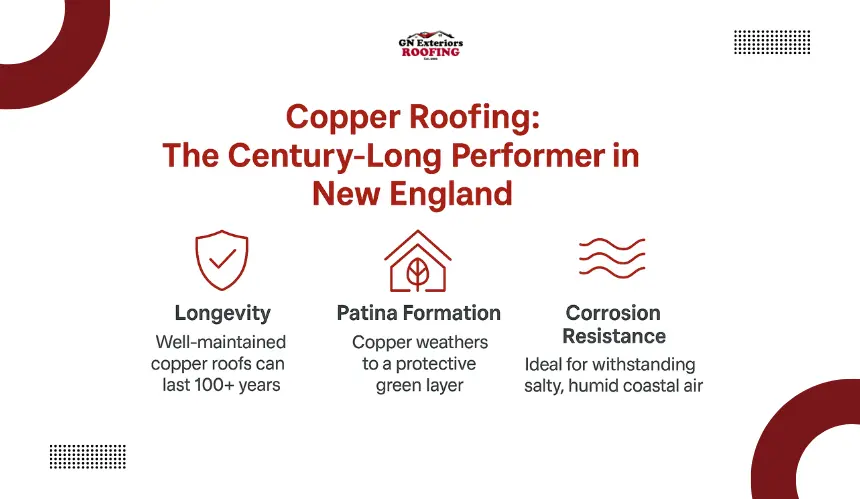
Copper roofing is often viewed as the premium choice for homeowners who want unmatched longevity. Its natural ability to strengthen through patina development makes it one of the most durable roofing materials used in the region.
Did you know? Historic buildings in New England, including structures in Boston and coastal towns, still have copper roofs more than 100 years old that remain fully functional today. This real-world longevity proves copper’s ability to withstand snow load, salt exposure, and seasonal temperature swings for generations. |
Copper roofing can last well over 100 years in New England, with many installations remaining structurally strong for more than a century. As the surface transforms into a green or brown patina, the metal gains an additional protective layer that shields it from moisture, temperature swings, and chemical reactions.
This slow and steady weathering process supports exceptional endurance, even in areas with heavy winter conditions and great seasonal changes.
Copper maintains its structure because of its strong resistance to corrosion and its ability to adapt to temperature variations. The metal expands and contracts at a stable rate, which reduces stress on seams and joints throughout the year.
Its natural rigidity allows it to handle snow loads, steady moisture, and long, cold seasons without weakening. With its patina acting as a weather barrier, copper remains durable in both inland environments and coastal regions affected by salt-laden air.
Copper roofing is particularly valuable on homes where long-term durability and architectural character matter. It performs well on historic properties, high-end residences, and homes located in areas with significant weather variation across the seasons.
Its century-long lifespan can reduce the need for future replacement, which provides strong lifetime value for homeowners who plan to remain in their properties for many years. Copper’s visual transformation also appeals to those who want a roof that becomes more distinctive with age.
Cost is a major deciding factor when comparing these three metals because each one represents a different balance of upfront investment and long-term value.
Aluminum is the most economical option and appeals to homeowners who want reliable durability without a high starting price. It offers a favorable cost-to-performance ratio for properties that need strong corrosion resistance.
Zinc falls into the mid to high price range due to its extended lifespan and its ability to develop a protective patina that reduces long-term maintenance. Its cost is influenced by the metal’s natural longevity, the skill level required for installation, and the need for compatible underlayment systems that support even weathering.
Copper is the highest-cost material because of its exceptional lifespan and its unique architectural character. The price reflects the metal’s proven durability, its strong resistance to environmental stress, and the craftsmanship required for proper installation.
While copper demands the largest initial investment, it often delivers the greatest lifetime value for homeowners planning to stay in their property for several decades.
This blog has compared the core performance traits, climate behavior, longevity, and cost considerations of aluminum, zinc, and copper roofing in New England. The table below provides a quick, clear overview of how these metals differ.
Metal Type | Typical Lifespan (Years) | Cost per Square Foot (Installed) | Climate Strengths | Potential Limitations |
Aluminum | 40 to 60 | $8 to $14 per sq. ft. | Strong corrosion resistance and reliable coastal performance. | Softer metal that may dent under impact. |
Zinc | 70 to 100+ | $12 to $20 per sq. ft. | Patina formation protects the surface and supports long-term durability. | Needs skilled installation and balanced ventilation. |
Copper | 100 to 150+ | $18 to $30 per sq. ft. | Exceptional weather resistance and long-term stability. | Highest upfront cost and noticeable color changes. |
Aluminum delivers dependable corrosion resistance and solid performance in moisture-heavy areas. Zinc offers extended longevity supported by its protective patina.
Copper provides an unmatched lifespan and strong environmental stability. The right choice depends on budget, property location, preferred appearance, and long-term durability expectations.
If you are planning a metal roof and want clear guidance on choosing the right material for your New England home, GN Exteriors can help you understand how aluminum, zinc, and copper will perform on your property. Their team provides detailed inspections, tailored recommendations, and careful installation that support long-term durability.
Metal roofing does not block Wi-Fi inside the home because wireless signals are generated and received indoors. Cell signals may weaken slightly in rare cases, but this is usually resolved by using modern routers, boosters, or mesh systems. Most New England homeowners report no noticeable change after installing a metal roof.
A properly installed metal roof is quiet during rain and snow. Underlayment, insulation, and secure fastening create a sound barrier that reduces noise levels. Many homeowners notice that modern metal roofs are actually quieter than older shingle roofs during storms.
Metal roofs do not increase the likelihood of a lightning strike. Lightning is drawn to height and conductive pathways in the ground, not the roof material. If a strike ever occurs, metal roofing is actually safer because it disperses energy and is noncombustible.
Metal roofs shed snow more efficiently than asphalt, but this is typically controlled with snow guards or engineered breaks. These devices help manage snow movement and protect walkways, entry points, and landscaping in snowy New England winters.
Yes. Metal roofing reflects more solar heat than traditional materials, which helps reduce indoor temperature rise during warm summer months. Some coatings also increase reflectivity for further energy savings. Homeowners often notice cooler attic spaces and more stable indoor comfort.