
Key Takeaways:
|
Vinyl siding is often labeled as low maintenance, but exposure to moisture, UV radiation, and environmental buildup gradually affects its performance and appearance. Without proper care, minor surface issues can develop into structural concerns such as warping, staining, or moisture intrusion behind panels.
Effective maintenance is not about frequent intervention but about applying the right cleaning methods, inspections, and preventive measures at the right intervals. This article explains what vinyl siding actually requires to remain durable, visually consistent, and structurally sound over time.
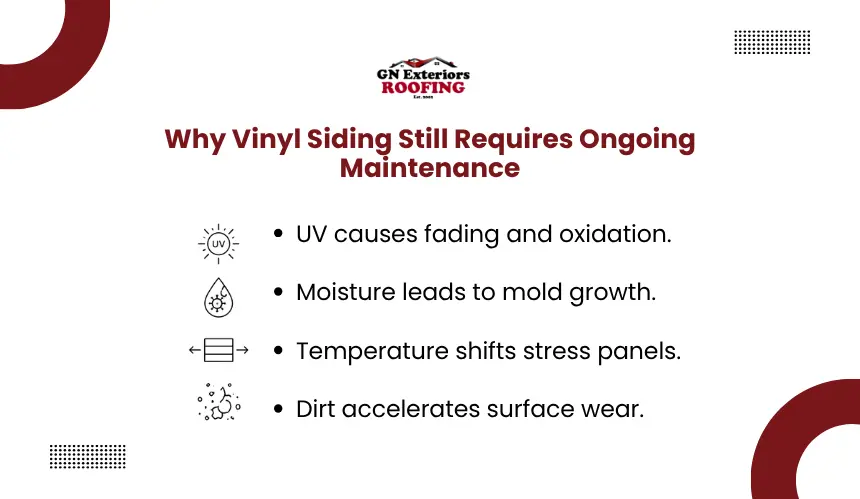
Vinyl siding is engineered for durability, but it is not immune to environmental stressors that gradually affect both its surface and structural performance. Continuous exposure to external elements alters material properties over time, making periodic maintenance essential for preserving functionality and appearance.
Ultraviolet radiation causes slow degradation of the polymer surface, leading to fading and oxidation that reduces color consistency and surface integrity. Moisture exposure, especially in humid or shaded areas, creates conditions for mold, mildew, and algae to develop, which can penetrate surface textures and stain panels if not addressed early.
Temperature fluctuations introduce expansion and contraction cycles that place stress on panel connections and fastening systems. Over time, this movement can loosen panels, create gaps at seams, and allow water intrusion behind the siding. Dirt, airborne pollutants, and organic debris further accelerate surface wear by trapping moisture and promoting biological growth.
Neglecting these factors does not result in immediate failure, but it compounds gradually. Surface discoloration, hidden moisture retention, and minor structural shifts can evolve into larger issues that compromise insulation performance and increase the risk of internal wall damage.
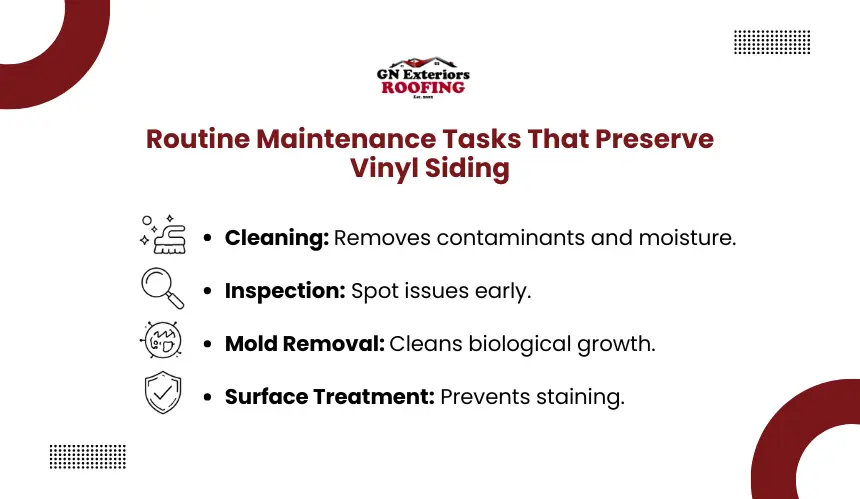
Consistent maintenance focuses on controlled cleaning, periodic inspection, and targeted removal of contaminants before they embed into the material. These actions are not complex but must be executed with the right methods to avoid damaging the siding while preserving its protective function.
Surface cleaning removes contaminants that retain moisture and accelerate material wear. Soft washing using low-pressure water combined with siding-safe detergents prevents surface abrasion and avoids forcing water behind panels. Manual cleaning with a soft brush is effective for localized buildup where pressure systems are not required.
Cleaning frequency depends on exposure conditions. Properties in high humidity zones, shaded areas, or near vegetation typically require cleaning once or twice per year, while lower-exposure environments may only need annual maintenance. Skipping cleaning cycles allows organic growth and pollutants to bond with the surface, making removal more difficult and increasing the risk of permanent staining.
Visual inspections identify early-stage issues before they develop into structural problems. Key areas include panel alignment, seam integrity, and fastening points where movement or loosening may occur due to thermal expansion. Small cracks, minor warping, or gaps around joints often indicate underlying stress that requires correction.
Inspection should also include areas around windows, doors, and corners where water intrusion is more likely. Detecting these issues early prevents moisture from reaching the underlying structure, which can lead to insulation damage or internal wall deterioration.
Organic growth forms when moisture remains trapped on the siding surface, particularly in shaded or poorly ventilated sections. Mold and mildew not only affect appearance but also indicate conditions that can lead to deeper material impact if ignored.
Removal requires targeted cleaning solutions designed to break down biological growth without degrading the vinyl surface. Applying the solution and allowing proper dwell time ensures effective penetration before rinsing. Preventing regrowth involves reducing moisture retention by trimming nearby vegetation, improving airflow, and maintaining regular cleaning intervals.
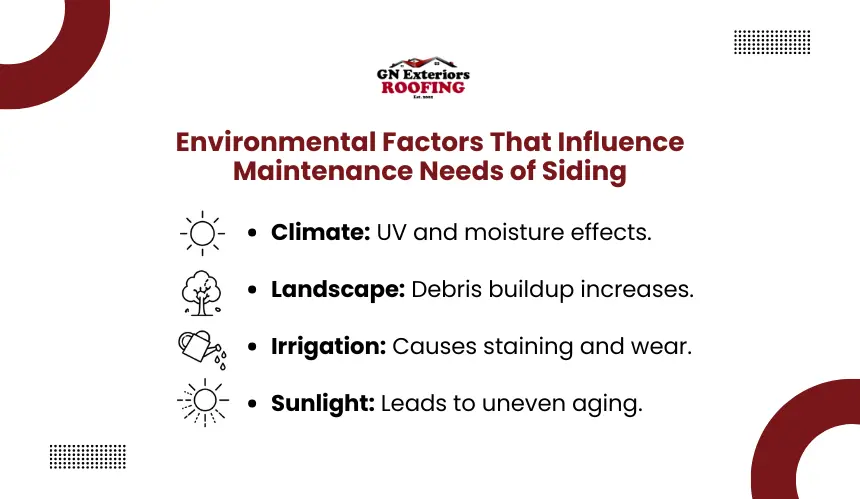
Maintenance requirements are not fixed; they vary based on how the property interacts with its surrounding environment. External conditions determine the rate of surface contamination, moisture retention, and material stress, which directly impacts how frequently cleaning, inspection, and corrective actions are needed.
Regions with high humidity or frequent rainfall create persistent moisture exposure, which accelerates mold and algae formation on siding surfaces. In contrast, dry and high-temperature climates increase the rate of UV-induced fading and surface oxidation.
Storm activity introduces additional risks through wind-driven debris that can scratch or loosen panels, while freeze-thaw cycles in colder climates expand trapped moisture, placing stress on joints and increasing the likelihood of minor separations. These conditions require more frequent inspections and targeted maintenance after seasonal changes.
In the South Shore and Greater Boston area, vinyl siding faces a mix of coastal moisture, wind exposure, winter freeze-thaw cycles, and seasonal pollen buildup. These conditions increase the likelihood of mildew growth, surface residue, and movement stress at panel joints as temperatures shift throughout the year.
In communities across this part of Massachusetts, maintenance usually needs to account for both moisture-related staining and cold-weather expansion and contraction rather than treating siding care as a once-a-year task.
Vegetation density around a property directly affects how much organic debris accumulates on siding. Trees release pollen, sap, and leaves that adhere to surfaces and trap moisture, creating ideal conditions for biological growth. Overhanging branches also limit sunlight exposure, slowing natural drying and increasing mildew risk.
Irrigation systems positioned too close to exterior walls contribute to repeated water exposure, particularly at lower siding levels. This continuous moisture contact promotes staining and can accelerate wear if not managed through proper system alignment and drainage control.
Direct and prolonged sunlight leads to gradual breakdown of the vinyl surface, causing color fading and reducing material flexibility over time. This process, known as UV degradation, makes siding more susceptible to cracking under mechanical stress.
Uneven sunlight exposure across different sides of a structure can also result in inconsistent aging, where certain areas deteriorate faster than others. Managing this impact involves periodic assessment of sun-facing sections and adjusting maintenance frequency to address accelerated wear patterns.
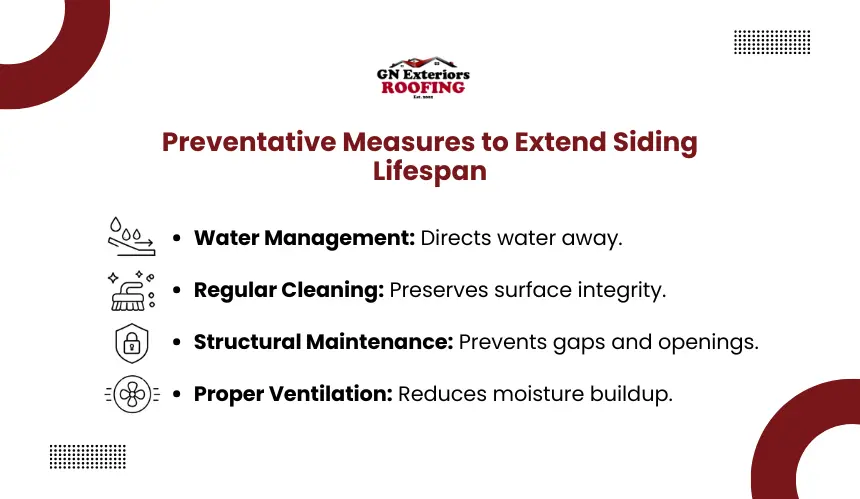
Preventative maintenance reduces the frequency of corrective work by controlling the conditions that lead to damage. Instead of reacting to visible issues, these measures manage water flow, surface exposure, and structural stability to keep siding functioning within its designed limits.
Water is the primary driver behind most siding-related issues, particularly when it is not properly directed away from the structure. Functional gutters and correctly positioned downspouts prevent water from cascading over siding surfaces or pooling near the base, where prolonged exposure can lead to staining and moisture infiltration.
Improper drainage increases the risk of water entering behind panels, especially at seams and lower sections. Over time, this can affect the substrate and insulation, creating hidden damage that is not immediately visible from the exterior. Managing water flow reduces this risk at its source.
The method used to clean vinyl siding directly influences its lifespan. High-pressure washing can strip protective surface layers, force water behind panels, and weaken structural connections. Controlled low-pressure cleaning preserves surface integrity while effectively removing contaminants.
Using siding-compatible cleaning agents ensures that chemical reactions do not degrade the material. Incorrect solutions can cause discoloration or surface breakdown, especially when applied repeatedly over time. Proper technique prevents cumulative damage during routine maintenance.
Vinyl siding relies on surrounding components such as seals, trim, and ventilation systems to maintain overall performance. Gaps around windows, doors, and utility penetrations allow water and air to bypass the siding system, increasing the risk of internal moisture exposure.
Sealing these transition points maintains a continuous barrier against external elements. At the same time, adequate ventilation behind the siding helps regulate moisture levels and reduces condensation buildup. Maintaining these supporting elements ensures that the siding system performs as intended under varying environmental conditions.
Routine maintenance preserves siding performance, but it does not reverse material fatigue, structural deformation, or hidden moisture damage. Recognizing the transition point between maintenance and repair is critical to prevent escalation into more costly structural issues.
Visible distortion such as warping, buckling, or panels pulling away from the wall indicates that the siding system is no longer maintaining proper alignment. These issues often result from repeated expansion cycles, improper fastening, or underlying substrate movement.
Loose or detached panels expose the building envelope to direct moisture intrusion. If left unaddressed, water can penetrate behind the siding and affect insulation layers or wall sheathing, increasing the risk of internal deterioration.
Surface staining that remains after proper cleaning typically signals deeper material changes rather than superficial buildup. Oxidation, long-term UV exposure, and embedded contaminants can alter the surface at a molecular level, making restoration through cleaning ineffective.
In such cases, continued maintenance will not restore appearance or performance. Replacement of affected sections becomes the only viable solution to maintain visual consistency and material integrity.
Compromised siding impacts thermal performance by allowing uncontrolled air movement through gaps, seams, or damaged sections. This reduces the effectiveness of insulation and creates temperature fluctuations within the structure.
Air leakage increases heating and cooling demand, leading to higher energy consumption. When siding no longer functions as a consistent exterior barrier, repair or replacement becomes necessary to restore energy efficiency and maintain controlled indoor conditions.
Protect your home’s exterior with expert care from GN Exteriors. From routine vinyl siding inspections to professional cleaning and preventative solutions, our team helps maintain durability, prevent damage, and keep your siding looking its best year-round. Schedule a consultation today to preserve your home’s value and curb appeal.
A hose removes loose dust, but it does not break down algae film, oxidation residue, or embedded grime along seams and textured surfaces. Professional cleaning is usually more appropriate when staining persists, shaded elevations stay damp, or buildup returns quickly after routine washing, indicating conditions that require deeper surface treatment.
Improper pressure washing can shorten siding life by forcing water behind panels, loosening edges, and damaging the surface finish. The risk is highest near joints, trim, soffits, and older fastening points. Low-pressure exterior cleaning methods are generally safer because they remove contamination without disrupting panel stability or moisture management.
Rapid re-soiling usually points to a site condition rather than a cleaning failure. Overhanging trees, poor drainage, sprinkler overspray, airborne debris, and limited sun exposure keep surfaces damp and allow mildew, pollen, and environmental residue to accumulate faster. The solution often involves correcting moisture sources, not just repeating the wash.
That depends on what caused the color loss. Surface residue and biological staining may respond to proper cleaning, but UV degradation and oxidation change the siding material itself. When fading appears uneven, chalky, or persistent after treatment, the issue usually shifts from maintenance into partial replacement or broader exterior renovation planning.
Post-storm inspection should focus on panel movement, corner looseness, hidden cracks, displaced trim, and impact points from branches or wind-driven debris. Siding can remain visually intact while developing small openings that admit water. Checking drainage paths and lower wall sections is also critical because splashback can create delayed moisture problems.
Older wall systems often make siding maintenance more consequential because minor gaps can expose less efficient insulation and increase air leakage faster. In these cases, routine inspections around penetrations, seams, and transition points matter more. Exterior panel condition directly affects indoor comfort, moisture control, and heating or cooling load over time.
Dark streaks are not always biological growth. They can also come from oxidation runoff, asphalt residue, airborne pollution, or dirt tracking below trim and gutters. Correct identification matters because treatment methods differ. Cleaning the wrong way may leave the staining source unresolved, especially when the real issue is runoff or drainage concentration.