
Key Takeaways
|
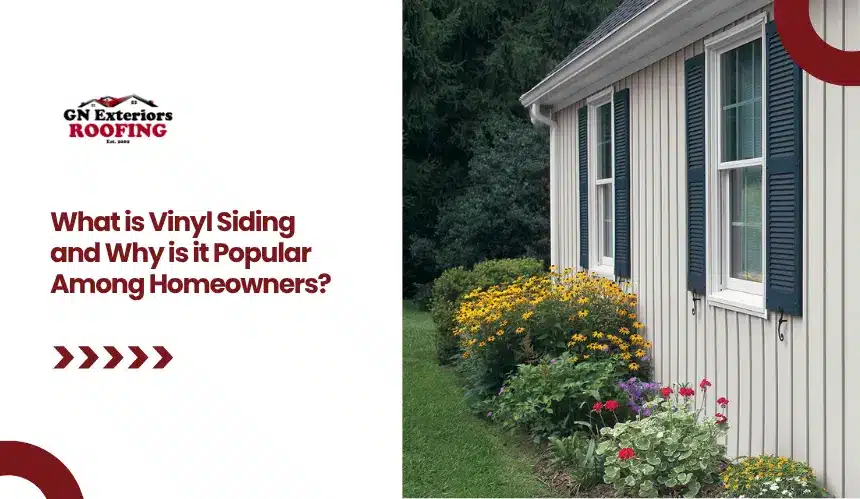
Choosing the right exterior for a home often comes down to balancing durability, cost, and appearance. Many homeowners exploring siding options quickly come across vinyl siding because it is widely used across modern residential construction and renovation projects.
This article breaks down what vinyl siding actually is and explains the practical reasons behind its growing popularity, helping readers understand whether it aligns with their home improvement goals.
Before exploring why it is widely used, it is important to understand what vinyl siding actually represents as a building material and how it functions on a home’s exterior.
Vinyl siding is primarily made from polyvinyl chloride, commonly known as PVC, combined with stabilizers and color additives that enhance strength and longevity. The material is engineered into durable siding panels through an extrusion process, where it is shaped into consistent profiles designed for residential exterior walls.
This manufacturing approach ensures uniform thickness, color consistency, and resistance to common environmental stressors.
Vinyl siding acts as an outer protective shell that covers a home’s structural walls. It helps shield the building envelope from rain, wind, and prolonged sun exposure while allowing controlled airflow behind the panels to prevent moisture buildup. This layered system supports better wall protection without directly bearing structural loads, making it an effective exterior wall covering.
Vinyl siding is commonly installed on single-family homes, townhouses, and suburban developments, especially in areas where homeowners prioritize low-maintenance exterior materials.
It is used both in new construction projects and as a replacement siding option during renovations, offering a practical solution for updating older exteriors without extensive structural modifications.
After understanding what vinyl siding is, the next step is to look at the characteristics that define how it is built and how it performs as a material. These features are inherent to the product itself and explain why it behaves differently from other exterior cladding options.
Vinyl siding is designed as a modular system where individual panels lock into each other through interlocking edges. This structure creates a continuous exterior surface that stays aligned over time while allowing slight movement during temperature changes. The panel-based design also simplifies installation and ensures consistent coverage across exterior walls.
Modern vinyl siding comes in a wide range of factory-finished colors and textures, including wood grain patterns, smooth finishes, and matte surfaces. These finishes are integrated during manufacturing rather than applied later, which helps maintain color consistency and reduces the risk of uneven appearance over time.
The material composition of vinyl siding makes it resistant to common environmental factors such as moisture, UV rays, and pests. It does not rot, corrode, or attract insects like some traditional materials, and its surface is designed to handle expansion and contraction caused by temperature changes without cracking easily.
Vinyl siding has a non-porous surface, meaning it does not absorb water like wood or other organic materials. This property helps prevent issues such as swelling, mold growth, and internal moisture damage, making it a reliable option for maintaining exterior wall integrity over time.
Once the structure and material properties are clear, the next question most homeowners ask is practical: why is vinyl siding consistently chosen over other exterior options? The answer lies in how it performs across cost, upkeep, and long-term usability in real residential scenarios.
Vinyl siding is considered a cost-efficient exterior cladding because it eliminates multiple expense layers tied to materials like wood or fiber cement.
There is no need for periodic painting, sealing, or specialized coatings, which significantly reduces lifecycle costs. In most residential projects, both material pricing and installation labor remain lower due to its lightweight panel system and faster installation timelines.
Important: Vinyl siding replacement recouped about 95% of its cost at resale in the 2023 Cost vs. Value report by Zonda Media, compared with 89% for fiber-cement siding. This highlights its strong cost-to-value performance, making it a practical consideration for homeowners evaluating exterior upgrades. |
One of the strongest decision drivers is the minimal upkeep requirement. Vinyl siding does not require repainting, sanding, or chemical treatments to maintain its appearance.
Routine cleaning with water is typically enough to remove dirt or surface buildup. This makes it a practical choice for homeowners who want a consistent exterior look without ongoing maintenance commitments.
Vinyl siding is engineered to handle temperature variation, moisture exposure, and prolonged sunlight without rapid degradation. It does not absorb water, which reduces the risk of swelling or structural weakening.
In regions with seasonal shifts, properly installed panels expand and contract without compromising the overall exterior system, maintaining performance stability over time.
From a design perspective, vinyl siding offers a wide range of color profiles, panel styles, and texture variations. Homeowners can choose between traditional lap siding, vertical panels, or textured finishes that replicate wood grain without the associated maintenance. This flexibility allows the material to adapt to different architectural styles without requiring custom fabrication.
The interlocking panel system allows contractors to complete siding installations faster compared to heavier or multi-layered materials. Reduced installation time lowers labor costs and minimizes disruption to daily living. This efficiency is particularly valuable in renovation projects where timelines and accessibility play a critical role.
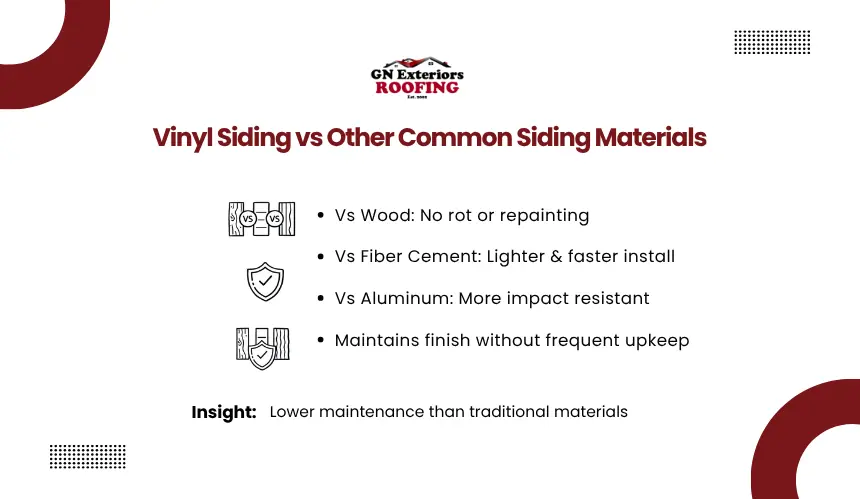
After understanding why homeowners choose vinyl siding, the next step is evaluating how it compares directly with other widely used exterior materials. This comparison helps clarify where vinyl stands in real-world decision-making without repeating its core benefits.
Wood siding is often selected for its natural appearance, but it comes with ongoing structural responsibilities. Unlike vinyl siding, wood is prone to moisture absorption, which can lead to rot, warping, and insect damage if not properly maintained.
It also requires routine painting or sealing to preserve its surface. In contrast, vinyl siding remains dimensionally stable and does not rely on surface treatments to maintain performance.
Fiber cement siding is known for its strength and fire resistance, but it is significantly heavier and more labor-intensive to install. This increases both installation time and labor costs. It also requires periodic repainting to maintain its finish.
Vinyl siding, on the other hand, offers a lighter panel system that simplifies handling and reduces installation complexity, making it a more practical option for projects with tighter timelines or budgets.
Aluminum siding was once a common exterior material, particularly in older homes. While it is resistant to rust, it is more susceptible to denting and surface damage from impact. Over time, aluminum may also require repainting to maintain its appearance.
Vinyl siding provides better resistance to minor impacts and retains its factory finish longer, reducing the need for cosmetic upkeep in typical residential conditions.
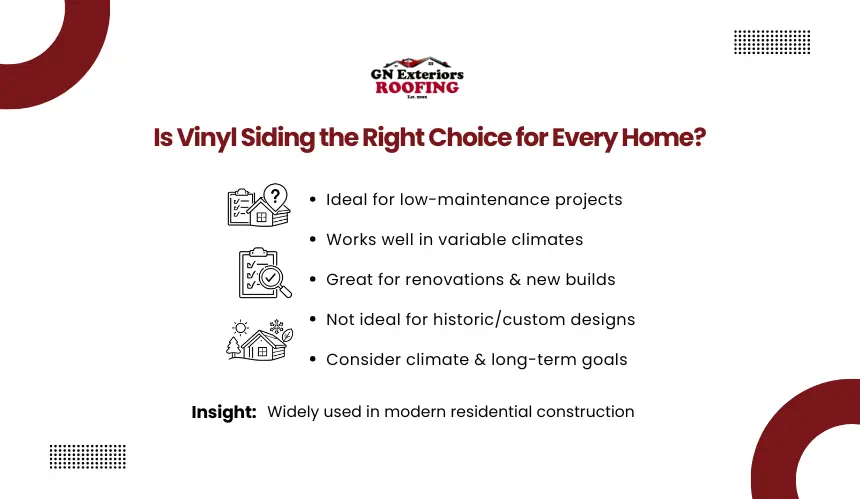
Even though vinyl siding is widely adopted, it is not automatically the best fit for every property. Homeowners often need to evaluate specific project conditions, architectural requirements, and long-term goals before making a final decision.
Vinyl siding works particularly well in projects where cost control, installation speed, and low maintenance are top priorities. It is commonly selected for large-scale residential developments, rental properties, and exterior renovations where homeowners want a clean, updated look without committing to ongoing upkeep.
In areas like Greater Boston and the South Shore, where seasonal weather shifts bring humidity, coastal moisture, and temperature swings, homeowners often choose Vinyl siding to handle exposure without requiring constant maintenance.
In certain cases, other materials may align better with project requirements. For example, historic homes or properties with strict architectural guidelines may require materials that match original construction styles, such as wood or fiber cement.
High-end custom homes may also prioritize premium finishes or specific textures that go beyond standard vinyl siding profiles, especially in neighborhoods where architectural consistency plays a major role in property value.
Did you know? In the Northeast, 93% of attached homes completed in 2024 used vinyl siding as the primary exterior wall material, according to the U.S. Census Bureau. This is especially relevant for a Greater Boston and South Shore audience because it ties vinyl siding directly to the broader regional housing market rather than relying on generic national claims. |
Before choosing vinyl siding, homeowners typically assess factors such as climate conditions, insulation needs, and overall design compatibility. In coastal-influenced regions like the South Shore, salt air and moisture exposure can influence installation methods and material selection.
Additionally, aligning siding choice with long-term plans, such as resale value or future renovations, helps ensure the decision supports both functional and aesthetic goals.
Upgrading your home’s exterior should feel like a smart, lasting decision, not a risk. GN Exteriors helps homeowners choose and install siding solutions that balance durability, design, and long-term value. If vinyl siding feels like the right direction, their team can guide the process with clarity and precision from start to finish.
Vinyl siding itself is not a primary insulator, but when paired with insulated backing or proper wall sheathing, it can contribute to improved thermal efficiency. The overall insulation performance depends more on the wall assembly behind the siding rather than the siding alone.
In many cases, vinyl siding can be installed over existing surfaces such as wood or aluminum, provided the underlying structure is stable and level. Proper preparation, including moisture barrier installation and surface inspection, is essential to ensure long-term performance.
Modern vinyl siding systems are designed with wind resistance ratings and secure locking mechanisms. When installed correctly according to manufacturer specifications, they can withstand significant wind loads, though extreme conditions may still require inspection or reinforcement.
Vinyl siding production involves synthetic materials, but its long lifespan and minimal maintenance requirements can reduce resource consumption over time. Some manufacturers also incorporate recyclable content, contributing to more sustainable building practices.
Homeowners should evaluate licensing, installation experience, familiarity with local building codes, and previous project quality. Proper installation plays a critical role in performance, so choosing a contractor with proven expertise is often more important than focusing only on material selection.