
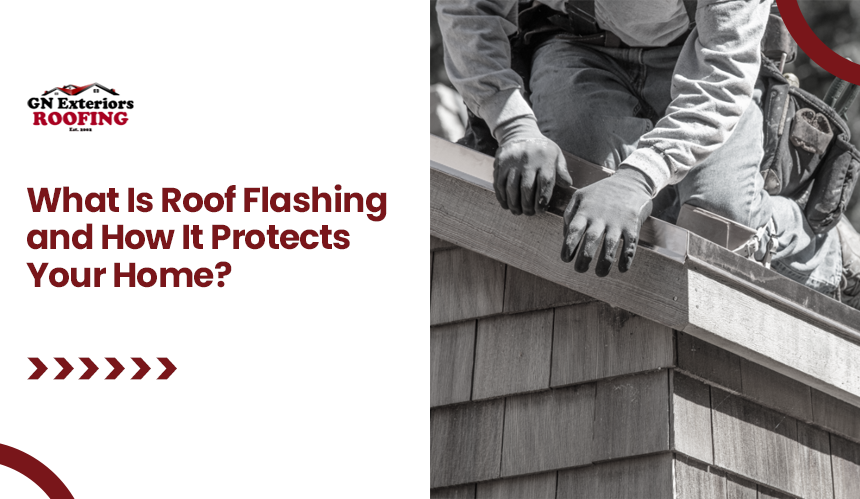
Roof flashing is the thin, weatherproof material installed at vulnerable points on your roof to prevent water from seeping into your home. It’s not decorative. It’s not optional. It’s what protects your roof from leaks where shingles alone can’t.
Think about areas like chimneys, valleys, skylights, and vents; anywhere two surfaces meet or something penetrates the roof. These are the first places water tries to sneak in during a storm. That’s where flashing steps in, redirecting water safely off the roof and into the gutter system.
Without proper flashing, even a brand-new roof can fail. Water can bypass your shingles, soak into the roof decking, ruin insulation, and cause mold growth in your attic or ceilings.
In this article, we’ll break down exactly what roof flashing is, where it’s used, the types and materials available, and why it’s one of the most critical, yet often overlooked components of a watertight roofing system.

Flashing is a thin, waterproof material, usually made of metal, that is installed at critical points on your roof to stop water from entering your home. It protects the areas where shingles alone are not enough, such as joints, corners, and roof openings.
In simple terms, flashing is the roof’s first line of defense Against leaks. It prevents water from sneaking in where different parts of the roof meet.
It directs rainwater away from seams and into the drainage system, helping prevent wood rot, mold growth, ceiling damage, and long-term structural issues. Without it, even the best roofing system is vulnerable.
Roof flashing matters because water does not need a wide opening to cause serious damage. It only takes one small gap around a chimney, vent, or valley for rainwater to start soaking into your home. Flashing is what prevents that from happening.
Without flashing, water can slip under the shingles and saturate the roof decking. From there, it can drip into the attic, ruin insulation, stain your ceilings, and even compromise the framing of your house. Over time, this leads to mold growth, rotted wood, peeling paint, and in some cases, foundation damage due to redirected water infiltration.
Flashing is not just a finishing detail. It is an essential layer in the roofing system that controls water flow and protects structural integrity. Shingles are designed to shed water, but only on smooth, uninterrupted surfaces. As soon as the roof has a slope change or something cuts through it, like a pipe or skylight, flashing becomes the critical defense.
A roof without properly installed flashing is guaranteed to fail over time. That failure might not show up immediately, but when it does, it usually comes with costly repairs
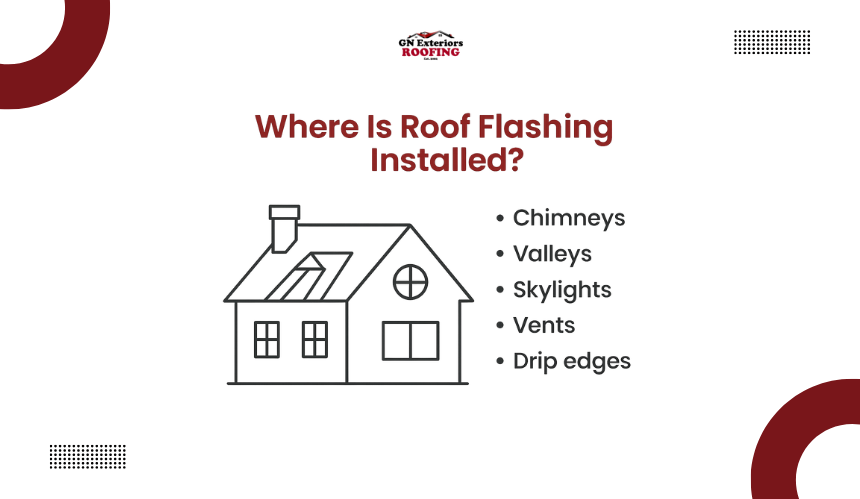
Roof flashing is installed anywhere your roof is vulnerable to water intrusion, specifically, where two surfaces intersect or where roofing materials are interrupted by a structural element. These are the places water naturally tries to enter, and flashing is the only thing standing in its way.
Here’s exactly where flashing is required:
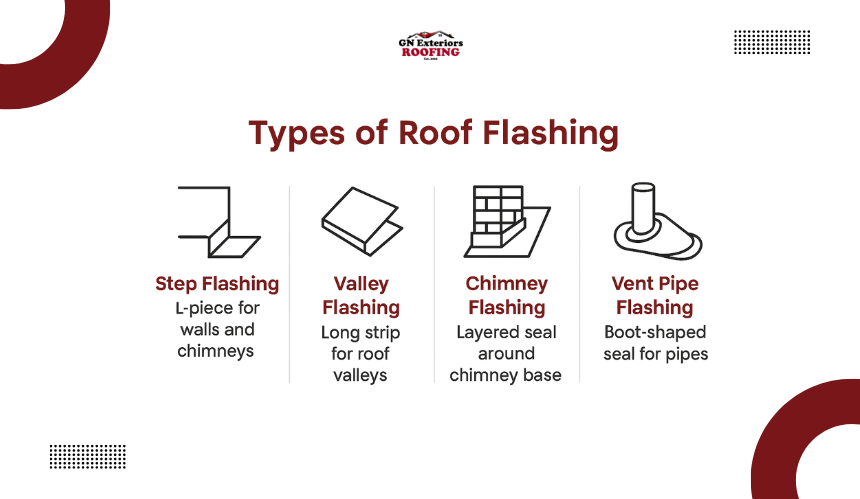
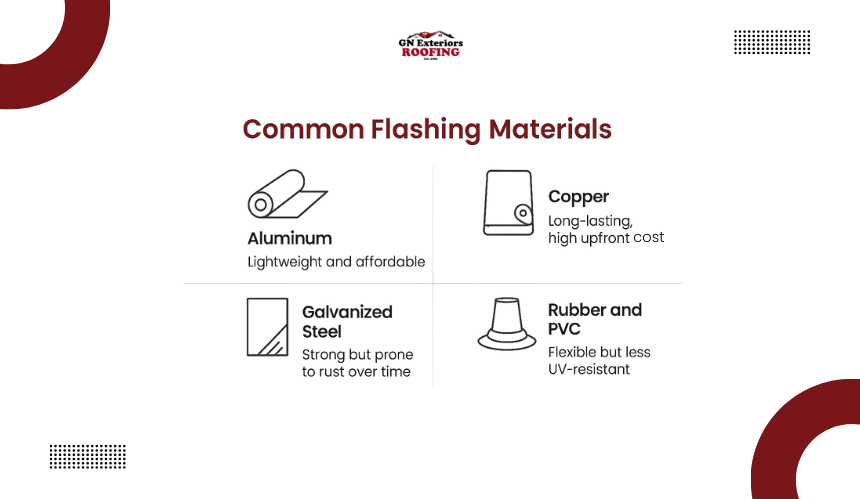
The climate in areas like Quincy, Milton, Weymouth, and Randolph, MA features frequent rain, snow, and temperature fluctuations that put extra stress on roof flashing.
Flashing materials and installation must resist moisture, freeze-thaw cycles, and wind-driven rain to effectively prevent leaks. Five main types of flashing materials are described below:
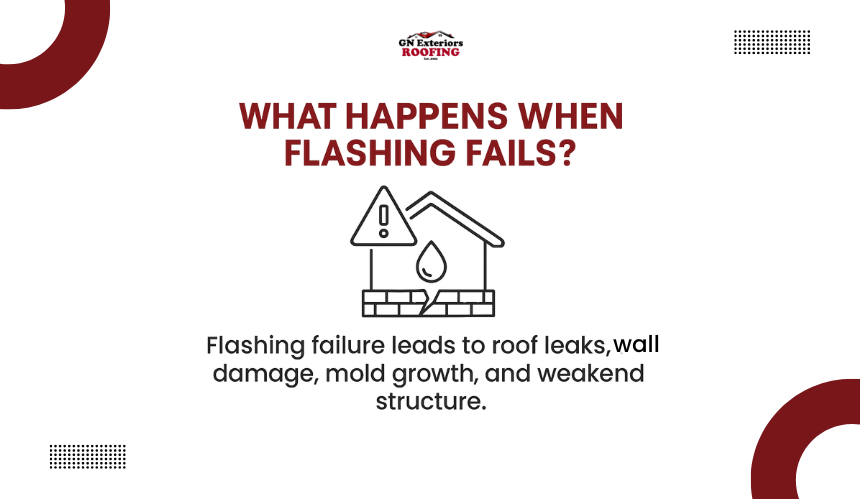
When flashing fails, water enters places it should never reach. It often begins with a small gap around a vent pipe or a crack in old chimney flashing, but the damage spreads quickly and quietly.
Water that slips beneath the roof surface can soak the wooden decking and cause it to rot from the inside. Once the decking becomes weak, shingles lose their grip, and the leak expands.
Moisture may reach the attic, saturate the insulation, and create ideal conditions for mold to grow. Over time, structural framing can warp, ceiling drywall can stain or collapse, and wiring may be exposed to moisture.
The earliest signs are often subtle. You might notice ceiling stains, musty odors, or dripping during heavy rain. In more serious cases, flashing failure leads to sagging roof sections, bubbling paint, or visible mold along interior walls.

Minor flashing issues can often be repaired if they are addressed early. Small cracks, loose edges, or deteriorating sealant around vent pipes or step flashing may only need resealing or re-fastening. Roofing cement or specialized adhesives can be used to create a waterproof seal and restore proper function.
However, these types of repairs are only effective when the flashing itself is still structurally sound. If the metal is warped, thinned out, or beginning to rust, a repair might only delay a larger problem.
If the flashing is corroded, bent, missing, or improperly installed, it must be replaced. Attempting to patch or reuse flashing in poor condition increases the risk of roof leaks. In many cases, especially during roof replacement, all old flashing is removed and replaced with new material to ensure compatibility and performance.
Reusing old flashing is rarely recommended, as it may no longer fit the new roofline, and the sealant bonds are already compromised.

Flashing repair and replacement may look simple, but improper installation can result in hidden water intrusion. Professional roofers understand how to align flashing with the roof’s slope, how to integrate it with shingles or siding, and how to seal it to prevent leaks from developing over time.
The best way to avoid costly roof damage is to catch flashing issues early, whether after a storm or as part of routine yearly maintenance. That is why homeowners trust GN Exteriors for thorough inspections, precise flashing repairs, and full replacements when needed.
Most quality metal flashing lasts 20 to 30 years. Copper can exceed 50 years. Over time, exposure to weather, corrosion, or physical stress degrades seals and joints, signaling replacement is needed.
DIY repair may work for very minor issues, like resealing small cracks or resetting loose flashing. But full installation or complex repairs around chimney bases, skylights, or valleys require professional skills. Improper placement can cause more damage and void warranties.
Watch for water stains on ceilings, peeling paint near the roof eaves, visible rust or cracks in the flashing, or dripping during storms. Odor, mold, or soft spots in attic flooring are also indicators.
Yes. standing water, leaves, moss, or debris accelerate corrosion and degrade seals. Use a stiff brush with mild soap and water to clean flashing twice a year. Clear valleys and edges so water drains freely.
Not always. During roof replacement, your contractor will inspect existing flashing. If it is rusted, warped, or poorly bonded, it will be replaced. If still in good shape, it may pass inspection, but expect resealing.