
Choosing the right siding for your home is more than a design decision, it directly impacts your property’s energy efficiency, weather resistance, maintenance demands, and overall value.
Vinyl siding continues to be a favorite for its affordability and ease of maintenance. For homeowners who love the rustic charm of cedar without the ongoing upkeep, Cedar Impression siding offers a long-lasting, low-maintenance alternative.
In this guide, we’ll break down the most widely used siding types, including their construction, benefits, and ideal use cases. You will find all the important information you need to make an informed and confident siding choice.
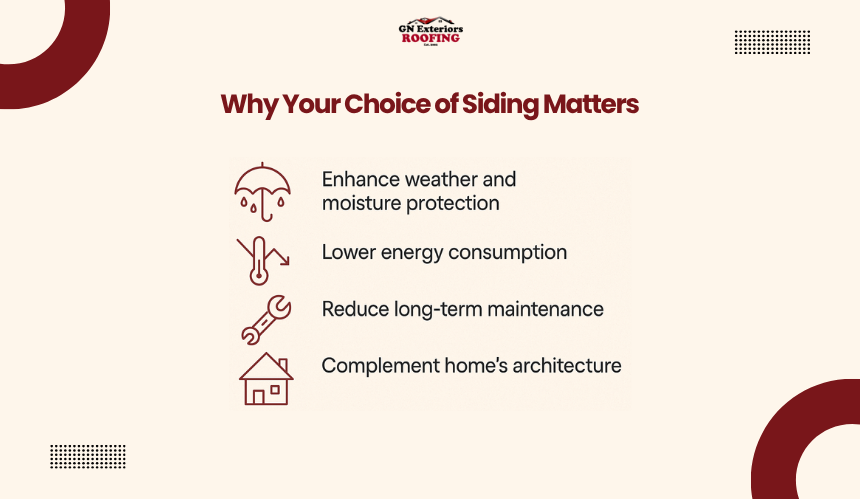
Siding is your home’s first line of defense against moisture, wind, sun exposure, and energy loss. The material you choose affects not only the durability and thermal efficiency of your home but also its visual appeal and maintenance demands over time.
In short, the right siding can:
Failing to consider these factors can lead to premature wear, higher energy bills, and costly repairs. Making informed siding selection essential for both performance and peace of mind.
From fiber cement to polymer shakes and traditional brick veneer, today’s siding market offers homeowners a wide spectrum of materials, each with distinct performance traits, maintenance needs, and design benefits.
Below is a detailed breakdown of the most widely used siding options, including their key features, ideal use cases, and critical considerations.
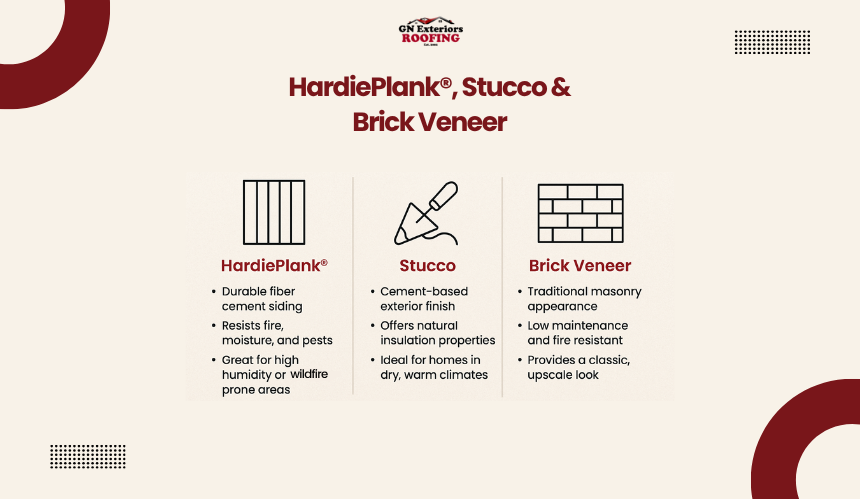
HardiePlank® siding, a leading brand of fiber cement, is engineered for strength, fire resistance, and weather durability. It’s composed of cement, sand, and cellulose fibers, offering the texture of natural wood with industrial-grade performance.
Benefits:
Disadvantages:
Best For: High-moisture areas, wildfire zones, or homes requiring a long-lasting wood-look exterior.
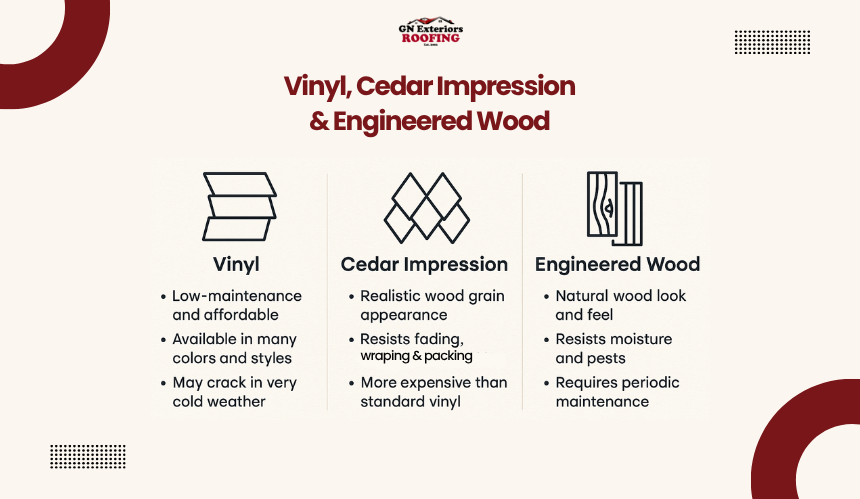
Vinyl siding is a synthetic option made from durable PVC, prized for its affordability and ease of maintenance. It remains the most commonly installed residential siding in the U.S. Most modern vinyl siding options now include UV inhibitors and optional foam backings, which help improve both color retention and energy efficiency.
Benefits:
Disadvantages:
Best For: Cost-conscious homeowners or those seeking a fast, no-fuss siding solution.
Cedar Impression siding mimics the beauty of real cedar shakes using a molded polymer design. It’s molded from real cedar shingles, giving it a deeply authentic grain pattern and enhanced curb appeal without the high-maintenance drawbacks of organic wood.
Benefits:
Disadvantages:
Best For: Traditional, Cape Cod, and craftsman-style homes that benefit from wood-like charm.
Engineered wood siding is made from wood strands or fibers bonded with resin under pressure. It delivers the natural look of wood with improved resistance to moisture and pests. Unlike traditional wood, it’s treated with waxes and binders to enhance durability and prevent fungal decay.
Benefits:
Disadvantages:
Best For: Homeowners seeking the warmth of real wood at a lower cost and with better durability.
Stucco siding is a cement-based finish applied over a wire mesh or foam board, typically used in arid or temperate climates. It offers natural insulation properties and creates a seamless, monolithic appearance that works well with Spanish, Mediterranean, or Southwestern-style homes.
Benefits:
Disadvantages:
Best For: Homes in dry, warm regions such as the Southwest.
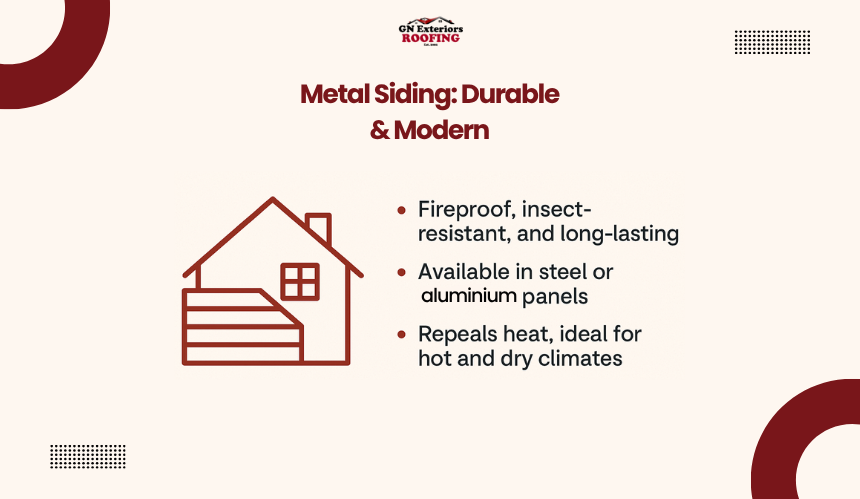
Metal siding, often made from galvanized steel or aluminum, offers a sleek, modern aesthetic with excellent durability. Many metal siding panels are now coated with baked-on finishes that prevent rust and reflect heat, making them energy-efficient and long-lasting.
Benefits:
Disadvantages:
Best For: Industrial-style homes, commercial buildings, or areas prone to fire.
Brick veneer is a thin layer of real brick or stone adhered to the home’s exterior. It offers the timeless beauty of masonry without the structural weight of solid brick walls. Because it’s non-structural, brick veneer can be added to wood-frame homes to deliver a traditional masonry appearance without requiring reinforced foundations.
Benefits:
Disadvantages:
Best For: Colonial, Tudor, or traditional-style homes in moderate to dry climates.
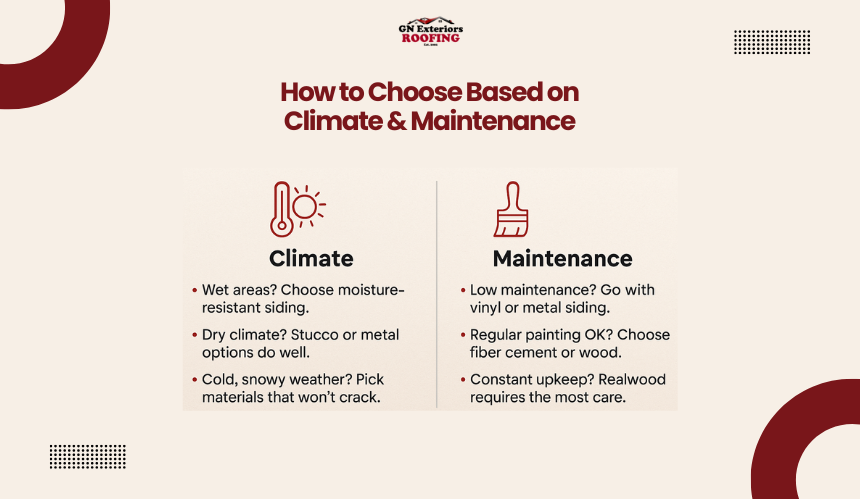
Your environment should be the first filter when narrowing down siding options.
How much time are you realistically willing to spend on upkeep?
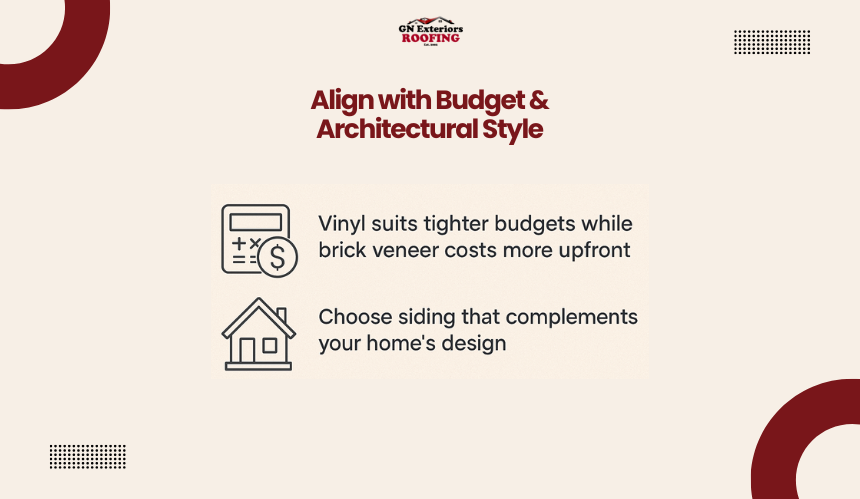
Budget plays a big role, but it’s not just about material cost, it is about installation, longevity, and return on investment.
Some siding types just look “right” on certain home styles.
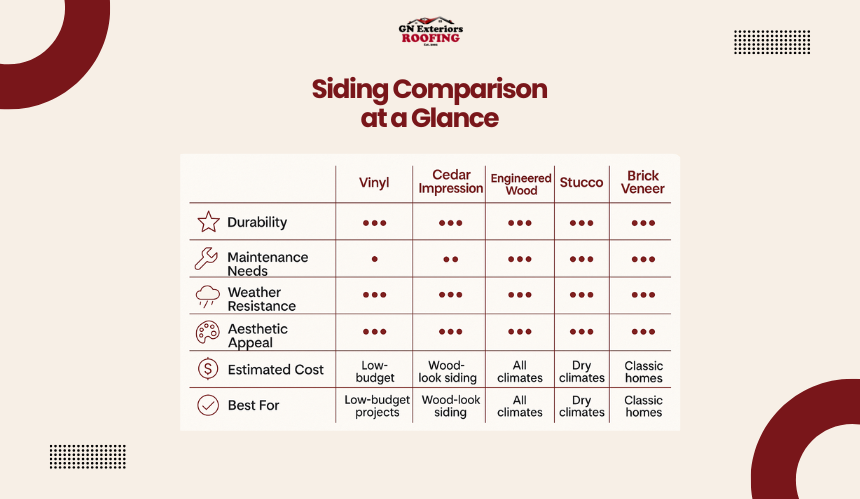
If you are still weighing your options, this side-by-side comparison will help you quickly assess the strengths and trade-offs of each siding type. The table below summarizes key factors for every material we have discussed:
Siding Type | Durability | Maintenance Needs | Weather Resistance | Aesthetic Appeal | Best For |
HardiePlank® (Fiber Cement) | 30–50 years+ (very high) | Moderate (may need repainting) | Excellent (fire, rot, moisture resistant) | High. Realistic wood texture | Fire-prone & coastal regions, traditional homes |
Vinyl Siding | 20–40 years (good) | Very low | Moderate (may warp/crack) | Moderate. Wide color range | Budget-conscious homeowners |
Cedar Impression (Polymer) | 30+ years (high) | Very low | Good (resists rot, insects) | Very high. Authentic wood look | Homes needing curb appeal with low upkeep |
Engineered Wood | 20–30 years (moderate) | Moderate (needs painting/sealing) | Fair to good (can swell if unsealed) | High. Natural wood appearance | Wood-look homes with lower install cost |
Stucco | 50+ years (high) | Low (inspect for cracks) | Good (ideal in dry climates) | Smooth, classic texture | Southwestern and Mediterranean homes |
Metal (Steel/Aluminum) | 40–60 years (very high) | Low (may need refinishing) | Excellent (fire & insect resistant) | Moderate. Industrial/sleek finish | Modern homes, fire-prone areas |
Brick Veneer | 50+ years (very high | Very low | Excellent (fire & weatherproof) | Classic, upscale finish | Traditional/colonial homes seeking permanence |
Still confused about which siding is right for your home? At GN Exteriors, we make the choice easy with expert guidance and premium siding options, including HardiePlank® fiber cement, low-maintenance Vinyl, and realistic Cedar Impression siding.
Whether you’re focused on durability, curb appeal, or long-term value, our team helps you choose with confidence and install with precision.
Yes. Light-colored siding reflects sunlight, helping reduce cooling costs in hot climates. Darker colors absorb heat, which can aid warmth in colder regions but may raise cooling needs during summer.
Insulated vinyl siding has a foam backing that improves thermal resistance (R-value), reduces energy loss, and strengthens impact resistance. It costs more than standard vinyl but improves comfort and efficiency.
You can paint vinyl siding using acrylic latex paint, but it must be a lighter color than the original to prevent warping. Painting may void warranties, so always check manufacturer guidelines first.
The ideal time to install siding is in spring or fall when temperatures are mild. Extreme cold can make materials brittle, and high heat may cause vinyl to expand, affecting proper fit and finish.