
Key Takeaways:
|
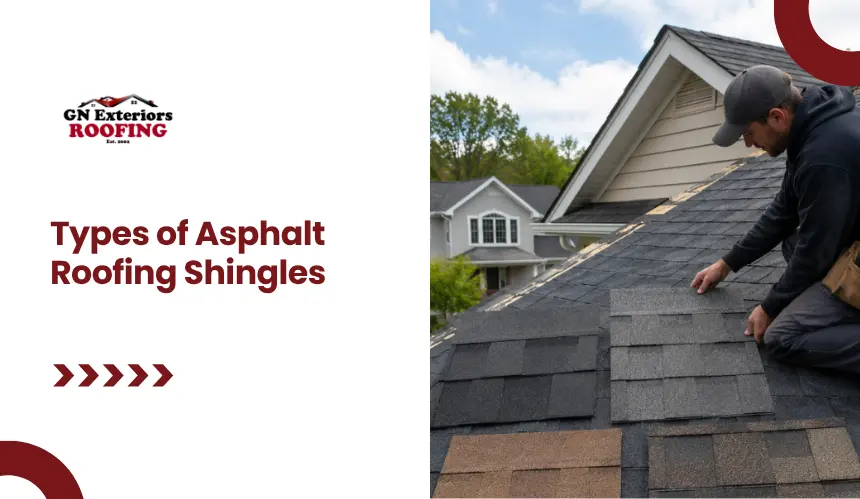
Choosing asphalt roofing shingles is not just about color or price. Many property owners struggle to distinguish between basic 3-tab shingles, architectural shingles, and premium laminated systems because the visual differences often hide major performance differences underneath.
This blog explains the main types of asphalt roofing shingles, how they are constructed, and where each option is commonly used in residential roofing systems.
Not all asphalt shingles are engineered for the same roof performance conditions. Differences in construction thickness, material layering, granule composition, and reinforcement methods directly influence durability, wind resistance, moisture protection, and visual depth.
Understanding these differences makes it easier to evaluate why some shingles last longer or perform better under specific environmental conditions.
3-tab asphalt shingles are considered the most traditional asphalt roofing format. Their design focuses on cost efficiency and simplified roof coverage rather than dimensional appearance or advanced weather performance. They are commonly installed on budget-focused residential projects, detached structures, and properties where a flatter roof profile is acceptable.
3-tab shingles use a single-layer fiberglass base coated with asphalt and surfaced with protective mineral granules. Each strip is manufactured with evenly spaced cutouts that create the appearance of three separate tabs once installed across the roof deck.
The uniform layout produces a flat and consistent roof surface without dimensional shadowing. Because the shingles contain fewer material layers, they remain lighter in weight than laminated architectural systems. This lighter construction can simplify installation but also reduces structural thickness against wind pressure and impact stress.
The primary advantage of 3-tab shingles is lower material and installation costs. Their simpler structure requires less raw material during manufacturing, making them one of the most economical roofing options for residential applications.
However, the thinner single-layer construction typically results in shorter service life and lower wind resistance ratings compared to architectural shingles. In areas exposed to frequent storms, strong temperature shifts, or prolonged sun exposure, 3-tab systems may experience faster granule loss, edge curling, or seal deterioration over time.
Architectural asphalt shingles are the most widely installed asphalt roofing type in modern residential construction. Their layered design improves structural durability while creating a more textured roof appearance that resembles higher-end roofing materials.
Many homeowners choose this category because it balances lifespan, weather performance, and visual depth more effectively than basic single-layer shingles.
Architectural shingles use laminated construction, where multiple asphalt layers are bonded together to create varying thickness across the shingle surface. This layered profile produces shadow lines and dimensional texture that give the roof a less uniform appearance than flat 3-tab systems.
The irregular tab patterns are intentionally designed to imitate natural roofing materials such as cedar shake or slate. Because the shingles contain more material mass, the roof surface appears deeper and more defined when viewed from ground level.
The thicker laminated structure improves resistance against wind uplift, thermal cracking, and long-term surface wear. Many architectural shingles are manufactured with stronger adhesive sealing strips that help maintain roof stability during heavy wind conditions.
Their added thickness also slows visible aging caused by prolonged ultraviolet exposure and seasonal temperature cycling. As a result, architectural shingles commonly carry longer manufacturer warranty periods and are frequently selected for reroofing projects where homeowners want a longer replacement cycle without moving to premium roofing materials like metal or natural slate.
Luxury asphalt shingles are designed for residential roofing projects where appearance, material thickness, and premium weather performance carry higher priority than basic installation cost.
These shingles use heavier laminated construction to replicate the texture and contour of natural slate or hand-split cedar shake roofing while maintaining the installation flexibility of asphalt-based systems.
Luxury shingles contain multiple reinforced asphalt layers that create deeper dimensional profiles across the roof surface. The added thickness allows manufacturers to produce more detailed textures, irregular shadow patterns, and varied tab shapes that resemble natural roofing materials more realistically than standard laminated shingles.
Many luxury products also include advanced granule blends designed to improve color retention and reduce visible fading caused by prolonged ultraviolet exposure. Because of their heavier structure, these shingles generally create a more pronounced roofline and stronger curb appeal on larger residential properties.
Luxury asphalt shingles are frequently installed on custom homes, steep-slope roofing systems, and properties where exterior design consistency is a major consideration.
They are also commonly selected in neighborhoods where slate-style or shake-style roofing aesthetics are preferred without the structural weight requirements of natural materials.
Their thicker construction can provide additional resistance against wind-driven rain, surface deformation, and impact stress, making them more suitable for regions exposed to severe seasonal weather conditions.
Impact-resistant asphalt shingles are engineered for roofing systems exposed to hail impact, wind-driven debris, and repeated thermal stress. Unlike standard shingles that primarily focus on water shedding and surface durability, these systems are designed to absorb kinetic energy without fracturing the asphalt layer or damaging the fiberglass reinforcement beneath the surface granules.
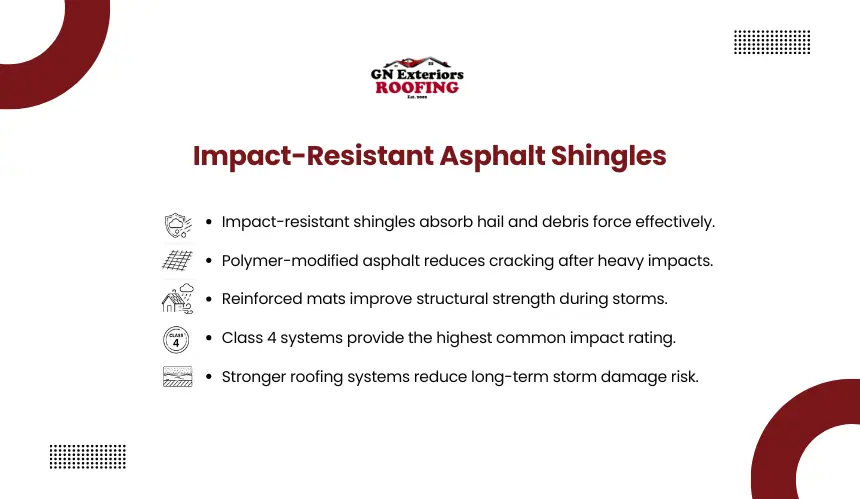
Impact-resistant shingles typically use polymer-modified asphalt or rubberized asphalt blends that increase flexibility during sudden impact events. When hail strikes the roof surface, the modified asphalt layer disperses force across a wider area instead of allowing localized cracking around the impact point.
Many products also use reinforced fiberglass mats with higher tensile strength to reduce splitting under stress. The shingle structure is commonly tested using UL 2218 impact classification standards, where steel balls are dropped from controlled heights to simulate hail impact conditions. Class 4 shingles represent the highest commonly available residential impact rating under this testing method.
Some systems also incorporate wider adhesive bonding zones that improve shingle retention during high-wind storms that often accompany hail activity.
Roof damage from hail often begins as microscopic fractures beneath the granule surface rather than visible punctures. Over time, these fractures can accelerate asphalt oxidation, moisture penetration, and granule displacement. Impact-resistant shingles reduce this progression by maintaining greater structural integrity after repeated storm exposure.
In hail-prone regions, these systems may also reduce the frequency of premature roof replacement caused by cumulative storm damage. Some insurance providers recognize Class 4 roofing systems as lower-risk assemblies and may offer policy adjustments or roofing-related discounts depending on regional underwriting requirements.
The heavier reinforced structure can also improve long-term resistance against thermal expansion fatigue, particularly in climates with rapid seasonal temperature variation.
The right asphalt shingle depends on structural exposure, roof lifespan expectations, and how the roofing system will perform under local weather conditions.
Material thickness, wind classification, granule retention, and impact resistance ratings all affect long-term roof stability, especially in climates that experience snow load, freeze-thaw cycling, and coastal moisture exposure.
Massachusetts roofs are exposed to multiple seasonal stress cycles throughout the year. In areas such as Randolph and surrounding parts of the state, winter snow accumulation, ice dam formation, coastal humidity shifts, and strong wind events can place continuous stress on asphalt roofing systems.
Architectural shingles are commonly selected for asphalt shingles roofing in Randolph because their laminated construction provides better resistance against wind uplift and thermal contraction compared to thinner single-layer shingles.
Roofs exposed to repeated freeze-thaw conditions also benefit from stronger sealing strips that help reduce water intrusion during melting snow cycles.
For homes located near coastal zones or open suburban corridors where wind exposure is higher, impact-resistant or heavier laminated shingles may provide greater long-term structural stability.
Different asphalt shingles are engineered for different replacement timelines. A lower-cost roofing system may reduce initial installation expense but can require earlier replacement if the roof experiences accelerated granule loss, seal failure, or storm-related surface wear.
Homeowners planning long-term occupancy often prioritize:
Architectural and luxury shingles generally provide better long-duration performance because of their thicker asphalt composition and reinforced structural layering.
Roof profile affects how shadows, rooflines, and exterior materials visually interact across the property. Flat-profile shingles create a cleaner, uniform surface, while dimensional laminated shingles produce more depth and texture across steep-slope roof sections.
Homes with stone facades, cedar accents, or larger roof elevations often use architectural or luxury shingles because the added dimensional layering creates stronger visual definition from street level.
On smaller residential structures or detached garages, simpler 3-tab systems may still meet practical performance and appearance requirements without unnecessary material cost.
Whether the goal is longer roof lifespan, stronger storm resistance, or a more dimensional roof appearance, choosing the right asphalt shingle system can affect both protection and long-term maintenance costs. GN Exteriors helps property owners evaluate roofing materials based on structural performance, weather exposure, and real installation requirements rather than appearance alone.
Mixing shingle types on one roof is rarely ideal because thickness, exposure lines, sealant placement, and shadow patterns may not align properly. Even when colors look similar, different product profiles can create uneven water flow, inconsistent fastening zones, and visible roofline irregularities after installation.
Roof pitch changes how quickly rain, snow, and debris move off the surface. Steeper roofs often highlight shingle texture and dimensional depth, while lower-slope areas require stronger attention to underlayment, flashing, and water-shedding details. The shingle type matters, but the full roof assembly controls moisture performance.
Darker shingles can absorb more heat, which may increase surface temperature during long sun exposure. However, actual wear depends on ventilation, attic heat buildup, granule quality, and UV resistance. A properly ventilated roof with quality shingles can control thermal stress better than a poorly ventilated roof with lighter shingles.
Shingles are only the visible part of the roofing system. Underlayment, starter strips, ridge caps, flashing, drip edge, ice and water barrier, and attic ventilation all affect leak resistance and long-term durability. Weak installation details can shorten roof life even when high-grade asphalt shingles are used.
Common warning signs include missing granules, lifted edges, brittle tabs, exposed fiberglass, recurring leaks, cracked sealant lines, and dark streaking caused by algae growth. Interior ceiling stains or attic moisture may signal that roof protection has already weakened beneath the visible shingle surface.