
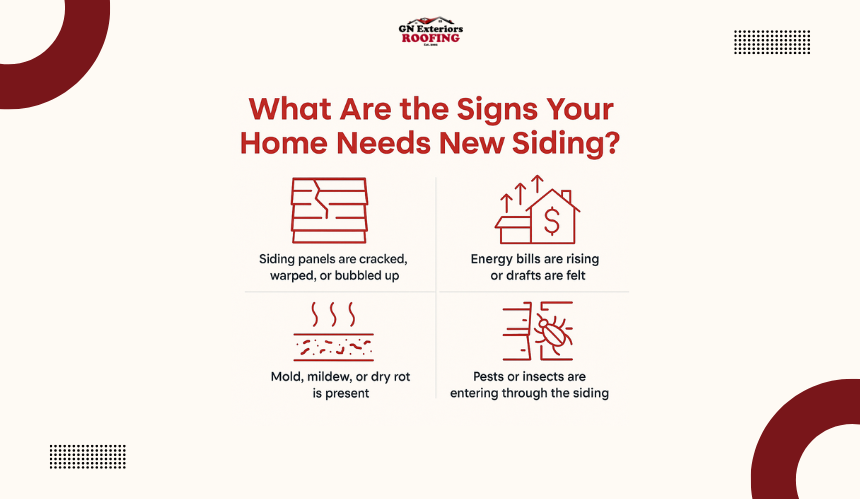
If your home’s exterior siding is cracked, warped, or visibly faded, these are not just cosmetic flaws; they are warning signs that your siding may be failing.
Damaged or aging siding can allow water intrusion, reduce insulation effectiveness, and even attract pests, putting your home’s structure and energy efficiency at risk.
Recognizing the early signs of siding failure can help you avoid expensive repairs down the line. From bubbling surfaces to rising energy bills.
This guide breaks down the nine most common red flags that your home might need siding replacement, backed by building science and real-world expertise.
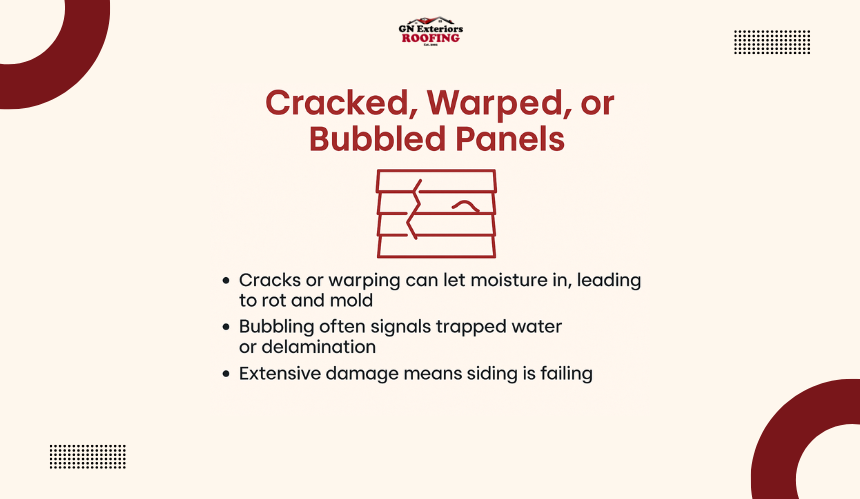
One of the clearest signs that you need to replace siding of your home is visible cracking, warping, or bubbling on the panels. These surface defects often indicate that moisture has penetrated behind the siding, breaking the weather-resistant barrier and damaging the underlying sheathing.
Warped boards may bow outward or pull away from the wall, while bubbling under paint or finish usually signals trapped water or delamination, especially in vinyl or fiber cement products.
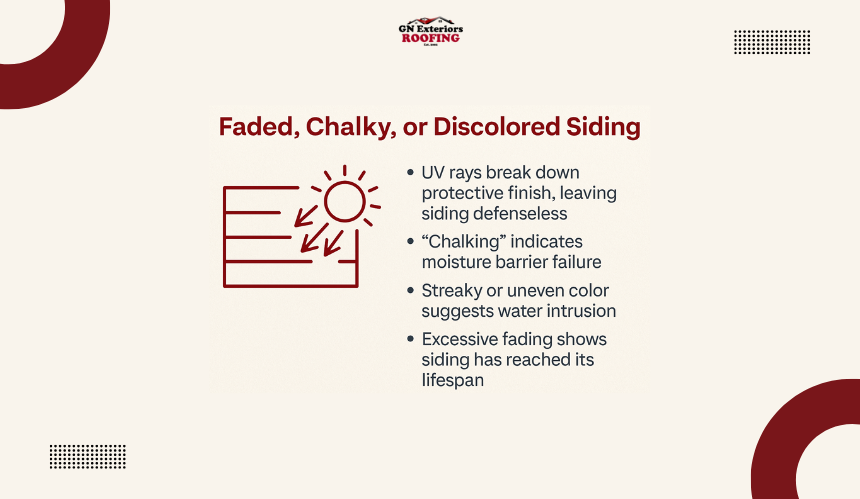
If your current siding has lost its original color, appears washed out, or leaves a white, powdery residue on your fingers, it’s a clear indicator that the protective finish has deteriorated.
This usually happens due to prolonged exposure to UV rays, harsh weather cycles, or oxidation. While fading might seem cosmetic, it actually suggests that the siding’s weatherproofing layer has broken down, leaving the surface more vulnerable to cracking, moisture absorption, and thermal degradation.
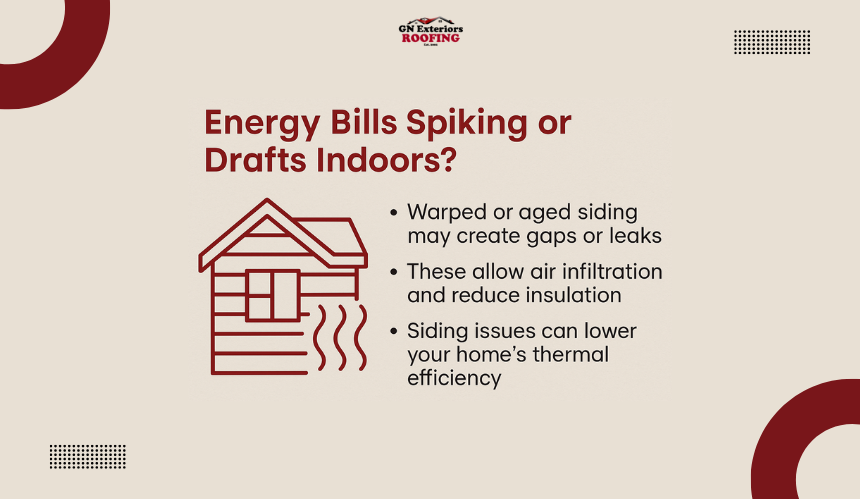
A sudden or consistent increase in your heating or cooling costs can often be traced back to compromised siding. When siding ages, warps, or separates from the sheathing, it creates gaps that allow air infiltration and reduce your home’s thermal performance.
In colder climates, this leads to heat escaping through exterior walls; in warmer regions, it allows excessive heat and humidity to enter, forcing your HVAC system to work harder.
Poorly performing siding also affects the R-value of your home’s exterior envelope, especially if there’s missing or degraded insulation wrap underneath.
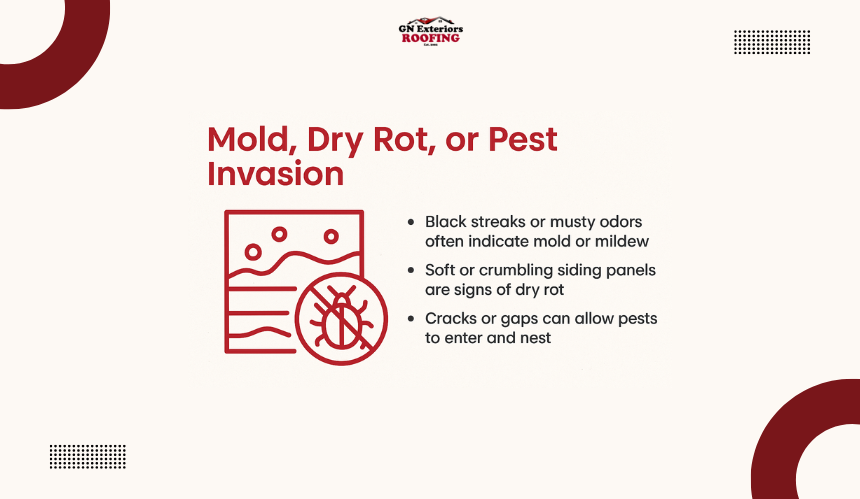
If you notice black streaks, green patches, or a musty odor near your siding, you’re likely dealing with mold or mildew growth. Both are signs of moisture becoming trapped behind your siding panels.
In more advanced cases, this can evolve into dry rot, a type of fungal decay that breaks down cellulose in wood-based materials and weakens the structural integrity of your home.
These problems are especially common in areas with poor drainage, aging caulking, or compromised flashing.
Unchecked microbial growth can spread into insulation, wall cavities, and even subflooring, leading to costly repairs and health risks.
Siding panels that shift, rattle in the wind, or appear misaligned are more than a nuisance; they’re a structural vulnerability. This usually occurs when fasteners loosen over time, substrates swell, or the siding expands and contracts excessively due to temperature fluctuations.
Gaps between panels or corners pulling away from the wall expose your home to wind-driven rain, insect entry, and further panel detachment.
If panels are completely missing, even in small sections, the underlying wall is left defenseless against moisture, UV damage, and temperature extremes, accelerating deterioration from the inside out.
When siding becomes compromised through cracks, gaps, or softened materials, it opens the door to pest intrusion. Termites, carpenter ants, and even rodents exploit these vulnerabilities to access wall cavities, where they can nest, tunnel, or feed on structural components.
Wood and fiberboard sidings are especially prone to damage when moist or deteriorating, making them ideal targets for pests. In some cases, birds and bees may also attempt to nest behind warped or loose panels.
Unlike surface-level damage, pest-related issues often go unnoticed until interior walls or insulation are already affected, leading to expensive remediation and repairs.
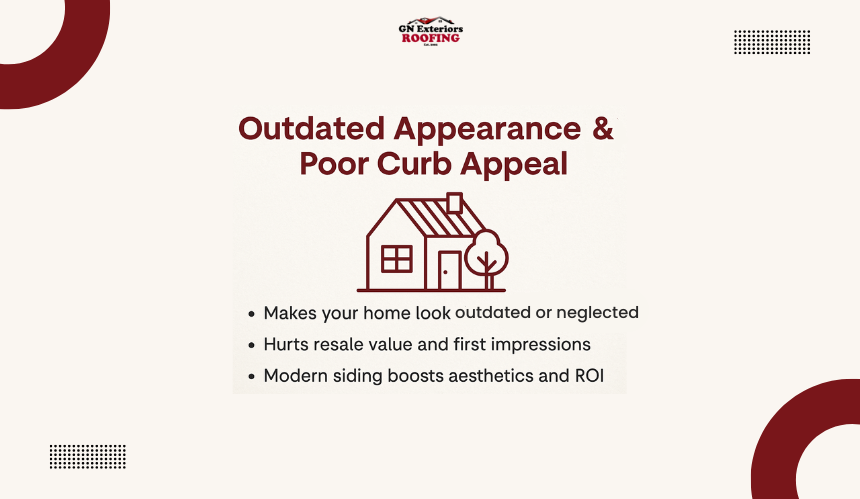
Even if your siding is structurally intact, an outdated or worn appearance can negatively impact your home’s curb appeal and resale value. Faded colors, obsolete textures, or clashing trim can make your home look older than it is, and deter potential buyers if you’re planning to sell.
Many older homes still feature aluminum, T1-11, or dated vinyl siding styles that don’t match today’s aesthetic standards or energy performance expectations.
Modern siding materials like HardiePlank fiber cement, Cedar Impressions, and insulated vinyl offer not just a fresh look, but also superior weather resistance, fire protection, and thermal efficiency.
The age of your siding is a critical factor in determining whether it needs replacement. Most siding materials, including vinyl, fiber cement, and wood have a typical service life ranging from 20 to 40 years.
Beyond this lifespan, even well-maintained siding begins to lose its protective properties due to material degradation, weather exposure, and mechanical wear.
If your siding is approaching or exceeding two decades, it’s wise to schedule a professional inspection. Early replacement can prevent hidden damage like substrate rot, insulation failure, and increased moisture infiltration. These issues become costlier to repair over time.
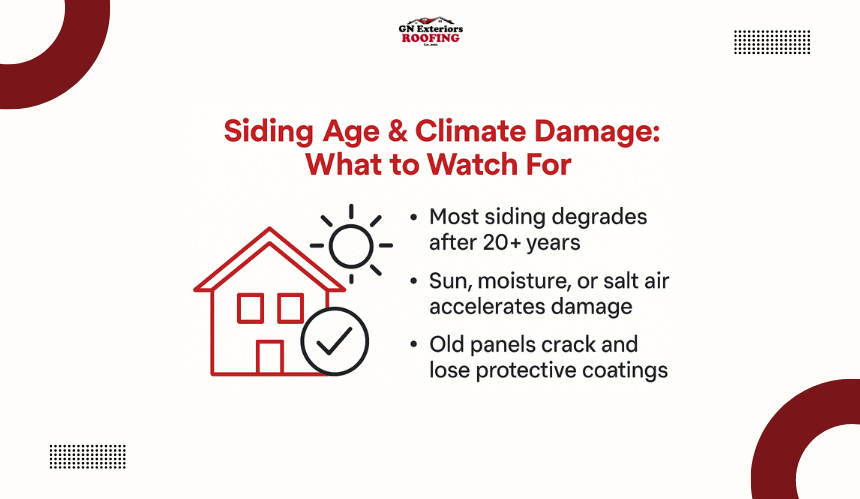
Different climates accelerate siding deterioration in unique ways. Homes in areas with freeze-thaw cycles, heavy rainfall, extreme heat, or coastal salt exposure face specific challenges that can shorten siding lifespan and amplify damage if not addressed promptly.
Understanding your local climate’s impact helps you anticipate the types of siding damage most likely to occur, and guides you toward choosing materials best suited for your environment.
When it’s time to replace your siding, choosing the right material is key to ensuring lasting protection and curb appeal.
Options like durable HardiePlank fiber cement, versatile and low-maintenance vinyl siding, or the natural beauty of Cedar Impression siding each offer unique benefits tailored to different home styles and climates. GN Exteriors helps you select the best fit to safeguard your home from moisture, pests, and weather while enhancing energy efficiency and aesthetics.
Proper care can significantly extend the lifespan of your siding and prevent costly repairs. Here are five tips to keep it performing at its best:
Taking these simple steps helps protect your siding investment and keeps your home looking great year-round.
Yes. When siding allows moisture infiltration, it can lead to mold growth inside walls, which releases spores that degrade indoor air quality and can trigger allergies or respiratory issues.
Installation time varies by material and home size but typically ranges from one to three weeks. Fiber cement siding like HardiePlank may take longer due to its weight and installation complexity compared to vinyl.
Yes. Insulated vinyl siding and fiber cement products with integrated insulation can significantly reduce heat loss, improving your home’s R-value and lowering energy bills.
Materials like HardiePlank fiber cement offer superior fire resistance compared to vinyl or wood siding, making them ideal for areas prone to wildfires or strict building codes.
For some materials like fiber cement or wood, repainting can extend lifespan if the siding is structurally sound. However, vinyl siding cannot be effectively painted and may require replacement if faded or damaged.