
Key Takeaways:
|
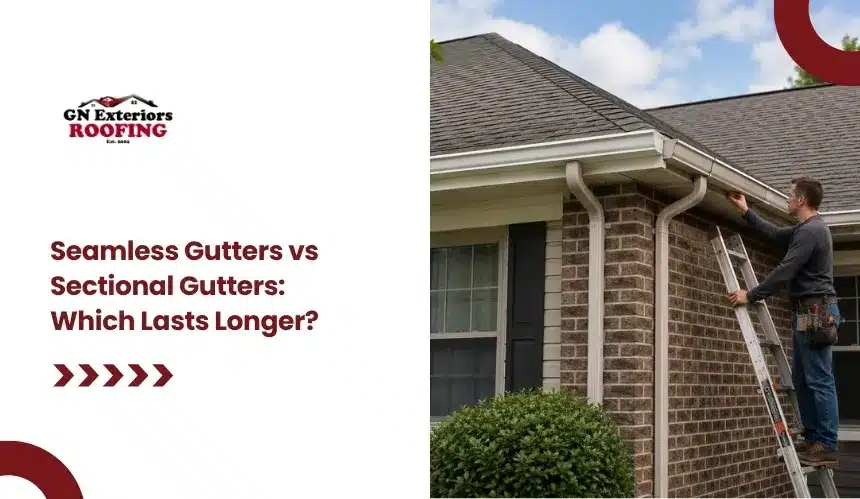
Gutters fail when water does not move away from the roofline correctly. Sagging channels, weak support, clogged outlets, poor slope, and moisture exposure can shorten the life of the system and lead to damage around fascia, siding, landscaping, and foundation areas.
Seamless gutters generally offer better long-term performance than sectional gutters because their structure supports steadier drainage with fewer repair-sensitive areas. Sectional gutters can still be useful for certain projects, but their lifespan depends more on precise assembly and consistent upkeep.
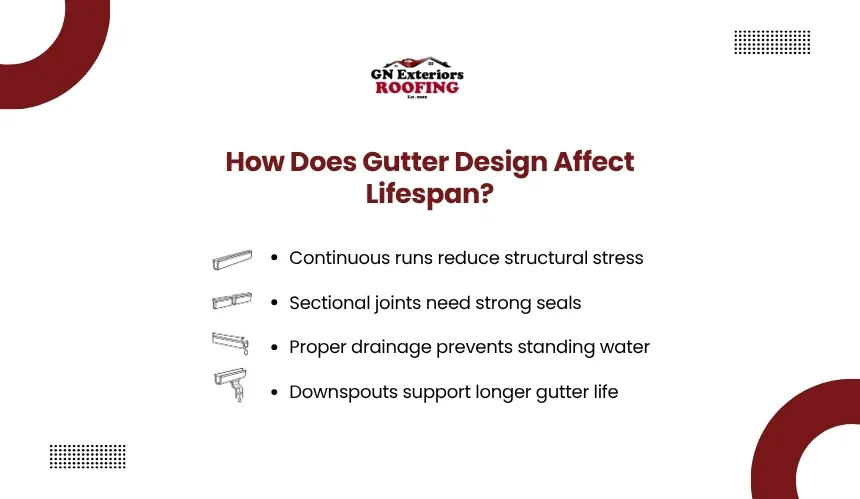
Gutter design affects how well the system handles roof runoff, debris weight, seasonal movement, and daily exterior exposure. Most residential gutters last anywhere from 10 to 50+ years, depending on the material, installation quality, cleaning routine, and whether the system is seamless or sectional.
Do You Know?
A roof can shed a surprising amount of water during even a small rain event. The EPA uses 0.623 gallons as the conversion factor for rainwater collected from each square foot per inch of rainfall. That means a 1,000 sq. ft. roof can produce about 623 gallons of runoff from just 1 inch of rain before collection efficiency is considered.
Seamless gutters are made in long runs that are measured to fit the property. Aluminum seamless gutters commonly last around 20 to 30 years, while premium copper seamless gutters can last 50 years or more when installed and maintained correctly.
Their main design advantage is stability along straight rooflines. Because the channel is not divided into several connected pieces, it is less likely to develop alignment problems during its service life when exposed to rainwater, roof grit, leaves, and seasonal expansion.
Sectional gutters are built from shorter pieces that are often connected in 10-foot sections. Their lifespan commonly ranges from 10 to 20 years for vinyl and around 20 years for aluminum or galvanized steel, depending on weather exposure and upkeep.
This modular design makes sectional gutters more vulnerable to small changes over time. A 40-foot gutter run may have 3 or more connection points, and if one connection weakens, the system may need sealing, adjustment, or partial replacement before the gutter material reaches its full expected life.
A gutter lasts longer when water moves through the channel without collecting in low spots. A common gutter slope is about 1/4 inch for every 10 feet, which helps move runoff toward the downspouts and reduces standing water inside the channel.
Seamless systems usually perform better on longer rooflines because the channel has fewer interruptions in the water path. Sectional systems can still drain effectively, but they require more precise alignment across each connected piece to avoid pooling that can shorten service life by several years.
Do You Know?
The University of Minnesota Extension recommends at least one downspout per 50 linear feet of roof eave and says downspout extensions should discharge water at least 4 feet beyond the wall. This shows that gutter lifespan is not only about the gutter channel, but also about how well the system moves water away from the foundation.
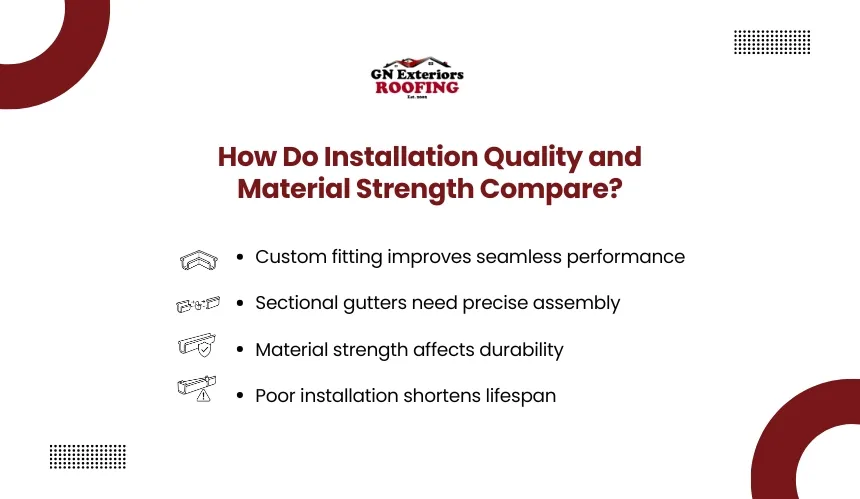
Installation quality affects gutter lifespan as much as the gutter type itself. A strong gutter material can still fail early if the pitch, hanger spacing, downspout placement, or fascia attachment is not handled correctly.
Seamless gutters are usually formed on-site or cut to match the exact roofline. This custom fit allows the installer to control the gutter length, slope, and placement with fewer adjustments during installation.
A well-fitted seamless gutter sits more securely against the fascia and directs water toward the downspouts with less strain on the system. Proper hanger spacing also helps the channel keep its shape during heavy rain or debris buildup.
Braintree homes deal with regular New England rain, snowmelt, and seasonal moisture, which makes proper roof drainage important for protecting fascia, siding, landscaping, and foundation areas. Around residential areas near Monatiquot River, Weymouth Fore River, and older tree-covered neighborhoods, seamless gutters in Braintree are especially useful because they help move water more steadily across longer rooflines with fewer repair-sensitive points.
They are encouraged for homeowners who want a cleaner gutter fit, reduced leak risk, and stronger long-term drainage performance. Since many Braintree properties face leaf buildup, changing temperatures, and moisture exposure through the year, seamless gutters can help reduce overflow issues and support better exterior protection over time.
Sectional gutters need careful alignment from one piece to the next. The installer must keep the slope consistent, secure each section properly, and prevent low spots that can hold water.
Small setup errors can affect the full system. A slightly uneven section may slow drainage, a loose connector may shift under weight, and poor support may allow the gutter to bend before the material reaches the end of its normal service life.
Aluminum, steel, copper, and vinyl gutters all age differently. Aluminum is common because it resists rust and suits many residential properties. Steel adds strength but needs protective coating. Copper can last for decades with correct installation. Vinyl is affordable but may crack under harsh temperature changes.
When both gutter types use similar materials and proper installation, seamless gutters usually provide a longer lifespan. However, strong material and skilled installation can help a sectional system perform better than a poorly installed seamless one.
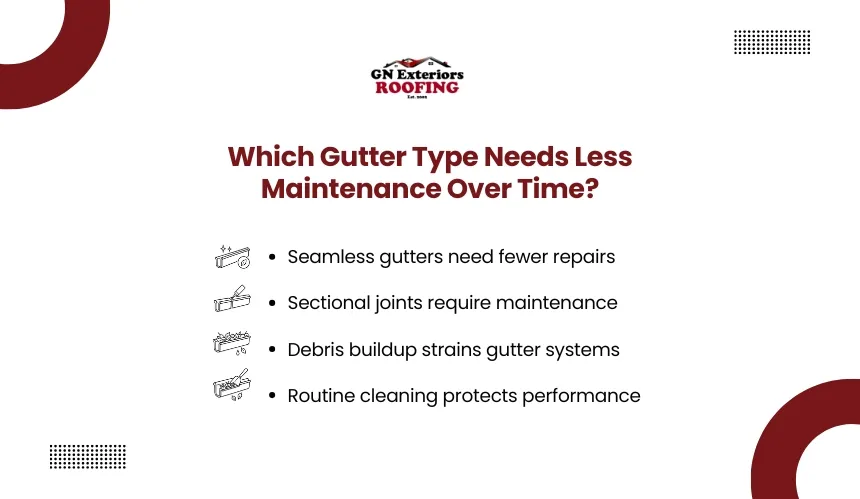
Maintenance affects how long any gutter system stays reliable. Cleaning, drainage checks, hanger inspections, and small repairs all help prevent water from reaching areas that are not designed to handle constant moisture.
Seamless gutters usually need less corrective service across straight runs because the system has fewer areas that require resealing or adjustment. This can reduce the number of repair visits needed over the life of the gutter system.
Routine care still matters. Leaves, roof sediment, and clogged downspouts can affect any gutter type, so homeowners still need regular cleaning and inspection to keep water moving away from the home.
Sectional gutters often need more attention because their connected areas are exposed to water movement, debris pressure, and expansion from temperature changes. Over time, these areas may need resealing, tightening, or replacement.
This maintenance does not always mean the full gutter system has failed. In many cases, small repairs can extend its service life, but the system usually requires more hands-on upkeep than a seamless option.
Heavy rainfall, wind, ice, leaves, and clogged downspouts can reduce gutter performance. When water cannot exit quickly, extra weight builds inside the channel and strains hangers, corners, outlets, and end caps.
Seamless gutters tend to handle this pressure better along long straight sections. Sectional gutters can still perform well, but they are more likely to show wear where individual pieces connect. Regular cleaning is the main way to protect both systems from early damage.
In Braintree, changing weather can push leaves, roof grit, pine needles, and small debris into open gutter channels. When this buildup blocks water flow, gutters can become heavier, pull out of alignment, or send runoff over the edge instead of toward the downspouts.
For homes across the South Shore, tree-lined residential streets, and older Braintree properties, gutter protection in Braintree is useful because it helps keep the drainage system clearer between cleanings. It supports better water movement during rainy months, reduces strain on hangers, and helps the gutter system perform longer with fewer clog-related service issues.
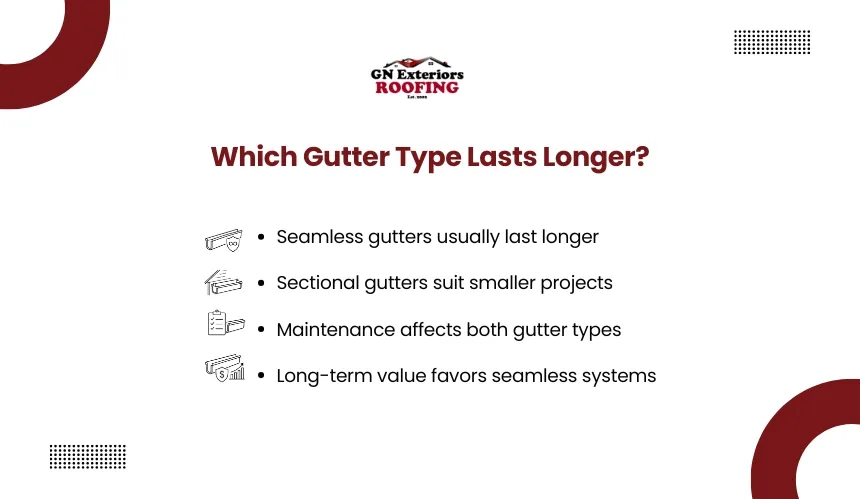
Seamless gutters are usually the longer-lasting choice for homeowners who want stronger durability, cleaner drainage, and fewer repair demands over time. Their design works especially well for full-home gutter replacement and long roofline coverage.
Sectional gutters can still be practical for smaller projects, partial replacements, detached structures, or budget-conscious repairs. They may cost less upfront, but they often need more maintenance to stay reliable.
The best option depends on the home’s roofline, gutter material, installation quality, drainage layout, and maintenance routine. When these factors are equal, seamless gutters usually provide better long-term value than sectional gutters.
For homeowners who want stronger roof drainage, cleaner exterior protection, and fewer gutter issues over time, GN Exteriors provides dependable gutter solutions built around long-term performance. From seamless gutter installation to gutter protection, their team helps homes stay better prepared for rain, snowmelt, debris buildup, and seasonal weather. Contact GN Exteriors to choose a gutter system that supports durability, curb appeal, and reliable water control.
Yes, seamless gutters usually last longer because they have fewer connection points along straight runs. Fewer joined areas mean fewer places where water can leak, sealant can fail, or the gutter can shift out of alignment over time.
Aluminum seamless gutters commonly last around 20 to 30 years, while copper seamless gutters can last 50 years or more with proper installation and maintenance. Their lifespan depends on material quality, slope, cleaning routine, and weather exposure.
No, sectional gutters are not always a bad choice. They can work well for smaller projects, partial replacements, detached garages, or lower-budget repairs. However, they usually need more attention because each joined section can weaken over time.
Gutter slope helps water move toward the downspouts instead of sitting inside the channel. A poor slope can create standing water, added weight, overflow, and hanger strain, which may shorten the service life of any gutter system.
Seamless gutters are useful in Braintree because local homes often face New England rain, snowmelt, leaf buildup, and seasonal moisture. A custom-fitted gutter system can support steadier drainage and reduce water-related strain on fascia, siding, and foundations.
Gutter protection can help gutters last longer by reducing leaves, pine needles, roof grit, and debris inside the channel. Cleaner gutters are less likely to hold standing water, overflow, strain hangers, or require frequent clog-related service.