
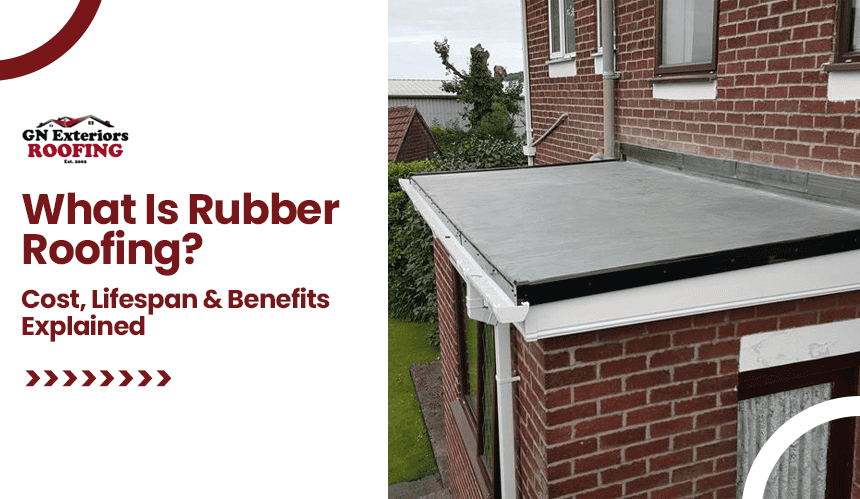
Rubber roofing, also known as a synthetic membrane roof, is a highly durable and waterproof roofing solution designed primarily for flat and low-slope structures.
Made from advanced materials like EPDM (Ethylene Propylene Diene Monomer), TPO (Thermoplastic Polyolefin), and PVC (Polyvinyl Chloride), rubber roofs have become a preferred choice for both commercial buildings and modern residential applications.
Let’s break down what rubber roofing is, explore its long-term benefits, evaluate its expected lifespan, analyze installation and material costs.
Rubber roofing refers to a category of roofing systems that use synthetic rubber or polymer-based membranes to provide a seamless, weather-resistant barrier, primarily for flat and low-slope roofs.
Unlike traditional shingles or metal panels, rubber roofs are installed in large, flexible sheets that reduce the number of seams and dramatically lower the risk of leaks.
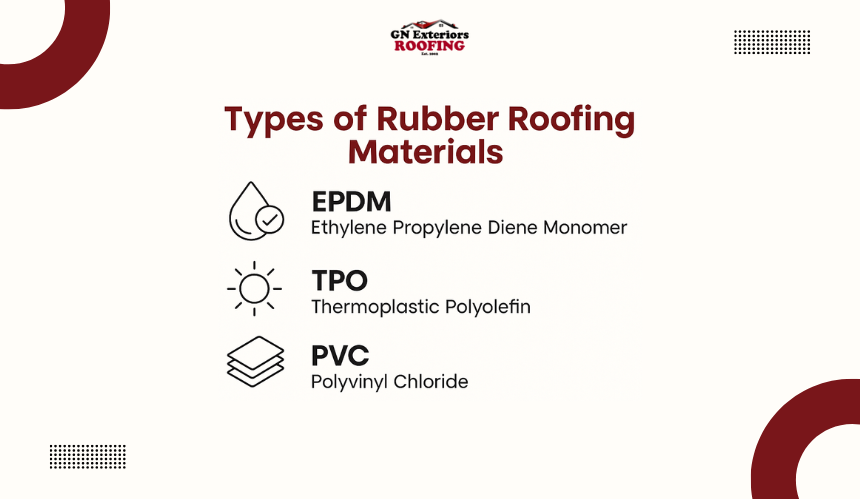
Rubber roofing is engineered from durable, flexible, and UV-resistant compounds designed to withstand harsh weather conditions, standing water, and temperature fluctuations. The most common types of rubber roofing materials include:
These membranes are typically installed using mechanical fastening, ballasting, or full-surface adhesive bonding, depending on building structure and environmental needs.
Rubber roofs act as a continuous waterproof membrane, preventing moisture infiltration on surfaces where traditional roofing fails, especially in flat roof systems where drainage is limited.
Their large sheets (often 10–20 feet wide) minimize seam exposure, and advanced installation methods (like hot-air welding for TPO and PVC) ensure long-term resistance to water penetration, UV rays, and thermal cycling.
Rubber roofing is commonly installed on:
Its flexibility, low maintenance requirements, and performance in extreme weather conditions make it an ideal solution for both urban and rural roofing applications.
When it comes to choosing the right roof, especially for flat or low-slope structures, you don’t just want something that “gets the job done.” You want peace of mind.
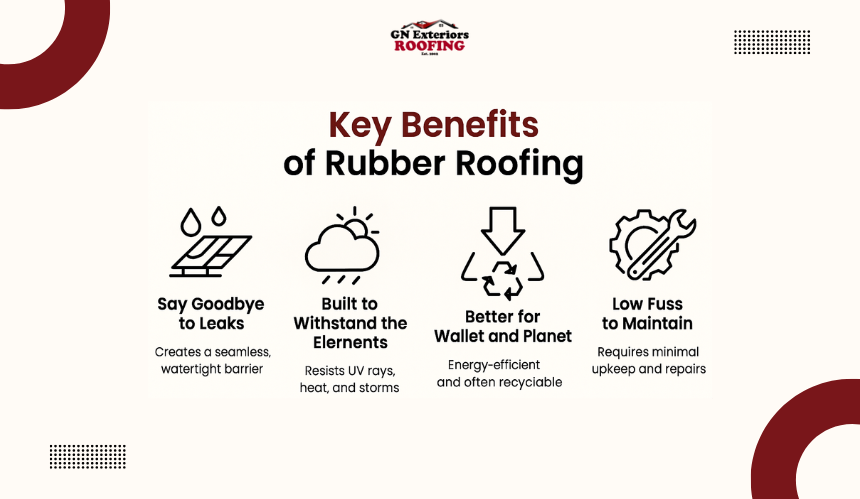
You want something that holds strong when the weather turns, that doesn’t demand constant repairs, and that helps your home or building stay energy-smart for years. That’s exactly where rubber roofing shines. The six main benefits are defined below:
Rubber roofing forms a seamless, watertight shield that keeps moisture out, no matter how hard it rains. Unlike traditional shingles that can lift or crack, rubber membranes lay flat and tight, dramatically lowering the chance of leaks.
Pro tip: Rubber roofing is especially valuable if you’ve struggled with pooling water or roof repairs in the past.
From blazing summer sun to freezing winter storms, rubber roofs are made to last. They don’t crack, blister, or buckle under pressure. EPDM holds up beautifully under UV rays, while white TPO and PVC membranes help reflect heat, keeping your home cooler when it matters most.
Fact: In sunny areas, they can reflect up to 80% of solar heat, lowering your energy bills and easing the load on your AC.
Rubber roofing isn’t just good for your building, it’s smart for the environment too. TPO and PVC membranes are energy-efficient and often ENERGY STAR® rated, while many rubber roofs are recyclable at the end of their life.
Choosing a cool, white membrane can help reduce your home’s carbon footprint and monthly energy costs.
One of the best parts? Rubber roofs don’t need constant attention. A quick inspection once or twice a year, keeping the drainage clear, and an occasional reseal (depending on the type) is often all it takes. Small punctures or tears? Easily patchable. No major headaches.
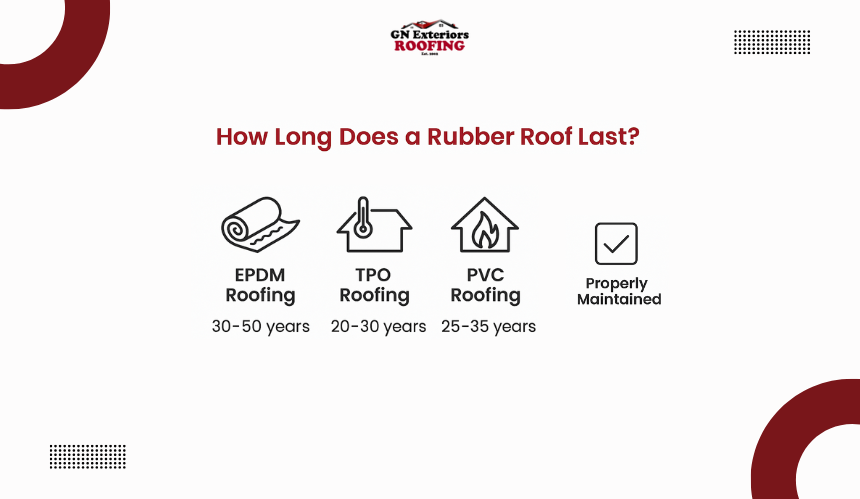
When investing in a new roof, longevity matters. You want something that doesn’t just perform well today, but keeps protecting your home or building for decades. That’s one of the biggest strengths of rubber roofing: it’s built to last.
Not all rubber roofs are made the same, and their lifespan depends largely on the type of membrane used and the installation quality. Here’s what you can typically expect:
With the right installation and basic maintenance, rubber roofing could be the last roof you worry about for decades.
| Pro tip: With proper installation and basic upkeep, rubber roofing systems often outlast traditional roofing materials, especially on flat roofs where shingles typically underperform. |
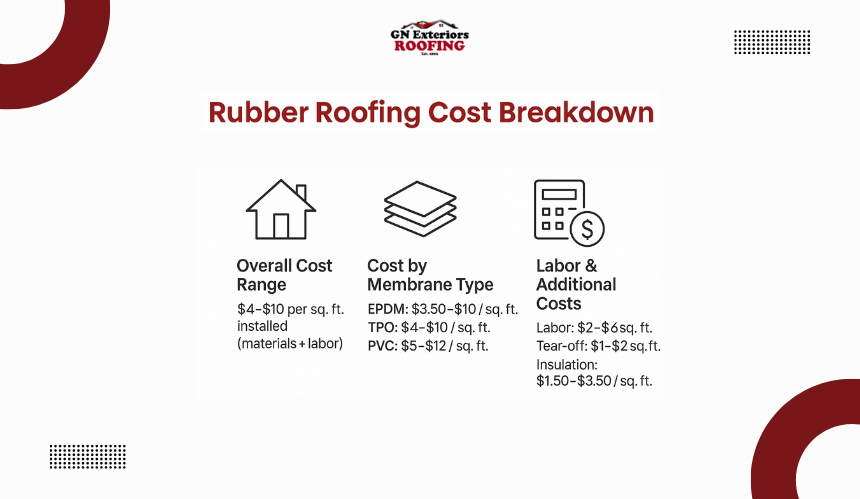
Understanding the cost of a rubber roof goes beyond just the material. Installation method, roof complexity, location, and upkeep all play a role.
Here’s a detailed breakdown to keep things transparent.
On average, most homeowners spend between $4 and $10 per sq ft installed, covering materials and labor.
This means a typical 1,500 sq ft roof costs between $6,000 and $20,000, though high-end systems or complex installations can push that to $30,000 or more.
EPDM
TPO
PVC
Installed: $5.00–$12 / sq ft
Labor typically adds $2–$6 per sq ft, depending on method and complexity. You might have to encounter some additional cost, including:
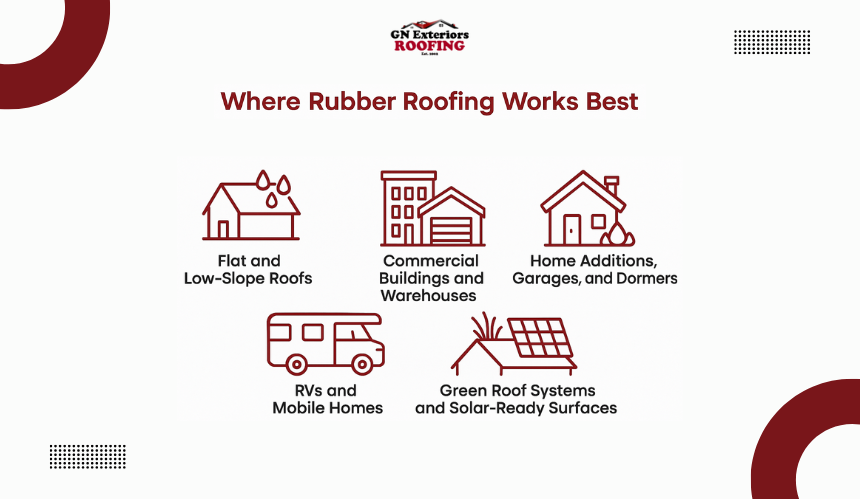
Rubber roofing is not a one-size-fits-all solution, but when it fits, it fits perfectly. It’s specifically designed to handle roofing challenges that traditional materials like shingles or metal often struggle with. If you’re dealing with a flat or low-slope roof, rubber may be the smartest choice on the table.
Rubber roofing is purpose-built for low-pitch and flat roof structures where water doesn’t easily drain. Traditional materials like asphalt shingles rely on gravity to shed water, something flat roofs just can’t do well.
Rubber membranes, on the other hand, are fully waterproof and laid in large sheets, reducing seam exposure and keeping moisture out. That is why you’ll see EPDM, TPO, or PVC membranes topping everything from modern homes to warehouses.
From strip malls to logistics hubs, commercial properties often have expansive flat roofs, and rubber roofing dominates here.
EPDM is especially popular in commercial roofing thanks to its wide roll sizes, UV resistance, and long service life. TPO and PVC are also favored for their energy efficiency and compliance with green building standards.
If your garage, porch, or second-story dormer has a flat or gently sloped roof, rubber is a low-maintenance, leak-resistant upgrade. Many homeowners use it for extensions or bump-outs where aesthetics are secondary to function and waterproofing.
Rubber roofing is a go-to choice for recreational vehicles and mobile homes due to its flexibility, weather resistance, and low weight. Most RV roofs today use white TPO or EPDM to reflect sunlight, manage heat, and keep the interiors cooler while traveling or parked.
Looking to install solar panels or build a living roof? Rubber membranes provide an ideal base. Their heat-welded or fully-adhered seams form a consistent, sealed layer that supports solar hardware or growing media.
TPO and PVC are especially popular in these setups because of their energy efficiency and structural support capabilities.
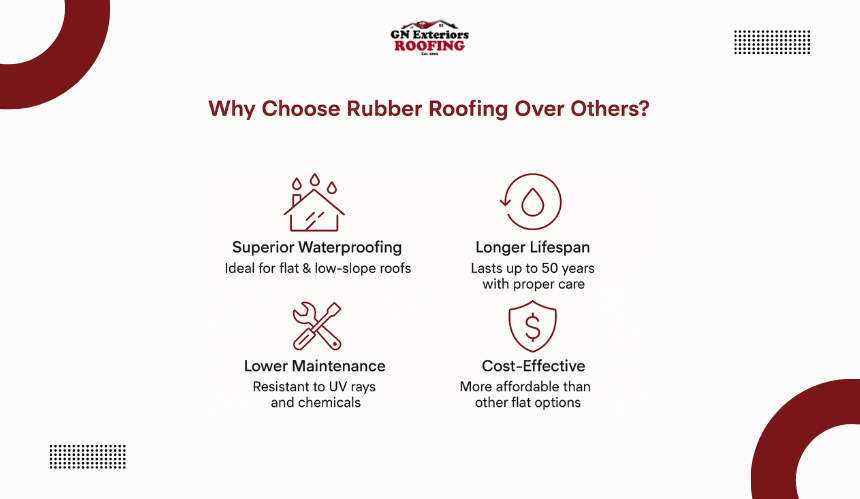
Rubber roofs outperform many traditional systems on flat surfaces where water pooling, UV exposure, or complex penetrations (like vents and HVAC units) are concerns.
Compared to asphalt shingles, which can lift or crack on low slopes, and metal roofs, which are more rigid and expensive, rubber roofing delivers better waterproofing, lower maintenance, and longer-term value, without the constant stress of repairs.
The South Shore region experiences a mix of hot summers, snowy winters, and coastal humidity, a unique combination that influences roofing needs:
That’s why choosing a roofing system that’s built for all-season performance, like rubber roofing, just makes sense for South Shore homes. It’s protection you can count on, no matter what New England weather throws your way.
It’s protection you can count on, no matter what New England weather throws your way. GN Exteriors, proudly serving Braintree, Quincy, Milton, Randolph, and Weymouth, is here to make sure it’s done right.
Yes, EPDM is a type of synthetic rubber membrane and is the most common form of “rubber roofing.” It’s typically available in black or white-on-black sheets and is widely used on flat or low-slope roofs for its durability and ease of installation.
Light foot traffic is allowed and safe, especially if you install walkway pads. However, these membranes are not designed for heavy, constant foot traffic without reinforcement, which protects the surface from punctures and wear.
Only in limited, specialized cases. For flat roofs, fleece-backed EPDM can sometimes be installed over asphalt, but your existing roof must be in good condition and flat. It’s not recommended for pitched shingle roofs. Always consult a professional before attempting an overlay.
Many DIYers have considered using EPDM membranes (used for roofs) in ponds, but you have to be cautious. Roofing EPDM is typically treated with zinc or other biocides to resist algae, which can leach into water and harm aquatic lif. For pond use, it’s best to choose a food‑grade liner instead.