
Clogged gutters don’t just cause inconvenience, they directly lead to roof leaks, foundation cracks, basement flooding, and costly structural repairs.
Your home’s gutter system plays a vital role in directing rainwater safely away from your roof, siding, and foundation. When that system becomes blocked by leaves, shingle grit, or debris, water backs up and begins to infiltrate areas it was never meant to reach.
Routine gutter cleaning ensures that downspouts stay clear, water flows properly, and your property remains protected from moisture-related damage.
From preventing hydrostatic pressure around your foundation to stopping fascia board rot and ice dam formation along your roofline, the importance of this simple task cannot be overstated.
In this article, we’ll explore exactly what happens when gutters are neglected, why it matters in every season, and how proactive maintenance safeguards your investment, inside and out.
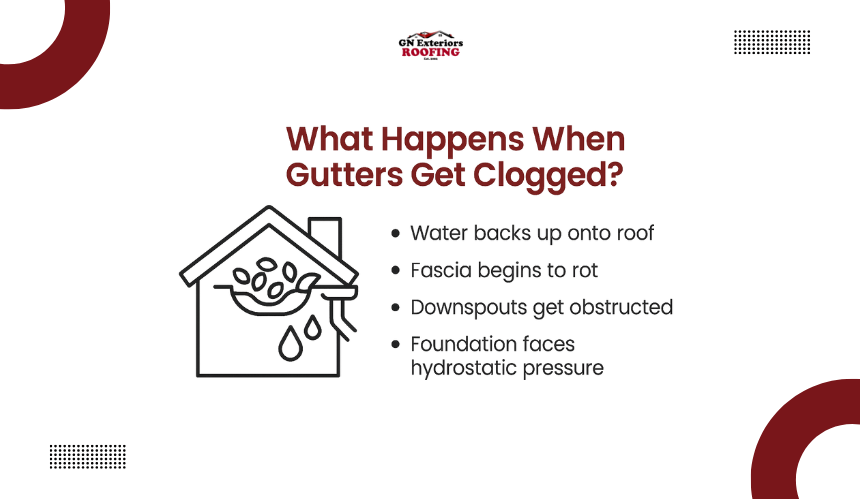
Here’s what typically goes wrong:
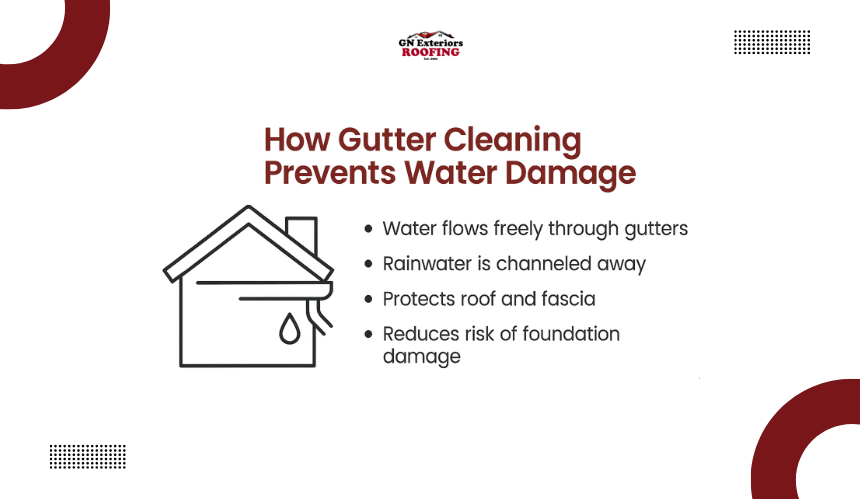
Clean gutters ensure rainwater drains properly from the roof edge and into the downspouts. When clogged, water pools along the lower shingles, increasing the risk of saturation, granule loss, and decking wood rot.
Over time, moisture can penetrate underlayment layers and enter the attic, leading to mold growth and insulation damage.
When water overflows from blocked gutters, it falls straight to the base of your home. This oversaturation causes hydrostatic pressure to build up along the foundation wall.
If this pressure persists, it may result in cracks, frost heave, and basement seepage, especially in areas with expansive clay soil or freeze-thaw cycles.
Basements are particularly vulnerable to water intrusion when gutters are not functioning properly. Overflowing water can leak through window wells, foundation joints, or porous concrete walls.
Even minor seepage can lead to moisture buildup, mold growth, and musty odors that compromise indoor air quality.
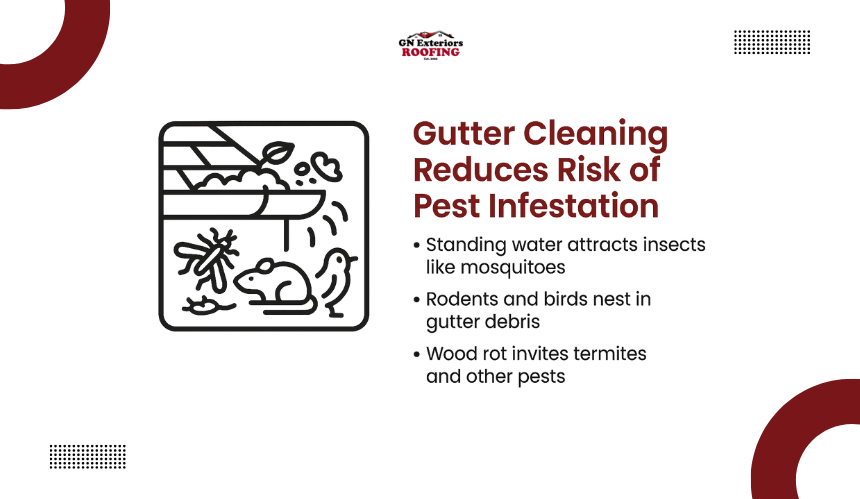
Water trapped in clogged gutters turns into a breeding ground for mosquitoes, gnats, and midges. Even a few inches of standing water can support an entire insect lifecycle.
During warmer months, you may notice a sudden spike in mosquito activity near your roofline or around the porch, that’s often the first sign your gutters are holding stagnant water.
Leaves, pine needles, and twigs jammed in the gutter system create cozy nesting spots for mice, squirrels, and sparrows. Once established, these animals can damage the gutter with their weight, clawing, or chewing.
They often seek warmth inside attic spaces, traveling through soffit gaps, fascia board rot, or roof vents to get inside.
Excess moisture around the roofline softens wooden fascia and trim boards, inviting termites, carpenter ants, and powderpost beetles. These insects don’t stay outside for long. once they begin feeding on damp exterior wood, the transition to interior framing is just a matter of time.

Your roof is not just a layer of shingles, it is a complex system designed to shed water efficiently and protect your home from the elements. But when gutters clog, that entire system is compromised.
Regular gutter cleaning is essential to keeping your roofline dry, intact, and performing the way it was engineered to. Below are the four key ways clean gutters protect your roofing system.
When gutters are blocked, water overflows and pools near the roof edge, where it begins to seep under shingles. This trapped moisture saturates your roof underlayment, damages the plywood decking, and can eventually leak into attic spaces.
In high-rainfall areas or homes with shallow roof pitches, this backup happens quickly and often goes unnoticed until stains appear on interior ceilings.
In colder climates, clogged gutters are a leading cause of ice dams. When snow melts and can’t drain, it refreezes at the gutter line, forming thick ridges that trap water above them.
This trapped water is then forced upward beneath shingles and underlayment, causing slow, concealed leaks that often lead to mold, insulation saturation, and ceiling collapse in extreme cases.
Saturated shingles deteriorate faster than dry ones. Water exposure causes granule loss, curling, and delamination, especially in asphalt roofing.
Over time, this shortens the life of your roof and may void manufacturer warranties tied to proper maintenance. Consistent gutter cleaning helps ensure water is diverted efficiently, reducing unnecessary strain on the roof surface.
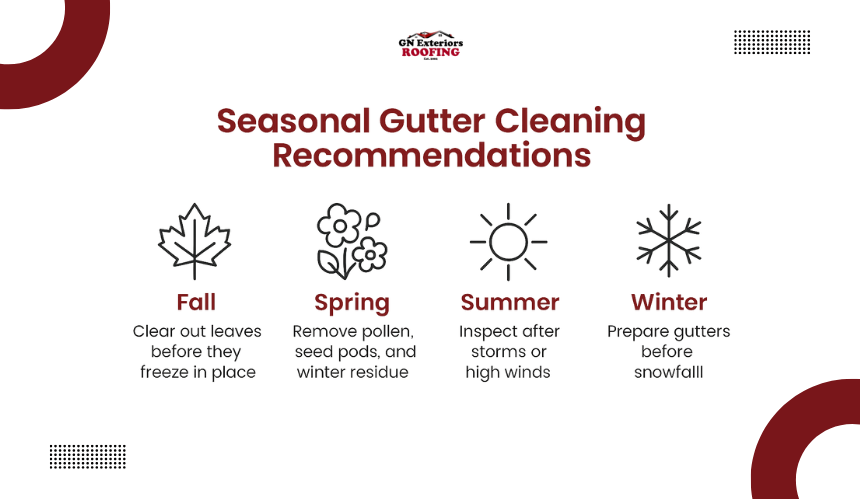
Gutters do not just get dirty once. They face different challenges throughout the year. From falling leaves in autumn to seed pods in spring and ice in winter, your gutter system is constantly under pressure.
In regions like Quincy, Milton, Weymouth, and Randolph, MA, where weather patterns shift dramatically across seasons, regular gutter cleaning is especially important. Following a seasonal schedulehelps prevent buildup and keeps your home protected year-round.
Fall is the most important season for gutter cleaning, especially if your home is surrounded by trees. Leaves, pine needles, twigs, and acorns pile up quickly and block water flow.
Once freezing temperatures hit, that debris hardens and creates problems like ice dams, gutter sagging, and roofline water backup.
Best time to clean: After most leaves have fallen and before the first freeze arrives.
Spring rain helps wash away some debris, but it also introduces new problems. Pollen, seed pods, and leftover winter grit can clog your gutters just as easily as leaves.
This is also a good time to inspect for ice-related damage, such as loose brackets, cracked seams, or rotted fascia from months of freeze-thaw cycles.
Best time to clean: Late spring, once trees are done dropping seeds and blooms.
Summer is not usually a problem season, but strong storms can change that. High winds may drop branches, roofing granules, or nesting debris into the gutter system. A quick check after each storm can prevent hidden blockages that lead to surprise overflows during the next rainfall.
Best time to check: After severe weather or if water is draining slowly.
Once snow begins to fall, cleaning becomes difficult. That is why a pre-winter cleaning is essential, especially in cold climates. Clear gutters help snowmelt drain properly, preventing ice dams, icicles, and roof leaks.
Skipping this step allows water to refreeze and expand, which causes long-term damage to both your roof and gutter system.
Best time to clean: Just before the first consistent freeze in late fall.
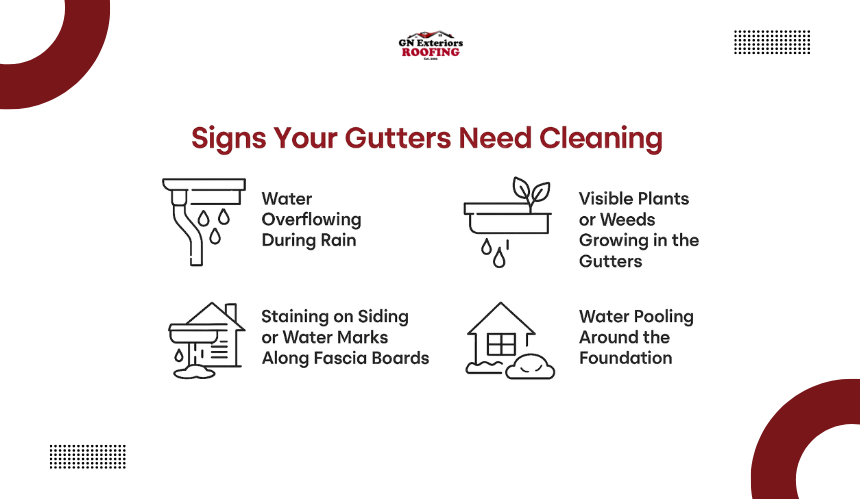
You do not always need a ladder to know your gutters are in trouble. In fact, your home will usually give off clear signs when it is time for a cleaning. Recognizing these early indicators can help you prevent serious damage before it starts.
If you notice any of the following, your gutters likely need immediate attention:
Black streaks or water stains on your exterior walls often signal that water is not draining properly. It may be seeping behind the gutter or spilling over and soaking your siding.
Left untreated, this can result in fascia board rot, paint deterioration, and moisture intrusion behind siding panels.
If sections of your gutters are pulling away from the fascia, that usually means they are overloaded with debris or water. This can lead to gutter failure, fastener damage, and potential water intrusion at the roof edge. In some cases, the entire section may collapse.
If your gutters are overflowing, sagging, or showing signs of wear, it is best to address the issue before it turns into a larger problem. Whether your system needs a full replacement or targeted repairs, GN Exteriors provides professional gutter installation and repair services to help protect your home from water damage year-round.

Even with gutter guards, it is recommended to inspect and clean your gutters at least once a year. While guards reduce the amount of debris, small particles like shingle grit, pine needles, and pollen can still accumulate and block water flow over time.
Gutters should slope at least 1/4 inch for every 10 feet of run toward the downspout. This ensures that water flows efficiently and does not pool in the system. Improper slope is a leading cause of standing water and overflow issues.
Yes, seamless gutters are generally more durable and leak-resistant than sectional systems. Because they have fewer joints, there are fewer opportunities for leaks to form, which improves long-term performance and reduces maintenance.
With proper installation and maintenance, seamless aluminum gutters can last 20 to 30 years. Copper seamless gutters can last over 50 years. Their longevity depends on climate conditions, frequency of cleaning, and whether any protective coatings were applied.
No. Gutter guards help reduce the volume of debris entering the system, but they do not eliminate maintenance. Some types of guards can even trap debris on top, requiring occasional cleaning to prevent overflow or water sheeting over the edge.