

A Quick Answer: PVDF paint systems offer stronger long-term color stability, UV resistance, and weather protection for metal roofs, while SMP (silicone-modified polyester) coatings provide a more affordable option with good hardness and moderate fade resistance. This simple difference in resin chemistry shapes how each finish performs over time, especially under strong sunlight, salt exposure, or changing weather patterns. |
Homeowners often compare these two coatings because the choice directly affects roof appearance, surface durability, and overall lifespan. PVDF uses a fluoropolymer resin known for exceptional color retention and gloss stability. SMP relies on a silicone-modified polyester blend that performs well in typical residential climates where UV intensity is not extreme.
This article explains how each coating behaves under real environmental conditions, how the chemistry influences protection, and how to decide which finish aligns with climate needs, budget, and long-term expectations.
Metal roof paint systems are engineered to protect the roof surface from sunlight, moisture, and temperature shifts. These coatings rely on a blend of resins, pigments, and binders that work together to prevent fading, chalking, and early surface wear.
The chemistry behind the coating determines how well the roof maintains its appearance and structural integrity over time, especially when exposed to strong UV radiation or varying climate conditions.
A high-performing paint system does more than add color. It acts as a protective shield that reduces corrosion, enhances weather resistance, and keeps the metal substrate stable through thermal expansion and seasonal changes.
Understanding how these coatings function at a material level helps homeowners see why the choice of paint system is a key factor in roof longevity and long-term aesthetic performance.
PVDF coatings are known for their strong ability to resist fading, UV breakdown, and long-term weather exposure. They use a high-performance fluoropolymer resin that gives the coating exceptional stability when exposed to sunlight and harsh environmental conditions.
Many PVDF coatings are formulated with at least 70% PVDF resin. This high content is what gives them superior weather and UV resistance compared with standard paints or lower-grade coatings.
Every metal used in roofing has its own chemical properties that shape how well it resists these environmental pressures. Factors such as alloy strength, corrosion behavior, natural patina development, and thermal movement determine how long the material can perform without degradation.
Some metals form protective surface layers when exposed to moisture, while others depend on inherent resistance to chemical reactions. These differences explain why aluminum, zinc, and copper age at different rates across New England’s varied microclimates.
PVDF coatings offer strong protection in coastal areas and high-sun regions due to their resistance to salt air, oxidation, and thermal stress. They also maintain consistent color even after years of sunlight exposure, which helps buildings preserve their appearance and value.
This level of protection benefits commercial buildings, coastal residences, and homes that face extreme heat or year-round sunlight.
For example, properties in Braintree experience shifting temperatures, coastal winds, and seasonal UV exposure. PVDF coatings perform reliably under these changing weather conditions.

SMP coatings use a silicone-modified polyester resin that provides reliable performance for typical residential environments. They offer a balance of durability, affordability, and surface hardness, which makes them a popular choice for homeowners who want dependable protection without the higher cost of premium fluoropolymer systems.
SMP coatings are created by combining polyester resin with a small percentage of silicone to improve weather resistance and surface performance. This blend helps the coating stay flexible enough to handle seasonal temperature changes while still maintaining a hard outer layer.
The resin structure resists early chalking and provides solid protection in areas where UV intensity remains moderate.
SMP finishes provide dependable results in regions where sunlight levels are steady but not extreme. The resin holds pigment well during normal UV exposure and maintains color for many years in suburban or inland settings. Their hardness also helps the surface stay resistant to minor scratches during installation or routine handling.
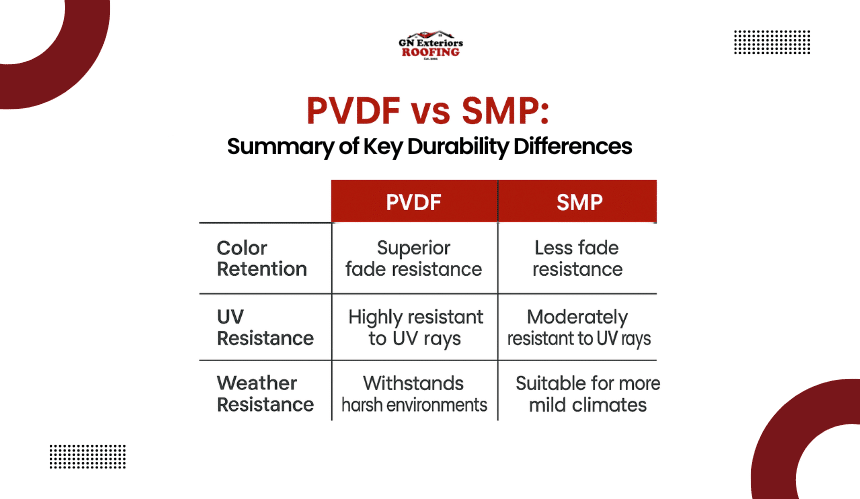
Durability plays a major role in how well a roof performs throughout its lifespan. The table below provides a clear and concise overview that helps readers compare both coating systems at a glance.
Performance Factor | PVDF Coating | SMP Coating |
UV Stability | Maintains strong color and gloss under long-term sunlight exposure due to resilient fluoropolymer chemistry | Performs well in moderate sunlight but fades faster under stronger or extended UV conditions |
Color Retention | Holds pigment integrity for several decades with minimal shade change | Retains color for many years but shows visible fading sooner in high-sun environments |
Fade Resistance | High resistance to fading caused by heat, UV, and chemical pollutants | Moderate fade resistance with quicker loss of brightness in intense climates |
Chalk Resistance | Shows slow and gradual chalk development over extended aging periods | Experiences earlier chalking as the polyester resin reacts to UV stress |
Moisture and Humidity Protection | Strong resistance to moisture, salt, and airborne contaminants | Reliable performance in average conditions, but reacts more quickly to humidity and heat |
Surface Aging Over Time | Ages slowly with minimal visible deterioration | Ages at a faster rate, especially in sunny or coastal areas |
Expected Longevity | Often exceeds 30 to 40 years while holding appearance and performance | Performs well during early years but shows age-related changes sooner |
Substrate Protection | Provides long-lasting protection that reduces corrosion and surface wear | Protects effectively in standard residential environments but with a shorter lifespan |
Choosing between PVDF and SMP becomes much easier when homeowners understand how each coating behaves over time. PVDF offers stronger stability and weather performance, while SMP provides dependable protection for standard residential needs.
Anyone planning a long-term roofing project can benefit from reviewing these differences and speaking with a metal roofing company that understands climate conditions, environmental exposure, and the level of durability required for the home.
Homeowners often compare these two coatings based on long-term value and upfront cost. While PVDF offers stronger durability, it also requires a higher initial investment. SMP provides dependable performance at a more accessible price point, which makes it a preferred choice for budget-conscious projects.
Note: These prices can vary depending on the roof design, panel type, manufacturer specifications, labor rates, chosen color, and regional climate requirements.
Selecting the right coating comes down to matching the roof’s environmental exposure, long-term expectations, and project budget. Each system serves a different type of homeowner, so a clear decision path helps narrow the choice quickly and confidently.
Choose PVDF Coating if:
Choose SMP Coating if:
Ready to choose the right finish for your metal roof? GN Exteriors can guide you toward the coating that delivers the durability and look you want. Let our team help you make a confident and long-lasting choice.
Yes, both coatings can support energy efficiency through solar reflectance, but PVDF offers more stable reflectivity over time. Its surface maintains consistent brightness, which helps reduce heat absorption during warm seasons. SMP also provides reflective benefits, but the value decreases as the finish ages and begins to lose color intensity.
Darker colors absorb more heat and tend to show fade sooner. PVDF handles dark pigments more effectively because its resin protects the color from UV breakdown. SMP can still support darker shades, but these colors usually fade faster in strong sunlight.
Yes, steeper roof pitches shed water and debris more easily, which reduces wear on the coating. Shallow pitches hold moisture longer, which can influence the rate of surface aging. PVDF responds better to prolonged moisture exposure, while SMP performs best when water runoff is consistent.
Touch-ups are possible but rarely recommended for PVDF because the color match is difficult to replicate due to its high stability. SMP touch-ups are easier since the coating has more accessible color matching, but the repaired spot may age differently from the surrounding surface.
Most roofs benefit from light cleaning once or twice a year to remove dirt, pollen, and environmental buildup. Cleaning helps both coatings maintain better appearance, although PVDF typically shows less visible change between cleanings.
Yes, metal roofs with SMP finishes can be recoated with PVDF in the future, but the process requires proper preparation. The roof must be cleaned, lightly abraded, and professionally primed so the new coating can bond correctly and deliver the expected performance.