
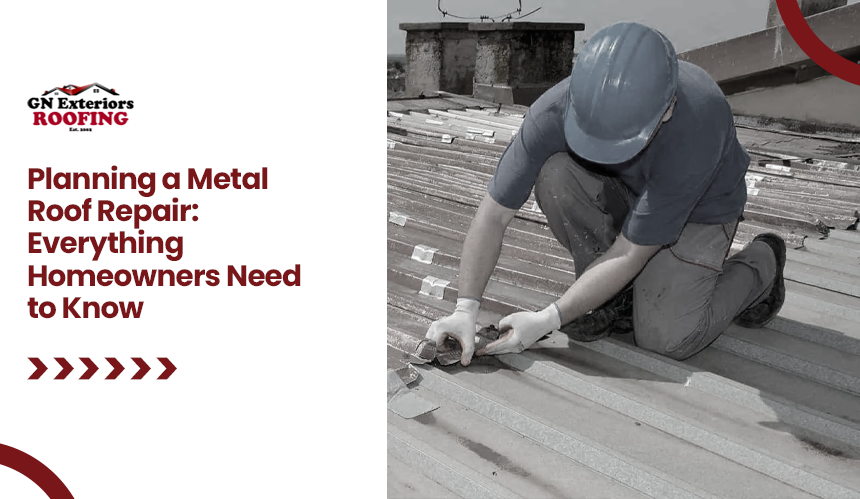
A metal roof is one of the most durable roofing systems a homeowner can invest in, but even the strongest materials are not immune to wear, leaks, or storm damage over time. When problems appear, planning a repair project properly can make the difference between a quick fix and recurring roofing issues.
Unlike a full roof installation, which focuses on new materials and structural setup, a repair project targets existing damage with precision. It is about identifying the exact problem, choosing the right repair method, and ensuring the work restores both function and appearance.
This guide will walk you through each stage of planning a metal roof repair, from assessing the damage and budgeting to selecting the right contractor.
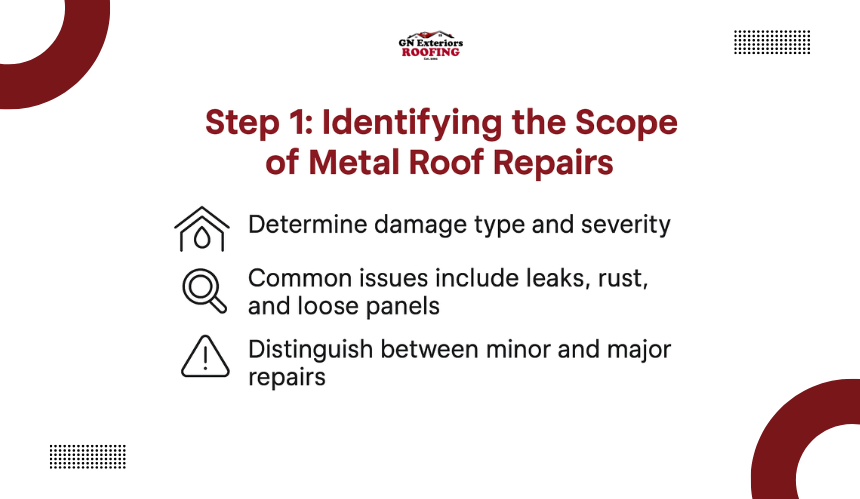
The first step in planning is to clearly determine what type of damage your roof has and how severe it is. A scoped plan not only saves money but also ensures the repair addresses the root cause instead of offering a temporary patch.
Homeowners usually discover damage after storms, seasonal wear, or years of exposure to the elements. The most common problems include:
By identifying which of these issues your roof has, you create the foundation for all later decisions, from budgeting to contractor selection.
Not all roofing problems demand the same approach.
Sometimes what begins as a repair project reveals a deeper problem. A full metal roof replacement might be more practical if the roof has extensive corrosion across large areas, multiple recurring leaks, or frequent repairs that never hold. While replacement is a bigger investment, it can save money in the long run compared to ongoing repair cycles.
Understanding the severity at this stage prevents wasted resources and ensures the next steps of the metal roof repairing project are grounded in reality.
Inspection is the stage where you move from assumptions to facts. A systematic check reveals the true condition of your roof, highlights hidden risks, and provides the evidence needed for accurate quotes and planning.
Start with a homeowner’s visual check. Walk the perimeter of the house and use binoculars to spot visible rust, shifted panels, or discolored streaks that may signal water intrusion. Inside, inspect the attic for moisture stains or insulation damage. These first signs help you understand if immediate repairs are needed.
Inspection by an experienced metal roofing contractor adds a deeper layer of accuracy. Roofing specialists use tools like infrared scanners to detect trapped moisture beneath panels and moisture meters to measure hidden leaks. They also evaluate structural elements such as the decking and trusses to ensure that the underlying framework can still support the roofing system.
One of the most important steps during inspection is documenting every issue carefully. Take clear photos of rust spots, leaks, dents, and loose panels. Write down the locations and approximate sizes of the damage. This documentation helps in three ways:
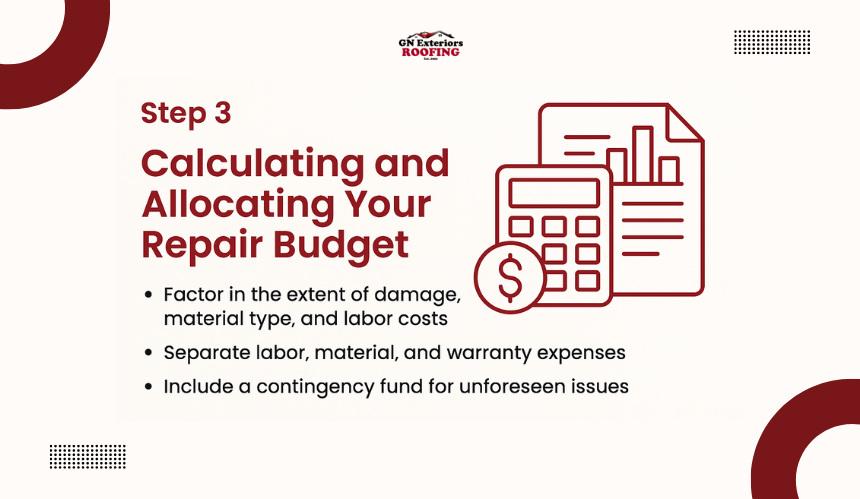
Budget planning transforms inspection results into actionable numbers. Without it, unexpected costs can stall the project midway.
The following factors shape repair costs:
When reviewing a proposed repair estimate, make sure it clearly separates the cost of labor, materials, and warranty coverage. A detailed breakdown helps you understand exactly what you are paying for and prevents unexpected add-ons later.
Always include a contingency fund of 10–15% in your budget to cover hidden issues that may surface once the repair begins, such as weakened decking or additional fastening needs.
If the damage was caused by storms or hail, review your insurance policy carefully to see whether some or all of the expense may be reimbursed.
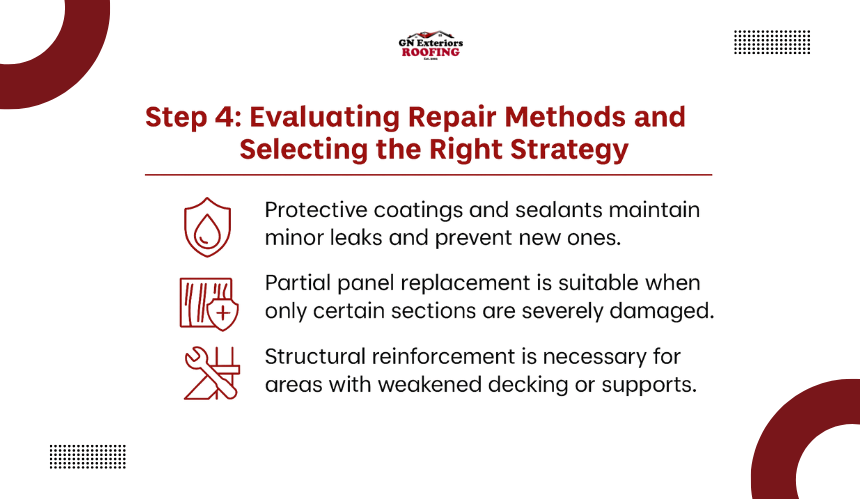
Choosing the right repair method is not just about fixing visible damage. It is about ensuring the solution is durable, cost-effective, and appropriate for the specific type of problem your metal roof faces. The strategy you select determines whether the repair will extend the roof’s lifespan for years or simply provide a temporary patch.
Minor surface issues are typically resolved with coatings and resealing. Larger-scale failures involving multiple panels call for replacement work to prevent leaks from spreading. If inspection reveals structural weakness, reinforcement must take priority since cosmetic repairs alone will not ensure safety.
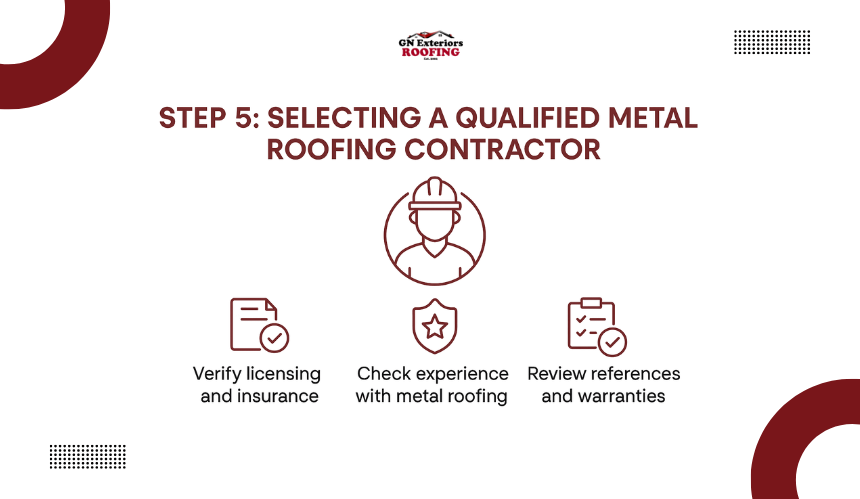
Contractor choice is often the difference between a repair that lasts and one that fails prematurely.
Choosing the right contractor gives you peace of mind that the repair will be done correctly and safely. That’s why homeowners trust GN Exterior for metal roof repairs for licensed service, full insurance protection, and skilled workmanship that stands behind every project.
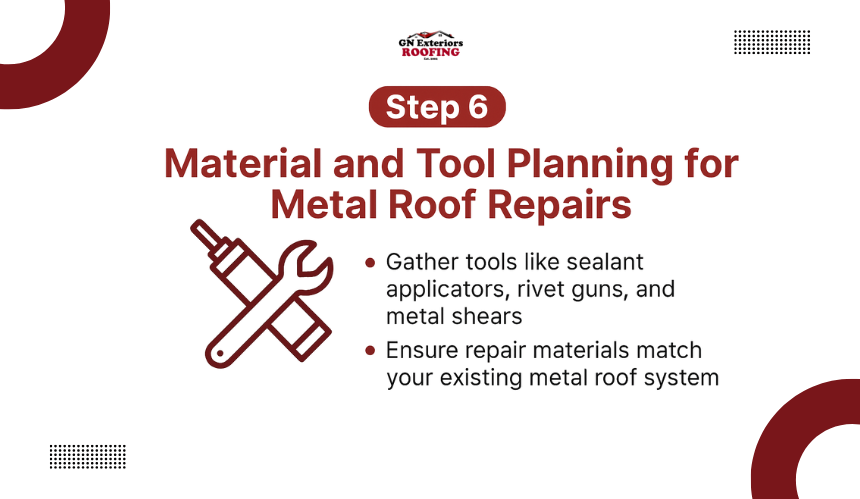
Before repair work begins, having the right tools and materials on hand prevents delays and ensures the job is done correctly. This step is especially important for homeowners considering smaller DIY repairs, but even for contractor-led projects.
Basic tools for small repairs include seam rollers, rivet guns, roof sealant applicators, and screw guns with washer-head fasteners. For panel replacement, metal snips and shears may be needed to cut panels precisely.
Specialized prep tools like wire brushes, solvent wipes, and magnetic sweepers are also helpful to ensure surfaces are clean and metal fragments are removed before sealing.
Material compatibility is crucial. Repair components should always match the base roof system to prevent premature failure. Fasteners must be compatible with the existing metal and include durable washers to ensure watertight seals. Sealants and coatings should also be chosen based on the roof’s finish type so they bond properly and provide long-lasting protection.
Modern repair products now offer sustainability benefits. Reflective “cool roof” coatings can reduce indoor heat buildup and energy costs, while many replacement panels include recycled content. Choosing environmentally conscious options not only improves efficiency but also extends the lifespan of the roof.
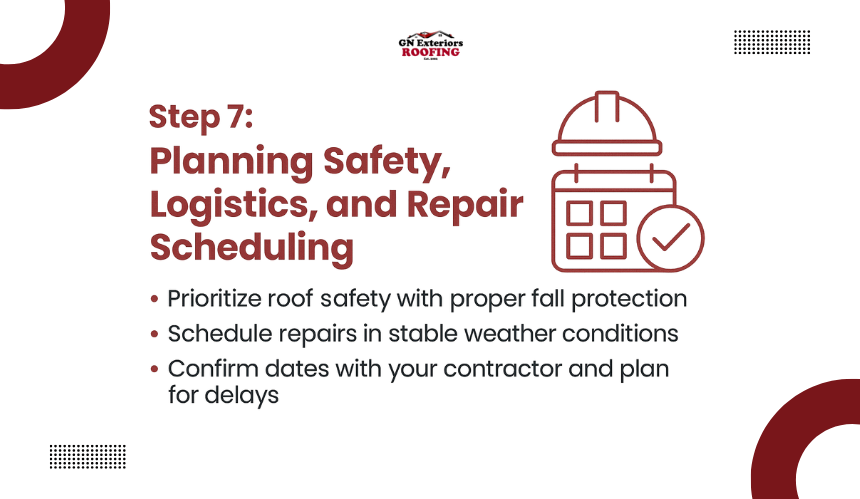
Once a contractor and strategy are chosen, planning shifts to safe and efficient execution. Proper planning at this stage ensures the work is carried out efficiently, protects both workers and property, and reduces the risk of delays.
Metal roofs are slippery and often steep. Repairs should never begin without OSHA-recommended safety practices, including fall protection harnesses, secure ladders, and non-slip footwear. Contractors should provide a clear safety protocol, outlining how workers will avoid falls, manage tools, and protect the home during the repair process.
Choose a repair window with stable weather since coatings and sealants require dry conditions to bond properly. Agree on start and finish dates with your contractor and confirm how weather delays will be handled. Proper scheduling prevents rushed work and minimizes disruption to daily routines.
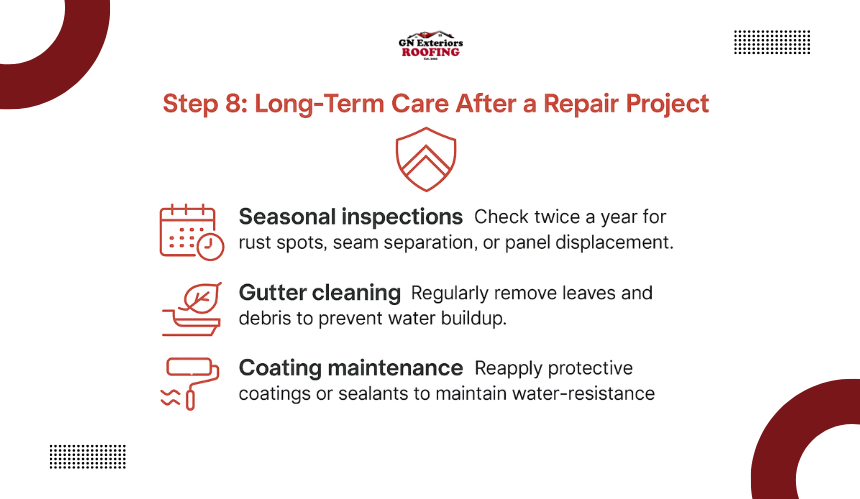
Repairs extend the life of a metal roof, but ongoing care determines how long the benefits last. Consistent care helps prevent minor issues from returning, preserves the strength of the repair work, and maximizes the roof’s overall lifespan.
No, not usually. In residential homes, the layers of decking, insulation, and underlayment absorb most sound. So, unless the underlayment was compromised during repair, each repaired section should remain as quiet as the rest of the roof. If noise remains a concern, adding sound-absorbing boards in the attic can help.
No. A properly repaired metal roof does not increase the risk of lightning strikes. Lightning is drawn to the tallest object in an area, not to specific roofing materials. Repairs do not change this fact. In reality, if lightning does strike, a repaired metal roof actually offers added safety by dispersing the electric charge across its surface, lowering the chance of fire compared to less conductive roofing systems.
Possibly, but only if the existing surface is structurally sound and the code allows it. Overlaying saves time and cost, but requires cleaning, securing any loose panels, and ensuring the substrate can accept new fasteners. Always confirm with local codes and your contractor to avoid moisture trapping or code violations.
Yes. Repairs done outside of approved warranty guidelines may void manufacturer coverage. Also, some insurers may deny claims if repairs are performed improperly. Always consult your warranty terms before DIY fixes or non-certified contractors. Licensed repairs with documentation help preserve both warranty and insurance protection.
Yes! Metal roofing is one of the best substrates for solar installation. Standing seam or properly flashed panels provide secure mounting points without penetrating the material. You’ll want to coordinate with your repair provider to ensure repair patches and seams are positioned well for future solar placement.