
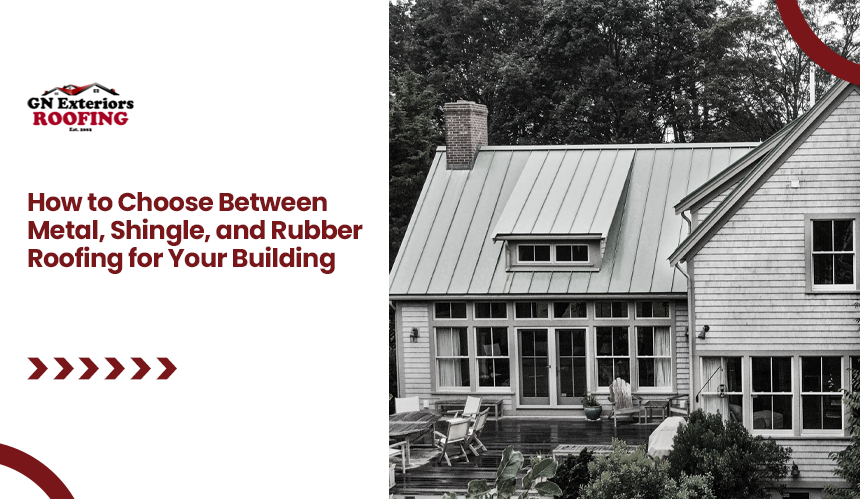
Choosing the right roofing material is one of the most important decisions a homeowner will make. When comparing metal roofing, asphalt shingle roofing, and rubber roofing, the differences in durability, cost, and environmental impact can dramatically influence your choice.
Homeowners often search for answers to questions like “Which roofing lasts the longest?”, “Is metal roofing worth the cost?”, or “What is the best roofing option for flat roofs?”.
This guide addresses those questions directly by breaking down each roofing type, highlighting its strengths, limitations, and best applications.
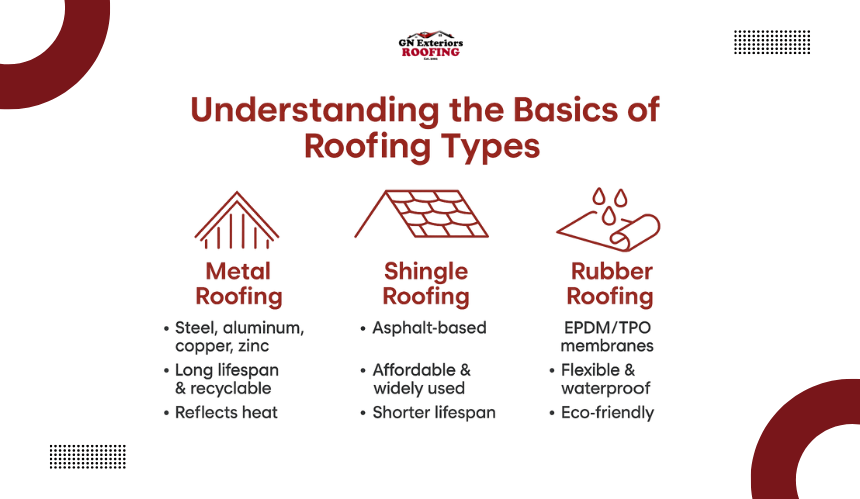
Before comparing performance, costs, or advantages, it is essential to know what each roofing material actually is. This foundational knowledge helps homeowners evaluate options without confusion.
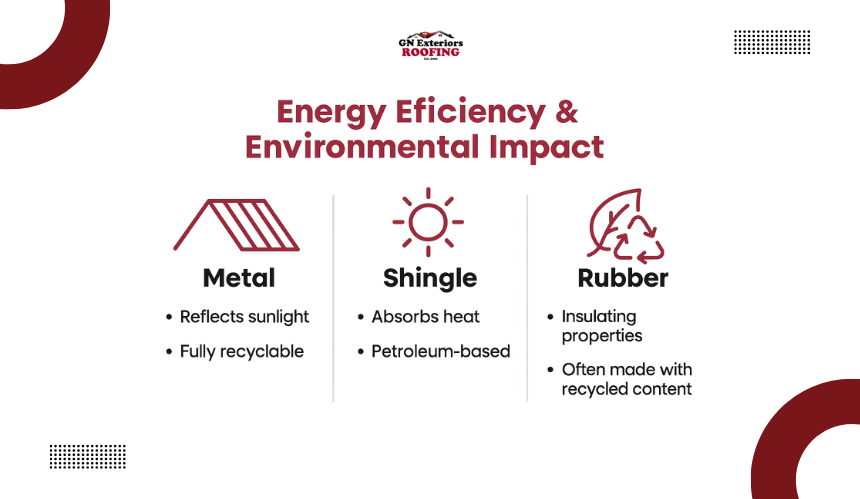
Metal roofing is built from durable materials such as steel, aluminum, zinc, or copper. It is manufactured in different forms, including standing seam panels, corrugated sheets, and metal shingles. Metal roofing is known for its resilience and long lifespan. Its reflective properties reduce heat absorption, and its recyclability positions it as a sustainable choice.
Shingle roofing, particularly asphalt shingles, is a layered material made from fiberglass or organic mat coated with asphalt and mineral granules. It comes in two main types: the economical 3-tab shingles and the thicker architectural shingles. This roofing style dominates residential neighborhoods due to its wide availability and design flexibility.
Rubber roofing is engineered primarily from EPDM or TPO compounds. It is highly flexible, making it effective on flat or low-pitch roofs where water resistance is crucial. Because many rubber products incorporate recycled material, they are valued for their eco-conscious profile. Rubber membranes are installed in large sheets, minimizing seams and reducing leaks.
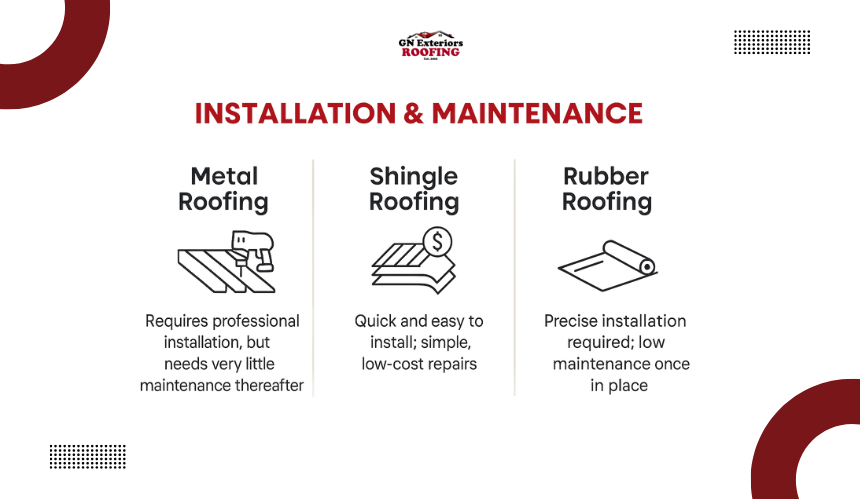
When choosing between metal, shingle, and rubber roofing, homeowners usually compare cost, durability, energy savings, aesthetics, environmental footprint, and ease of upkeep. Here’s what each factor means in practical terms.
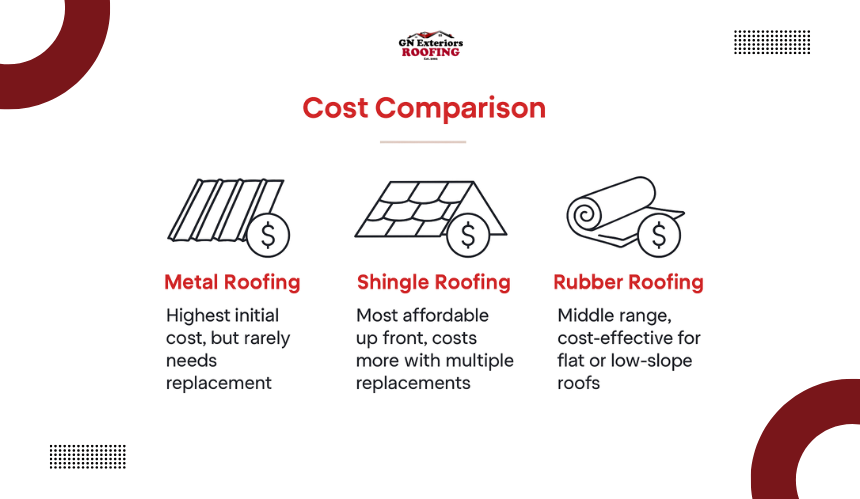
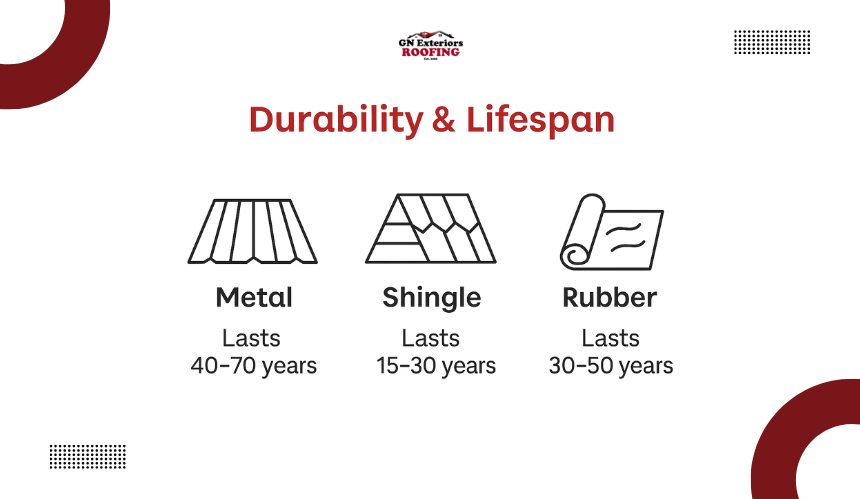
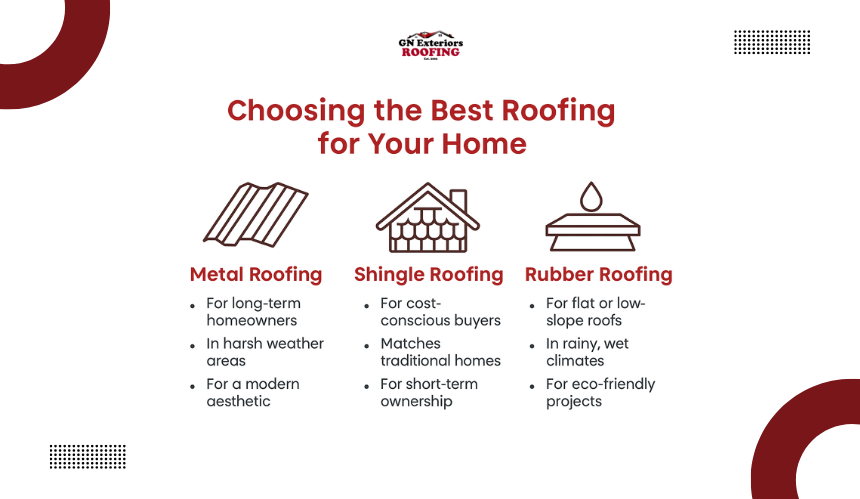
Once you understand the key factors like cost, durability, and appearance, the next step is deciding which roofing type fits your situation best. The right choice depends on how long you plan to stay in your home, the local climate, your budget, and whether you prioritize style, sustainability, or practicality.
Metal roofing is ideal for:
Shingle roofing is best for:
Rubber roofing is best for:
Still unsure which roofing type is the right fit for your home or commercial building? Daniel Fox Roofing Inc. provides expert guidance and professional installation to ensure a solution that delivers lasting durability, reliable performance, and strong curb appeal.
Yes, replacing an old roof with a high-quality option often boosts resale value. Buyers see a new roof as a sign of reduced future expenses and improved curb appeal, making the property more attractive in competitive markets.
In some cases, a new layer can be placed over an existing roof, especially with shingles. However, this depends on the condition of the current roof and local building codes. A professional inspection is recommended before considering this option.
Rubber roofing provides the most natural sound insulation, making it a strong choice for homes near busy roads or airports. Metal and shingle roofs can be insulated effectively, but rubber naturally absorbs more external noise.
Light-colored roofs reflect more sunlight, keeping homes cooler in hot climates. Darker roofs absorb heat, which can be useful in colder regions. Choosing the right shade can improve energy efficiency without changing the material.
The timeline varies by material and project size. Shingle roofs may take a few days, while metal and rubber roofing can take longer due to specialized installation requirements. Weather conditions also affect scheduling.
Yes, certain materials are designed to withstand severe storms. Metal roofing offers strong wind resistance, while rubber roofing provides excellent leak protection during heavy rainfall. Impact-resistant shingles are also available for hail-prone regions.