
Key Takeaways:
|
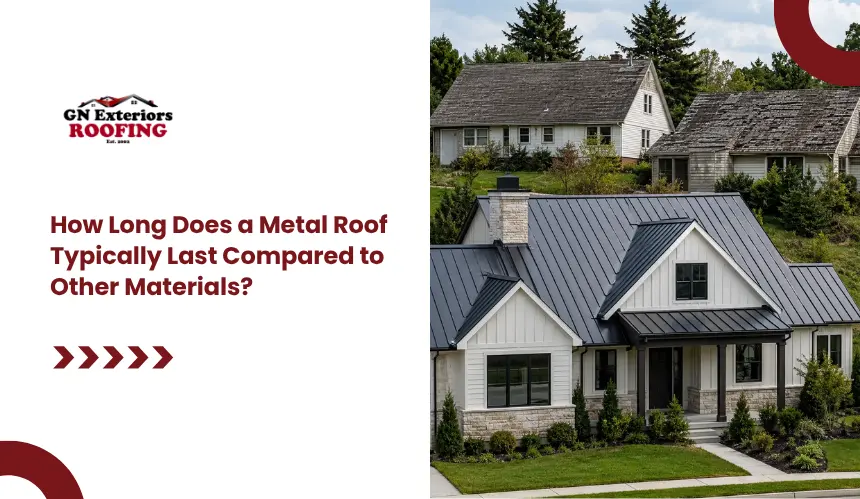
A roof replacement is one of the largest long-term exterior expenses a property owner faces, which makes material lifespan a major decision factor. Metal roofing is often marketed as a decades-long solution, but its actual lifespan varies depending on the metal type, coating system, installation quality, and environmental exposure.
This article compares how long metal roofs typically last against other common roofing materials and explains the durability factors that influence replacement timelines.
Metal roofing is commonly selected for its extended service life and lower replacement frequency compared to many traditional roofing systems.
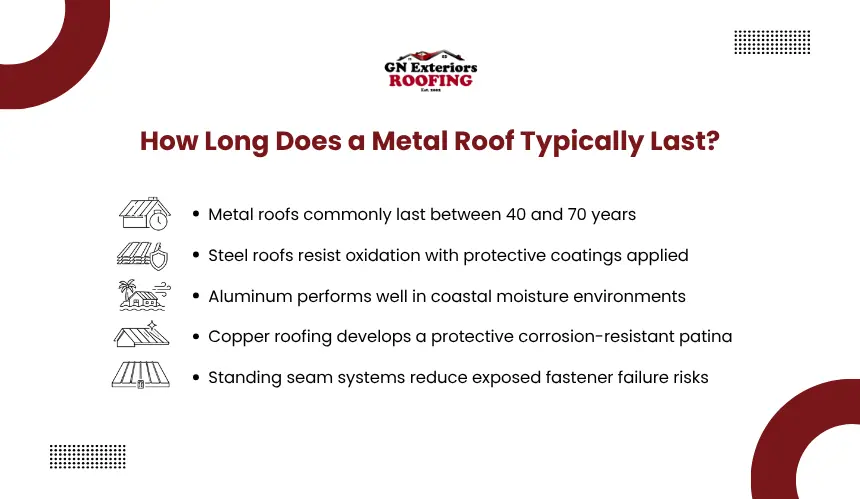
Most residential metal roofs last between 40 and 70 years, although the actual lifespan depends on the metal composition, panel design, protective finishes, installation accuracy, and regional weather exposure.
Different metal roofing materials age at different rates because corrosion resistance, thermal expansion behavior, and coating durability vary by metal type. Steel roofing systems typically last 40 to 60 years when galvanized or coated with protective finishes that reduce oxidation and moisture penetration. Aluminum roofs often perform well in coastal environments because aluminum naturally resists salt-related corrosion, allowing many systems to exceed 50 years.
Copper and zinc roofing systems generally last the longest. Copper roofs can remain structurally functional for more than 70 years because the surface develops a protective patina that slows corrosion over time. Zinc roofing also forms a self-protective layer that helps reduce weather-related deterioration and surface damage.
Standing seam metal roofs usually outlast exposed-fastener systems because concealed fasteners reduce water intrusion risk around screw penetrations. Reduced fastener exposure also limits long-term loosening caused by thermal expansion and contraction cycles.
Metal roofing durability is heavily tied to how the roof manages moisture, temperature fluctuation, and environmental stress. Protective coatings such as Galvalume, zinc layers, and specialized paint systems shield the metal surface from ultraviolet radiation, oxidation, and water exposure. Without those coatings, surface corrosion can accelerate structural weakening.
Metal roofs also perform differently from asphalt-based materials during extreme temperature shifts. Metal expands and contracts without absorbing moisture, which lowers the likelihood of cracking, curling, or material separation over time. This becomes especially important in climates with frequent freeze-thaw cycles, intense sun exposure, or heavy seasonal storms.
Ventilation and installation precision also affect lifespan. Improper flashing placement, trapped moisture, poor panel alignment, or inadequate fastening systems can shorten roof life even when premium materials are used. In many cases, installation defects cause premature failure long before the metal itself reaches the end of its expected lifespan.
Asphalt shingles remain the most widely used residential roofing material because of lower upfront cost, but their lifespan is significantly shorter than metal roofing in most climate conditions. The difference becomes more noticeable in regions with prolonged sun exposure, heavy rainfall, temperature swings, or repeated storm activity.
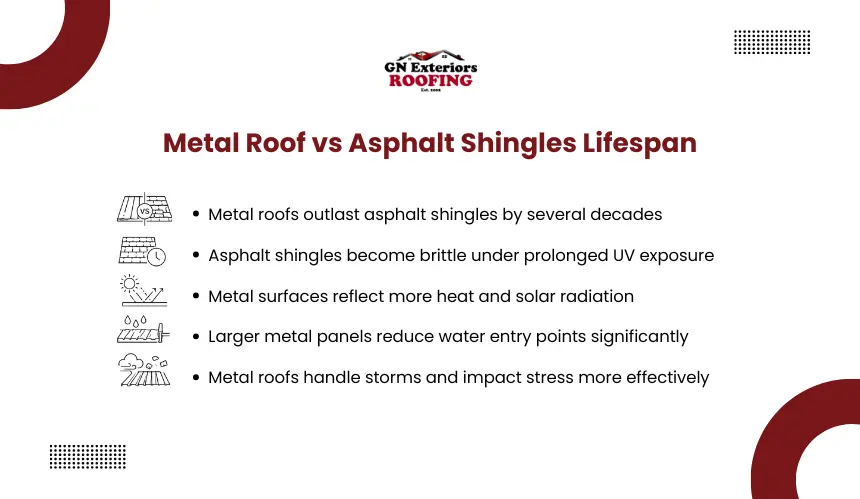
Standard three-tab asphalt shingles typically last 15 to 20 years, while architectural shingles may reach 25 to 30 years under stable conditions. By comparison, many metal roofing systems remain functional for 40 years or longer before major replacement becomes necessary.
The replacement cycle changes long-term ownership costs. A property owner may replace an asphalt roof two or even three times during the lifespan of a single metal roof. That difference often affects maintenance planning, labor expenses, disposal costs, and insurance considerations over several decades.
Roof aging also progresses differently between the two materials. Asphalt shingles gradually lose protective granules, dry out under ultraviolet exposure, and become more brittle with age. Metal roofing does not rely on granular surfacing, which reduces gradual surface erosion from sunlight and weather exposure.
Heat retention plays a major role in asphalt roof deterioration. High attic temperatures and constant solar exposure accelerate asphalt breakdown, causing shingles to warp, curl, or crack over time. Metal roofing reflects more solar radiation and experiences less material degradation from prolonged heat exposure.
Moisture resistance also differs substantially. Asphalt shingles depend on overlapping layers and underlayment systems to prevent water intrusion, but aging shingles can become vulnerable to wind uplift, edge separation, and moisture penetration.
Metal panels create larger continuous surfaces with fewer exposed seams, reducing the number of entry points where water can infiltrate the roofing system.
Storm performance creates another lifespan gap. Hail impact, strong winds, and debris can displace or fracture asphalt shingles more easily than properly installed metal panels. Repeated storm-related repairs gradually shorten asphalt roof service life, especially in regions with severe seasonal weather patterns.
Metal roofing occupies a middle ground between traditional lightweight roofing systems and premium long-life materials such as slate and clay tile. While several roofing materials can last for decades, their durability profiles differ based on moisture behavior, structural weight, impact resistance, and maintenance demands.
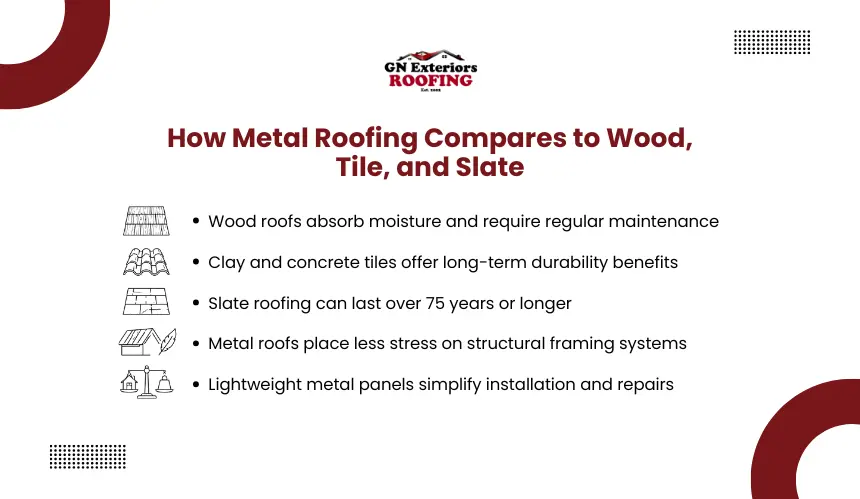
Wood shingles and wood shakes typically last 20 to 35 years, depending on the wood species, ventilation conditions, and moisture exposure. Cedar roofing is commonly used because it naturally resists insects and decay better than some other wood products, but long-term durability still depends heavily on climate conditions and maintenance frequency.
Moisture creates one of the largest lifespan limitations for wood roofing systems. Repeated wet-dry cycles can lead to splitting, warping, fungal growth, and gradual structural weakening. In humid environments or shaded roof areas, trapped moisture often accelerates deterioration faster than surface aging alone.
Metal roofing does not absorb water, which reduces swelling, rot development, and biological growth issues. It also requires less ongoing surface treatment than wood roofing, which often needs periodic sealing, cleaning, or damaged shake replacement to maintain structural performance.
Clay and concrete tile roofs commonly last 50 years or more, placing them within a similar durability range as many premium metal roofing systems. However, tile longevity depends heavily on structural support capacity because tile roofing places significantly more weight on the building frame.
Concrete and clay tiles resist ultraviolet degradation well, but individual tiles can crack from impact stress, shifting loads, or freeze-thaw expansion. Even when the tiles themselves remain intact, underlayment deterioration beneath the tile system can create earlier repair requirements.
Metal roofing systems weigh substantially less, which simplifies installation on many residential structures and reduces framing stress over time. Metal panels are also less vulnerable to isolated fracture damage from foot traffic or falling debris compared to brittle tile surfaces.
Natural slate is one of the longest-lasting roofing materials available, with some systems remaining functional for more than 75 to 100 years. Slate achieves that lifespan because stone is highly resistant to ultraviolet exposure, moisture absorption, and temperature-related deterioration.
Despite its durability, slate introduces structural and installation complexity. The material is extremely heavy, requires reinforced framing in many applications, and depends on specialized installation techniques to prevent breakage during placement or repairs. Replacement costs and labor requirements are also substantially higher than most roofing systems.
Metal roofing offers a different long-term value profile. Although metal may not always match the maximum lifespan of premium slate systems, it provides extended durability with lower structural load, simpler installation logistics, and reduced repair complexity over time.
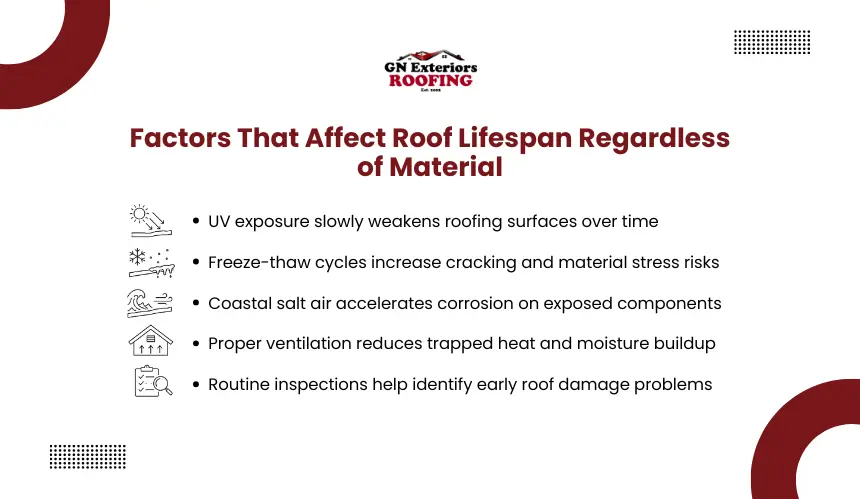
Roofing material alone does not determine how long a roof will last. Environmental exposure, installation accuracy, ventilation performance, and maintenance practices all influence how quickly roofing systems deteriorate under real operating conditions.
Ultraviolet radiation gradually breaks down roofing materials by weakening surface coatings, drying protective compounds, and accelerating thermal expansion stress. Asphalt shingles often become brittle under prolonged heat exposure, while painted metal surfaces can experience coating degradation if lower-grade finishes are used.
In Massachusetts, roofing systems are exposed to wide seasonal temperature swings, coastal moisture, snow accumulation, and freeze-thaw cycling that place continuous stress on roofing materials. Properties near Weymouth experience additional salt-air exposure from the coastal environment, which can accelerate corrosion around fasteners, flashing systems, and lower-quality metal panels if protective coatings are insufficient.
Because of these conditions, metal roofing installation in Weymouth often prioritizes corrosion resistance, seam durability, and long-term weather performance over lower upfront material cost.
Moisture exposure creates a separate set of aging risks. Heavy rainfall, snow accumulation, and persistent humidity increase the likelihood of trapped moisture, underlayment deterioration, and structural decay beneath the roof surface.
Freeze-thaw cycles are especially damaging because absorbed moisture expands during freezing temperatures, creating cracking and separation in vulnerable materials such as tile, wood, and aging shingles.
Coastal environments introduce additional corrosion pressure because airborne salt particles accelerate oxidation on exposed metal components, flashing systems, and fasteners. Roofing systems installed near coastal regions typically require corrosion-resistant materials and specialized protective coatings to maintain expected lifespan performance.
Improper installation shortens roof lifespan faster than normal weathering in many cases. Misaligned panels, poorly sealed flashing, incorrect fastener spacing, and inadequate drainage design can allow water intrusion long before the roofing material itself fails structurally.
Ventilation also affects long-term roof performance. Poor attic airflow traps heat and moisture beneath the roofing system, increasing condensation risk and accelerating material fatigue. Excessive attic temperatures can shorten the life of asphalt shingles, while trapped moisture may damage decking, insulation, and fastener systems across multiple roof types.
Routine roof inspections and repairs help identify early-stage failures before widespread damage develops. Loose flashing, clogged drainage areas, sealant deterioration, and localized surface damage often become larger structural problems when left unaddressed over multiple seasons.
A roof designed for long-term durability can reduce future repair frequency, moisture-related damage, and premature replacement costs. GN Exteriors helps property owners evaluate roofing materials based on lifespan, weather exposure, and structural performance so the roofing system matches both the property conditions and long-term maintenance expectations.
A roof warranty does not always match the full service life of the roofing system. Many warranties cover paint finish, material defects, or specific components rather than every cause of failure. A metal roof may last 40 to 70 years, but fasteners, sealants, flashing, and workmanship still affect real performance.
The metal panels are rarely the first component to fail. Early problems usually appear around fasteners, flashing, seams, pipe boots, ridge caps, or poorly sealed penetrations. These weak points handle water movement, expansion, and wind pressure, so small installation errors can shorten lifespan even when the metal surface remains strong.
Standing seam roofing is often worth considering when long-term durability is the priority. Its concealed fastener system reduces exposed screw penetrations, which lowers the risk of moisture entry and fastener loosening. This design usually performs better than exposed-fastener panels in areas with wind, snow, and frequent temperature changes.
A metal roof should generally be inspected once a year and after major storms. Inspections should focus on seam movement, flashing condition, coating wear, loose fasteners, debris buildup, and drainage paths. Early correction helps prevent minor moisture issues from reaching the underlayment, roof deck, or interior structure.
Metal roofing can sometimes be installed over existing asphalt shingles, but the roof deck must be structurally sound, dry, and properly ventilated. Trapped moisture, uneven shingle layers, or hidden deck damage can reduce performance. A professional assessment is needed before overlay installation because lifespan depends on the condition beneath the new roof.