
Key Takeaways
|
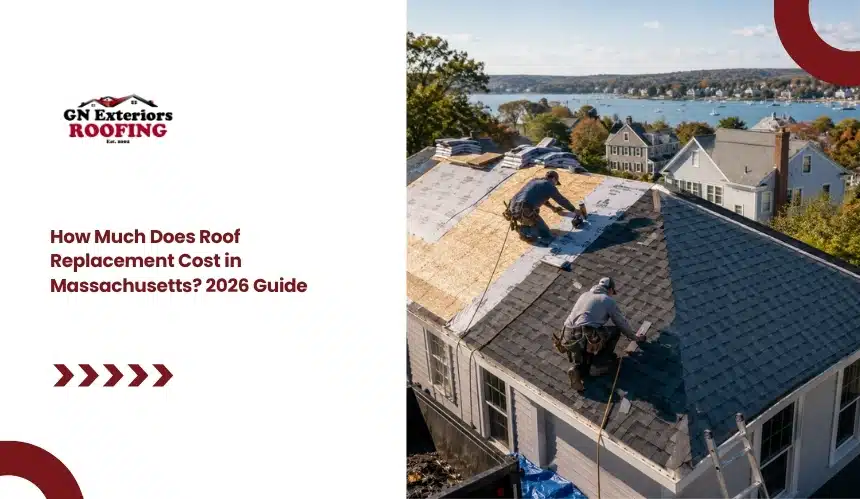
Roof replacement in Massachusetts usually costs $8,000 to $35,000+ in 2026, depending on roof size, slope, material, tear-off work, and hidden structural issues. Many standard asphalt shingle replacements fall between $13,000 and $22,000. The real price depends on the roof’s size, condition, material choice, and the level of work required beyond basic shingle installation.
Roof replacement pricing in Massachusetts depends on roof area, material grade, labor difficulty, and existing roof condition. A simple asphalt roof costs less than a steep roof with dormers, skylights, chimneys, valleys, or difficult access points.
A typical asphalt shingle roof replacement in Massachusetts often ranges from $13,000 to $22,000 for an average home. Smaller, simple roofs may cost $8,000 to $13,000, while larger or more complex roofs can reach $25,000 to $35,000+.
Asphalt shingles remain the most common residential roofing material because they offer a practical mix of cost control, weather resistance, installation speed, and design flexibility. Architectural shingles cost more than basic 3-tab shingles, but they usually provide thicker construction, stronger wind resistance, and better curb appeal.
Roof Type | Estimated 2026 Cost Range |
Small basic asphalt roof | $8,000 to $13,000 |
Average architectural shingle roof | $13,000 to $22,000 |
Large or steep asphalt roof | $20,000 to $35,000 |
Metal roof replacement | $25,000 to $55,000+ |
Slate, cedar, or premium roofing | $35,000 to $75,000+ |
The lower end usually applies to simple rooflines with easy access and limited repair needs. The higher end applies when the project requires premium materials, extra safety setup, complex roof transitions, or structural correction.
Roof size is one of the clearest pricing factors because roofing is measured in squares. One roofing square equals 100 square feet of roof surface. A 20-square roof equals 2,000 square feet of roofing area.
The roof area is not the same as the interior living space. A 1,700-square-foot home may have 2,000 to 2,300 square feet of roof surface if the roof has a moderate pitch, overhangs, dormers, or multiple planes.
Roof Surface Size | Roofing Squares | Estimated Asphalt Cost |
1,200 sq. ft. roof | 12 squares | $7,200 to $13,200 |
1,800 sq. ft. roof | 18 squares | $10,800 to $19,800 |
2,200 sq. ft. roof | 22 squares | $13,200 to $24,200 |
3,000 sq. ft. roof | 30 squares | $18,000 to $33,000 |
These ranges are based on an estimated $600 to $1,100 per roofing square for many asphalt shingle projects. The price per square rises when the roof has steep sections, limited access, old layers, upgraded shingles, or difficult removal conditions.
Massachusetts roofs face snow, ice dams, freeze-thaw cycles, heavy rain, coastal wind, and humid seasonal conditions. These factors increase the need for reliable moisture barriers, edge protection, attic airflow, and proper drainage.
Older homes can also raise labor costs. Many Massachusetts properties have steep gables, narrow driveways, aged roof boards, layered shingles, chimney intersections, and limited setup space. These conditions slow the crew, increase safety requirements, and make installation more detailed.
Do You Know?
Massachusetts receives about 45 to 55 inches of annual precipitation across the state, according to the NOAA State Climate Summary. That means a roof replacement in Massachusetts is not only about installing new shingles. The roof system must also manage frequent rain, snowmelt, drainage movement, and moisture exposure throughout the year.
Two homes with the same square footage can receive very different roofing estimates. The price changes when roof shape, slope, access, material, tear-off work, and installation details require more labor or specialized handling.
Roof pitch and access can change labor time even when the roof area is already measured. A steep roof slows installation because workers need stronger fall protection, safer staging, and more careful material handling.
Multi-story homes can also cost more because crews must move materials farther and work at greater heights. Tight driveways, landscaping, fences, and limited dumpster space can add handling time.
Common cost-raising conditions include:
A simple ranch roof can often be replaced faster than a steep Colonial, Cape, or Victorian-style roof, even when both roofs have a similar square count.
Material selection affects upfront cost, installation labor, maintenance expectations, and long-term performance. Basic asphalt shingles cost less, while architectural asphalt shingles offer better thickness and appearance. Metal, cedar, slate, and synthetic roofing require higher material costs and more specialized labor.
Roofing Material | Typical Cost Level | Best Use Case |
3-tab asphalt shingles | Lower | Budget-focused replacement |
Architectural shingles | Moderate | Standard residential roof replacement |
Luxury asphalt shingles | Moderate to high | Better texture and curb appeal |
Metal roofing | High | Long service life and strong snow shedding |
Cedar roofing | High | Historic or natural-style homes |
Architectural shingles are often the most balanced choice for Massachusetts homes. They cost more than 3-tab shingles, but they usually provide stronger weather performance without the major price jump of slate, cedar, or metal.
Hanover homes often need roofing materials that can handle New England rain, snow, wind, and freeze-thaw changes without creating heavy maintenance demands. For many residential properties, asphalt shingle roofing in Hanover is commonly done because asphalt shingles offer a strong balance of affordability, curb appeal, weather resistance, and repair flexibility. This makes the material practical for pitched roofs, dormers, chimneys, and older home styles found throughout the area.
Tear-off is the process of removing old roofing before the new system is installed. A single-layer tear-off is usually more straightforward. Two layers require more labor, produce more debris, and increase dumpster weight.
Removal work also affects cleanup time. Heavy debris, tight access, and older materials can require more crew coordination, especially on properties with narrow driveways or limited staging space.
A clear estimate should state whether full tear-off, disposal, dumpster service, and cleanup are included. These items can change the true cost even when two quotes show the same shingle type.
Hanover’s climate can be tough on roofing because homes deal with winter snow, steady rain, coastal moisture, humidity, and seasonal temperature changes. These conditions can increase the risk of leaks, ice-related wear, corrosion around weak areas, and faster aging when the roof material is not durable enough.
That is why metal roofing is often encouraged in Hanover for homes that need stronger long-term weather protection. Metal roofing sheds rain and snow efficiently, resists moisture damage, handles temperature swings well, and can provide a longer-lasting option for homeowners who want better year-round roof performance.
A roof system includes more than visible shingles. Moisture barriers, drip edge, pipe boots, starter shingles, ridge caps, roof transitions, and attic airflow details all affect water control and long-term performance.
Wall transitions, chimney edges, skylight curbs, vents, and pipe penetrations are high-risk leak areas because water changes direction around them. Attic airflow matters because trapped heat and moisture can shorten shingle life and increase condensation risk.
Important roof system components include:
A low estimate may exclude some of these items. That can reduce the initial price, but it can also increase leak risk, shorten roof life, or weaken warranty eligibility.
Massachusetts roof replacement costs are shaped by regional weather, building conditions, and local compliance requirements. The roof must be installed for New England performance, not only for basic water coverage.
Snow and ice affect roof pricing because winter moisture can move under shingles when meltwater refreezes near the eaves. This creates ice dams that block drainage and push water toward vulnerable roof edges.
Freeze-thaw cycles also stress sealants, gutters, fasteners, metal edges, and roof joints. When trapped moisture freezes, small gaps can expand and create leak paths. This is why winter-ready roof installation requires careful attention to eaves, valleys, and drainage routes.
Homes with weak attic conditions or uneven insulation may need correction during replacement. New shingles alone may not solve winter roof problems if heat and moisture continue collecting under the roof surface.
Do You Know?
During the severe winter of 2014–2015, Boston recorded 110 inches of seasonal snowfall, according to the NOAA State Climate Summary. This shows why roof edges, attic conditions, drainage routes, and winter protection matter so much in Massachusetts roof replacement planning.
Coastal Massachusetts homes face wind-driven rain, salt air, and higher moisture exposure. These conditions can wear shingles, corrode metal components, loosen edge materials, and expose weak transition details faster than inland conditions.
Roofing near coastal areas may require higher-rated shingles, stronger fastening patterns, corrosion-resistant components, and careful edge installation. These upgrades can raise the price, but they reduce the chance of wind uplift and water intrusion.
Inland homes still face heavy rain and seasonal storms, but coastal properties usually need closer attention to fastening strength, material durability, and exposed roof edges.
Roof replacement in Massachusetts often involves permits, contractor registration, insurance, and code-compliant installation. Homeowners should confirm the required approvals before the project starts.
A professional roofing estimate should also show whether the contractor carries liability insurance and workers’ compensation coverage. This protects the homeowner from risk if property damage, injury, or incomplete work occurs during the project.
Before hiring, homeowners should verify:
These checks help prevent compliance problems, unclear responsibility, weak protection, and liability issues during the project.
Hidden costs usually appear after tear-off because the old roof can conceal moisture damage, weak wood, failed transitions, or damaged edge materials. A strong estimate explains how these repairs are priced before work starts.
Roof decking replacement can add several hundred dollars or several thousand dollars depending on the extent of the damage. Minor repairs may involve only a few plywood sheets, while widespread rot around valleys, eaves, or leak areas can raise the total much more.
New shingles need a firm, dry, and stable base. Soft plywood, rotted boards, or delaminated sheathing cannot hold fasteners properly. Installing new roofing over weak decking can lead to poor nail grip, uneven surfaces, and premature failure.
The estimate should include a unit price for roof decking repair. This keeps the homeowner from being surprised if the crew discovers damaged wood after removing the old shingles.
Chimneys, skylights, dormers, sidewalls, and roof-to-wall intersections require detailed water control. These areas collect runoff and often become leak points when metal pieces are old, bent, reused, or poorly integrated.
Skylights may need new flashing kits or curb repairs. Chimneys may require step flashing, counterflashing, or masonry-related corrections. Wall areas can require siding or trim adjustments so water drains correctly.
These details are performance work, not cosmetic add-ons. A new roof can still leak if roof transitions are not layered and sealed correctly.
Gutters, fascia, and soffits influence how water and air move at the roof edge. Damaged fascia can weaken gutter attachment. Poor gutter slope can hold water near the roofline. Blocked soffits can restrict intake airflow.
These issues may not be included in the base roof price, but they can affect the performance of the new roof. Replacing shingles without correcting rotten fascia, clogged soffits, or poor drainage can leave the same moisture conditions in place.
Roof-edge repairs may involve:
These items are usually priced separately because their full condition may not be visible until tear-off begins.
Warranty upgrades may increase the project price when the roof must use manufacturer-approved accessories. These can include starter shingles, ridge caps, moisture barriers, ventilation products, and installation methods required for enhanced coverage.
A stronger warranty can provide better protection, but the homeowner should review the actual terms. Some warranties include prorated coverage, transfer limits, installation conditions, and exclusions.
The value depends on the contractor’s certification, the product system used, and whether workmanship coverage is clearly written. A warranty headline is less useful than the details that explain what is covered, for how long, and under what conditions.
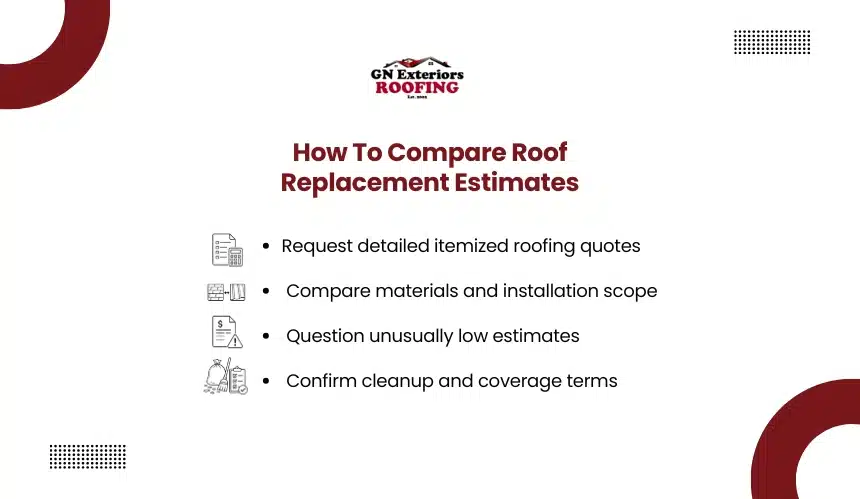
A roof replacement estimate should make the scope easy to compare. The lowest number is not always the best value if the quote leaves out important system details, site protection, removal work, cleanup, or compliance-related items.
A detailed roofing quote should show the full installation package, not only the shingle brand. It should explain materials, labor, removal work, disposal, jobsite protection, cleanup, and coverage terms.
Quote Item | Why Does It Matter? |
Roof size in squares | Shows how the price was calculated |
Shingle brand and type | Confirms material quality |
Tear-off details | Shows whether old roofing is removed |
Underlayment type | Affects water resistance |
Ice barrier placement | Supports winter leak protection |
Transition work | Covers high-risk leak areas |
Airflow plan | Supports attic moisture control |
Wood repair rate | Clarifies hidden repair costs |
Cleanup and disposal | Prevents surprise debris fees |
Coverage terms | Explains long-term protection |
A quote without these details is difficult to compare because it does not show whether the contractor is pricing the same roof system.
The lowest quote may leave out essential work. It may exclude approvals, transition replacement, airflow correction, ice barrier coverage, premium accessories, or full cleanup.
A cheaper roof can become more expensive if it leaks early, fails inspection, loses product coverage, or needs repeat repairs. Price matters, but scope determines whether the installation is complete.
When one estimate is thousands of dollars lower than the others, homeowners should ask what is missing. The gap often comes from weaker materials, less labor, vague repair pricing, or excluded components.
Homeowners should ask direct questions before signing a roofing contract. Clear answers show whether the estimate is complete and whether the contractor understands Massachusetts roof conditions.
Useful questions include:
These questions reduce confusion before work begins and make it easier to compare contractors fairly.
Roof replacement is worth the cost when repairs no longer solve the roof’s overall condition. A complete replacement protects the building envelope, reduces leak risk, improves curb appeal, and gives the home a more reliable weather barrier.
Roof repair makes sense when damage is isolated, such as a few missing shingles, one pipe boot leak, or a small transition issue. Replacement becomes more practical when the roof has widespread wear or repeated failures.
Replacement may be the better option when:
Repeated repairs can delay replacement, but they may not stop system-wide failure. Once the roof reaches the end of its service life, full replacement often provides better long-term cost control.
A properly installed roof protects insulation, drywall, framing, attic spaces, siding, and interior finishes from moisture damage. It also improves resale confidence because buyers and inspectors can see a newer roofing system with documented materials and coverage terms.
The value comes from the full roof assembly. Shingles shed water, but moisture barriers, roof transitions, airflow, substrate condition, and workmanship determine how long the roof performs.
A new roof can also reduce emergency repair calls, improve maintenance planning, and support stronger property presentation when the home is listed for sale.
Homeowners should plan beyond the base price because removal can reveal work that was not visible during the initial inspection. The strongest budget starts with roof size, then adjusts for slope, material quality, winter exposure, and site complexity.
A smart planning process includes:
This approach gives homeowners a more accurate cost picture before work begins. It also makes it easier to compare contractors based on scope, not only the number at the bottom of the estimate.
A roof replacement is a major investment, so the right contractor matters just as much as the right material. GN Exteriors helps Massachusetts homeowners choose roofing systems built for local weather, from snow and ice to rain, wind, and seasonal moisture. Whether the project involves asphalt shingles, metal roofing, roof repairs, or full replacement planning, their team focuses on clear estimates, durable installation, and dependable protection.
The average roof replacement cost in Massachusetts in 2026 is often $13,000 to $22,000 for many standard asphalt shingle roofs. Smaller simple roofs may start near $8,000, while large, steep, or premium-material roofs can exceed $35,000.
Massachusetts roof replacement can cost more because roofs face snow, ice dams, freeze-thaw cycles, coastal wind, heavy rain, and higher labor demands. These conditions often require stronger moisture protection, better transition work, proper attic airflow, and winter-ready installation details.
Asphalt shingles are usually the most affordable roofing material for Massachusetts homes. Basic 3-tab shingles cost less, but architectural shingles are more common because they provide thicker construction, better appearance, and stronger weather performance.
Yes, hidden roof damage can increase the final price after tear-off. Soft sheathing, damaged fascia, failed roof transitions, blocked intake airflow, and moisture-weakened wood may need correction before the new roofing system can be installed properly.
Homeowners can avoid overpaying by comparing itemized estimates, checking contractor credentials, reviewing coverage terms, and asking how hidden repairs are priced. A complete quote should explain materials, labor, removal, disposal, system details, cleanup, and possible change-order costs.