

A Quick Answer: The best fasteners for marine-grade metal roofs are 316 stainless steel screws, bi-metal fasteners with stainless heads, and high-durability polymer or ceramic-coated roofing screws. The best sealants for these environments are butyl sealants for lap joints, neutral-cure silicone for exposed flashing, and high-performance SMP hybrid sealants for areas that experience expansion and movement. These materials perform reliably because they resist salt corrosion, maintain structural strength, and create watertight barriers in coastal climates. |
Marine-grade environments expose roofing systems to intense salt spray, humidity, and ultraviolet cycles. This combination accelerates degradation in standard hardware, which affects both structural stability and long-term weatherproofing.
This blog will explain how each option works, why marine conditions require specialized materials, and how to select the most dependable components for lasting protection.
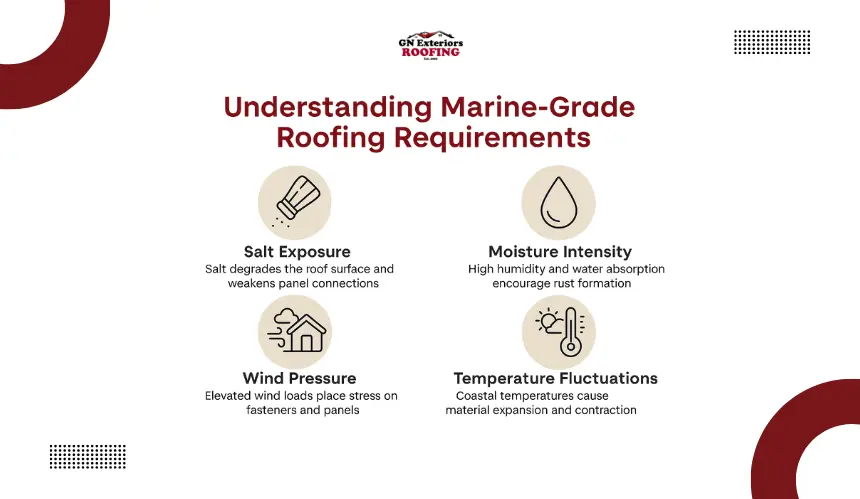
Coastal roofing systems operate in conditions that are far more aggressive than inland environments. The combination of salt-rich air, heavy moisture, and persistent ultraviolet exposure places continuous stress on metal panels and the components that secure them.
Important: Research shows the corrosive effects of salt-laden air can extend far beyond the immediate coast. In some regions, salt air has been linked to accelerated metal corrosion up to 30–50 miles inland, affecting zinc-coated or galvanized steel roofing and structures. |
Salt particles cling to metal surfaces and draw in moisture. This constant cycle creates an ideal environment for corrosion. Even small amounts of salt contamination can trigger oxidation on metal roofs, which compromises the integrity of fasteners and weakens panel connections over time.
Roofing hardware that is not designed for marine exposure often deteriorates quickly because it cannot resist this chemical activity.
Coastal humidity remains high throughout the year, and this prolonged moisture exposure encourages rust formation on vulnerable metals.
When fasteners and sealants absorb moisture or lose their waterproofing properties, they begin to loosen, degrade, or allow water intrusion. This makes moisture resistance a core requirement for any product used in marine roofing assemblies.
Homes and buildings near the ocean frequently experience elevated wind loads. Strong gusts create uplift forces that place added tension on the fasteners that hold metal panels in place.
Inadequate hardware increases the risk of panel displacement during storms. Marine-grade fasteners must therefore deliver superior withdrawal strength and mechanical stability under sustained pressure.
Coastal temperatures shift rapidly between warm, cool, and humid conditions. These changes cause metal panels to expand and contract. If fasteners or sealants cannot adapt to this movement, they may crack, separate, or lose adhesion.
Marine-rated materials are engineered to remain flexible and secure during thermal cycling, which helps prevent leaks and structural stress.
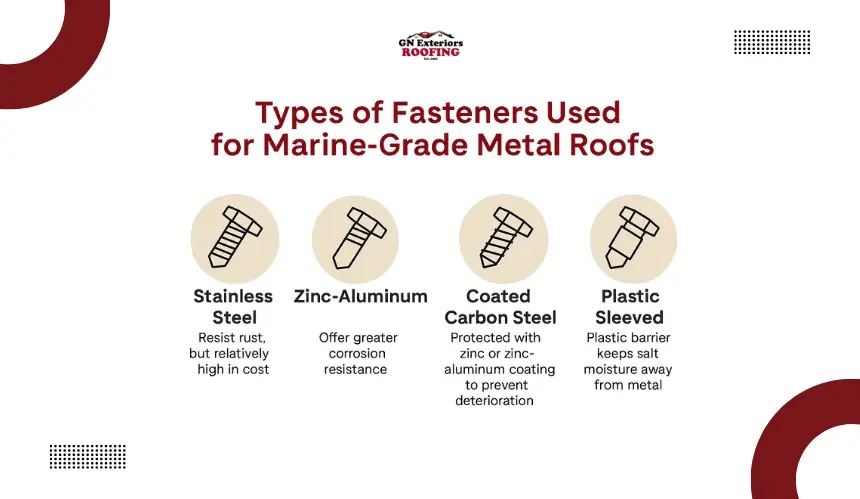
Marine roofing requires fasteners that can withstand continuous salt exposure, retain structural strength, and remain stable under heavy moisture and ultraviolet cycles. Each fastener category offers different levels of corrosion resistance and mechanical durability, which makes proper material selection essential for long-term roof performance in coastal environments.
Stainless steel fasteners are among the most reliable options for marine roofing because they resist corrosion and maintain structural integrity over long periods.
Grade 316 stainless steel provides the highest protection due to its molybdenum content, which strengthens its resistance to chloride-induced corrosion. This makes it one of the top choices for coastal and oceanfront installations.
Aluminum fasteners are commonly used with aluminum roofing panels because they help prevent galvanic reactions. Their natural immunity to rust and lightweight structure make them suitable for moderate coastal exposure.
They also maintain stable performance in high-humidity climates where steel fasteners may degrade faster without proper coatings.
Ceramic and polymer-coated screws use specialized multi-layer coatings that protect the underlying steel from salt, moisture, and ultraviolet damage. These coatings often undergo extensive salt-spray testing to confirm durability in marine zones.
They offer a cost-effective balance between corrosion resistance and mechanical strength, especially for projects where stainless steel is not required.
Bi-metal fasteners combine a hardened carbon steel shank with a stainless steel head. This design delivers high tensile strength while protecting the exposed head from corrosion. Their dual-metal construction makes them suitable for roofs that require strong pull-out resistance in coastal winds while still maintaining resistance to salt exposure.
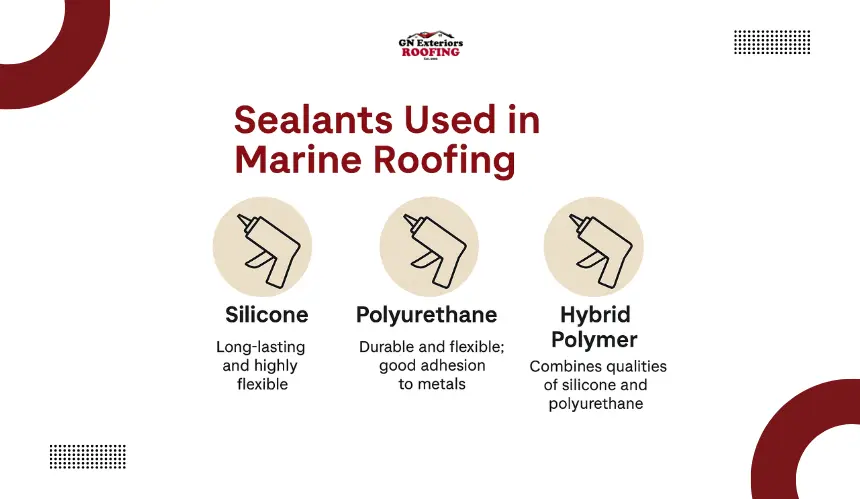
Sealants play a crucial role in keeping marine-grade metal roofs watertight. Coastal environments expose roof seams and joints to constant moisture, strong sunlight, and frequent temperature changes. This makes the quality and composition of the sealant just as important as the fasteners that hold the system together.
Butyl sealants are a reliable choice for metal roofs in marine climates because they maintain strong adhesion even in high humidity. Their flexible composition allows them to form a continuous barrier across lap joints and trim attachments.
Butyl tapes are often used where metal surfaces overlap since they stay pliable, resist water intrusion, and do not dry out under coastal conditions.
Polyurethane sealants are valued for their strong bonding properties. They hold up well under structural stress and provide long-lasting elasticity that supports areas that move or flex with temperature changes.
Their resistance to ultraviolet exposure and their ability to adhere tightly to metal surfaces make them suitable for more demanding sections of a marine roofing system.
Silicone sealants perform exceptionally well in environments exposed to intense sunlight and moisture. Neutral cure silicone is often recommended for metal roofing because it does not react with metal surfaces.
This type of sealant maintains flexibility, prevents cracking, and forms a strong waterproof seal around flashings and other exposed transitions.
SMP hybrid sealants combine the benefits of silicone and polyurethane. They offer strong adhesion without shrinking, and they hold up against severe coastal weathering. Their versatility allows them to be used on a wide range of metal roofing components that require durable, paintable, and long-lasting waterproofing.
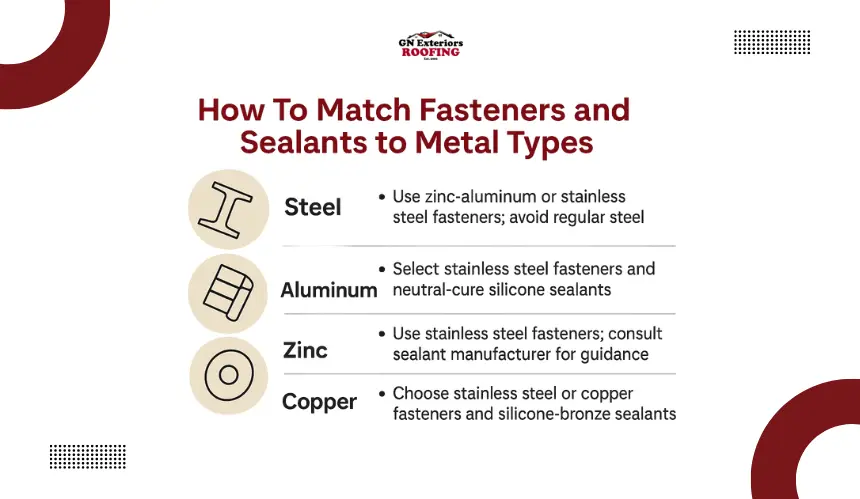
Metal roofing materials react differently when exposed to salt, moisture, and shifting temperatures. This makes compatibility an essential part of marine-grade roof design.
Choosing the right fastener and sealant combination for each metal type helps prevent corrosion, improve adhesion, and support long-term durability in coastal climates.
Standing seam systems use concealed clips rather than exposed screws, which reduces the number of penetration points. Stainless steel clips and fasteners are often the most reliable choice because they resist rust in marine conditions.
Neutral cure silicone or SMP sealants are typically applied around flashings and terminations since these sealants maintain flexibility and do not interfere with the movement of the raised seams.
Corrugated panels rely on exposed fasteners, so corrosion resistance is essential for every screw used. Stainless steel fasteners or high-quality coated screws with neoprene washers provide a secure seal at each penetration.
Butyl sealant or butyl tape is usually recommended between overlapping panels because it maintains a consistent waterproof barrier even in high humidity.
Aluminum panels pair best with aluminum or stainless steel fasteners to prevent galvanic corrosion. Zinc roofing performs well with stainless steel hardware due to its high corrosion resistance.
Galvalume panels often match best with coated fasteners that complement the panel’s alloy layer. Sealants for these metals should be non-reactive and formulated to bond with metallic surfaces without causing discoloration or surface breakdown.
Marine-grade fasteners and sealants must meet strict durability standards in order to perform well in high salt, high moisture, and high ultraviolet environments. These tests help confirm that a product can handle continuous coastal exposure without losing strength or adhesion.
The standard ASTM B117 salt spray test has been used since 1939 to measure corrosion resistance under accelerated salt-fog exposure. Products placed in the test chamber are exposed to a controlled salt fog that simulates long-term coastal weathering.
Fasteners and coated screws that perform well in extended salt spray hours tend to resist pitting, rust formation, and surface breakdown when used on marine metal roofs.
AAMA testing focuses on weathering performance and helps determine how well materials hold up against moisture and ultraviolet light. FM Global evaluates uplift resistance and structural reliability, which are crucial for buildings in high-wind coastal regions.
UL testing provides independent verification of fastener performance, giving users confidence that the product meets safety and durability benchmarks for metal roofing systems.
ASTM C920 classifies sealants based on their flexibility, adhesion, and movement capability. ASTM D412 measures tensile strength and elongation, which helps determine how well a sealant can stretch without tearing.
Shore A hardness ratings indicate how firm or soft the cured sealant becomes. These test results help users understand whether a sealant can maintain a reliable waterproof bond on marine-grade metal roofs.
Even the strongest marine-grade materials rely on proper installation to perform well in coastal environments. When fasteners and sealants are applied correctly, they create tighter seals, resist moisture more effectively, and maintain strength during constant exposure to salt, humidity, and changing temperatures.
Properly driven fasteners create a secure connection with the roof deck and reduce the chance of water infiltration. Under driving leaves gaps that weaken the seal, while over driving can damage washers and compromise the protective barrier around the penetration point. Consistent torque control ensures each fastener holds reliably during wind shifts and thermal movement.
Sealants perform best when applied to clean, dry, and prepared surfaces. Using the recommended amount of material and spreading it evenly helps maintain continuous protection along seams and flashing transitions. Allowing the sealant to cure as instructed supports long-lasting adhesion in high-moisture environments.
Marine roofs demand careful attention to material compatibility. When incompatible metals touch, moisture accelerates corrosion. Using matching fasteners, isolating washers, or protective barriers prevents these reactions and helps preserve the integrity of both the hardware and the roofing panels.
Regular checkups help identify small issues before they grow into costly problems. Tightening loose hardware, replacing worn washers, and refreshing sealant where needed keeps the roof secure and watertight. These steps are especially important in coastal regions where salt accumulation can accelerate wear.
Marine microclimates create localized variations in humidity, salt density, and airborne contaminants. These factors can change significantly within short distances near the coast.
Fasteners and sealants placed in areas with stronger salt drift or higher fog intensity may experience faster wear. Selecting materials with stronger corrosion resistance helps maintain durability in these unpredictable conditions.
High-quality roof coatings create an additional barrier that shields metal panels from salt and ultraviolet exposure. When applied correctly, they also reduce stress on fasteners and slow down surface oxidation. While coatings are not a substitute for marine-grade hardware, they provide extra support that helps the entire roofing system resist coastal deterioration.
Some manufacturers provide coastal suitability labels or marine grade certifications based on third-party testing. These labels can include UV performance ratings, salt fog exposure results, or compliance with environmental durability standards. Reviewing these certifications helps buyers choose materials that have been validated for harsh coastal use.
Washer quality greatly influences how well the fastener seals against water entry. Neoprene and other marine-safe washer materials retain flexibility and resist cracking when exposed to salt and sun. Lower quality washers tend to dry out faster, which increases the risk of leaks. Choosing fasteners with reliable washer components adds another layer of protection.
Reapplication schedules vary based on sealant type, exposure level, and roof design. Many marine suitable sealants last three to five years before needing maintenance in standard coastal conditions.
Roofs located within one mile of the shoreline or in areas with direct salt spray may require touch-ups every one to two years. Regular visual checks help determine whether the sealant is cracking, separating, or losing adhesion, which signals the need for resealing.