
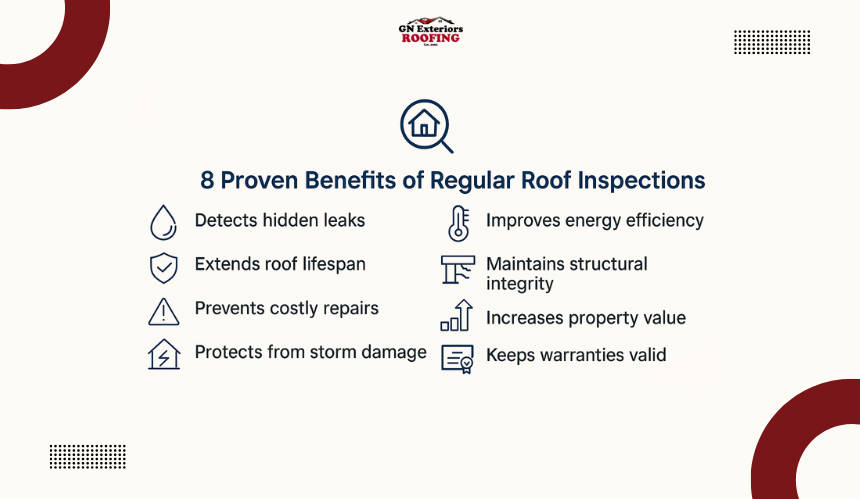
Regular roof inspections are your first line of defense against costly damage. Most roof issues, like hidden leaks, loose shingles, or sagging spots, start small and silently grow worse over time. By the time you notice a problem, it’s often too late.
A quick inspection every 6 to 12 months can catch these problems early, extend your roof’s lifespan, and protect your home from structural damage, mold, and energy loss.
| Did you know? Industry data shows that over 19% of home inspections reveal roofing issues. This makes roof problems one of the most common and costly maintenance concerns for homeowners. |
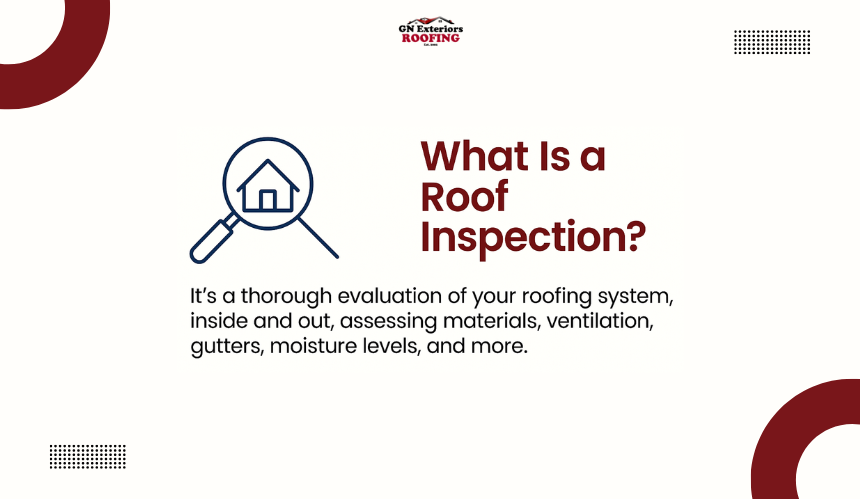
A roof inspection is a detailed evaluation of your roofing system, inside and out. It is designed to spot problems early, even the ones you can’t see from the ground. A proper inspection is not just about replacing a missing shingle; it evaluates your roof’s surface materials, flashing, gutters, attic ventilation, and moisture levels to give you a picture of your roof’s condition.
Licensed roofing professionals use ladders, cameras, moisture meters, and sometimes drones to assess wear, weak points, and weather damage. They check everything from curled shingles and cracked sealant to mold in the attic or sagging rooflines.
Regular roof inspections are a small investment that can save you thousands, extend your roof’s life, and protect your home’s value and safety. With nearly one in five homes experiencing roofing issues during inspections, proactive maintenance is essential.
Cracks, gaps, and poorly ventilated attics let heat escape in winter and enter in summer, overloading your HVAC system. Inspections reveal insulation issues, vent blockages, and energy-wasting leaks that silently increase your utility bills.
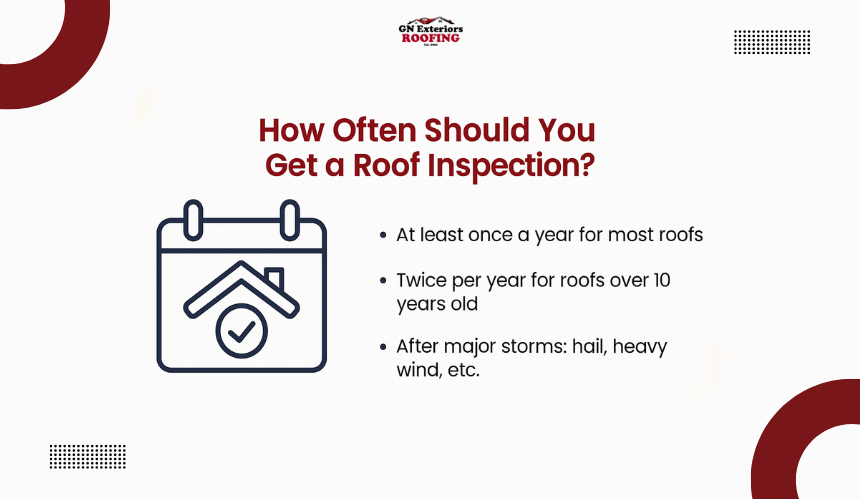
The simple answer to that is, you should get your roof inspected at least once a year. But the reality depends on your roof’s age, material, and local weather conditions.
For most homeowners, a thorough inspection every 6 to 12 months keeps small issues from turning into big headaches. Older roofs, especially those over 10 years old, benefit from inspections twice a year because aging materials wear faster, and weather impacts add up.
Don’t wait for visible damage, either. After any major weather event, like a hailstorm, heavy wind, or a winter freeze, schedule an inspection immediately. Storms can cause hidden damage that quietly worsens if left unchecked.
If your roof is flat or commercial, inspections every 3 to 6 months are common since these roofs face more wear and drainage challenges. Regular roof inspections are not just a calendar task; they are a vital habit that protects your home year-round.
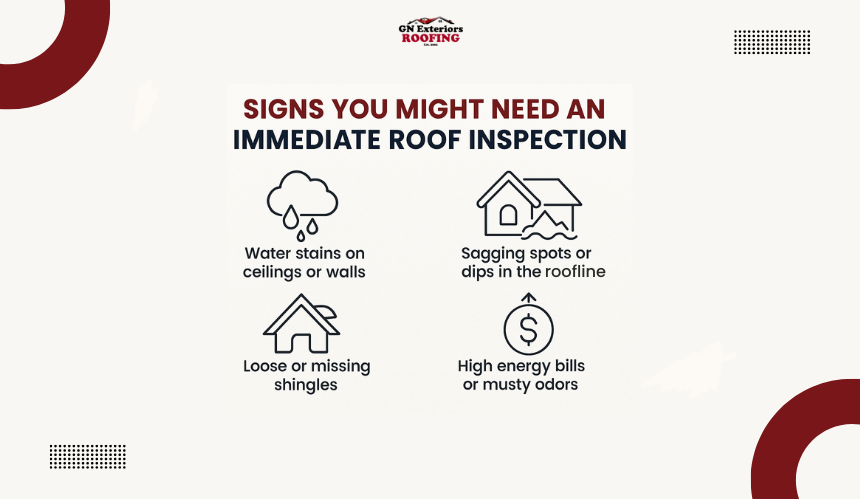
Not all roof problems give you a warning, but some do. If you notice any of the signs below, your roof may already be compromised and needs prompt attention:
Ignoring these signs can quickly turn a minor roof issue into a major structural problem. This is where GN Exteriors steps in with detailed, professional roof inspections tailored to your home’s specific needs.. We help you spot hidden risks early, plan repairs confidently, and protect your investment with expert care.
Most homeowners pay between $200 – $500 for a standard residential roof inspection, depending on roof size, pitch, complexity, and method (e.g., drone or manual).
While this might seem like an investment, catching small issues early often prevents expensive repairs or even full roof replacements down the line.
Some insurers will request or even require a roof inspection, typically within the first 30–60 days of policy start. They do so to assess roof condition and remaining lifespan.
A clean inspection report can even qualify you for lower premiums, while a failing inspection may lead to exclusions or rate increases.
Absolutely. If you live in a hurricane-prone region (like coastal zones), insurers may require a windstorm or wind-mitigation inspection, which checks for features like reinforced attachments, hip roofs, shutters, and more. Documented mitigation efforts can reduce insurance premiums by up to 45% in some states.
A standard inspection for most homes lasts between 30 minutes and 2 hours, depending on roof size, pitch, accessibility, and whether a full attic evaluation or drone photos are involved. More complex assessments or storm-damage inspections can take longer.
Asphalt shingles are durable and cost-effective, but they can be more vulnerable to high winds, hail, and UV degradation over time. Regular inspections help extend their lifespan and catch early signs of wear before damage spreads.