
Key Takeaways:
|
Weather exposure is one of the primary causes of exterior deterioration, leading to moisture intrusion, structural stress, and long-term repair costs. Many homeowners underestimate how quickly wind, UV radiation, and temperature shifts can compromise wall systems when the outer layer fails.
Vinyl siding is often positioned as a protective solution, but its actual performance depends on material behavior and installation design. This article explains how vinyl siding protects homes from weather damage through its structure, features, and real-world impact.
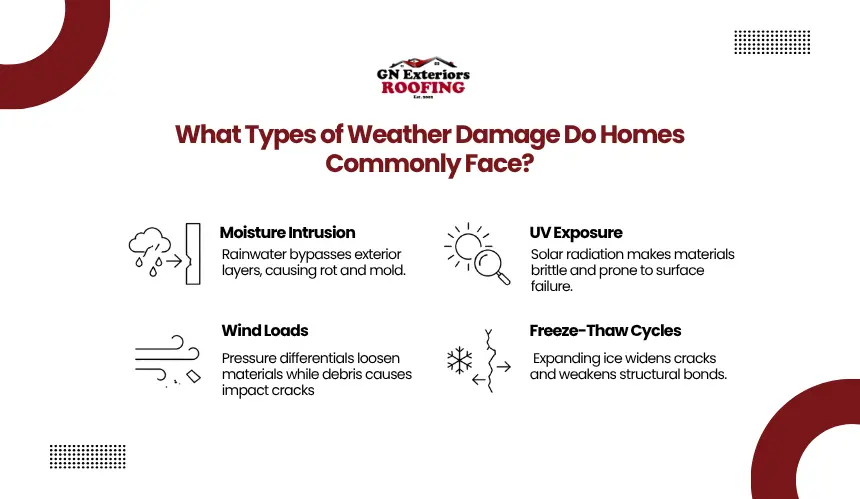
Exterior wall systems are continuously exposed to environmental forces that degrade materials over time. Understanding these damage mechanisms clarifies why protective cladding, such as vinyl siding, must manage multiple stress factors simultaneously rather than a single threat.
Water penetration is one of the most damaging forces because it affects both surface materials and internal components. When rainwater bypasses the exterior layer, it can saturate wall sheathing and insulation, creating conditions for mold growth, wood rot, and loss of structural integrity. Repeated wet-dry cycles accelerate material breakdown and compromise load-bearing elements.
High wind conditions apply pressure differentials across wall surfaces, which can loosen or displace poorly secured materials. Airborne debris introduces impact stress, causing cracks or breaches that expose inner layers. Once the exterior barrier is compromised, even minor openings can allow moisture and air infiltration, increasing vulnerability during subsequent weather events.
Continuous exposure to ultraviolet radiation degrades surface materials at a molecular level. This process leads to fading, brittleness, and reduced flexibility, especially in untreated or low-grade materials. As the material weakens, its ability to resist cracking under temperature changes or mechanical stress declines, increasing the risk of surface failure.
In colder climates, moisture trapped within small gaps or porous materials expands when it freezes. This expansion creates internal pressure that widens cracks and weakens structural bonds. Over repeated cycles, even minor imperfections can evolve into significant damage, allowing deeper penetration of water and accelerating deterioration across the wall system.
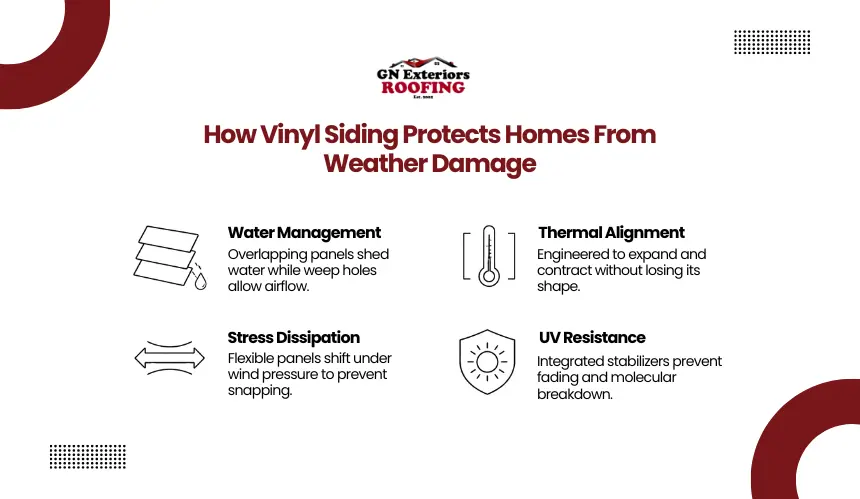
Vinyl siding operates as a layered defense system that manages water, absorbs mechanical stress, and stabilizes exposure to temperature and sunlight. Its effectiveness comes from the interaction between engineered material properties and installation design, rather than a single protective feature.
Vinyl siding is designed as a water-shedding system rather than a sealed barrier. Overlapping panels direct rainwater downward, preventing direct penetration into the wall assembly. Behind the panels, a weather-resistant barrier and drainage plane handle any incidental moisture, ensuring it exits the system without being absorbed.
Built-in spacing and weep pathways allow airflow, which reduces condensation buildup and prevents moisture from becoming trapped within the wall cavity.
Wind creates both suction and pressure forces that can displace rigid materials. Vinyl siding mitigates this by using flexible panels that can shift slightly within their fastening system. This controlled movement dissipates stress instead of concentrating it at fixed points.
Interlocking panel edges distribute force across the surface, reducing the likelihood of panel detachment or structural exposure during high-wind events.
The PVC composition of vinyl siding includes stabilizers that limit degradation from ultraviolet radiation. This prevents brittleness, fading, and surface cracking over time. Additionally, the material is engineered to expand and contract with temperature fluctuations without losing structural alignment.
This thermal responsiveness reduces stress on both the siding and the underlying wall system, maintaining consistent protection across seasonal changes.
Performance varies based on panel thickness, formulation quality, and installation precision. Thicker, higher-grade siding offers increased impact resistance and structural rigidity, which is critical in areas exposed to storms or debris. Proper installation ensures panels are neither too tight nor too loose, allowing necessary movement while maintaining secure attachment.
When material quality and system design are aligned, vinyl siding delivers consistent protection against multiple weather-related stressors over time.
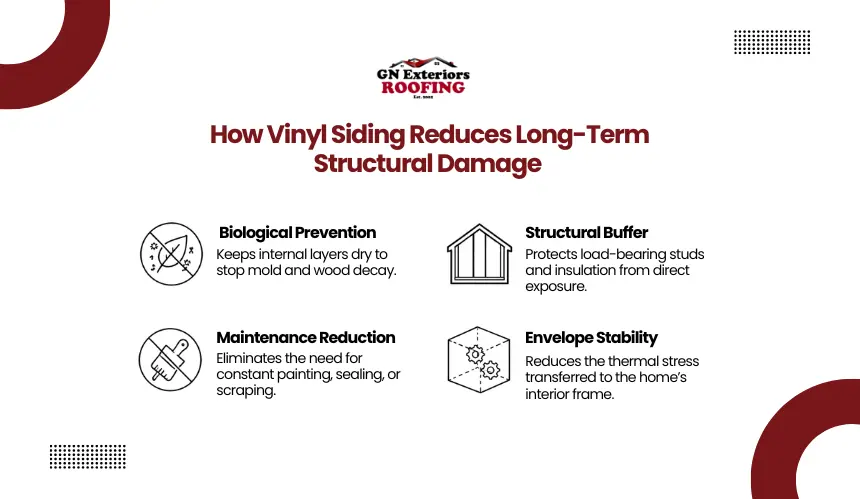
Beyond immediate weather resistance, vinyl siding influences how a home ages under continuous environmental exposure. Its role is not just to block elements at the surface level but to limit the conditions that typically lead to progressive structural damage over time.
Long-term exposure to trapped moisture often leads to mold growth, mildew formation, and wood decay within wall assemblies. By keeping internal layers consistently dry, vinyl siding reduces the conditions that allow biological contamination and structural weakening to develop. This directly preserves the integrity of insulation, framing, and interior surfaces over extended periods.
Exterior materials that degrade under weather exposure require repeated sealing, repainting, or replacement. Vinyl siding avoids these cycles because it does not absorb moisture, peel, or corrode under normal conditions.
This reduces the frequency of surface-level repairs and lowers ongoing maintenance demands, making long-term upkeep more predictable and less resource-intensive.
The wall assembly behind the siding includes load-bearing elements such as sheathing, studs, and insulation. Continuous exposure to environmental stress can degrade these components, leading to structural instability and costly repairs. Vinyl siding acts as a buffer that limits direct exposure, helping maintain the performance and durability of these critical structural layers.
Temperature fluctuations cause materials to expand and contract, which can weaken joints and create micro-fractures over time. Vinyl siding absorbs and accommodates part of this movement, reducing the amount of stress transferred to the underlying structure.
This stabilization helps prevent long-term issues such as cracking, warping, and material fatigue within the building envelope.
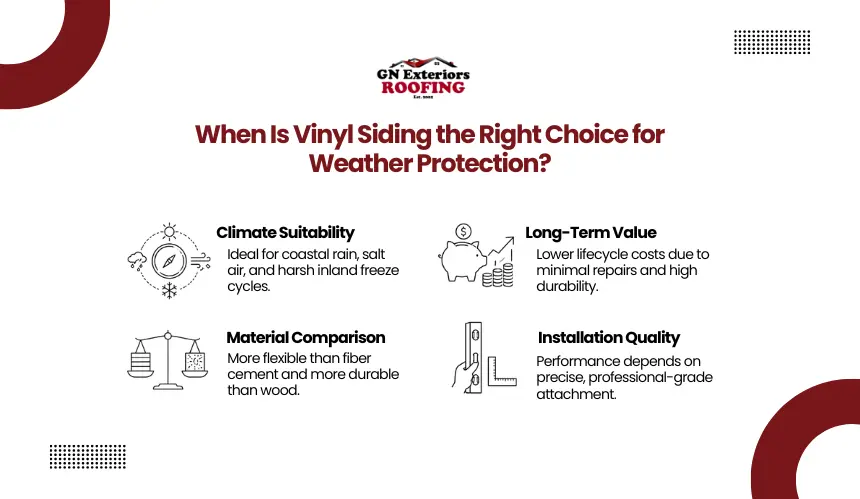
Selecting vinyl siding is not just a material choice but a climate-response decision. Its effectiveness depends on how well its performance characteristics align with regional weather patterns, structural requirements, and long-term maintenance goals.
Vinyl siding performs best in regions with mixed weather exposure where moisture, wind, and temperature variation are consistent concerns. In coastal Massachusetts areas like Quincy and Hingham, frequent wind-driven rain and salt-heavy air require exterior materials that resist corrosion and manage moisture efficiently. Vinyl siding’s non-corrosive composition and drainage design make it suitable for these conditions.
In inland areas such as Randolph and Weymouth, freeze-thaw cycles and winter snow loads create repeated expansion stress on exterior materials. Vinyl siding’s ability to expand and contract without cracking allows it to maintain structural alignment under these conditions, reducing the risk of surface failure over time.
Different siding materials respond differently to environmental stress. Wood siding offers natural insulation but requires constant sealing to prevent moisture absorption and decay. Fiber cement provides durability but is more rigid, making it susceptible to cracking under repeated thermal movement.
Metal siding resists impact but can corrode in coastal environments if not properly treated. Vinyl siding balances flexibility, moisture resistance, and low maintenance, making it a practical option for environments with variable weather patterns.
Initial installation cost is only one factor in material selection. Vinyl siding typically requires lower ongoing investment because it does not need repainting, sealing, or frequent repairs.
Over time, reduced maintenance and fewer structural issues translate into lower lifecycle costs. This makes it a cost-efficient option for homeowners prioritizing durability and predictable long-term performance.
Material performance is directly tied to installation quality. Improper fastening can restrict movement, leading to warping or buckling under temperature changes. Poor alignment or sealing around edges can create entry points for moisture and air.
Proper installation ensures that panels can move as designed while maintaining a continuous protective layer, which is essential for achieving the full weather-resistant benefits of vinyl siding.
Protecting a home from long-term weather damage starts with choosing the right exterior system and installing it correctly. GN Exteriors helps homeowners make that decision with a focus on durability, performance, and climate-specific solutions. Whether upgrading aging siding or planning a full exterior refresh, the team ensures the material works the way it’s meant to.
Storm-rated siding can still fail when installation is incorrect, fasteners are overdriven, or panels are not matched to local wind exposure. The weak point is often the system, not the material alone. Starter strips, corner posts, nailing technique, and manufacturer-rated wind resistance all influence storm performance.
Insulated vinyl siding adds rigid foam backing that improves impact resistance, reduces thermal bridging, and helps the wall surface stay more stable during temperature swings. It does not replace the need for proper sheathing or a weather-resistant barrier, but it can improve energy performance and reduce minor exterior stress.
Protection problems often show up through indirect warning signs rather than obvious panel failure. Homeowners should watch for loose courses, warped sections, bubbling interior paint, mildew near seams, rising energy bills, or repeated moisture staining around windows and trim. These symptoms usually point to system failure, not cosmetic aging alone.
Coastal conditions are hard on exterior materials because salt accelerates corrosion and wind-driven rain pushes moisture into vulnerable joints. Vinyl siding performs well in these settings because it does not rust and requires less surface maintenance than some alternatives. The larger concern is using corrosion-resistant fasteners and proper edge detailing.
Installation timing matters because vinyl expands and contracts with temperature. Panels installed too tightly in very cold or very hot conditions can buckle, gap, or distort later in the year. Experienced installers account for seasonal movement by leaving proper clearance, aligning courses correctly, and following manufacturer spacing requirements.
Vinyl siding mainly reduces maintenance exposure, but in some cases it can also support lower weather-related risk when paired with compliant installation and upgraded exterior assemblies. Insurers usually evaluate the full envelope condition, storm resilience, age of materials, and claim history rather than siding type in isolation.