
Key Takeaways
|
A metal roof is built for durability, but its protective finish is what truly preserves its strength, color, and corrosion resistance. Dirt, pollen, airborne pollutants, algae streaks, and oxidation can gradually dull that factory-applied coating.
Cleaning seems simple at first glance. In reality, the wrong technique can strip paint systems, weaken protective layers, and even shorten the roof’s lifespan.
This guide focuses specifically on how to clean a metal roof safely, using methods that protect the finish while delivering a clean, refreshed appearance.
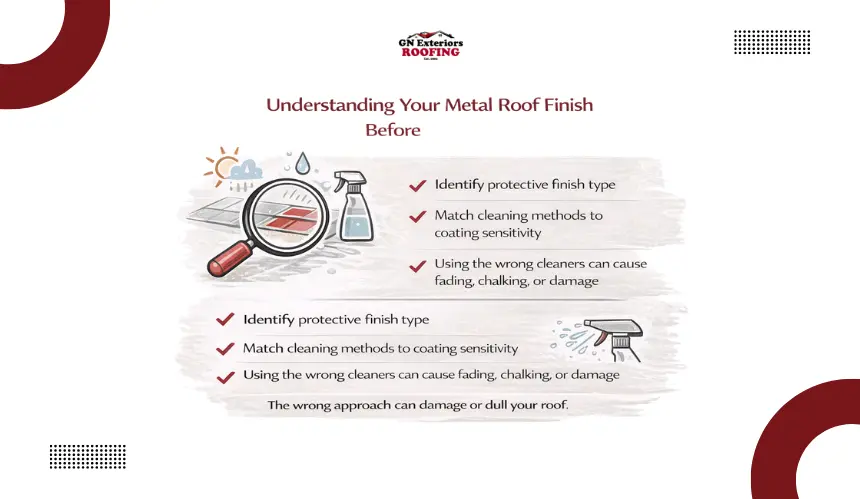
Before any water or cleaning solution touches the surface, it is essential to understand what type of finish protects the panels. Metal roofing systems are not all coated the same way.
The cleaning approach must match the coating chemistry, surface condition, and manufacturer specifications. Using the wrong method can cause premature fading, chalking, or coating breakdown that cannot be reversed.
Different finishes respond differently to moisture, friction, and chemical exposure. Identifying the coating type helps determine which cleaning agents and tools are safe to use.
Polyvinylidene fluoride coatings are known for high UV resistance, color retention, and strong film integrity. They tolerate mild detergents and soft washing techniques well. However, abrasive scrubbing or aggressive pressure washing can still reduce gloss levels and weaken surface protection.
SMP finishes provide solid durability and weather resistance. They are slightly more sensitive to harsh chemicals compared to PVDF coatings. Strong alkaline cleaners or solvent-based solutions may accelerate surface chalking.
Standard polyester coatings are often used in residential applications. While cost-effective, they have thinner film builds and lower fade resistance. Gentle, pH-neutral cleaners are critical to prevent premature oxidation.
Unpainted metal surfaces rely on protective zinc or aluminum-zinc alloy layers. Acidic cleaners can compromise these protective barriers and trigger corrosion. Only manufacturer-approved cleaning solutions should be considered for these finishes.
Cleaning too often can wear down protective coatings. Waiting too long can allow organic growth and environmental buildup to compromise the surface. Timing matters because metal roofing reacts to climate, airborne debris, and surrounding vegetation differently in every setting.
The goal is not cosmetic perfection. The goal is to prevent long-term surface damage while preserving coating integrity.
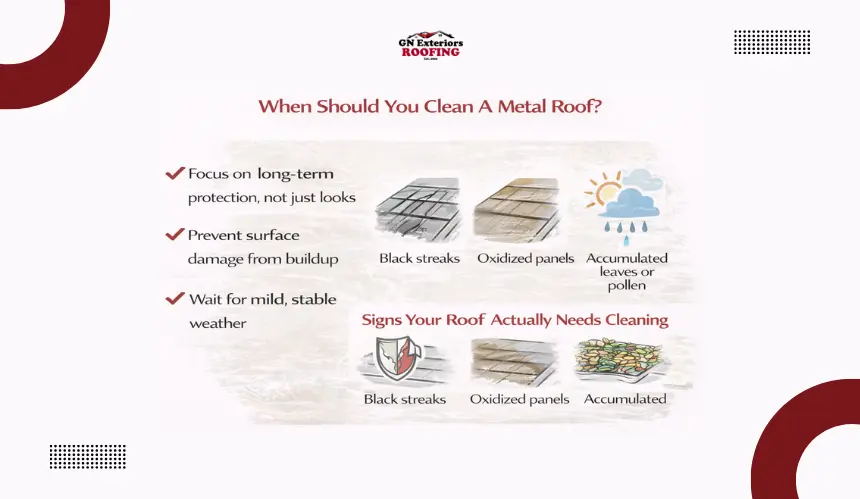
Certain visual indicators suggest it is time for maintenance. Black streaks often signal algae growth. Powdery residue may indicate early chalking. Concentrated pollen buildup, especially after heavy seasonal shedding, can trap moisture against the finish. In wooded areas, leaves collecting in roof valleys may lead to staining or water retention.
Oxidation appears as dull or faded patches, particularly on older polyester coatings. If runoff marks or uneven discoloration become visible from ground level, surface contaminants have likely bonded to the finish. Addressing these early prevents corrosion progression and protects panel seams.
Weather conditions directly affect cleaning safety and finish protection. Moderate temperatures prevent cleaning solutions from drying too quickly and reduce thermal stress on metal panels.
In Boston and the South Shore, seasonal patterns play a major role in timing. Coastal humidity from the Atlantic can encourage algae formation, particularly in areas like Quincy, Hingham, and Weymouth where salt air and moisture combine.
Spring pollen accumulation is common across neighborhoods near the Arnold Arboretum and the Blue Hills Reservation. Late fall leaf buildup is especially noticeable in tree-lined communities such as Milton and Hanover.
The safest window for cleaning in this region is typically late spring or early fall, when temperatures remain mild and wind speeds are manageable.
Avoid peak summer heat in Boston, as metal surfaces can become extremely hot and increase the risk of rapid chemical evaporation or surface streaking. Cleaning during calm, overcast conditions helps preserve coating gloss, maintain paint adhesion, and prevent residue marks.
Metal roofing panels are durable, but they are also smooth and naturally slippery. Even a slight layer of moisture or organic residue can reduce traction significantly.
Before starting any cleaning process, preparation must focus on fall protection, surface stability, and environmental control. Proper setup protects both the person cleaning the roof and the structural integrity of the roofing system.
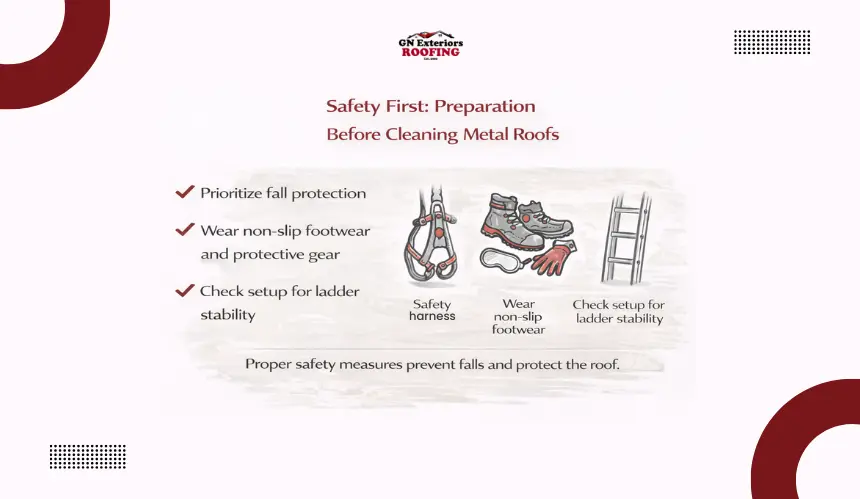
Working at height demands more than basic caution. Slip-resistant, soft-sole footwear helps maintain grip without scratching the painted surface. Hard-soled shoes can cause micro-abrasions that weaken coating performance over time.
Gloves improve hand control while handling wet tools and cleaning solutions. Protective eyewear shields against splash-back from detergents or debris.
For roofs with moderate to steep pitch, a fall protection system becomes essential. Safety harnesses anchored to secure structural points reduce fall risk and align with standards outlined by the Occupational Safety and Health Administration. Ladder stabilization is equally important.
The ladder should rest on firm, level ground and extend securely above the roof edge for safe access. Metal expands and contracts with temperature changes, so stepping only on supported panel areas near structural ribs helps prevent surface distortion or oil canning.
Roof cleaning involves water runoff and mild chemical solutions. Without preparation, landscaping, siding, and foundations may be exposed to overspray or residue. Covering nearby plants with breathable tarps reduces potential chemical stress. Pre-wetting shrubs and grass before applying cleaning solutions dilutes runoff concentration and minimizes impact.
Downspouts should be directed away from sensitive areas to control drainage flow. Protecting gutters and checking for blockages ensures that water moves efficiently through the drainage system rather than pooling along fascia lines. Managing runoff not only preserves landscaping but also prevents staining on exterior walls or walkways.
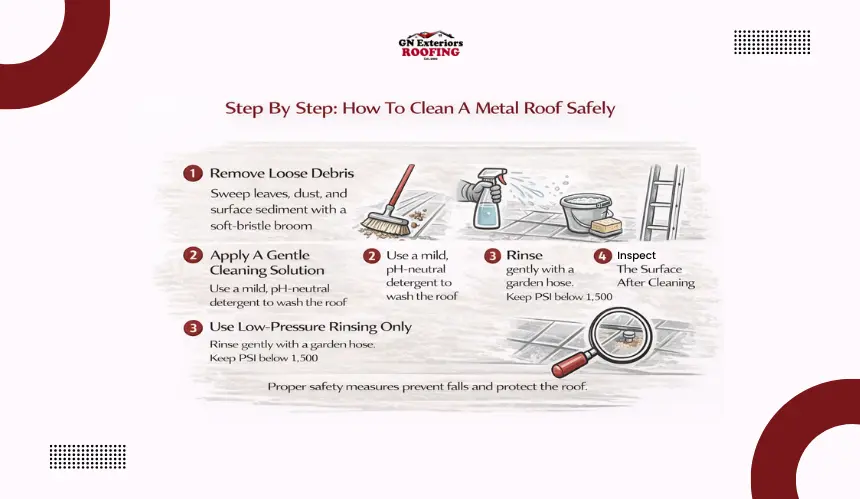
Once preparation is complete and the coating type is confirmed, the cleaning process should follow a controlled sequence. Metal roof cleaning is not about speed. It is about preserving paint systems, preventing surface abrasion, and maintaining seam integrity.
Each step below is structured to protect the finish while effectively removing contaminants.
Begin with dry cleaning. Use a soft-bristle broom or a non-abrasive brush to gently sweep away leaves, dust, pollen, and surface sediment. Removing debris before applying water prevents grit from being dragged across the panels, which can cause micro-scratches and reduce coating gloss.
Focus on roof valleys, panel ribs, and areas around exposed fasteners where buildup tends to collect. Clearing drainage channels supports proper runoff during rinsing and reduces moisture retention that can lead to staining or corrosion.
Avoid metal tools, wire brushes, or scraping instruments. Mechanical abrasion can compromise paint adhesion and expose the protective layer beneath.
After debris removal, apply a mild, pH-neutral detergent mixed with water. This solution effectively breaks down organic residue without disturbing protective coatings. Use a soft cloth, sponge, or low-pressure sprayer to distribute the solution evenly across the surface.
For tougher stains, manufacturer-approved metal roof cleaners or diluted oxygen-based solutions may be used according to label instructions. Always follow proper dilution ratios to protect coating chemistry and prevent surface discoloration.
Avoid concentrated bleach, acidic cleaners, ammonia-based products, or strong alkaline solutions unless specifically approved by the roof manufacturer. Harsh chemicals can accelerate oxidation, weaken film integrity, and reduce long-term finish performance.
Rinsing should be performed with controlled water flow. A standard garden hose is typically sufficient for residential metal roofing systems. If a pressure washer is used, it must remain below 1,500 PSI and only when permitted by manufacturer guidelines.
Direct water downward along the slope of the panels. Spraying upward can force water beneath overlaps and flashing, increasing the risk of water intrusion. Maintaining low hydrostatic pressure protects seam alignment, fastener seals, and structural integrity.
Controlled rinsing removes cleaning residue while preserving surface reflectivity and coating stability.
Once the roof has dried, conduct a visual inspection from a safe and stable position. Look for uneven gloss, signs of coating wear, loose fasteners, or sealant gaps near penetrations.
Inspection after cleaning supports proactive maintenance. Identifying minor issues early helps prevent corrosion progression and protects overall roof lifespan. Cleaning should enhance appearance while maintaining structural durability and finish integrity.
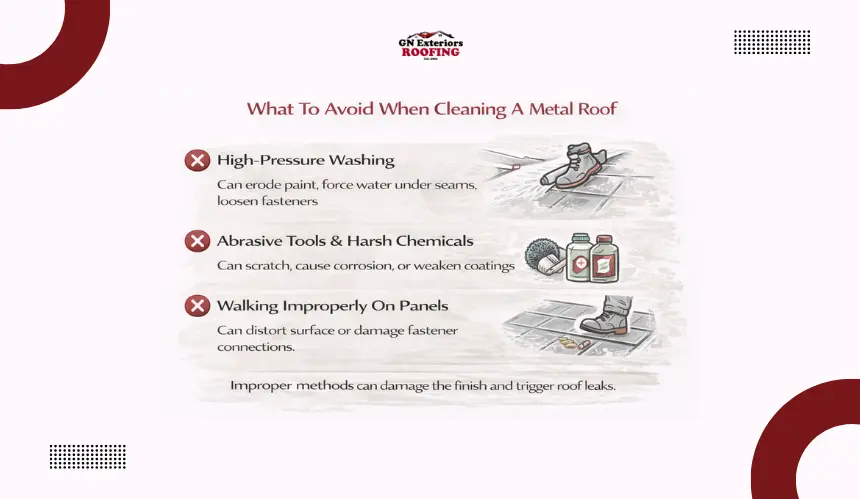
Many cases of premature fading, coating failure, or water intrusion are not caused by weather. They result from improper cleaning practices. Even a durable metal roofing system can suffer long-term damage if aggressive methods are used.
Excessive water pressure is one of the most common causes of coating damage. High PSI levels can erode paint systems, reduce gloss retention, and weaken the protective film that shields the metal substrate from corrosion.
Beyond surface wear, high-pressure spray can force water beneath panel seams and flashing. This increases the risk of trapped moisture and under-panel corrosion.
Fasteners may also loosen when exposed to repeated high-pressure impact. Maintaining low hydrostatic force is essential for protecting seam integrity and long-term performance.
Mechanical abrasion poses a serious threat to factory-applied coatings. Steel wool, scouring pads, stiff-bristle brushes, and scraping tools can scratch the finish and create micro-fractures in the paint layer. These surface disruptions accelerate oxidation and reduce coating lifespan.
Chemical misuse presents similar risks. Acid-based cleaners can react with protective zinc or aluminum layers on Galvalume surfaces. Strong alkaline solutions and solvent-based products may weaken paint adhesion or cause uneven discoloration.
Only pH-balanced, manufacturer-approved cleaners should be used to preserve surface chemistry and corrosion resistance.
Improper foot placement can damage more than just the finish. Stepping between structural supports may cause panel deflection or oil canning, which affects both appearance and alignment. Concentrated weight on unsupported areas increases structural stress and may distort fastener connections.
Movement across the roof should be deliberate and limited to supported panel zones, typically near ribs or structural framing beneath. Protecting panel alignment prevents surface distortion and helps maintain overall roofing stability.
Not every metal roof cleaning situation carries the same level of risk. Some roofs are safely manageable with careful preparation and controlled techniques. Others involve structural complexity, coating degradation, or safety concerns that require professional expertise. Knowing when to step back protects both the roof system and personal safety.
Certain conditions increase the need for trained specialists. Steep-slope roofs reduce footing stability and increase fall risk, especially on smooth painted panels. Multi-story homes or properties with complex rooflines demand specialized access equipment and controlled safety systems.
In Massachusetts, coastal exposure, salt-laden air, and freeze-thaw cycles common across communities like Quincy, Hingham, and Plymouth can accelerate surface wear and oxidation. A qualified metal roofing company in MA understands these regional stress factors and adjusts cleaning methods to preserve coating integrity under New England climate conditions.
Severe oxidation or advanced chalking may require surface restoration methods beyond simple washing. In these cases, professionals evaluate coating thickness, adhesion levels, and whether a restoration coating system is necessary. Attempting aggressive cleaning on heavily oxidized panels can worsen surface deterioration.
Extensive biological growth, such as dense algae or moss buildup, may require calibrated chemical treatments. Certified roof technicians understand proper dilution ratios, dwell times, and controlled rinsing procedures that prevent coating stress.
Warranty compliance is another critical factor. Many manufacturers specify approved cleaning methods and restrict certain chemicals or pressure levels. Professional contractors are familiar with these guidelines and often carry liability insurance that protects homeowners during the cleaning process.
A clean metal roof should never come at the cost of its protective finish. If you want expert care that preserves coating integrity and stands up to Massachusetts weather, trust the professionals who understand local roofing conditions. GN Exteriors delivers safe, detail-focused metal roof maintenance designed to protect your investment for years to come.
Yes, surface buildup can reduce reflectivity, especially on light-colored or reflective metal panels. Dirt, pollution residue, and biological growth lower solar reflectance, which may increase heat absorption. Keeping the surface clean helps maintain thermal performance and supports long-term energy efficiency.
Hard water stains are usually caused by mineral deposits left behind after evaporation. These can often be treated with a manufacturer-approved, non-acidic cleaner designed for mineral buildup. Preventing future stains may involve adjusting sprinkler direction or improving drainage patterns around the property.
Soft washing is generally safe when performed with controlled pressure and approved cleaning solutions. However, compatibility depends on the coating system and manufacturer guidelines. Always verify chemical recommendations to ensure paint adhesion and coating chemistry remain intact.
Surface rust may be reduced through gentle cleaning if corrosion has not penetrated the protective layer. Active rust typically requires localized treatment, sanding, primer application, and protective touch-up coating. Cleaning alone does not reverse structural corrosion.
In Massachusetts, professional metal roof cleaning typically ranges from $400 to $1,200 for most residential properties. Pricing depends on roof size, slope, accessibility, and the level of buildup. Coastal properties exposed to salt air may require more specialized treatment, which can influence overall cost.