
Your home’s siding is more than a decorative shell. It shields the structure from rain, wind, pests, and UV rays while shaping its overall style. When left unchecked, grime, moisture stains, and surface wear can quickly dull its appearance and weaken its protection.
Common ways to keep siding looking new include regular rinsing after storms, seasonal trimming of surrounding vegetation, and consistent clearing of gutters and downspouts.
This blog covers the best maintenance practices, prevention strategies, and professional tips to help you keep your siding looking new for years to come.
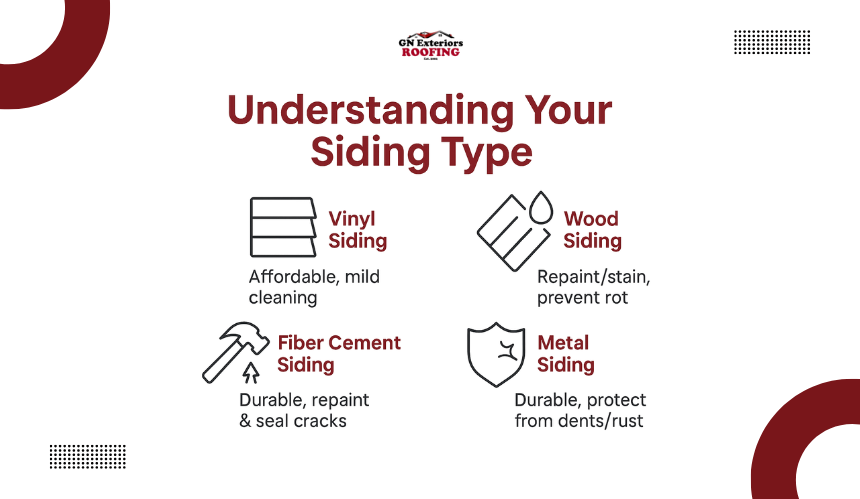
Before you decide how to care for your siding, you need to know exactly what you’re working with. Each material has unique strengths, vulnerabilities, and maintenance needs.
Recognizing these differences allows you to use the right cleaning methods, protective coatings, and repair approaches for maximum longevity.
Vinyl siding is popular for its affordability, variety of colors, and resistance to rot. It performs best with mild cleaning solutions and low-pressure washing to avoid surface damage. Over time, UV exposure can cause fading, so using a siding-safe protectant can help retain color. Inspect for loose or warped panels after storms, as early reattachment prevents larger issues.
Wood siding offers a natural, timeless look but requires more upkeep than synthetic options. It should be repainted or stained at regular intervals to protect against moisture intrusion. Check for peeling paint, small cracks, and early signs of rot, especially around window frames and corners. Proper ventilation around wood siding reduces mold growth and extends its lifespan.
Fiber cement siding combines the appearance of wood with higher resistance to fire, pests, and weather damage. While it rarely warps or rots, it benefits from periodic repainting to preserve its finish. Hairline cracks should be sealed quickly to prevent water entry. Because it is heavier than other siding types, ensure fasteners remain tight during seasonal inspections.
Metal siding, often made of aluminum or steel, offers exceptional durability and minimal upkeep. However, dents from hail or heavy impacts should be repaired promptly to prevent rust formation. A protective coating can shield the surface from oxidation and fading. Keep an eye on seams and fasteners, as expansion and contraction can cause slight loosening over time.
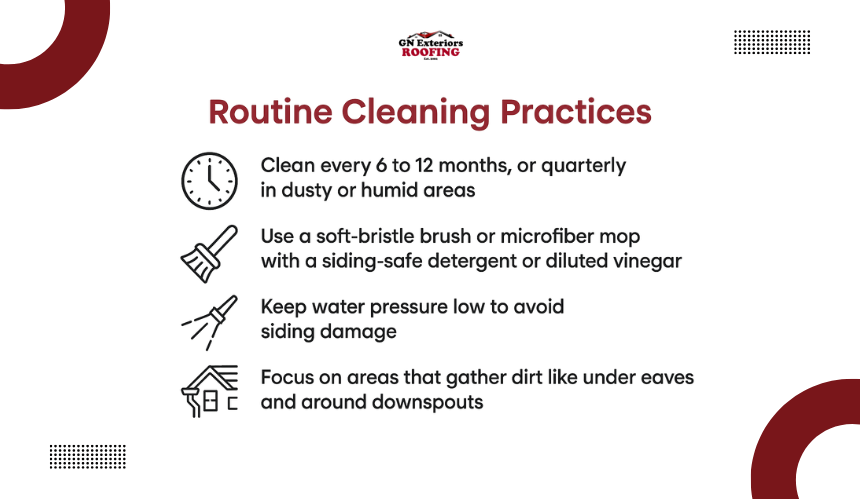
Routine cleaning is the most effective way to prevent dirt buildup, staining, and organic growth from diminishing your siding’s appearance. Below are five routine cleaning strategies to remove contaminants before they can cause permanent discoloration or surface damage.
Most siding types stay in good condition with a thorough cleaning once or twice a year. In areas with heavy pollen, dust, or humidity, a quarterly rinse prevents grime and mildew from taking hold. Consistency is more important than intensity, so schedule cleanings when weather conditions are mild.
A soft-bristle brush or microfiber mop is ideal for loosening dirt without scratching the surface. Choose a siding-safe detergent mixed with water for general cleaning, or a diluted vinegar solution for eco-friendly mold and mildew removal. You should avoid bleach-heavy cleaners unless tackling stubborn stains, and always test solutions on a small area first.
A garden hose with a spray nozzle is sufficient for most cleaning needs. If you use a pressure washer, keep the PSI under the manufacturer’s recommended limit. Spray at a downward angle to prevent water from seeping behind panels. High-pressure settings can crack vinyl, dent metal, or force moisture into wood.
Focus on spots prone to dirt and moisture accumulation, such as under eaves, around downspouts, and near shaded landscaping. Early cleaning of these areas reduces the risk of algae streaks and mold patches.
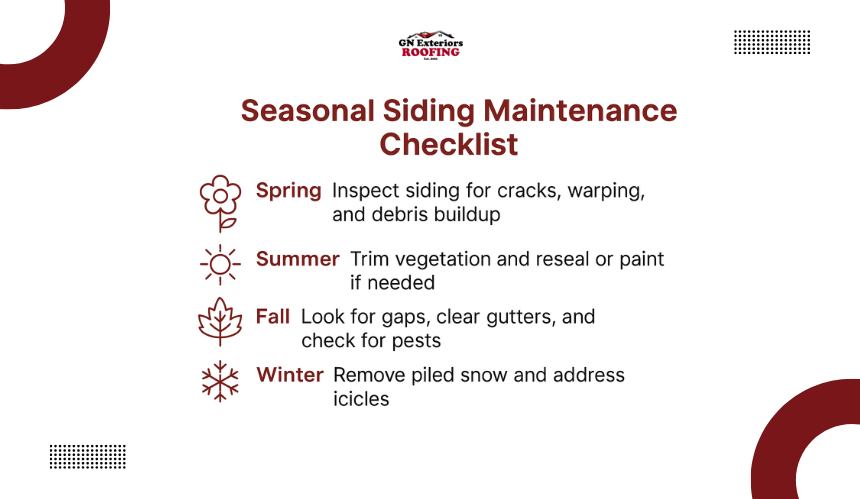
Seasonal maintenance ensures siding stays protected against weather changes, prevents damage from escalating, and keeps the exterior looking fresh all year. The following checklist answers the most common seasonal care questions homeowners have.
After winter, inspect siding for cracks, warping, or loose panels caused by freezing temperatures or ice buildup. Remove leaves, dirt, and debris lodged in seams or corners. This is also a good time to wash away salt residue in regions with snow and ice treatments.
Summer’s heat can cause fading or warping. Repaint or reseal siding if the finish looks worn, and ensure sprinkler heads aren’t spraying directly onto the exterior. Trim back vegetation to improve airflow and reduce moisture retention.
Look for gaps in caulking around windows, doors, and siding joints to prevent drafts and water intrusion during cold months. Clear gutters and downspouts so melting snow and rain can drain away from the siding. Check for pest activity, as cooler temperatures can drive insects and rodents closer to your home.
Remove snow that piles against the siding to prevent moisture absorption and staining. Avoid leaning shovels, ladders, or ice melt bags against the exterior to prevent dents and scratches. If icicles form near the roofline, address insulation and ventilation issues to reduce ice damming that can cause siding damage.
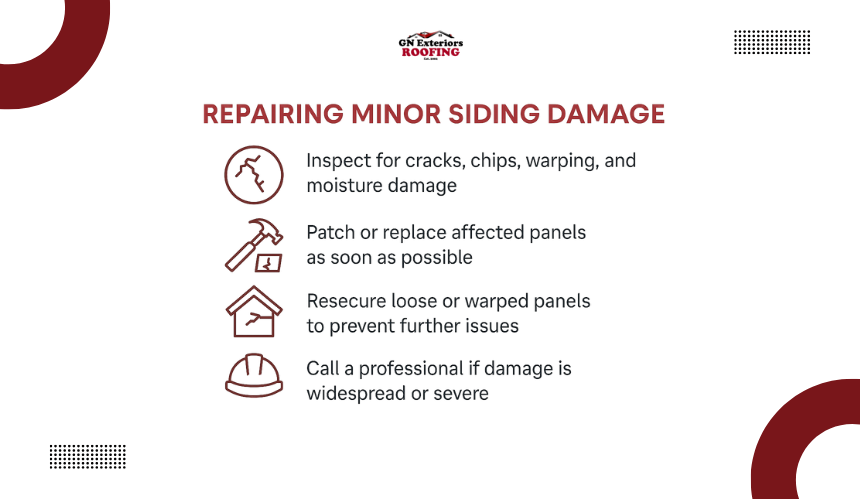
Addressing small siding issues quickly prevents them from spreading and turning into expensive repairs. The four questions below cover the most common situations homeowners face and how to handle them effectively.
Walk around your home at least twice a year and look for cracks, chips, warping, or loose panels. Discoloration, bubbling paint, or soft spots can also signal hidden moisture damage. Pay special attention to areas near gutters, sprinklers, and landscaping where water contact is frequent.
For vinyl siding, small cracks can be patched with color-matched caulk or replaced with a single new panel. Wood siding can be filled with exterior-grade wood filler and repainted once dry. Fiber cement repairs may require a specialized patching compound. If you’re unsure about material compatibility, consult the manufacturer’s guidelines.
Loose panels should be re-secured using the correct fasteners for your siding type. Warped vinyl panels often need replacement since reshaping them is not effective. For wood siding, warping may indicate moisture problems, so fix the underlying cause before replacing boards.
If damage covers a large area, involves structural moisture intrusion, or affects multiple siding types, professional repair is the safest option. Experts can identify hidden damage, match colors and textures, and ensure the siding is sealed to prevent repeat issues.
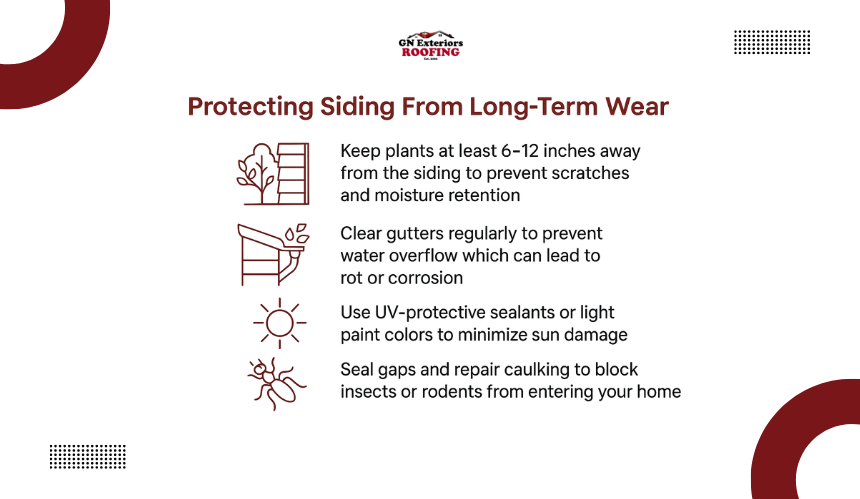
Preventive care is the key to keeping siding in top condition for decades. The queries below address practical, proactive steps that protect siding from environmental damage, wear, and costly deterioration.
Overgrown shrubs, trees, and climbing plants can scratch siding, trap moisture, and create shaded spots where mold and mildew thrive. Maintain at least a 6–12 inch gap between plants and the siding to allow airflow and reduce contact.
Clogged gutters cause water to overflow and run down the siding, leading to staining, rot, or corrosion, depending on the material. Cleaning gutters and downspouts twice a year ensures proper drainage and prevents water from pooling against the exterior.
Extended sunlight exposure can weaken the finishes of your siding. Installing UV-protective sealants, using lighter paint shades that reflect sunlight, or adding shade elements such as awnings can significantly slow down fading and heat-related warping.
Insects and rodents can chew through or nest behind siding, especially wood or fiber cement. Seal small gaps, repair damaged caulking, and avoid stacking firewood or debris directly against the exterior. Regular inspections help spot pest activity early.
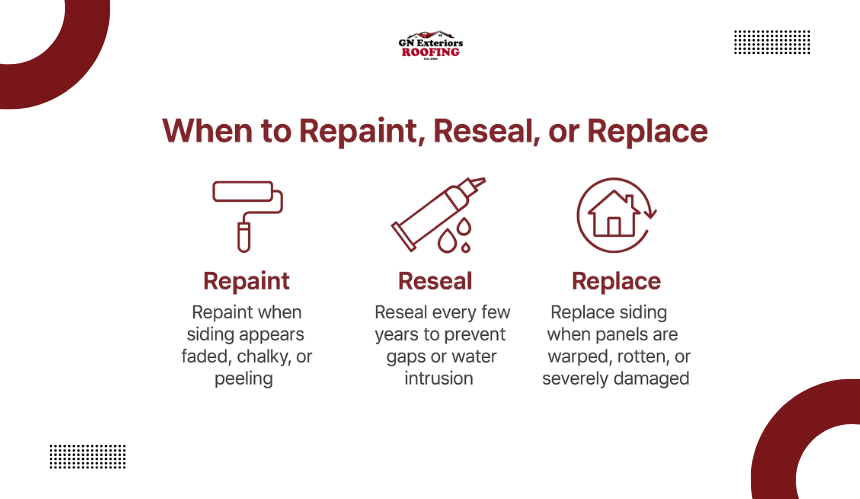
Knowing when to refresh or replace siding prevents small issues from turning into structural problems and keeps the exterior looking sharp. Now, let’s explore the timing and signs for each type of maintenance action.
Painted wood siding typically needs repainting every 5 to 7 years, while fiber cement may last 10 to 15 years between coats. If the paint appears chalky, faded, or visibly peeling, it’s time for a fresh coat to maintain both appearance and weather resistance.
Sealing intervals vary by siding material and climate, but a good rule is every 3 to 5 years for wood and fiber cement. If water no longer beads on the surface or sealant lines are cracked, reapplication is needed to prevent moisture intrusion.
Replacement is worth considering if large areas are warped, rotted, or repeatedly damaged, or if repairs become more frequent than maintenance. Persistent moisture problems, pest damage, or significant color fading that can’t be corrected with repainting are also clear indicators. In these cases, professional siding installation can restore both appearance and performance.
Full replacement ensures uniform appearance and performance, but replacing sections can be cost-effective if damage is localized. Matching color and texture is critical for partial replacements to maintain curb appeal.
For expert siding inspection and installation, GN Exterior delivers reliable service and lasting results. Every project is completed with precision and attention to detail to keep your exteriors looking their best year after year.
Yes. Using too much pressure or holding the nozzle too close can crack vinyl, dent metal, or force moisture behind panels, leading to hidden damage. Always follow manufacturer guidelines and use a low-pressure setting when cleaning siding.
Yes. Newer siding materials and insulated backing options can reduce energy loss, improve indoor comfort, and lower utility bills, making it a worthwhile investment in both performance and property value.
Many siding types can be repainted or refinished. High-quality exterior paints formulated for the specific material will provide the best adhesion and long-lasting results.
Professional siding installation can significantly boost curb appeal and perceived home value. Buyers often see new siding as a sign of reduced future maintenance and improved energy efficiency.
Fiber cement and metal siding typically offer the longest lifespan with the least frequent maintenance needs. High-quality vinyl siding is also a strong choice, as it resists rot, insects, and fading when maintained properly. For a durable and distinctive look, cedar impression siding provides the charm of natural wood with lower upkeep requirements.