
How to Clean Roof Gutters - Methods, Frequency, and Cost Breakdown

Clogged roof gutters are one of the most common causes of foundation damage, soffit rot, and basement flooding, but they are often ignored. Water flow is hindered and overflow codes are created when organic debris, such as leaves, pine needles, moss, and asphalt shingle granules, accumulates in your gutter system, which can compromise your home’s structural integrity.
Why Gutter Cleaning Is Essential for Home Maintenance
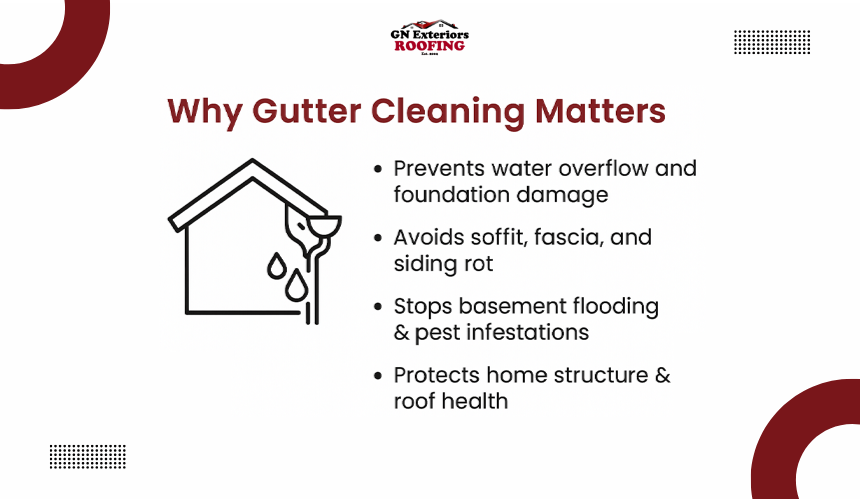
The drainage system is blocked by leaves, twigs, or roof granules, and this impedes the flow of water, making the water back up under the shingles, accumulate around the foundation, and damage fascia boards.
What are the Consequences of Neglected Gutters?
Blocked gutters also do not provide the required drainage of water, so that other areas become wet which is not supposed to be. This will, in the long term, cause some serious structural and environmental problems around your residence.
- Foundation cracking caused by water pooling around the foundation of the home, expanding soil, and hydrostatic pressure.
- The Holes in the roof due to leaks and ice dams, caused by the accumulation of water that crevices under the shingles or freezes on the edge of the shingles during the winter.
- Soffit, fascia, and siding will rot because of prolonged exposure to the running water, which will saturate the wooden trim and weaken structural elements.
- Pest infestations such as mosquitoes, carpenter ants, and rodents are attracted to the wet, unclean area of the clogged gutters.
All Gutter Cleaning Methods (Manual, Tools, Professional Services)

Method 1: Manual Gutter Cleaning with Scoop and Bucket
This is the most hands-on approach and is often considered the most thorough for packed gutters. It allows you to directly inspect and clear clogged areas with precision.
- Best for: Heavily clogged gutters with wet debris or mud buildup
- Tools needed: Ladder stabilizer, plastic scoop, heavy-duty gloves, safety glasses
- Pros: Complete control, no special equipment required
- Cons: Time-consuming, requires physical effort, and ladder safety precautions
Method 2: Cleaning with Garden Hose and Telescopic Wand
Using water pressure to dislodge debris is effective when gutters are not deeply packed. A telescoping wand can improve reach and minimize ladder use.
- Best for: Light debris, pine needles, shallow gutters
- Pros: Good reach for one-story homes, effective at clearing downspouts
- Cons: Not suitable for compacted material; water mess is common
Method 3: Leaf Blower Gutter Attachments
This method uses air pressure to blow leaves and dry material out of the gutter trough. It’s fast, but only works under dry weather conditions.
- Best for: Dry seasons with light leaf accumulation
- Pros: Fast and ladder-free when used from the ground
Cons: Ineffective on wet or sticky debris; may scatter mess
Method 4: Wet/Dry Vacuum Gutter Cleaning
A vacuum system with extension attachments can remove debris without climbing a ladder. It’s particularly useful for single-story homes or flat roof designs.
- Best for: Light-to-moderate dry debris in easily accessible gutters
- Pros: Cleaner than blowing; works from the ground
Cons: Limited reach for high roofs; setup requires extension kits
Method 5: Gutter Cleaning with a Pressure Washer
This method uses a high-pressure nozzle or a specialized U-shaped gutter wand to blast away debris buildup. It is ideal for homeowners dealing with hardened sludge, moss, or compacted dirt inside the gutter channels.
Before starting, ensure downspouts are clear to avoid forcing debris into drainage pipes. Use caution around loose gutter joints and seams, as water pressure may worsen minor damage.
- Best for: Deep-cleaning gutters with stuck-on grime or algae
- Tools needed: Pressure washer (1,500–3,000 PSI), gutter cleaning wand, safety goggles
- Pros: Very effective for stubborn buildup; can restore gutters to like-new condition
- Cons: Risk of water intrusion under shingles or fascia; not suitable for older or loosely mounted gutters
Method 6: Gutter Cleaning with a Rake
A specialized gutter rake, typically a curved or extendable tool is used to pull out large clumps of debris such as leaves, pine cones, and twigs. This method is particularly helpful when gutters are heavily clogged or difficult to access with traditional tools.
Use caution to avoid damaging fasteners or seams while pulling material. It’s often paired with ground-based vacuuming or flushing afterward to clear remaining residue.
- Best for: Heavy, dry debris buildup in neglected or high gutters
- Tools needed: Telescoping gutter rake, ladder, collection bag or tarp
- Pros: Allows gutter cleaning from the ground in many cases; good for reaching across wide roofs
- Cons: Less precise; may leave behind finer debris that requires flushing
Method 7: Professional Gutter Cleaning Services
Licensed professionals use specialized tools and techniques to ensure full removal of debris and verify proper water flow through downspouts. Many also offer minor repair services.
- Best for: Multi-story homes, steep roofs, or when safety is a concern
- Tools used: High-powered vacuums, camera scopes, pressurized downspout flushers
- Pros: Fast, thorough, includes inspection and minor repairs
- Cons: Cost varies by roof size, access difficulty, and regional labor rates
How Often Should You Clean Your Gutters?

The general recommendation is twice a year, once in late spring and again in early fall; some homes may require more frequent maintenance.
The frequency of gutter cleaning depends on multiple factors, including your regional climate, tree coverage around the roofline, roof slope, and type of debris common in your area.
1. Standard Gutter Cleaning Frequency
- Twice a year: Recommended for most homes, especially in temperate zones without excessive foliage
- Quarterly: Necessary for properties surrounded by pine, oak, or maple trees that shed continuously
- Monthly spot checks: Ideal after severe weather events, such as windstorms or heavy rain, especially during fall
2. Region-Specific Adjustments
- Pacific Northwest (e.g., Seattle, Portland): Clean 3–4 times per year due to high rainfall and dense tree cover
- Northeast (e.g., Boston, New York): Clean spring and fall, with extra attention after leaf drop
- Southeast (e.g., Atlanta, Charlotte): High humidity and storm frequency may require 3x per year
- Southwest (e.g., Phoenix, Las Vegas): Typically, once a year, unless near palm trees or desert debris
- Midwest (e.g., Chicago, Minneapolis): Clean after thaw (spring) and before snow (fall) to prevent ice dams
Signs You Need to Clean Sooner
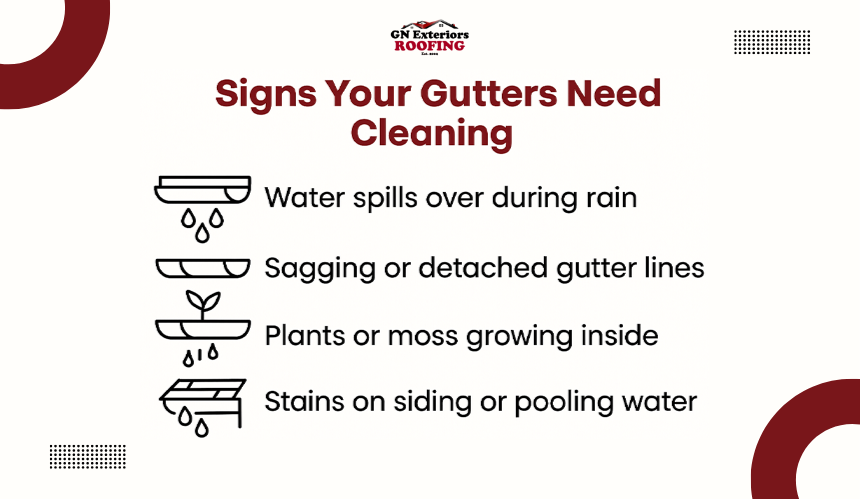
- Water spills over the gutter during rainfall
- Gutters appear sagging or pulling away from the fascia
- You see plants, moss, or insect activity inside the gutter channels
- Staining on siding or pooling around the foundation
For Your Information: The average lifespan of aluminum seamless gutters is between 15 and 25 years, while stainless steel seamless gutters can last up to 50 years if properly maintained.
DIY vs. Hiring a Professional Gutter Cleaning: What is Better?

1. DIY Gutter Cleaning
2. Professional Gutter Cleaning
GN exterior provides professional gutter services that include downspout flushing to ensure unobstructed water flow and a comprehensive visual inspection to check for leaks, loose hangers, or sagging gutter sections.
Which Option Offers Better Value?
How to Clean High Gutters?
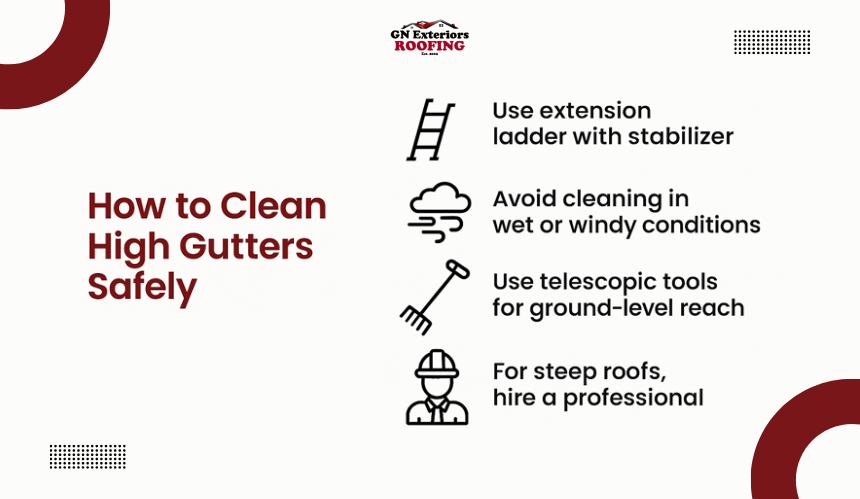
Safety Precautions for Cleaning High Gutters
| Did you know: Each year, over 164,000 emergency room-treated injuries and approximately 300 deaths in the U.S. are caused by falls from ladders, many of which occur during home maintenance tasks like gutter cleaning |
Gutter Maintenance Tips to Reduce Cleaning Frequency
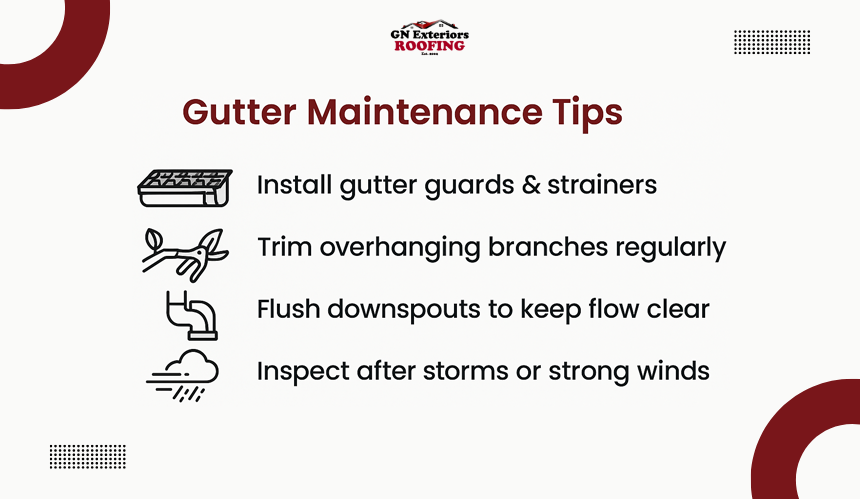
Trim tree branches that hang over your home on a regular basis, particularly when you have pine, maple, or oak trees in your vicinity. Inspect and clear loose debris early after major storms or heavy winds.
Frequently Asked Questions
How far should downspouts extend from the foundation?
To effectively divert water away from your home, downspouts should extend at least 5 to 10 feet from the foundation. This helps prevent water from pooling near the base of your home, which can lead to hydrostatic pressure, soil erosion, and eventual foundation cracking. Using splash blocks or downspout extensions is a simple fix.
Can blocked gutters affect my homeowners' insurance?
Yes, blocked gutters can cause damage that is not covered under many homeowners’ insurance policies. If water overflows due to neglect and causes foundation leaks, basement flooding, or mold, insurers may view it as preventable damage. Keeping a documented maintenance schedule helps protect your claims eligibility.
What’s the typical height for residential gutters and associated risks?
Residential gutter height averages 11 feet for single-story homes and up to 19 feet for two-story homes. At these heights, ladder use becomes hazardous, especially without stabilizers or spotters. Falls from above 15 feet carry a significantly increased risk of serious injury, which is why professional services are recommended for taller homes.
Do professionals clean underground drains connected to downspouts?
Most gutter cleaning services only clear downspouts to ground level. If your system drains into underground pipes or storm drains, this typically requires a separate service using hydro-jetting or camera inspection tools. However, many professionals will check for signs of blockage and recommend further action during their visit
When should damaged gutter parts be repaired or replaced?
Visible signs like cracks, holes, rust, sagging, or leaking joints mean your gutters are not functioning properly. Minor issues like loose hangers or joint leaks can often be repaired, but warped or corroded sections usually need replacing. Delaying repairs increases the risk of water damage to your fascia, siding, and foundation.