

A Quick Answer: Coastal homes can protect metal roofs from salt-air corrosion by choosing corrosion-resistant materials, applying marine-grade protective coatings, and maintaining a consistent cleaning and inspection routine that prevents chloride buildup from damaging the roof’s surface. These steps reduce early wear and help the roof last for decades in harsh marine conditions. |
Living near the coast brings constant exposure to salt particles carried by ocean winds. These particles settle on metal surfaces and begin a chemical reaction that weakens protective layers, encourages oxidation, and shortens the lifespan of panels, fasteners, and seams.
Homeowners often underestimate how quickly salt accelerates corrosion, especially in areas where humidity remains high throughout the year. This article will explain what makes salt-air corrosion so aggressive, and which roofing systems react most strongly to coastal conditions.
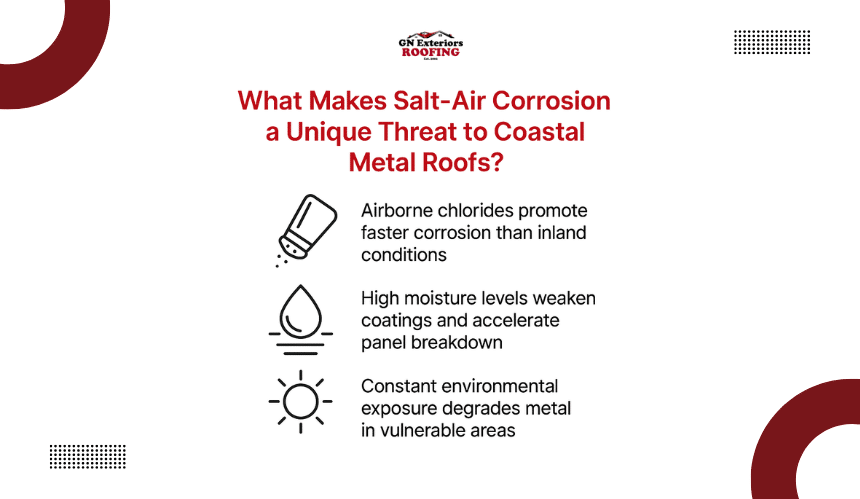
Salt-heavy environments create surface conditions that degrade metal roofing faster than inland climates. The combination of airborne chlorides, high moisture levels, and constant environmental exposure produces a corrosive setting that weakens coatings, affects panel surfaces, and accelerates breakdown in areas where metal is most vulnerable.
Salt particles contain chloride ions that attach to metal surfaces and disrupt protective layers. Once these ions settle, they draw moisture toward the metal and create a film that speeds oxidation and pitting.
This reaction develops more aggressively near the ocean because the air remains saturated with salt, and the particles continually replenish after every drying cycle. This environment increases the chance of surface damage, especially on roof panels that face prevailing winds.
Coastal climates maintain steady humidity and frequent wetting and drying cycles, which create the ideal conditions for corrosion to spread. When metal stays damp for long periods, the moisture interacts with salt particles and produces a thin electrolyte layer that supports corrosion. Coastal winds, UV exposure, and temperature changes also affect how quickly this layer forms and dries, which leads to constant stress on the roof’s surface.
Not all roofing metals respond the same way to marine environments. Galvanized steel often corrodes faster because its zinc layer breaks down quickly in the presence of salt. Bare aluminum can show surface pitting when chloride contact becomes heavy.
Lower-grade metals with minimal coating protection experience the fastest deterioration. Roofing systems designed for inland climates often struggle the most when relocated to coastal conditions.
Did you know? Coastal towns in New England, including Braintree, often experience more than 150 days of high humidity each year, which increases the time metal surfaces stay damp and speeds up the salt-air corrosion process. |
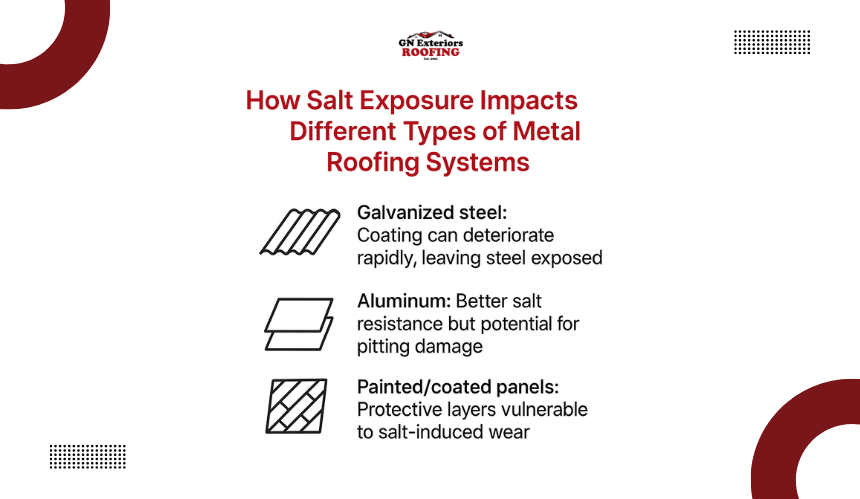
Salt-heavy air affects metal roofing systems in different ways depending on panel design, fastener placement, coating composition, and how each system responds to continuous moisture. Understanding these differences helps homeowners choose materials that can withstand long-term marine exposure without requiring frequent repairs or protective treatments.
Standing seam roofs rely on concealed fasteners and raised vertical seams that protect critical connection points from salt contact. Although the smooth panel surface offers strong resistance, salt can still collect in small channels where panels meet.
Over time, this creates stress points that can weaken paint finishes or cause early coating wear. Properly coated aluminum and coastal-grade steel panels usually hold up well when installed correctly.
Corrugated roofs have exposed fasteners that sit directly in the path of salt particles. These fasteners often corrode first, especially if they are not stainless steel or marine-rated. The wavy design also traps moisture in low points, which allows salt and water to settle for longer periods. This increases the chance of coating deterioration and accelerates rust on steel-based panels.
Stone-coated steel systems use a granular surface that adds a protective layer over the metal base. This layer helps shield the metal from direct salt contact, but granules can erode with heavy wind-driven salt.
Once the granules thin out, the underlying steel becomes more susceptible to pitting and oxidation. Homeowners near the coast often benefit from choosing versions specifically tested for marine climates.
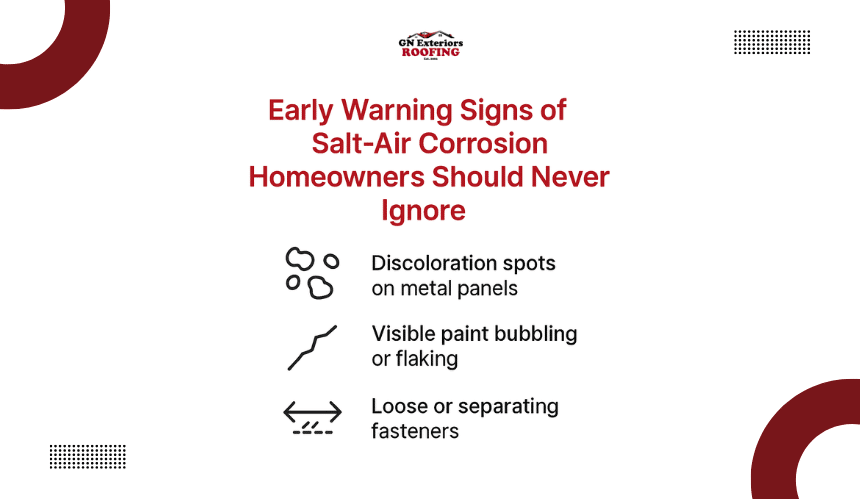
Salt-air corrosion often begins with small changes that are easy to overlook. These early signs reveal how moisture and chloride particles interact with roof materials long before structural issues develop. Detecting these clues early helps homeowners prevent spreading damage, especially in coastal regions where salt deposition happens daily.
Surface discoloration, chalky residue, or dull fading often indicates that protective coatings are weakening under salt exposure. These visual changes form as chloride particles break down paint layers and cause the finish to lose its protective strength. Even mild pitting or tiny rough spots can signal that oxidation has already begun on the metal’s surface.
Fasteners that appear rusted, loose, or swollen often reveal deeper corrosion at connection points. Panels may begin to lift in small areas as metal edges weaken.
Seams that once sat tight may open slightly as salt and moisture cause minor expansion. These changes often appear on wind-facing roof slopes where salt particles land most frequently.
Ridge caps, flashings, vents, and exposed trims usually show damage before large roof panels do. These components receive more concentrated salt spray and experience heavier water runoff, which allows corrosion to form faster. Because these areas protect underlying structures, early failure can lead to leaks and other issues if left untreated.
Quick insight: Homes near the Atlantic coast can experience salt particle accumulation within days after heavy onshore winds, which increases the likelihood of early corrosion on small roof components. |
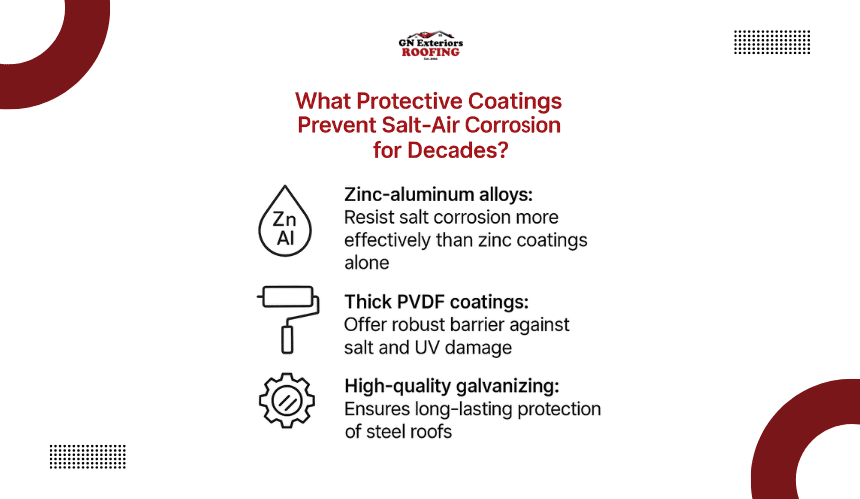
Protective coatings play a major role in helping metal roofs withstand the constant presence of salt in coastal environments. Each coating type offers a different level of defense, and choosing the right one can determine how long the roof remains structurally strong and visually appealing.
Understanding how these coatings perform helps homeowners plan long-term protection strategies that reduce the risk of premature deterioration.
PVDF coatings, often known for their Kynar-based formulas, provide long-lasting color stability and exceptional resistance to salt particles. These coatings create a smooth and durable finish that makes it difficult for chloride ions to penetrate the surface.
Because PVDF resists UV damage and maintains adhesion in humid climates, it is one of the most reliable choices for homes near the ocean.
Galvalume and galvanized coatings protect metal by adding barrier layers of zinc or zinc-aluminum alloys. While both offer strong performance inland, their resistance levels differ in coastal regions. Galvalume performs well at moderate distances from the shoreline, but it may degrade faster with heavy salt exposure.
Galvanized steel can show early wear in high-salt areas because chloride particles attack the zinc layer more aggressively. Choosing the right coating depends on how close the home sits to ocean exposure.
Rubberized, ceramic, and elastomeric coatings create flexible surface layers that help resist minor surface abrasion and limit moisture contact. These coatings are often used as supplemental protection to extend the life of older metal roofs that already show signs of finish wear.
Although they are not substitutes for factory-applied marine coatings, they strengthen the surface and improve salt resistance when applied as part of a routine maintenance plan.
Interesting fact: Homes located within five miles of the New England coastline often experience higher coating wear rates because salt particles mix with moisture and cling to roof surfaces for extended periods. |
Coastal environments require installation methods that strengthen the roof’s resistance to constant salt exposure, daily moisture cycles, and wind-driven particles. When a metal roof is set up with materials and techniques designed for marine climates, it gains a longer service life and maintains structural performance under ongoing environmental stress.
Marine-grade fasteners hold up against heavy moisture and chloride buildup far better than standard options. Stainless steel, especially higher grades like Type 316, provides durable corrosion resistance that helps preserve panel stability. Strong fasteners prevent loosening, rust streaking, and early failure in areas where salt collects the most.
Reinforced seams and upgraded flashing materials protect the roof’s most vulnerable points from moisture intrusion. When seam locks are tightly secured, and flashings are installed with coastal-rated materials, the roof reduces the chance of salt reaching exposed metal edges. These reinforcements support long-term durability by preventing damage that often begins in transition areas.
Effective ventilation keeps the underside of the roof dry by reducing trapped humidity and preventing condensation from forming on internal surfaces. In coastal climates, indoor moisture can be just as harmful as outdoor salt exposure.
Balanced airflow helps maintain stable temperatures, limits hidden dampness, and slows corrosion that might otherwise develop from the inside.
Important information: Homes in coastal New England often face humidity swings during seasonal transitions, which increases internal moisture and make ventilation one of the most important installation features for long-term roof protection. |
Coastal homes rely heavily on consistent maintenance to keep metal roofs strong through years of salt exposure. Even the most durable coatings benefit from regular care, especially in regions where humid air and onshore winds leave salt particles on the surface almost every day.
Regular rinsing removes the salt film that settles on roof panels and prevents the early stages of oxidation. A simple fresh-water rinse once a month is often enough for homes several miles from the coast, while properties closer to the shoreline may need more frequent cleaning after windy or humid periods.
Light rinsing keeps protective coatings stable by reducing chloride buildup before it can bond with the surface.
Professional inspections help identify subtle corrosion patterns that homeowners may miss. Inspectors often use coating thickness gauges, corrosion analyzers, drones, and moisture meters to locate weak spots.
These tools reveal early coating wear, hidden moisture pockets, and minor surface changes that signal future corrosion risks. Annual assessments ensure that problems are addressed before they spread.
Recoating becomes necessary when the roof’s finish shows thinning, small scratches, or mild chalking. Restorations are ideal for roofs with minor surface wear but no large-scale corrosion.
Replacement is only needed when structural components have weakened or panels show extensive damage. Making the right choice at the right time preserves long-term durability and prevents expensive repairs.
Quick insight: Many New England roofs benefit from a rinse by a professional metal roofing company after periods of high humidity or coastal storms because these conditions increase salt concentration on metal surfaces. |
Building codes for coastal regions include strict requirements that help protect homes from salt exposure, wind pressure, and moisture intrusion. These regulations guide material selection and installation methods so homeowners can ensure their roofs meet durable, long-lasting performance standards.
Coastal building codes often reference industry standards such as the International Building Code and ASCE guidelines. These standards outline minimum wind resistance, material durability expectations, and installation methods suited for marine environments. Compliance protects the home’s structural integrity and influences long-term insurance coverage.
Products designed for salt-rich regions typically hold certifications for corrosion resistance, coating thickness, and long-term performance. Many manufacturers offer marine-zone ratings that specify how close the roof can be installed to saltwater exposure.
These certifications provide homeowners with confidence that their materials can withstand demanding coastal conditions.
Some insurance policies require specific roofing materials or protective measures for homes near the shoreline. Coverage may depend on corrosion protection, wind resistance, or material certification. Understanding these requirements ensures the homeowner avoids gaps in protection.
Did you know? Homes in coastal Massachusetts, including areas near Braintree, often face stricter wind and corrosion-related roofing requirements to meet local building code standards. |
Metal roofing materials perform differently when exposed to salt and moisture. Some metals provide long-lasting protection in marine climates, while others require special coatings or more frequent maintenance. Comparing materials helps homeowners select the best option for their specific coastal environment.
Aluminum resists salt corrosion and maintains a stable surface in marine environments. Copper provides excellent longevity and develops a patina that protects it from surface damage. Stainless steel, particularly higher grades, offers exceptional strength and corrosion resistance. These materials are often the best choices for homes closest to the ocean.
Zinc-aluminum coated steel panels perform well in coastal areas when installed with marine-grade coatings. They balance affordability with protective benefits and provide consistent performance at moderate distances from the shoreline. Homeowners commonly use these materials when they want durability without premium costs.
Lower-cost galvanized steel panels offer strong value for inland regions but struggle in coastal environments where chloride exposure is heavy. These panels may require more frequent maintenance and recoating. They are best suited for homeowners several miles away from the coastline.
Internal corrosion can occur when moisture becomes trapped beneath roof panels or inside attic spaces. This hidden moisture environment can damage underlayment materials and quietly weaken the roof from the inside, making interior protection just as important as exterior care.
High-performance underlayments help block moisture and protect the roof assembly from internal condensation. These materials resist heat, humidity, and moisture movement, making them ideal for regions with frequent temperature changes. Upgraded underlayments add protection that reinforces the entire roofing system.
Indoor humidity contributes to the moisture cycle beneath the roof. Dehumidifiers, improved ventilation, and proper airflow help maintain drier conditions. Lower humidity reduces condensation formation and protects the underside of metal panels from hidden corrosion.
Wind-driven rain often finds its way into small openings during coastal storms. These moisture intrusions can settle inside the roofing assembly and create conditions that speed corrosion. Homeowners benefit from routine post-storm checks to ensure hidden dampness does not linger.
Environmentally conscious choices can help homeowners protect their roofs while reducing environmental impact. Sustainable coatings and materials support long-lasting protection in marine climates without compromising performance.
Low-VOC coatings provide strong corrosion resistance while minimizing chemical emissions. These coatings are ideal for homeowners who want to maintain indoor and outdoor air quality while extending roof life. Their durability helps reduce the number of recoating cycles required over time.
Reflective coatings reduce heat absorption and keep homes cooler during warm seasons. Lower roof temperatures reduce stress on the metal surface and limit thermal expansion, which supports long-term durability. These coatings help reduce energy use as well.
Many metal roofing materials are fully recyclable and designed for long-term performance in coastal climates. Aluminum and copper are among the most sustainable metals because they maintain durability and can be recycled without losing quality.
For homeowners who want long-lasting protection against salt-air corrosion, professional guidance makes all the difference. GN Exteriors provides coastal-grade metal roofing solutions that help safeguard your home from harsh marine conditions. Reach out today to learn how expert installation and maintenance can keep your roof strong for decades.
The lifespan of an unprotected metal roof near the ocean varies widely based on the type of metal. Unprotected steel roofs can fail in only a few years because salt-laden air accelerates corrosion quickly.
Naturally corrosion-resistant metals like aluminum, copper, and zinc can last for decades, even without specialized coatings.
Aluminum performs far better and typically lasts 40 to 60 years even with minimal coating. Copper and zinc offer the highest durability and often reach 70 to 100 years because they form a protective patina instead of rusting.
No matter the metal type, regular cleaning is essential to prevent salt buildup and preserve long-term performance.
Painted metal roofs last longer in marine climates when they use finishes formulated for salt-heavy environments. High-performance coatings, such as PVDF systems, resist UV fading, prevent surface chalking, and reduce the amount of chloride that can bond to the metal. These coatings help stabilize the roof’s appearance and extend its protective lifespan.
Early salt-air damage can be corrected through rinsing, gentle cleaning, recoating, and surface restoration. These steps remove corrosive residue and rebuild protective layers. Once corrosion penetrates the metal, it cannot be reversed, but targeted repairs and coatings can slow deterioration and prevent further material loss.
Aluminum is one of the strongest all-around choices for coastal homes because it naturally resists rust and remains stable in humid, salt-rich conditions. It performs consistently even in areas close to the shoreline and often outlasts many coated steel systems in direct marine exposure. Its lightweight structure also reduces stress on the home.
Homes within one mile of the shoreline usually benefit from rinsing every two to four weeks to clear off salt deposits. Rinsing becomes especially important after humid periods, heavy wind, or storm conditions since these events push more salt particles onto the roof surface. Consistent cleaning slows the start of corrosion.
Corrosion rates vary because salt does not settle evenly across the roof. Wind-facing slopes collect higher concentrations of airborne salt, while shaded or recessed areas hold moisture longer. Roof geometry, elevation, runoff patterns, and orientation all influence where corrosion begins and how quickly it spreads.
Coastal warranties require materials and coatings that can withstand salt exposure, heavy humidity, and stronger wind pressures. These warranties often specify distance limits from open water and performance criteria related to corrosion resistance. Inland warranties do not include these requirements because they are designed for environments without marine conditions.