
Key Takeaways
|
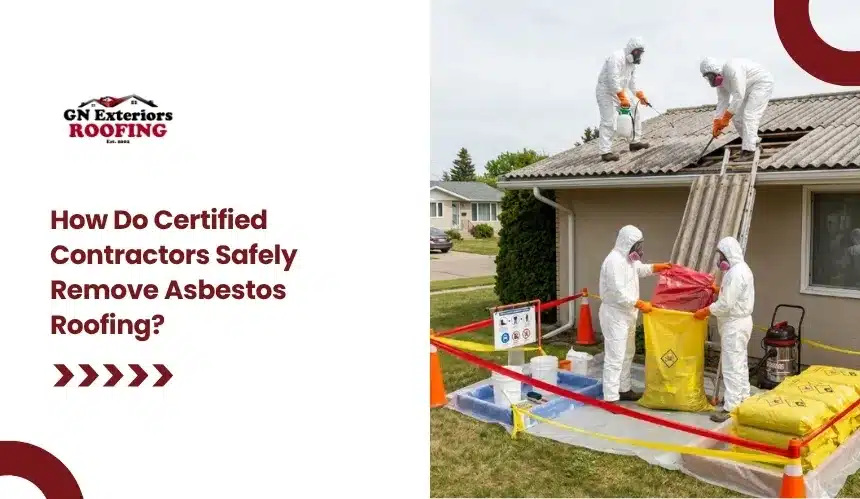
Asbestos roofing becomes hazardous when aging roof materials are handled without the right abatement controls. The danger is not always visible because microscopic fibers can move through dust, debris, clothing, tools, and nearby surfaces.
Certified contractors follow a regulated removal process that separates asbestos work from ordinary roofing. Their role is to verify the material, reduce exposure pathways, protect the site, and ensure the waste is handled through approved channels.
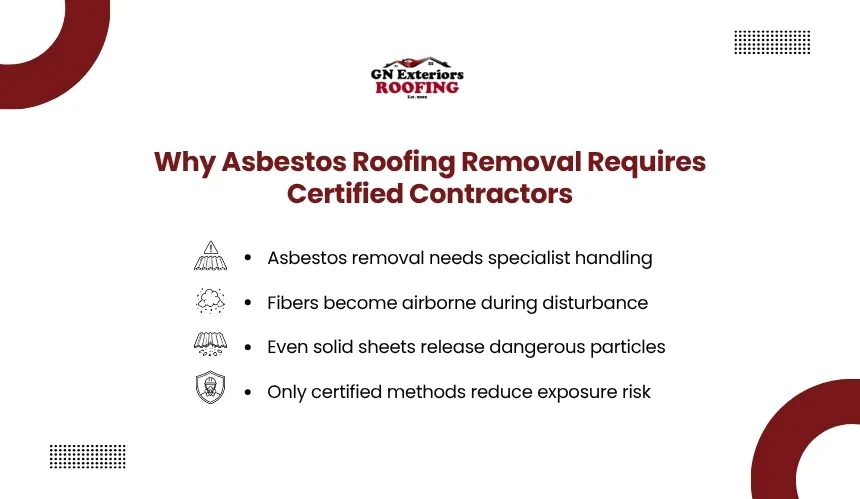
Asbestos roofing removal requires specialist handling because the risk depends on how the material is assessed, accessed, detached, and cleaned up. Standard roofing methods are not designed to manage respiratory exposure, site isolation, or regulated waste requirements.
Asbestos fibers can become airborne when old roof sheets, shingles, underlayment, or roofing felt are cut, cracked, drilled, scraped, or pulled apart during removal. Even materials that appear solid can release microscopic fibers if they are brittle, weather-damaged, or handled aggressively.
Once fibers leave the roofing material, they can attach to work clothing, settle into gutters, enter roof voids, or remain in settled dust. This creates an exposure pathway that may continue after the visible roofing debris has been removed.
Do You Know? OSHA states that there is no safe level of asbestos exposure. Even short exposure periods have been linked to asbestos-related disease, which is why certified contractors treat roofing disturbance as a controlled exposure risk rather than ordinary demolition. |
Certification means the contractor has the required training, licensing, and procedural knowledge to identify asbestos-containing materials and remove them under regulated safety controls. This includes understanding exposure limits, removal classifications, respirator use, containment planning, and approved waste handling.
Certified asbestos professionals also document how the job will be classified, supervised, and completed. Their planning covers worker competence, respirator fit, access equipment, emergency procedures, disposal routes, and evidence that the work followed applicable asbestos regulations.
DIY asbestos roof removal creates risk because homeowners usually lack the equipment, training, and disposal access required for asbestos abatement. Common actions such as prying panels loose, using power tools, bagging debris incorrectly, or sweeping dust can turn a roofing job into a hazardous material cleanup.
Improper handling may also create compliance issues. Many areas restrict how asbestos waste is packaged, transported, and accepted, so a failed DIY attempt can lead to penalties, rejected waste, professional remediation costs, and delays before the roof can be replaced.
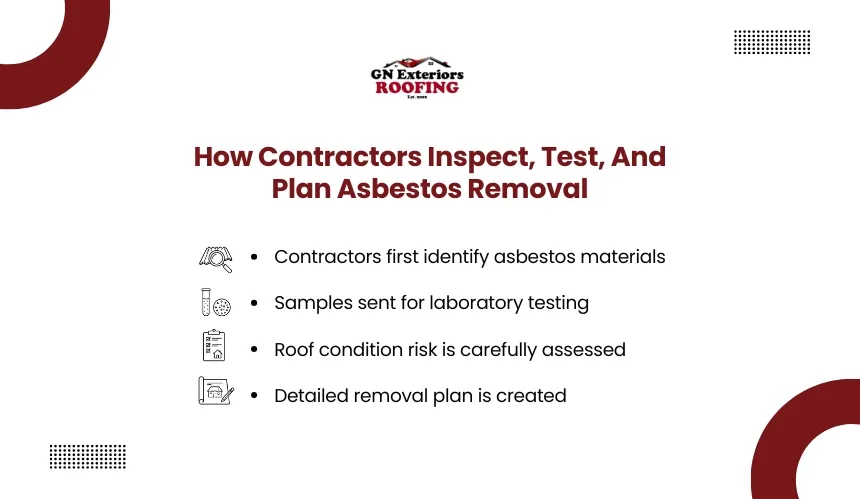
Safe asbestos roof removal starts with verification, not demolition. Certified contractors first confirm whether asbestos is present, assess how easily fibers could be released, and define the controls needed before work begins.
Contractors begin with an asbestos survey to identify roof materials that may contain asbestos, such as cement sheets, shingles, roof tiles, flashing compounds, insulation boards, or older roofing felt. Visual inspection can raise suspicion, but it cannot confirm asbestos content.
Samples are usually collected under controlled conditions and sent to an accredited laboratory for analysis. Lab testing helps determine whether the material contains asbestos, what type may be present, and whether the removal should follow stricter handling procedures.
The contractor evaluates whether the roofing material is intact, cracked, weathered, friable, or likely to break during removal. Damaged asbestos roofing carries a higher release risk because fibers can escape more easily when sheets crumble, fasteners loosen, or surfaces have already deteriorated.
The risk assessment also considers roof height, slope, structural stability, access points, nearby buildings, air intakes, occupied rooms, gardens, driveways, and public areas. These site conditions determine how workers control movement, prevent debris spread, and protect people around the property.
Before removal begins, certified contractors prepare a method statement that defines how the asbestos roofing will be handled, contained, removed, packaged, transported, and disposed of. This plan gives workers a controlled sequence instead of relying on on-site guesswork.
They may also arrange permits, regulatory notifications, waste documentation, and safety controls required by local asbestos rules. A proper plan connects the survey results, site risks, worker protection, and disposal route into one compliant removal process.
Do You Know? EPA notes that asbestos renovation and demolition compliance may involve notification to the appropriate state or local air program authority, a thorough inspection, and techniques that prevent visible emissions during regulated work. |
Before removal starts, the contractor turns the roof area into a managed asbestos work zone. The setup controls who can enter, where debris can fall, how workers move, and which parts of the property must be protected.
Contractors establish an exclusion zone around the roof and ground-level drop areas to keep unauthorized people away from possible asbestos debris. Barriers, caution tape, and asbestos warning signs mark the restricted area clearly.
Residents, workers, pets, and nearby occupants are kept outside the removal zone until the area is cleared. This prevents accidental exposure and reduces the chance of fibers being carried into vehicles, walkways, indoor spaces, or neighboring areas.
Contractors use protective sheeting, ground covers, and controlled work surfaces to catch fragments, dust, and small pieces of asbestos-containing roofing material. Gutters, drains, landscaping, patios, and access routes may also be covered or isolated to prevent hidden contamination.
Openings such as windows, vents, doors, skylights, and air intakes are sealed or protected before removal begins. This stops asbestos fibers from entering occupied rooms, HVAC systems, attic spaces, or other parts of the building.
Workers wear disposable coveralls, gloves, protective footwear, and suitable respirators designed for asbestos exposure control. PPE reduces direct contact with asbestos fibers and limits the chance of contaminated clothing leaving the work area.
A decontamination setup gives workers a defined exit process from the asbestos zone. Disposable clothing, footwear cleaning, hygiene controls, and sealed waste handling reduce the chance that asbestos residue leaves the site on people, tools, or equipment.
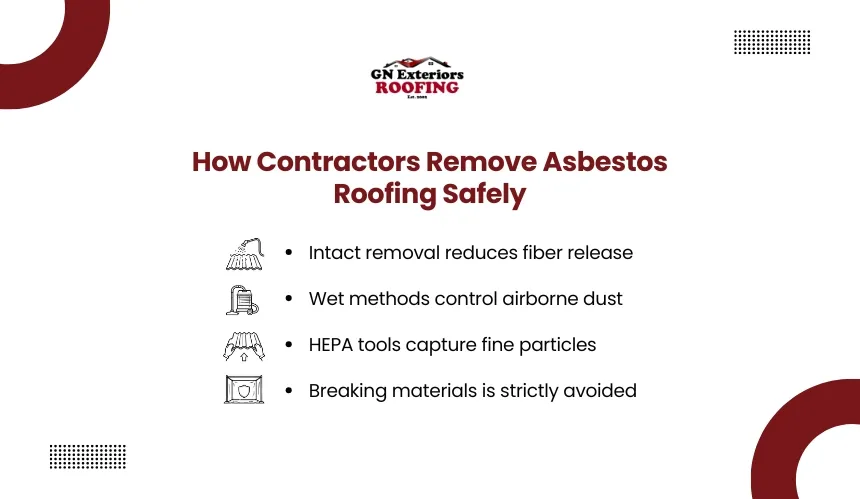
During removal, the contractor’s focus is material integrity. Roof components are detached in a planned sequence so sheets, shingles, fixings, and debris can be lowered, contained, and removed without unnecessary damage.
Wet methods help hold asbestos fibers in place during removal by reducing loose dust at the material surface. Contractors may use controlled misting or surface dampening when roof sheets, shingles, or asbestos-containing roofing felt are damaged or likely to become non-intact.
This method is not used blindly. Contractors first check whether moisture could create electrical hazards, slippery work surfaces, structural instability, or unsafe roof access conditions. When wetting is not suitable, alternative dust-control methods must be planned before removal begins.
Contractors avoid breaking asbestos roofing because intact materials are easier to control, package, and remove from the work zone. When sheets or shingles are shattered, the job creates more fragments, more cleanup points, and a higher chance of hidden residue in gutters, joints, scaffold platforms, and ground protection.
Instead of aggressive tear-off methods, the crew works around fixings, support points, and brittle areas. This keeps the removal process predictable and reduces secondary cleanup problems.
Do You Know? The federal asbestos construction rule states that roofing material should be removed intact whenever feasible. This supports the professional practice of loosening sheets carefully instead of smashing, snapping, or tearing them apart. |
HEPA-filtered equipment is used to capture fine asbestos particles that ordinary vacuums cannot safely contain. Contractors may use HEPA vacuums, controlled cutting systems, and dust collection attachments where tool use is unavoidable.
Dry sweeping, compressed air, and uncontrolled high-speed abrasive tools are avoided because they can spread fibers across the work area. Dust control keeps the removal process contained and supports safer cleanup once the asbestos roofing materials have been sealed for disposal.
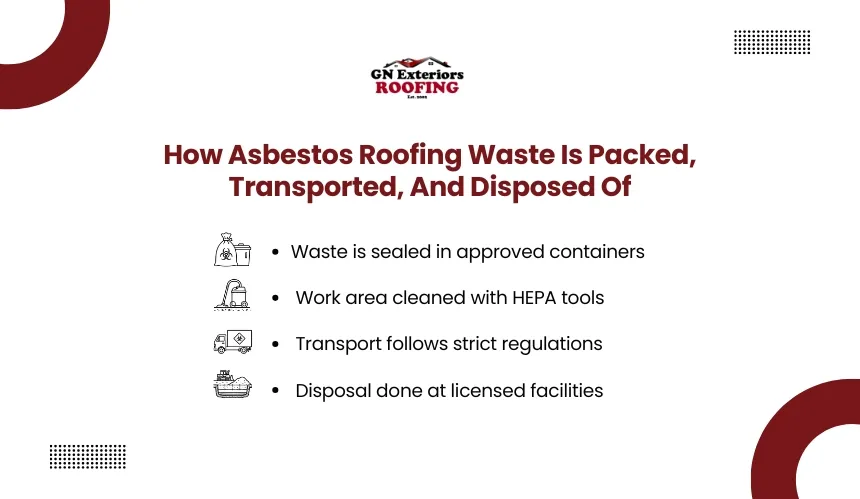
The waste stage protects the property after the roof materials have been detached. Asbestos roofing must be packaged, labeled, moved, and documented so it stays separate from ordinary construction debris.
Contractors place asbestos roofing debris, fragments, disposable PPE, contaminated sheeting, and cleanup materials into approved asbestos waste bags or leak-tight containers. Larger roof sheets may be wrapped in heavy-duty plastic sheeting and sealed to prevent loose fibers or broken edges from escaping.
Each package is sealed, labeled, and checked for damage before it leaves the work area. This packaging step protects handlers, transport crews, disposal staff, and anyone who may come into contact with the waste stream.
After the roofing materials are removed, contractors inspect the work area for fragments, dust, fasteners, and contaminated debris. HEPA vacuums and wet wiping are used to clean surfaces where asbestos fibers may have settled.
Dry sweeping, compressed air, and ordinary vacuums are avoided because they can push microscopic fibers back into the air. The cleanup process targets visible debris and fine contamination before protective barriers are removed.
Asbestos roofing waste is transported according to local hazardous waste or special waste requirements. Certified contractors use approved vehicles, proper documentation, sealed packaging, and disposal records to maintain a controlled chain of custody.
The waste is taken to a licensed disposal facility authorized to accept asbestos-containing materials. This prevents asbestos roofing debris from entering regular construction waste streams, landfills, or public handling areas where exposure risks would increase.
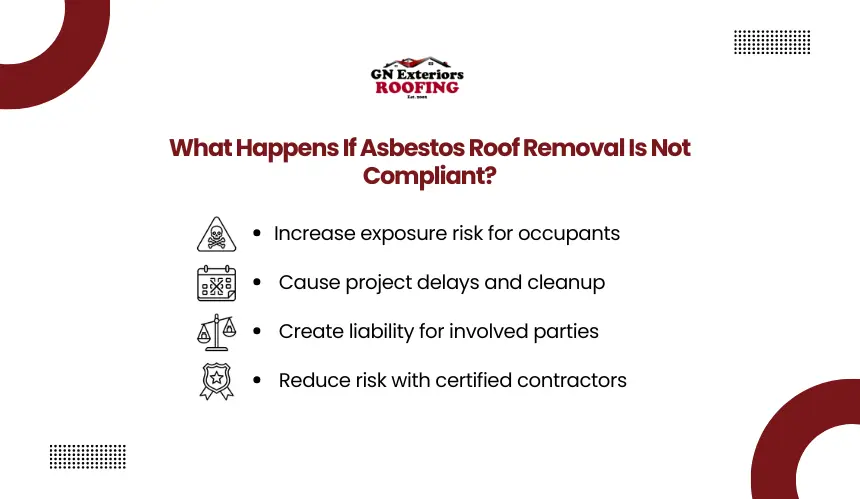
The job is not complete when the last asbestos panel leaves the roof. Final checks confirm that the work area has been cleaned, records have been completed, and the property is ready for standard roofing activity.
Contractors inspect the roof area, access routes, ground covers, gutters, scaffolding, and surrounding surfaces for remaining debris or visible contamination. Any leftover fragments, dust, or contaminated materials must be removed before the work zone is released.
Clearance checks may include visual assessment, contamination review, and confirmation that protective controls can be safely removed. This step verifies that the property is ready for the next construction phase without exposing roofers, occupants, or nearby workers to asbestos residue.
Homeowners should receive records that confirm the asbestos removal was completed according to required safety and disposal procedures. These documents may include contractor credentials, asbestos inspection results, waste transfer notes, disposal receipts, and completion paperwork.
This documentation protects the property owner by showing that asbestos-containing roofing materials were handled by qualified professionals. It can also support future property sales, insurance records, renovation planning, or compliance checks.
Roof replacement should begin only after the asbestos contractor has released the work area and provided the necessary completion records. This keeps the reroofing crew separate from asbestos abatement responsibilities and prevents confusion over who is responsible for any remaining cleanup.
Once the area is released, the roofing contractor can inspect decking, repair damaged substrate, install underlayment, and begin the new roof system under normal construction procedures.
When asbestos roofing requires careful handling, GN Exteriors provides the professional support needed to protect your property from unnecessary risk. Their team understands the importance of safe planning, controlled removal coordination, and proper roofing replacement after asbestos materials are cleared. For homeowners who want a safer, cleaner path from hazardous roofing concerns to a reliable new roof system, GN Exteriors is ready to help with trusted exterior solutions.
Asbestos roofing can affect insurance reviews, renovation planning, and buyer confidence because it creates a future removal liability. Insurers may ask about roof condition, age, and known hazardous materials. Property value impact usually depends on whether the roof is intact, documented, professionally managed, or likely to require near-term asbestos abatement.
Disclosure rules vary by location, but known asbestos-containing roofing should generally be treated as a material property condition. Buyers may request inspection records, removal estimates, or management plans before closing. Clear documentation reduces disputes because it shows whether the roof was tested, repaired, encapsulated, or professionally removed.
Storm-damaged asbestos roofing should not be touched, swept, or patched casually. The safer first step is to restrict access, avoid disturbing broken pieces, and contact a licensed asbestos professional or local authority for guidance. Emergency roof covering may be needed, but it should be handled without breaking or spreading contaminated debris.
Solar installation on a suspected asbestos roof requires careful assessment before drilling, mounting, or cable routing. Installers may refuse work until asbestos testing confirms the material status. If the roof contains asbestos, removal, encapsulation, or an alternative mounting system may be needed to avoid disturbing hazardous roofing materials.
Encapsulation can be less disruptive than full removal when the roof is stable, sealed, and structurally sound. However, it does not eliminate the asbestos from the property. Long-term costs may include inspections, coating maintenance, future disclosure issues, and eventual removal if the roof deteriorates or needs replacement.
Warning signs include vague licensing claims, no written method statement, no waste disposal details, unusually low pricing, pressure to start immediately, or refusal to provide insurance and documentation. A qualified contractor should explain testing, safety controls, disposal routes, and completion records before any asbestos roofing work begins.