
Quick Answer: Cedar Impression siding resists moisture and insects because it is not made from natural cedar wood. Its polymer-based surface does not absorb water like real wood, and it does not provide the same food source for wood-damaging insects. |
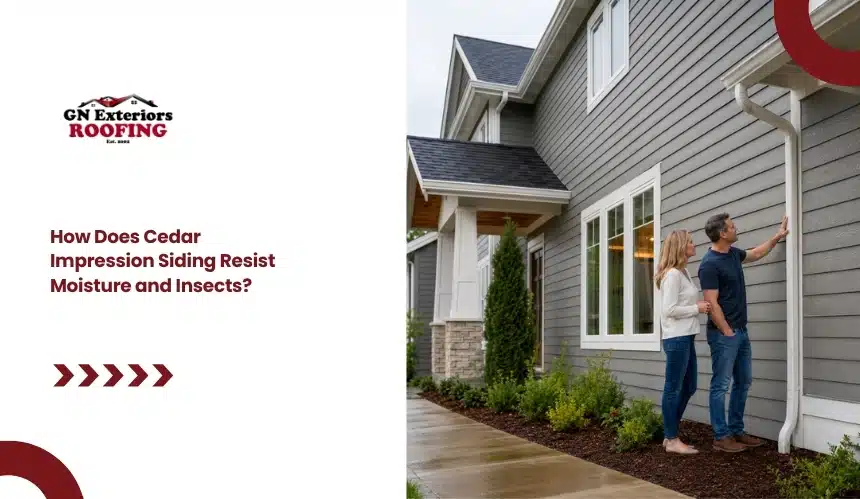
Moisture and insects are two of the biggest concerns with natural wood siding. Real cedar can look beautiful, but it still needs ongoing protection against water absorption, staining failure, swelling, soft spots, and pest activity. When moisture stays inside wood, the surface becomes more vulnerable to decay and insect damage over time.
Cedar Impression siding is designed to give homes the textured appearance of cedar shakes without many of the problems linked to real wood. It can copy the look of individual shingles, deep shadow lines, and natural shake patterns while offering stronger resistance against moisture-related wear and wood-damaging pests.
This blog explains how Cedar Impression siding helps reduce water absorption, rot, termite activity, carpenter ant concerns, and hidden wall problems when it is installed correctly.
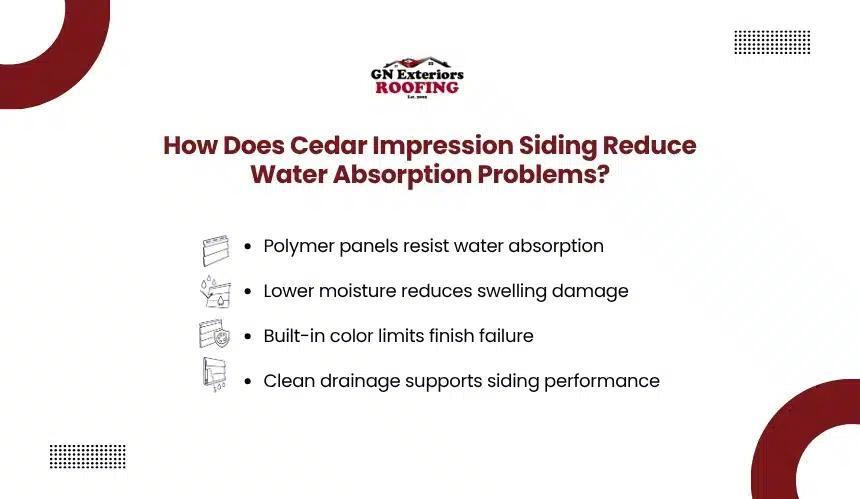
Cedar Impression siding reduces water absorption problems by replacing natural wood with a non-wood exterior material. Real cedar can absorb and release moisture depending on weather conditions, while polymer siding does not soak up water the same way. This makes the siding less likely to swell, soften, or decay from direct rain exposure.
Water resistance matters because exterior siding faces rain, snow, humidity, shaded walls, wet landscaping, and repeated temperature changes. When natural wood holds moisture for too long, it can lose strength, change shape, and create conditions where rot can start. Cedar Impression siding helps avoid many of those problems because the panel itself is not organic wood.
Polymer panels do not absorb moisture into wood fibers because they are not made from natural cedar. This helps Cedar Impression siding keep its surface more stable during wet weather, especially in areas where rain, snow, and humidity regularly affect the exterior.
Real cedar needs protective coatings to slow water absorption. If the stain, sealant, or paint wears down, the wood can begin taking in more moisture. Cedar Impression siding avoids that issue at the material level because the siding surface is built to resist water absorption without relying on wood grain protection.
This does not mean water can be ignored. Rain still needs to drain properly off the siding and away from the wall. However, the siding panel itself is much less likely to hold moisture like real cedar shakes.
Did you know: ICC-ES evaluation reports for Cedar Impressions polymer siding require that sheathing be covered with a water-resistive barrier before installation, confirming that the siding itself is designed to work as part of a code-compliant moisture management system, not as a standalone waterproof layer. |
Lower water absorption helps Cedar Impression siding avoid common moisture problems such as swelling, cupping, softening, and surface breakdown. Since the siding does not behave like natural wood, it does not expand from absorbed water in the same way cedar boards or shingles can.
This is especially important on shaded walls, lower exterior sections, and areas near landscaping where surfaces may stay damp longer after rain. Natural cedar can become more vulnerable in those spots if moisture remains trapped. Cedar Impression siding gives homeowners a cedar-style look with fewer water-related surface changes.
The result is a siding option that can keep its shake-style appearance with less concern about wood fibers opening, lifting, or deteriorating because of repeated moisture exposure.
Built-in color helps reduce the maintenance problems that come from paint or stain failure on natural cedar. Real wood often needs staining, sealing, or repainting to protect the surface from moisture. Once that finish begins to crack, peel, or wear thin, water can reach the wood more easily.
Cedar Impression siding usually has color integrated into the panel system, so it does not depend on field-applied stain for basic moisture protection. This can reduce the risk of peeling finishes, exposed wood grain, and water marks that often appear when natural cedar is not maintained.
Homeowners still need to clean the siding and inspect it over time, but they do not need to manage the same stain-and-seal cycle that real cedar usually requires.
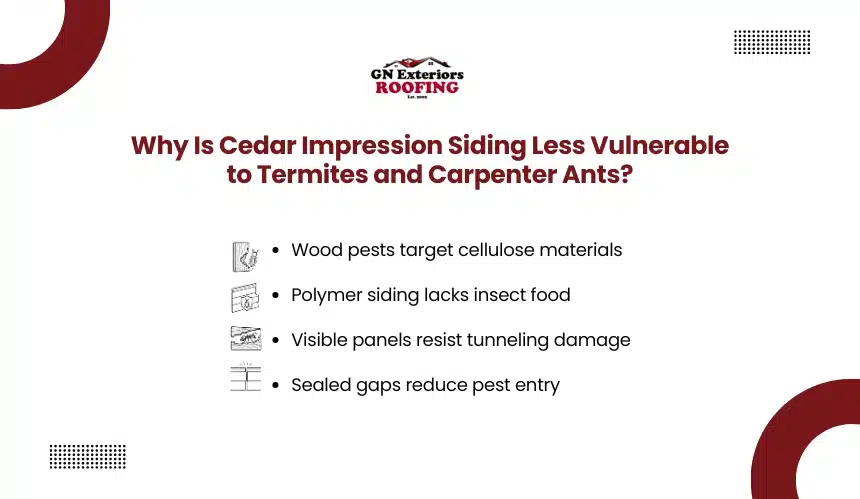
Termites feed on cellulose-based materials, and carpenter ants often tunnel into damp or decaying wood to build nests. Since Cedar Impression siding is a non-wood exterior material, it does not attract these pests in the same way real cedar siding can.
This makes Cedar Impression siding useful for homeowners who want a wood-shake appearance without increasing the risk of insect damage on the siding surface. It can still look like cedar, but it does not give wood-damaging insects the same material to chew, tunnel through, or nest inside.
Termites and carpenter ants are more commonly associated with wood because wood gives them either food, shelter, or nesting space. Natural cedar siding can become more vulnerable when moisture, cracks, gaps, or aging finishes weaken the surface over time.
Carpenter ants are especially drawn to damp or softened wood because it is easier to tunnel through. Termites can also damage wood-based materials when they find access points around the exterior. Real wood siding can create more risk if it stays wet, touches soil, or has unsealed openings.
Cedar Impression siding helps reduce this issue because the visible siding surface is not natural cedar. The material does not soften into wood fibers or create the same insect-friendly surface that pests usually prefer.
Important info: In NFPA 268 fire testing, Cedar Impressions siding shows no sustained flaming up to 12.5 kW/m², and because it’s polypropylene resin instead of wood, it does not provide the cellulose food source termites look for while also offering better fire resistance than natural cedar. |
Polymer siding does not provide the cellulose food source that termites look for in wood. This is one of the main reasons Cedar Impression siding can resist insect damage better than natural cedar shakes. The siding may copy the look of wood, but it does not behave like wood when pests come into contact with it.
This difference matters for long-term exterior protection. A home can still have wood framing, trim, sheathing, or structural materials behind the siding, but the Cedar Impression panels do not give insects the same direct feeding surface as real cedar.
For homeowners, this means the siding can lower the chance of visible insect damage on the exterior. It also reduces the need for wood-specific repairs such as replacing chewed, tunneled, or softened cedar shingles.
Cedar Impression siding resists insect damage at the panel level, but pests can still enter a home through gaps around trim, windows, doors, vents, utility lines, and foundation edges. The siding material may not attract insects, but openings in the wall system can still create access points.
This is why proper installation and exterior sealing are important. Corners, J-channels, flashing areas, soffits, and penetrations should be checked so insects cannot move behind the siding and reach wood framing or sheathing.
Cedar Impression siding helps reduce insect risk, but it should be part of a complete exterior system. When siding, trim, flashing, and pest control details work together, the home has stronger protection against both moisture and insect entry.
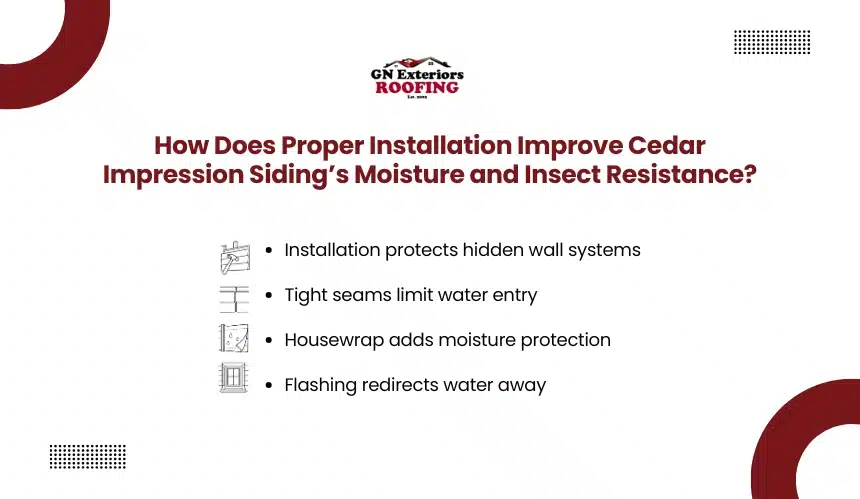
Proper installation improves Cedar Impression siding’s moisture and insect resistance by protecting the wall behind the panels. The siding material can resist water absorption and insect damage, but the full exterior system still needs tight seams, correct flashing, working drainage, and protected openings to stop water or pests from getting behind the siding.
This is important because most hidden siding problems start behind the visible surface. If water enters around trim, windows, corners, vents, or utility lines, it can reach wood sheathing, framing, or insulation. Cedar Impression siding works best when the panels and the wall system are installed together as one protective barrier.
Tight seams help reduce the chance of rain moving behind Cedar Impression siding. When panels are aligned correctly and fastened properly, water is more likely to shed off the exterior instead of entering open joints, loose edges, or poorly connected sections.
Seams are especially important around gables, dormers, corners, and trim transitions because these areas have more cuts and connection points. If gaps are too large or panels are not locked correctly, wind-driven rain can reach the wall behind the siding.
A clean installation keeps the siding surface stable and helps prevent hidden moisture problems. The panels resist water on their own, but correct seams help protect the full exterior assembly.
Key fact: Cedar Impressions siding is tested to ASTM D7254 and can resist negative wind loads from about 37 psf up to 230+ psf, depending on style, helping it stay locked tight under high winds that often force rain behind poorly installed or less rigid siding. |
Housewrap and flashing protect the wall behind Cedar Impression siding if rain gets past the outer surface. Housewrap acts as a moisture barrier, while flashing redirects water away from vulnerable areas such as windows, doors, rooflines, and trim connections.
These layers matter because siding is not meant to be the only defense against water. Even moisture-resistant siding needs a backup system behind it. Without proper flashing, water can collect at openings and slowly damage sheathing or framing.
A strong wall system uses Cedar Impression panels on the outside with proper water management behind them. This helps reduce rot risk, wall staining, insulation damage, and hidden moisture buildup.
Clearance from soil and mulch helps reduce insect access around the lower parts of the home. Even though Cedar Impression siding does not provide a wood food source, pests can still move through damp soil, mulch beds, foundation cracks, or gaps near the bottom of the wall.
Siding should not be buried against soil, mulch, or heavy landscaping. When exterior materials stay too close to the ground, moisture can collect, and pests can find easier pathways into the wall system.
Keeping the base of the siding clear helps the exterior dry faster and makes pest activity easier to notice. This protects the siding system and reduces the chance of insects reaching wood components behind the panels.
Yes, mold or mildew can grow on the surface if dirt, pollen, shade, or moisture sits on the siding for too long. The siding itself does not rot like wood, but the textured surface should still be cleaned so buildup does not become visible.
No, Cedar Impression siding is water-resistant, not completely waterproof. The panels help shed rain and resist water absorption, but the wall still needs proper flashing, housewrap, seams, and drainage to stop moisture from getting behind the siding.
Cedar Impression siding should be inspected at least once a year. Homeowners should check seams, corners, trim, lower wall sections, and areas near gutters or landscaping. Regular inspection helps catch moisture entry, loose panels, or pest pathways early.
Yes, Cedar Impression siding is often better than real cedar in damp areas because it does not absorb water like natural wood. It can provide a cedar-shake appearance while reducing the risk of swelling, rot, stain failure, and insect-related wood damage.