
Key Takeaways:
|
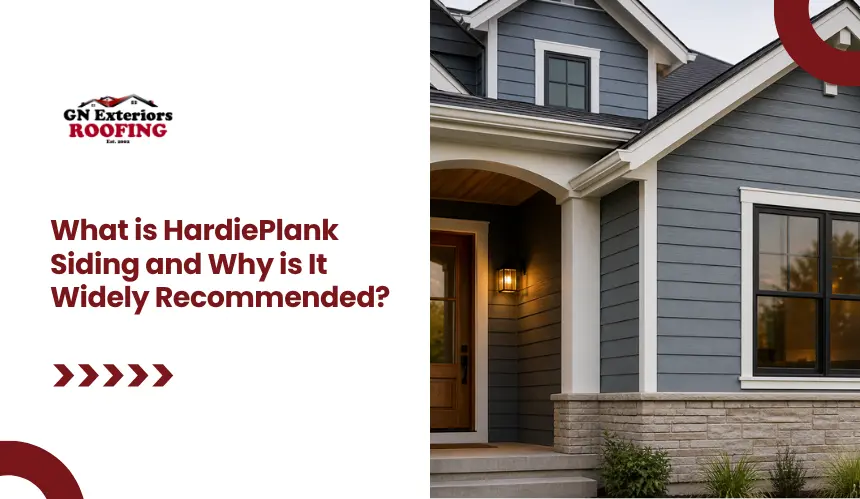
Choosing the right exterior siding often creates confusion because materials vary widely in durability, maintenance demands, and long-term value. Many homeowners struggle to balance appearance with resistance to weather, moisture, and structural wear.
HardiePlank siding is frequently recommended, but the reasons behind that recommendation are not always clearly understood. This article explains what HardiePlank siding is, how it works, and why it is considered a reliable option for modern homes.
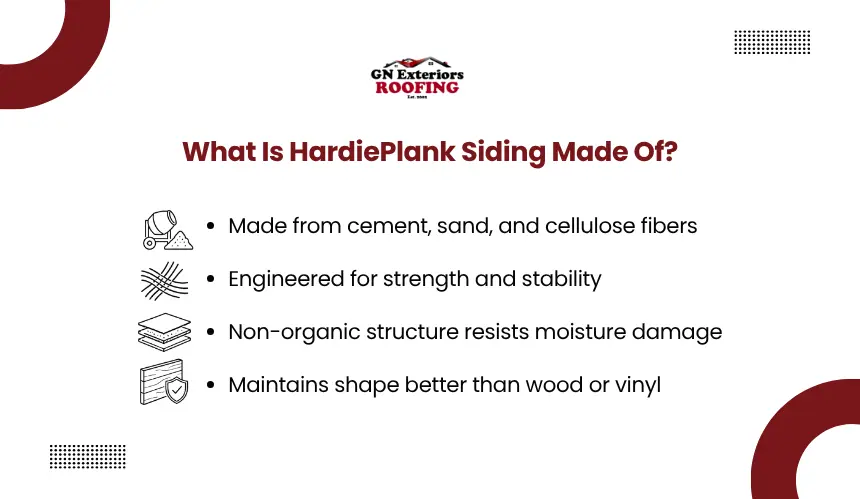
HardiePlank siding is an engineered exterior cladding designed to replicate the look of wood while delivering higher structural stability and resistance to environmental stress. Its performance comes from a controlled material composition and a manufacturing process that enhances strength at a microscopic level.
HardiePlank is a type of fiber cement siding composed of Portland cement, silica sand, water, and cellulose fibers. Cement provides compressive strength, sand adds dimensional stability, and cellulose fibers act as reinforcement, reducing cracking under stress.
This combination creates a dense, non-organic material that does not absorb moisture like wood, limiting expansion, shrinkage, and surface degradation over time.
Unlike wood, which is organic and prone to rot, fiber cement remains structurally stable in humid or wet conditions. Vinyl siding expands and contracts significantly with temperature changes, which can lead to warping or gaps, while aluminum dents easily under impact.
HardiePlank maintains its shape under thermal fluctuation and resists physical deformation, making it more predictable in long-term exterior performance.
The durability of HardiePlank is not only material-based but process-driven. High-pressure curing and autoclaving bind the components into a rigid matrix, increasing density and resistance to external forces.
Surface treatments and baked-on finishes further enhance UV resistance and color retention, reducing the rate of fading compared to traditional painted surfaces. This engineered production approach ensures consistent quality across panels and predictable performance in varying climates.
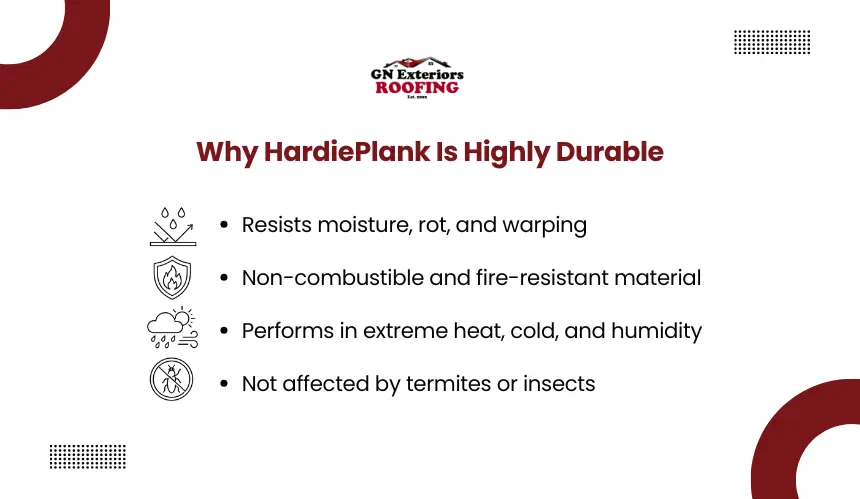
HardiePlank siding is engineered to handle long-term exposure to environmental stress without structural failure. Its durability comes from how the material responds to moisture, temperature shifts, fire exposure, and biological threats.
Fiber cement does not absorb water in the same way organic materials do, which limits swelling, softening, and internal decay. This prevents common failure points seen in wood siding, such as rot and surface splitting.
Dimensional stability remains consistent even in regions with frequent rain or humidity cycles, reducing the risk of warping or joint separation over time.
James Hardie notes that Hardie siding complies with ASTM E136 as a noncombustible cladding, although fire resistance applies to the fiber cement material itself and not to applied paints or coatings.
This property becomes particularly relevant in areas prone to wildfires or where building codes prioritize fire-safe exterior materials.
Temperature fluctuations cause expansion and contraction in most siding materials, leading to cracks or loose panels. HardiePlank maintains structural integrity across both high heat and freezing conditions due to its dense composition.
It performs reliably in coastal humidity, dry heat, and freeze-thaw cycles, making it suitable for diverse climate zones without frequent replacement or repair.
Because it is non-organic, HardiePlank does not serve as a food source for insects such as termites or carpenter ants. This eliminates a major degradation pathway that affects wood-based siding systems.
The absence of pest-related damage reduces long-term maintenance interventions and lowers the risk of hidden structural issues behind exterior walls.
In Greater Boston and South Shore communities like Dorchester, Quincy, and Hingham, salt air, wind-driven rain, and winter freeze–thaw cycles place consistent stress on exterior siding systems.
A properly executed HardiePlank siding installation in these areas ensures correct flashing, moisture management, and fastening to handle coastal exposure and seasonal temperature swings.
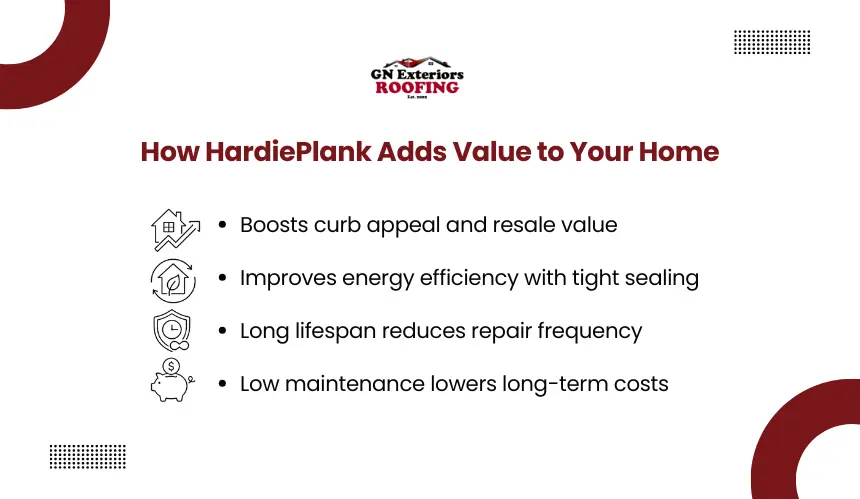
Beyond material strength, HardiePlank siding influences financial return, operating efficiency, and long-term ownership costs. Its impact becomes measurable through resale positioning, thermal behavior, and reduced maintenance cycles.
Zonda’s 2025 Cost vs. Value Report lists fiber-cement siding replacement among the highest-return exterior upgrades, with an average project cost of $21,485, resale value of $24,420, and cost recouped of about 113.7% to 114%.
Exterior siding directly affects buyer perception because it defines the visible condition of a property. HardiePlank delivers a uniform, wood-like finish with consistent lines and color retention, which signals durability rather than short-term cosmetic upgrades.
Homes with fiber cement siding often maintain stronger resale positioning because buyers associate the material with lower future repair risk and longer service life.
HardiePlank itself is not a primary insulator, but it contributes to a more stable building envelope when installed with proper underlayment and weather barriers. Its tight fit and resistance to warping reduce unintended air gaps, which limits heat transfer and air leakage.
This improved sealing effect helps HVAC systems operate more efficiently, especially in climates with large temperature variations between seasons.
Maintenance costs are driven by how often a material requires repair, repainting, or replacement. HardiePlank’s resistance to moisture damage, pests, and UV exposure reduces the frequency of these interventions.
Paint finishes applied during manufacturing typically last longer than on wood surfaces, extending repaint cycles and lowering lifecycle costs. Over time, fewer repairs and longer replacement intervals translate into predictable and lower total ownership expenses.
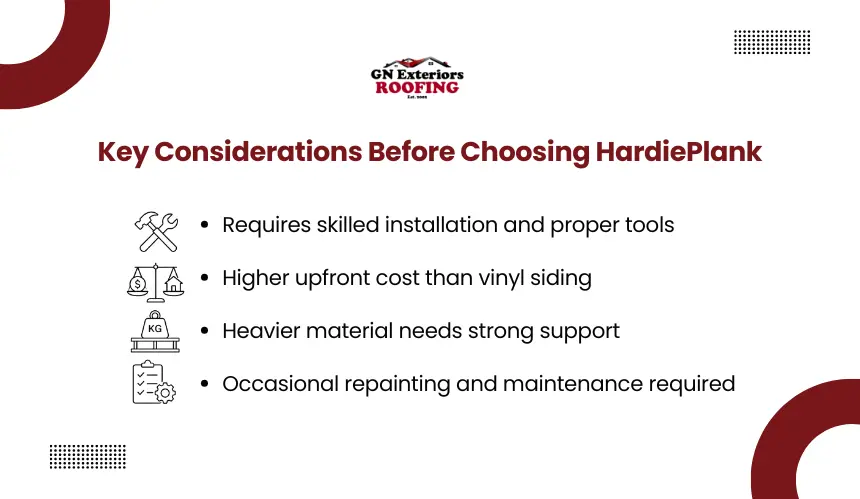
While HardiePlank delivers strong performance, it introduces specific installation, cost, and structural considerations that affect project planning. Evaluating these factors early helps prevent budget overruns and installation errors.
Fiber cement boards require specialized cutting tools and dust control measures because the material is dense and silica-based. Improper handling can lead to edge chipping or inaccurate fits, which compromise water sealing.
Installation typically demands trained contractors familiar with fastening patterns, joint spacing, and flashing integration. This increases labor dependency compared to simpler siding systems like vinyl.
Material costs for HardiePlank are higher than vinyl and can approach or exceed mid-range wood siding options, depending on finish and thickness. Labor costs also trend higher due to installation complexity.
However, initial cost differences should be evaluated against lifecycle performance, since lower maintenance and longer service intervals can offset upfront expenses over time.
HardiePlank is significantly heavier than vinyl or aluminum siding, which affects handling, transportation, and installation speed. The added weight requires proper fastening to structural framing rather than relying solely on sheathing.
In some cases, structural assessment may be necessary to ensure the wall system can support the load without compromising integrity.
Although more stable than wood, HardiePlank is not maintenance-free. Surface finishes will eventually require repainting, especially in areas with high UV exposure.
Joint sealing and periodic inspections remain necessary to maintain water resistance. These maintenance tasks occur less frequently than with wood but should still be factored into long-term upkeep planning.
Industry preference for HardiePlank is based on consistent field performance, predictable installation outcomes, and compliance with modern construction standards. Contractors prioritize materials that reduce callbacks, perform reliably across climates, and align with code requirements.
HardiePlank has been used across varied residential projects where exposure to moisture, temperature variation, and UV radiation is constant. Over time, it demonstrates lower failure rates compared to materials prone to warping, rot, or surface degradation.
This reliability reduces post-installation issues such as panel movement, joint failure, or premature repainting, which directly impacts contractor reputation and project durability.
James Hardie Industries has established standardized production processes that ensure uniform density, thickness, and finish quality across batches. This consistency allows contractors to work with predictable material behavior during installation.
Long-term warranties offered by the manufacturer provide additional assurance regarding product lifespan, finish durability, and resistance to environmental wear, reinforcing confidence among both contractors and homeowners.
James Hardie states that all Hardie fiber cement products come with a 30-year non-prorated warranty, while ColorPlus Technology finishes carry a 15-year limited warranty covering paint and labor against peeling, cracking, and chipping.
HardiePlank aligns with building codes that emphasize fire resistance, moisture control, and structural durability. Its non-combustible classification and compatibility with modern weather barrier systems support compliance in regions with strict construction regulations.
Standardized installation guidelines also streamline inspection processes, ensuring that properly installed systems meet performance benchmarks required for residential safety and longevity.
Choosing the right siding isn’t just about looks, it’s about long-term protection and performance. GN Exteriors helps homeowners make the right call with precision-driven HardiePlank solutions that are built to last. Get expert guidance and results that actually hold up over time.
HardiePlank siding can last for several decades when installed with correct flashing, clearances, fastening, and paint maintenance. Its actual lifespan depends on exposure level, installation quality, and moisture control behind the wall system. Poor caulking, blocked drainage paths, or incorrect clearances can shorten performance even when the material itself is durable.
HardiePlank siding is usually installed after old siding is removed so contractors can inspect sheathing, repair hidden moisture damage, and install a proper weather-resistant barrier. Installing it over existing siding can create uneven surfaces, trapped moisture, and fastening issues. A clean substrate gives the new system better alignment and long-term stability.
HardiePlank siding eventually needs repainting because exterior finishes wear down from UV exposure, wind, rain, and temperature changes. Factory-applied finishes typically last longer than standard field paint, but homeowners should monitor fading, cracking, or exposed edges. Timely repainting protects the surface and helps preserve the siding’s appearance.
The most common mistake is ignoring moisture management details, especially around windows, corners, rooflines, and ground clearance. HardiePlank performs best when water is directed away from the wall system. Poor flashing, tight joints, or incorrect clearances can allow moisture intrusion behind otherwise durable fiber cement panels.
HardiePlank can work well on older homes when the structure is evaluated before installation. Contractors often need to inspect wall framing, sheathing condition, trim transitions, and ventilation paths. Its wood-like appearance suits traditional architecture, but the added material weight and fastening requirements must match the existing exterior wall system.
Homeowners should rinse dirt from the surface, inspect caulked joints, watch for paint wear, and keep landscaping from touching the siding. Gutters should also direct water away from exterior walls. These basic maintenance steps help prevent moisture buildup, staining, and premature finish breakdown around high-exposure areas.