
Gutters protect your home from serious water damage by channeling rain away from the foundation. When they stop working properly, even small issues can lead to big problems like mold, rotting wood, and structural damage. Knowing whether your gutters need a quick repair or a full replacement helps you prevent costly repairs and keep your home safe.
In this article, you’ll learn the clear signs of gutter damage and how to decide between repair and replacement. We’ll also share simple maintenance tips to extend your gutter’s life.
The decision depends on three main factors: the age of your gutters, the cost of repairs compared to replacement, and how often problems occur. If the gutters are relatively new, structurally sound, and issues are localized, repairs usually make sense.
Replacement is the better option when the system is nearing the end of its lifespan, repair costs keep adding up, or the damage affects the overall structure. In these cases, replacing the gutters provides long-term protection and eliminates repeated maintenance.
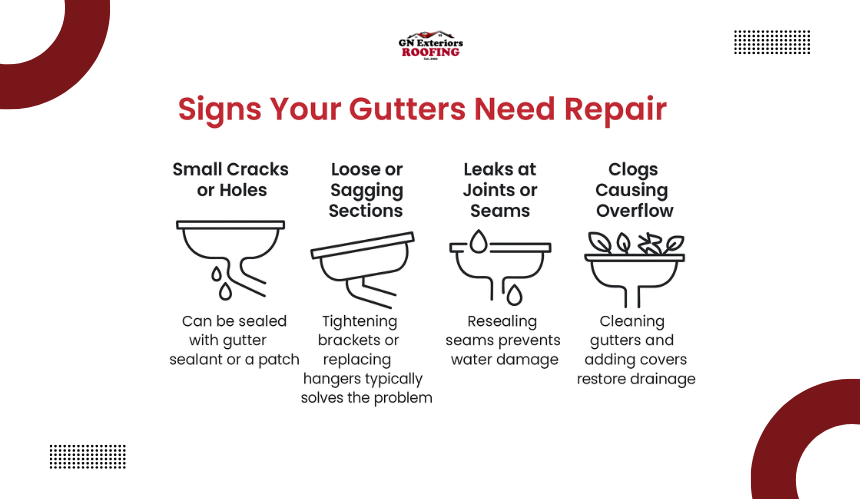
Some gutter issues are minor and can be fixed easily without replacing the entire system. Look for these common signs that call for quick repairs:
Tiny cracks or holes in the gutter surface can be sealed with gutter sealant or a patch. Fixing them early prevents leaks that can damage your siding and foundation.
If a section is pulling away slightly or sagging, tightening the brackets or replacing a few hangers usually solves the problem. Addressing this quickly ensures proper water flow and prevents overflow near your home’s base.
Water dripping from the joints often means the seal has worn out. Resealing the seams prevents water from pooling around the foundation, which could lead to costly repairs.
Overflow during rain often points to debris buildup. Cleaning the gutters and downspouts restores smooth drainage and helps avoid soil erosion around your property. Adding gutter covers can further prevent clogs and reduce future maintenance.
Did you know? 40% of homeowners have suffered home damage due to clogged gutters, and 45% identify clogs as their biggest maintenance concern. |
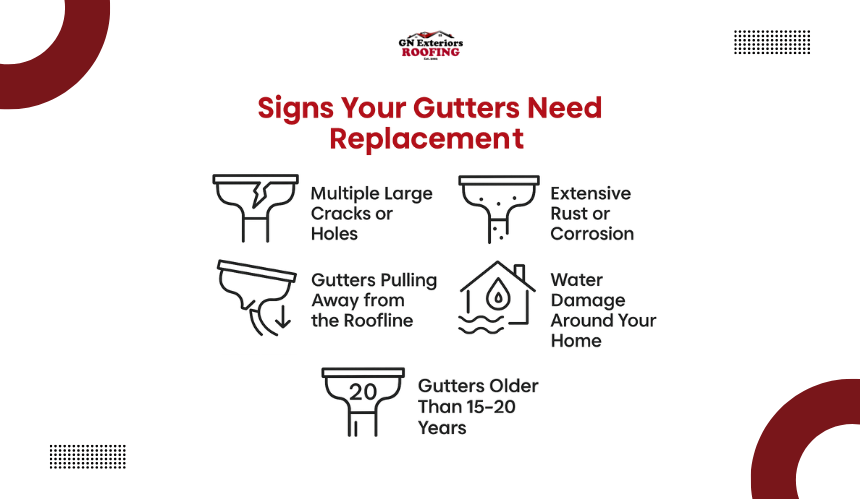
Some gutter problems go beyond simple fixes. If you notice these issues, replacing your gutters is the best way to protect your home from water damage.
When gutters develop several wide cracks or holes, sealing them is no longer effective. These gaps allow water to leak directly onto walls and the foundation, leading to costly structural damage over time.
Rust weakens the metal and creates thin spots that eventually turn into leaks. If you see widespread rust or corrosion along the gutter’s length, replacement is necessary to maintain a solid water drainage system.
If your gutters have detached from the fascia or hang loosely despite multiple repairs, the underlying fasteners or boards may be damaged. In this case, replacing them with a seamless gutter installation ensures they stay secure and work effectively.
Signs like peeling paint, rotting wood, mold near the foundation, or eroded landscaping indicate that gutters are failing to channel water properly. New gutters are essential to stop ongoing damage and prevent bigger repair bills.
Even with proper maintenance, gutters have a limited lifespan. If yours are over 15 years old and starting to show wear, replacing them is the safest choice for long-term protection.
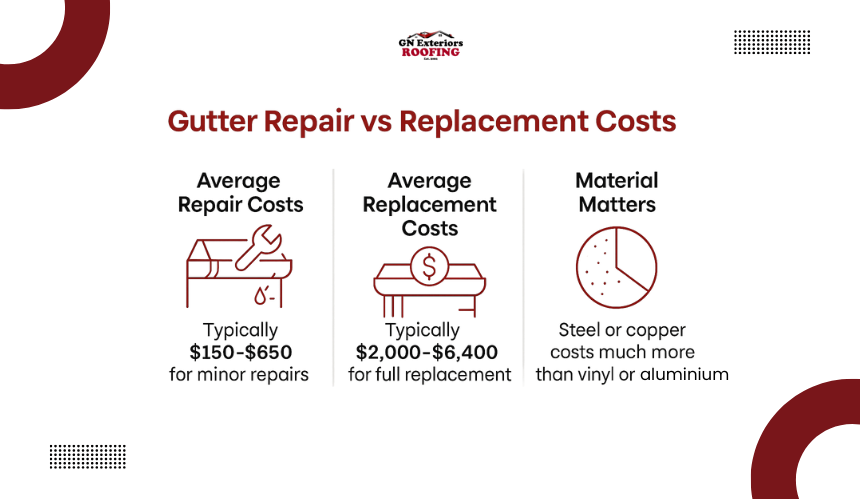
Cost is often the biggest factor in deciding whether to repair or replace your gutters. A quick fix may seem cheaper at first, but if repairs keep adding up or your gutters are near the end of their lifespan, replacement can save you money in the long run. Understanding the cost range for both options helps you make the most practical choice for your home.
Minor repairs, such as sealing small holes, replacing a few hangers, or fixing leaks at the joints, typically cost between $150 and $650, with most homeowners paying around $385.
On a per-foot basis, repair costs generally range from $4 to $18, depending on the material and how complex the damage is.
A full gutter replacement, including materials and installation, usually costs between $2,000 and $6,400. Prices vary based on home size, number of stories, and material choice.
On average, replacement costs range from $4 to $40 per linear foot, with premium materials and complex installations falling at the higher end.
Material plays a big role in both repair and replacement costs. Aluminum and vinyl are more affordable to fix, generally costing $5 to $8 per foot, while steel and copper repairs can reach $11 to $30 or more.
For replacement, aluminum and vinyl typically range from $4 to $13 per foot, while copper or zinc gutters can run $24 to $40 or higher per foot.
If the total repair estimate is close to half the cost of a full replacement, or if you’re paying for frequent repairs throughout the year, replacement is often the smarter investment.
While replacement costs more upfront, it eliminates the cycle of ongoing repairs and reduces the risk of water damage that can lead to even higher expenses.
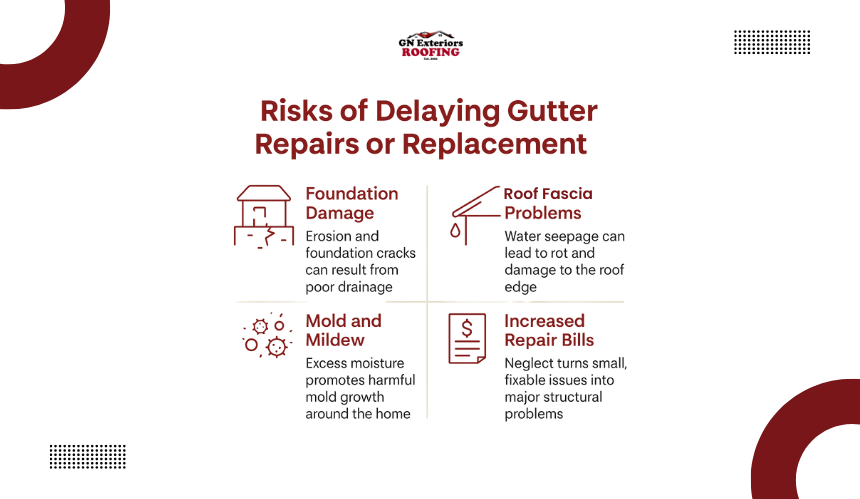
Putting off gutter repairs or replacement may seem harmless, but the damage can escalate quickly. Neglecting your gutters can lead to serious structural problems and expensive repairs. Here are the five risks associated with if your gutter repairs or replacement:
When gutters fail to channel water away, rainwater collects around your home’s base. Over time, this causes soil erosion and cracks in the foundation. Structural damage like this is costly to repair and can compromise your home’s stability.
Clogged or damaged gutters trap water near the roofline. This moisture seeps into the fascia boards and roof edges, leading to rot, weakened roofing materials, and potential leaks inside your home.
Excess moisture around the foundation and walls creates the perfect environment for mold. Once it spreads indoors, mold can damage walls, flooring, and insulation—and it poses health risks to your family.
Improper drainage washes away soil, damages plants, and leaves unsightly trenches in your yard. Rebuilding landscaping after water damage often costs more than timely gutter repairs or replacement.
What starts as a small leak can turn into multiple structural issues. The longer you delay, the more expensive the damage becomes, often far exceeding the cost of new gutters.
Did you know? 27% of homeowners clean gutters only when a problem occurs, and 36% spend nothing on regular upkeep. This dramatically increases risks of long-term damage. |
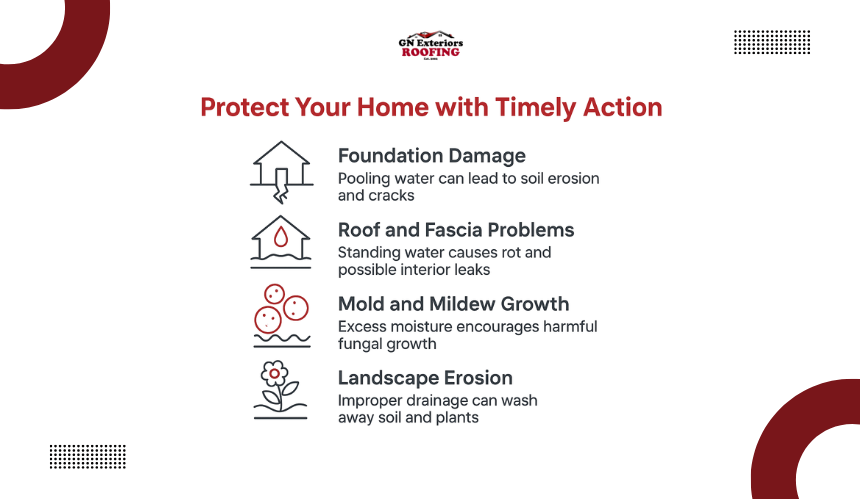
Protect your home from these costly risks by acting quickly. GN Exterior specializes in seamless gutter installation and gutter covers that keep your system efficient and low-maintenance.
Yes, even with gutter covers, maintenance remains essential. While covers prevent large debris like leaves, smaller particles, such as pine needles or roof grit, can still accumulate on top or underneath the guard. Experts recommend rinsing top-mounted guards a few times a year and clearing in-gutter inserts at least twice annually.
Seamless gutters are custom cut and installed on-site, eliminating leaks at joints. Their lifespan often exceeds 20‑30 years, depending on material quality (aluminum, copper, vinyl). In contrast, sectional gutters, with more seams, are prone to leaks and may require repairs sooner.
Yes. Gutter covers reduce moisture buildup that fosters mold and mildew. They also block debris that attracts pests and helps prevent water pooling that can form ice dams. However, no cover system is foolproof. Proper installation and periodic inspections are key to avoid issues.
Questions to Ask a Contractor During Seamless Gutter Installation:
Gutter covers can be particularly effective where leaf and debris buildup is common. Though professional installation costs range from $10 to $25 per linear foot, they often save money over time by reducing cleaning frequency and preventing damage from clogs.
You can handle small repairs like sealing minor leaks or tightening loose hangers on your own if you are comfortable working on a ladder and have the right tools. However, for issues such as large cracks, sections pulling away from the roof, or problems with water drainage, hiring a professional is safer and ensures the work is done correctly.