
Key Takeaways
|
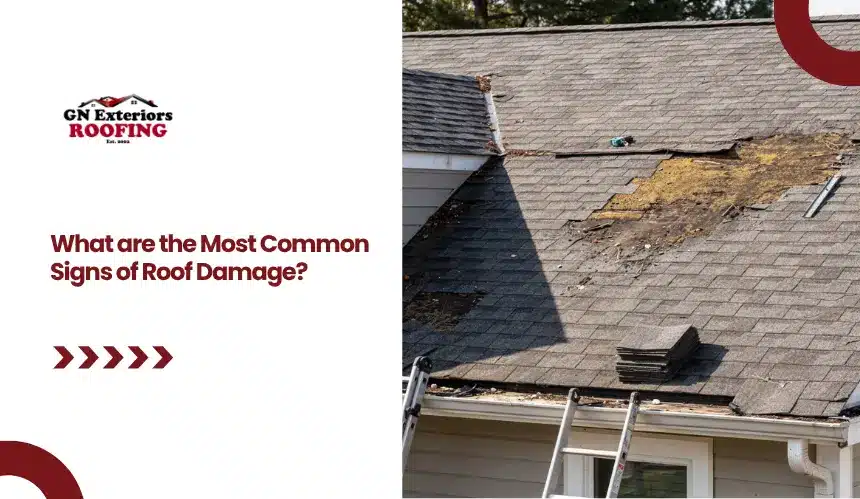
Roof damage rarely starts with something dramatic. It often begins with subtle changes that are easy to overlook until they turn into costly repairs or interior issues.
Homeowners dealing with changing weather patterns, seasonal storms, or aging materials often miss early warning signs that quietly affect roof integrity. This guide focuses on identifying the most common signs of roof damage in a clear and practical way.
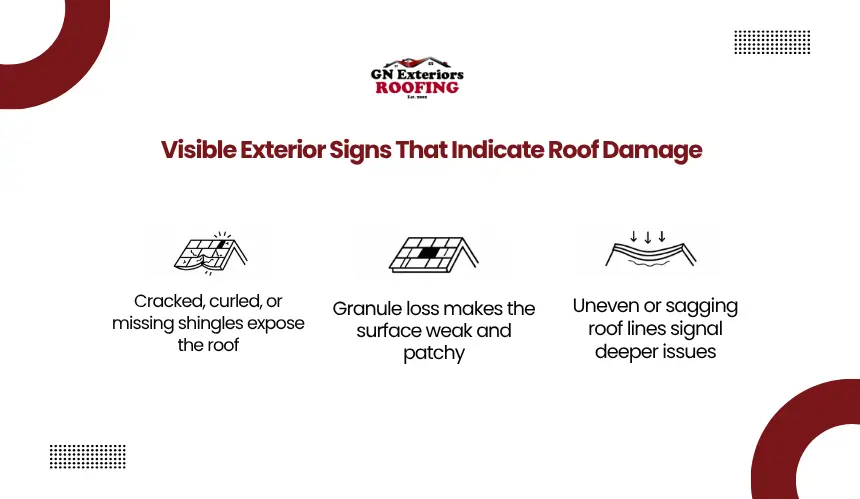
The outer surface of a roof often reveals the earliest warning signs of damage. These indicators develop due to constant exposure to sunlight, wind, and temperature changes.
A careful visual check from ground level can help identify issues before they progress into deeper structural concerns.
Shingles act as the first layer of protection against environmental exposure, and any visible distortion usually signals material fatigue. When shingles begin to curl at the edges or crack across their surface, it often reflects prolonged UV exposure or repeated expansion and contraction caused by temperature shifts.
In areas that experience intense sun followed by cooler evenings, such as neighborhoods around Griffith Park or the San Fernando Valley, this type of deterioration tends to appear more quickly. Missing shingles, on the other hand, are commonly the result of strong winds lifting and displacing them, leaving the underlying roof deck exposed to moisture.
Asphalt shingles are coated with protective granules that shield them from direct sunlight and enhance durability. When these granules start to wear off, the roof surface begins to appear uneven or patchy, reducing its ability to resist heat and water.
A common indicator of this issue is the accumulation of granules in gutters or along downspouts. This gradual erosion is often overlooked, yet it plays a critical role in accelerating roof aging and increasing vulnerability to weather-related damage.
A roofline should appear straight and consistent when viewed from any angle. Any visible dip or uneven section suggests that the underlying structure may be compromised. This can result from prolonged moisture exposure, weakened decking, or stress on supporting components.
Unlike surface-level damage, sagging points toward deeper structural concerns that may continue to worsen over time. Even slight irregularities should be taken seriously, as they often indicate that the roof is no longer distributing weight evenly across its framework.
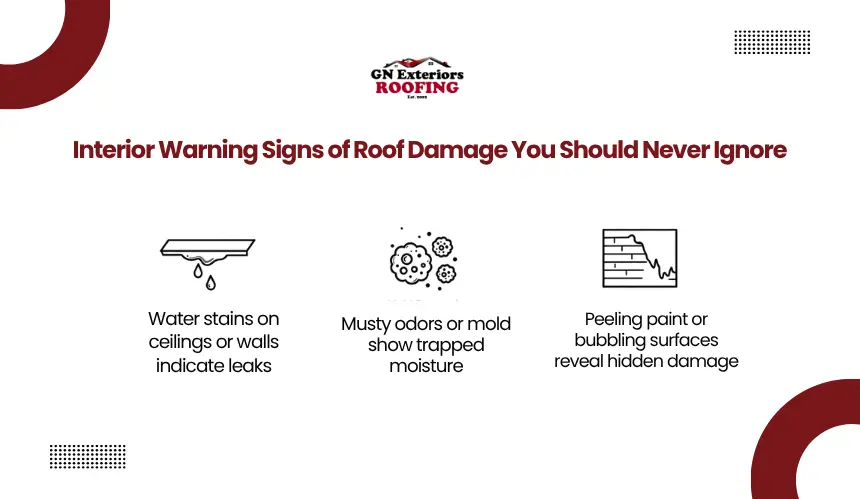
Roof damage does not always announce itself from the outside. In many cases, the first clear signs appear inside the home, especially after rainfall or seasonal humidity shifts.
These indicators often point to moisture intrusion that has already passed through the roofing system and begun affecting interior materials.
Discoloration on ceilings or upper walls is one of the most recognizable signs of a roof leak. These stains usually appear as yellow or brown patches and tend to expand over time if the source is not addressed. The shape and spread can also reveal whether the issue is ongoing or from a previous exposure.
Homes near coastal areas like Santa Monica or Long Beach may notice these stains more frequently due to moisture-laden air combined with roof wear. Even small marks should not be dismissed, as they often signal that water is traveling through layers of insulation and drywall.
When moisture becomes trapped in attic spaces or between structural layers, it creates the ideal conditions for mold development. This is often accompanied by a persistent musty odor that becomes noticeable even before visible mold appears.
Poor ventilation and damp insulation can accelerate this process, especially in enclosed attic environments. Beyond structural concerns, mold can also affect indoor air quality, making it an important sign that roof-related moisture issues are present.
Subtle changes in wall or ceiling finishes can indicate early-stage moisture exposure. Paint that begins to peel, bubble, or separate from the surface often reflects water buildup behind the material.
This type of damage is frequently overlooked because it develops gradually and may not immediately resemble a roof issue. However, it serves as an early warning that moisture is entering the home, allowing time to address the problem before it escalates into more visible or severe damage.
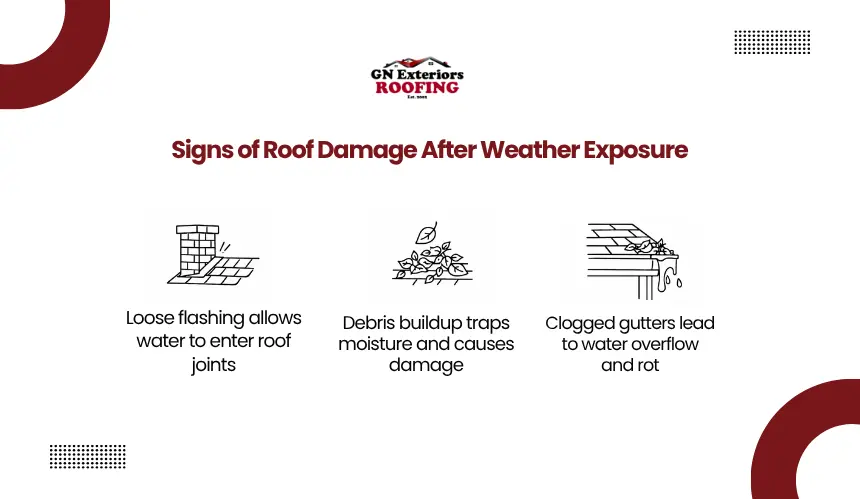
Weather events often accelerate roof deterioration and reveal damage that may not have been visible before. After heavy rain, strong winds, or seasonal shifts, certain problem areas become more noticeable due to stress on roofing materials and protective components.
Flashing is designed to seal joints where the roof meets vertical structures such as chimneys, vents, and skylights. When flashing becomes loose or slightly lifted, it creates entry points for water to seep into the roofing system.
In areas like Pasadena or Burbank, where temperature fluctuations can cause materials to expand and contract, flashing can gradually weaken over time. Even minor separation around these joints can lead to consistent moisture intrusion, especially during rain.
Storms often leave behind debris such as branches, leaves, or dirt that settles on the roof surface. While this may seem harmless at first, accumulated debris can trap moisture and create pressure points that affect shingles and underlying layers.
Impact from falling branches or hail can also cause dents, cracks, or localized damage that may not be immediately obvious from a distance. Over time, these small impact points can develop into leaks or structural weaknesses if not addressed.
Gutters play a critical role in directing water away from the roof. When they become clogged with debris, water begins to pool and overflow, often backing up toward the roofline.
This overflow can lead to water infiltration along the edges of the roof, increasing the risk of wood rot and damage to fascia boards. Persistent drainage issues also place additional strain on the roofing system, making it more vulnerable during heavy rainfall.
Homes across Massachusetts, especially in South Shore and Greater Boston communities like Quincy, Weymouth, Randolph, Milton, and Hanover, experience a mix of coastal moisture, winter snow loads, and freeze-thaw cycles. These conditions create a unique pattern of roof stress that differs from drier regions.
Heavy snowfall followed by rapid melting can force water beneath shingles, while repeated freezing expands trapped moisture within roofing materials. Coastal winds and salt exposure in nearby areas further contribute to faster material wear.
As a result, signs such as loose flashing, gutter overflow, and debris buildup tend to appear more frequently after seasonal transitions, making post-storm inspections particularly important in these regions.
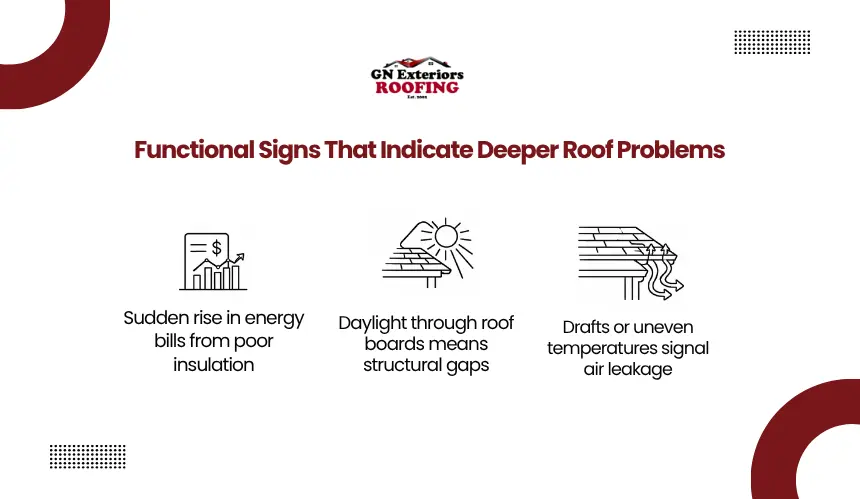
Not all roof damage is immediately visible. In many cases, performance-related changes inside the home reveal that the roofing system is no longer functioning as it should. These signs often point to hidden gaps, insulation breakdown, or compromised structural layers.
A noticeable spike in heating or cooling costs can indicate that the roof is no longer maintaining proper insulation. When small gaps or material degradation occur, conditioned air begins to escape, forcing HVAC systems to work harder to maintain indoor temperatures.
Homes in areas like Encino or Woodland Hills, where summers bring prolonged heat, often experience this issue when roof insulation weakens. Reduced thermal efficiency is a strong signal that the roofing system is allowing heat transfer beyond normal levels.
One of the clearest indicators of structural compromise is the presence of light entering through the roof boards. This is typically visible from the attic and suggests that there are openings or gaps in the roofing system.
Even small points of light can indicate pathways for water, air, and pests. This type of issue reflects a breakdown in the protective barrier and requires immediate attention to prevent further damage.
Unexplained drafts or uneven temperatures within the home can often be traced back to air leakage through the roof. When roofing materials shift or deteriorate, they create openings that disrupt indoor climate control.
This issue is sometimes mistaken for window or ventilation problems, but consistent airflow irregularities near ceilings or upper floors often point toward roof-related causes. Over time, these gaps can affect comfort levels and increase energy consumption if left unresolved.
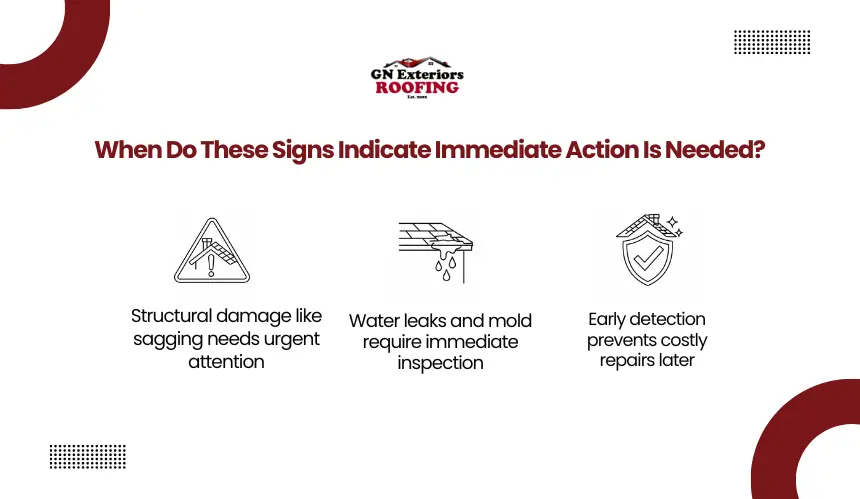
Not every sign of roof damage carries the same level of urgency. Some issues develop gradually and can be monitored, while others require immediate attention to prevent structural impact or interior damage. Understanding the difference helps in making timely and informed decisions.
Surface-level wear, such as slight granule loss or early-stage shingle curling, typically reflects aging rather than immediate failure. These conditions suggest that the roof is progressing through its lifecycle but may still perform adequately for a period of time.
In contrast, structural concerns such as sagging sections or visible gaps indicate that the roof’s support system is compromised. These issues affect load distribution and stability, making them significantly more critical than surface deterioration.
Certain signs should never be delayed, as they point to active or rapidly developing damage. Water entering the home, noticeable mold growth, or sections of the roof that appear uneven signal that the problem is already affecting internal layers.
In neighborhoods like Beverly Hills or Brentwood, where property structures often include complex roofing designs, even a localized issue can spread quickly if not addressed. Immediate inspection helps contain the problem before it impacts larger areas.
Addressing roof damage at an early stage significantly reduces the likelihood of extensive repairs. Small issues such as minor leaks or flashing gaps can often be resolved before they affect insulation, drywall, or structural wood components.
Delays allow moisture and environmental stress to compound the problem, increasing both repair complexity and cost. Early detection supports better maintenance planning and helps preserve the overall durability of the roofing system.
Roof issues rarely fix themselves, and waiting often turns small concerns into expensive problems. If something feels off or you have noticed even one of these warning signs, it is the right time to take action. GN Exteriors helps homeowners identify hidden risks early and protect what matters most with precise, reliable roofing solutions.
The timeline varies based on the extent of the damage and environmental exposure. Minor issues may remain stable for a short period, but in climates with frequent rain or temperature shifts, deterioration can accelerate within weeks. Delaying action often reduces the remaining lifespan significantly.
Insurance coverage often depends on whether the damage is sudden or due to long-term neglect. Issues caused by storms or unexpected events are more likely to be covered, while gradual wear without maintenance may lead to claim denials. Proper documentation and timely inspections play a key role in claim approval.
Basic visual checks from the ground are generally safe, but climbing onto a roof without proper equipment increases the risk of injury. Steep slopes, loose materials, and hidden weak spots make professional inspections a safer and more reliable option for accurate assessment.
Seasonal transitions are the most effective times to assess roof condition. Early spring helps identify damage caused by winter conditions, while fall inspections prepare the roof for upcoming weather changes. These checkpoints allow for timely maintenance before conditions worsen.
Even minor, unresolved roof concerns can influence a property’s perceived condition during inspections or resale evaluations. Buyers and inspectors often consider roof health as a key factor, and visible or documented issues may affect negotiations or long-term property value.