

Metal roofing is valued for its durability, energy efficiency, and long lifespan. When installed correctly, it protects against corrosion, lowers cooling costs, and boosts property value. However, many homeowners lose these benefits because of common installation mistakes.
Errors such as using the wrong fasteners, neglecting underlayment, or misjudging roof slope can quickly lead to leaks, higher repair costs, and a shorter roof life.
This guide highlights the most frequent metal roof installation mistakes and shows you how to avoid them, ensuring your roof delivers strength, efficiency, and long-term protection.
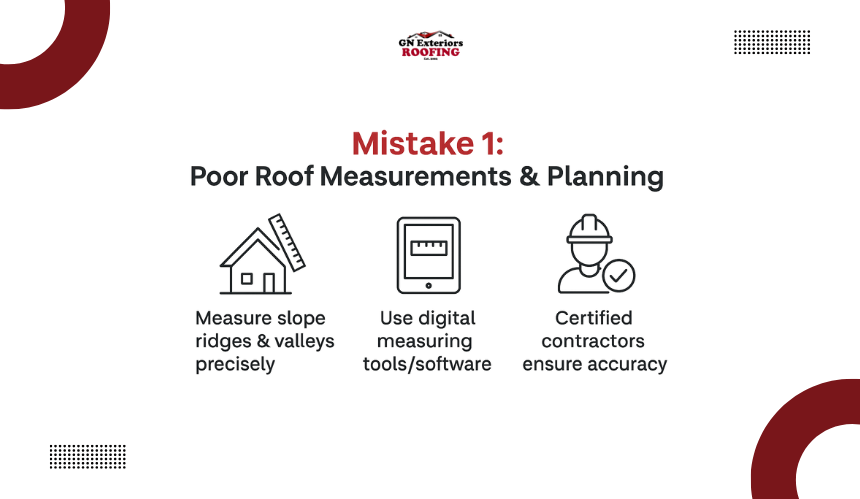
One of the biggest reasons metal roofing projects fail is inaccurate measurements. A roof that is measured incorrectly can lead to panel gaps, wasted material, water leaks, and visible misalignment.
Homeowners often underestimate how precise roof planning must be, especially with standing seam panels or interlocking systems that require exact sizing. Even a small error during measurement can compromise the roof’s integrity and appearance.
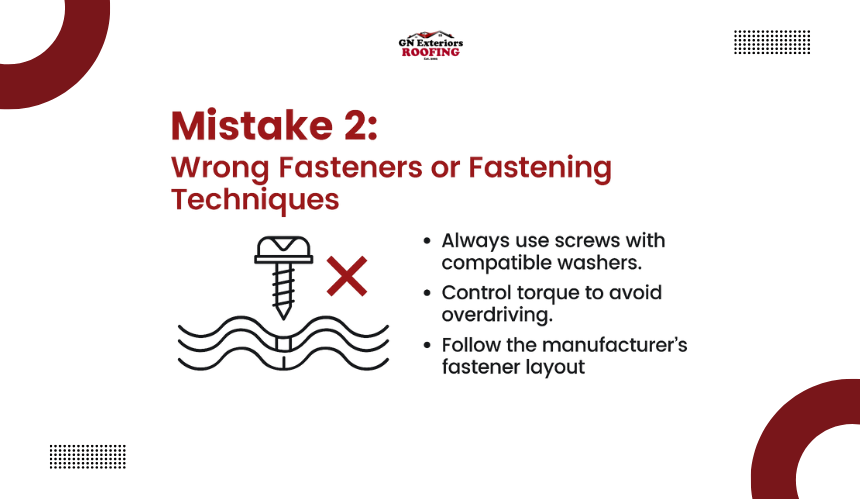
Fasteners hold the entire roofing system together, yet they are often overlooked. Using nails instead of screws, choosing fasteners made of incompatible metals, or tightening them at the wrong angle can create serious problems.
Over-tightened screws can damage washers and panels, while under-tightened ones leave gaps that allow water to seep in. Over time, these errors cause roof leaks, rust formation, and reduced wind resistance.
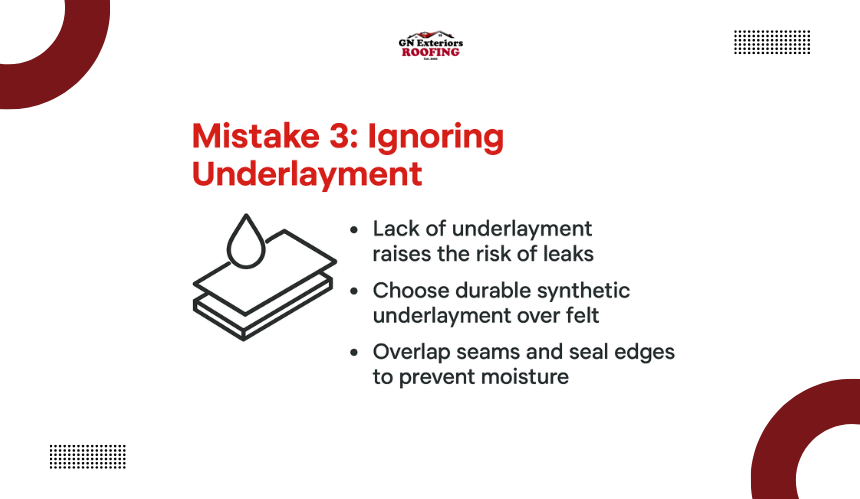
The underlayment is the hidden layer that protects the home from water, condensation, and temperature fluctuations. Skipping it or using low-quality materials leaves the roof vulnerable.
Without underlayment, even the smallest leak can cause interior damage. Felt underlayment often breaks down quickly, while modern synthetic options provide better resistance and longevity.
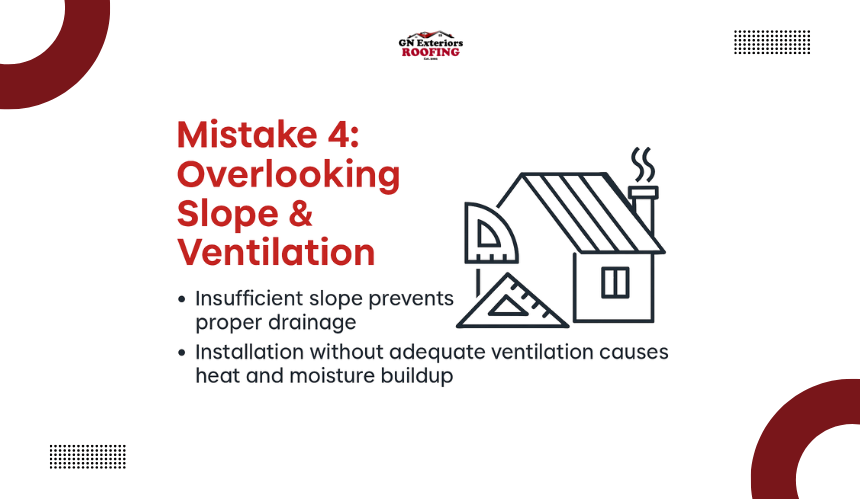
Every roofing system has slope requirements that determine whether water drains properly. Installing metal panels on a roof with an inadequate slope increases the risk of standing water and leaks. Poor ventilation can trap heat and condensation. This will damage both the roof and the home’s interior.
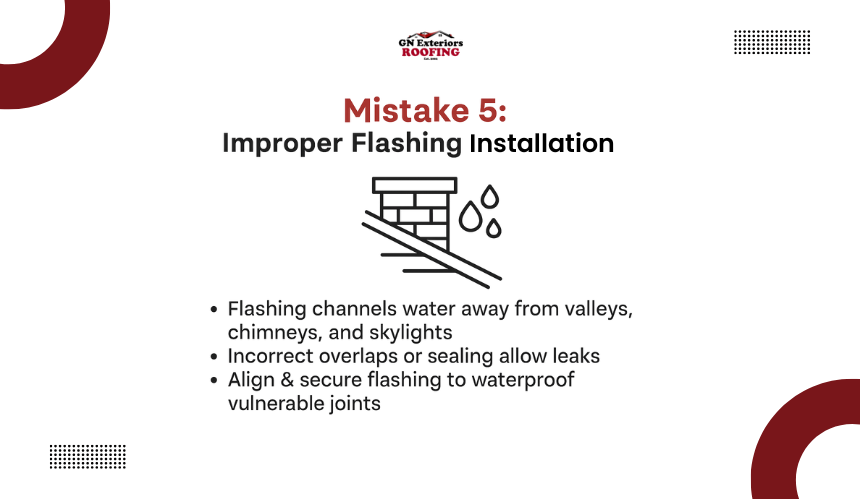
Flashing directs water away from vulnerable joints and roof penetrations. When installed incorrectly, such as leaving overlaps too short or applying sealant unevenly, it becomes the first point of failure. Water seeps through gaps, leading to leaks around chimneys, skylights, and roof valleys.
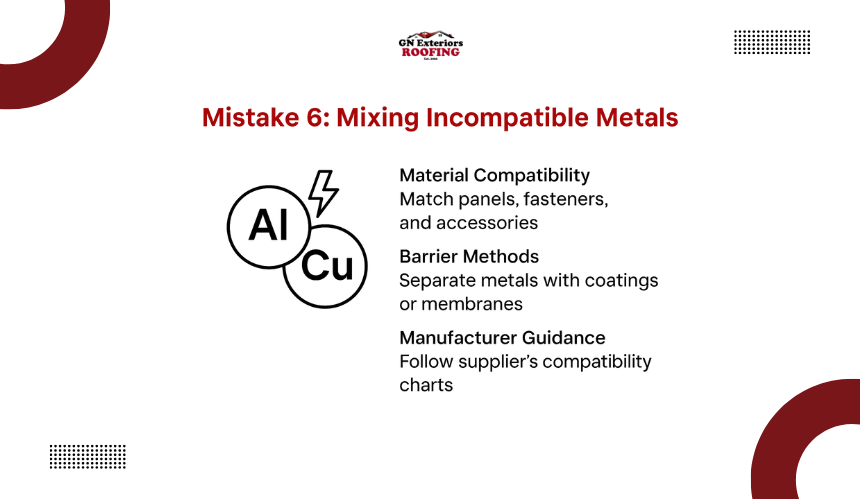
When different metals come into contact, galvanic corrosion occurs. This electrochemical reaction accelerates rust and can eat through panels or fasteners. For example, combining copper with aluminum can destroy both materials in just a few years.
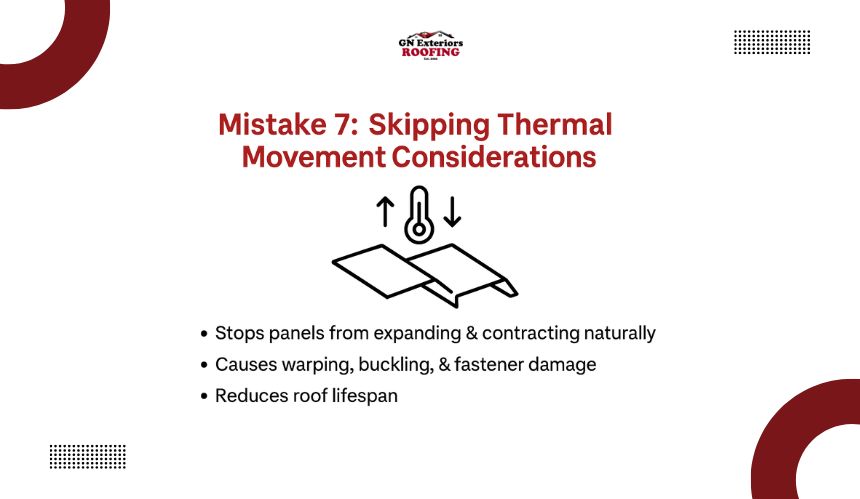
Metal roofs expand and contract with daily temperature changes. If panels are installed too tightly, they can warp, buckle, or damage fasteners. Without planning for thermal movement, stress builds up over time and shortens the lifespan of the roof.
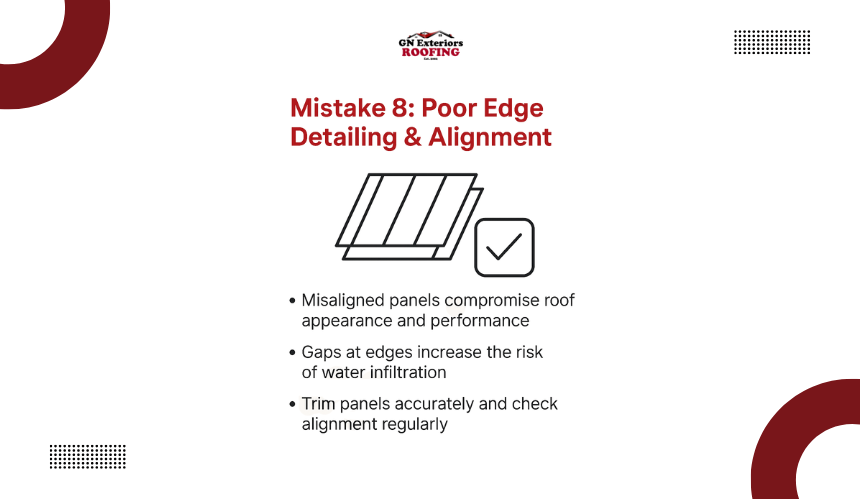
Edges and alignment determine not just the roof’s appearance but also its resistance to wind and water. If the starting line is off, the entire roof will look uneven and may allow water infiltration at the edges. Improper trimming also exposes sharp edges that can rust over time.
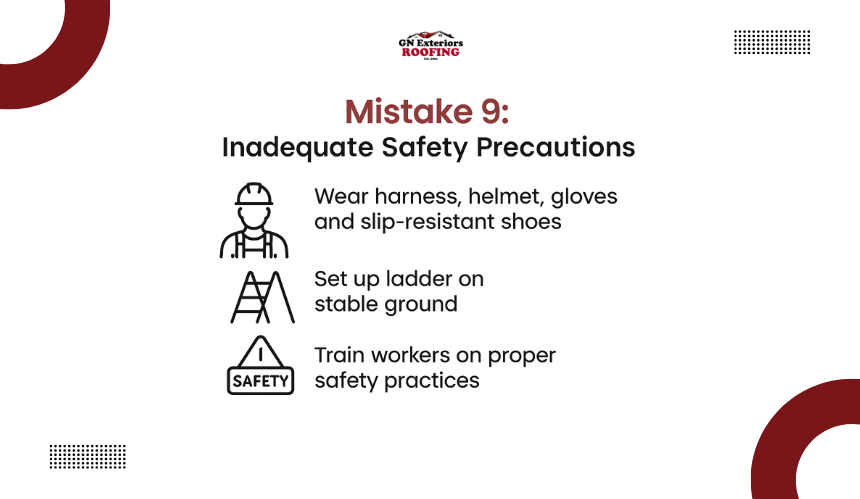
Installing a metal roof involves working at dangerous heights on slick, sharp surfaces. Skipping basic safety practices like harnesses, guardrails, or proper footwear can result in severe injuries. Many accidents during roofing projects happen because of poor preparation, not the work itself.
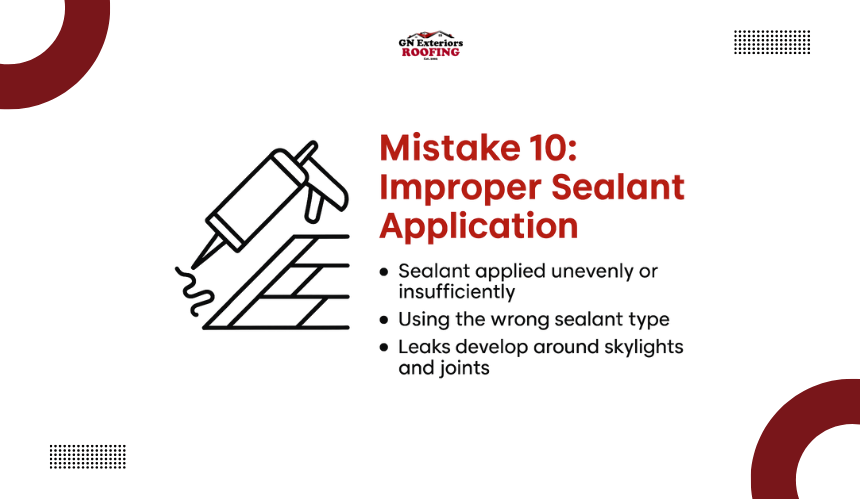
Sealants are vital for keeping water out of joints, seams, and roof penetrations. If applied incorrectly, they fail to stop leaks. Using the wrong product or spreading it unevenly creates weak points. Over time, poor sealant work leads to water intrusion around skylights, vents, and overlaps. This reduces the roof’s ability to stay watertight.
A metal roof can last for decades, but only when installed correctly. Small mistakes such as poor measurements, wrong fasteners, or improper sealant can create costly problems.
Every detail matters, from underlayment to flashing to ventilation. Avoiding these errors ensures strength, efficiency, and long-term protection.
For expert installation and lasting results, trust GN Exteriors. Schedule a roof inspection or request a consultation today to ensure a secure and durable metal roofing system.
A well-installed metal roof typically lasts 40 to 70 years. Lifespan depends on material type, installation quality, and regular maintenance. Steel and aluminum panels often last several decades with minimal repairs. Premium options such as copper and zinc roofing can last over 100 years when properly maintained, making them some of the most durable roofing choices available.
Yes, metal roofing can often be installed over asphalt shingles if the roof deck is in good condition. However, local building codes and manufacturer guidelines must be checked first. An inspection ensures the structure can handle the added weight.
No. Modern metal roofs reflect solar heat rather than absorb it. With proper ventilation and reflective coatings, a metal roof can reduce cooling costs by improving energy efficiency.
A metal roof is not as noisy as many people assume. With a proper underlayment and good insulation, the sound of rain or hail is greatly reduced. In fact, when installed correctly, a metal roof is usually no louder than asphalt shingles.
Maintenance includes clearing debris, checking fasteners, inspecting sealants, and cleaning gutters. Annual inspections after storms help detect minor issues early and extend roof lifespan.
Metal roofing has a higher upfront cost compared to asphalt shingles. However, the long lifespan, lower maintenance, and energy savings make it more cost-effective over time.
Yes, solar panels can be installed on most metal roofing systems. Standing seam roofs are especially solar-friendly because panels can be attached without drilling holes, preserving waterproofing.
A metal roof can increase resale value by improving curb appeal, reducing long-term maintenance costs, and offering strong warranty benefits. Buyers often see it as a premium upgrade.