
Quick Answer:
|
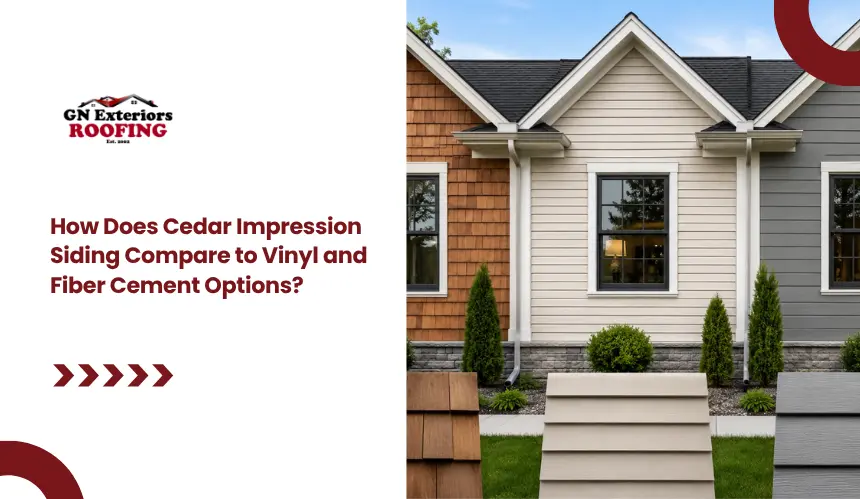
Choosing between these siding options is not only a design decision. It also affects how the exterior handles cleaning, repairs, fading, impact, moisture, and long-term upkeep. The best choice depends on what the homeowner values most: a shake-style design, lower upfront cost, less maintenance, or stronger resistance to weather and wear.
This blog compares the three siding options by appearance, durability, maintenance, cost, installation, and overall fit for different home priorities.
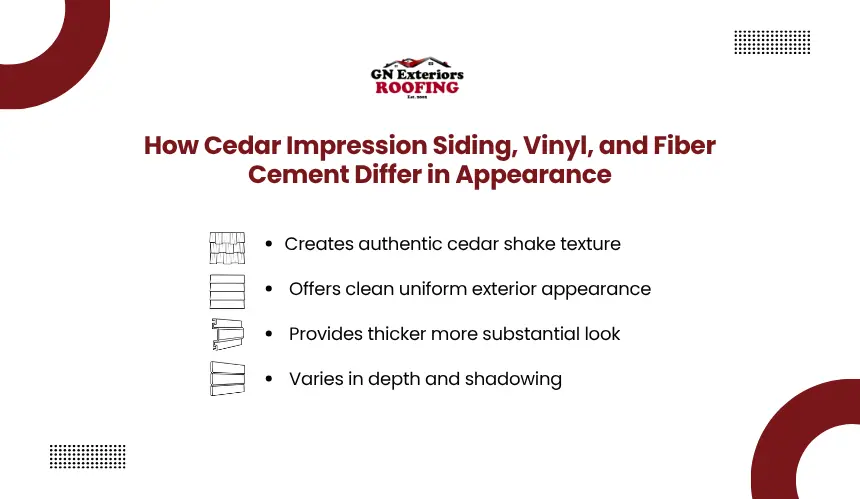
Cedar impression siding gives the strongest cedar-shake appearance because it is designed to copy the look of individual wood shingles. Vinyl siding can also imitate wood siding, but it usually looks cleaner, flatter, and more uniform. Fiber cement siding can look heavier and more substantial, but its appearance depends on the profile, texture, and finish chosen.
This section compares how each option changes the home’s exterior style. The main differences come down to texture depth, shadow lines, panel shape, color finish, and how closely the siding recreates the look of real cedar shakes.
Cedar impression siding is best for homeowners who want the look of cedar shingles without using natural wood. It usually has deeper grooves, uneven shake patterns, and stronger shadow lines than standard horizontal siding, which helps it create a more traditional cedar-style exterior.
This style works especially well on gables, dormers, upper stories, accent walls, and homes where the owner wants more visual detail. It can make the exterior feel warmer and more architectural because the siding does not look as flat or repetitive as basic lap siding.
Did you know: Cedar impression siding uses 3 to 5 mm deep grooves and staggered shake patterns to create stronger shadow lines than standard horizontal siding, mimicking real cedar without natural wood’s rot or frequent staining. |
Vinyl siding usually gives a cleaner and simpler exterior look. It is commonly made to imitate wood clapboard, board-and-batten, or shake-style siding, but many standard vinyl profiles still look more uniform than cedar impression siding. Vinyl siding is primarily made from PVC resin and is widely used for decoration and weatherproofing.
This makes vinyl a practical choice when the homeowner wants a neat exterior without a highly textured cedar-shake effect. It can look attractive on many homes, but lower-profile vinyl may not create the same depth, shadow, or handcrafted appearance as cedar impression siding.
Fiber cement siding often looks thicker, heavier, and more solid on the wall than standard vinyl. Some fiber cement products can mimic cedar shake, including Hardie Shingle siding, which James Hardie describes as designed to copy the look of classic cedar shake.
The difference is that fiber cement usually feels more like a durable cladding system than a lightweight decorative siding. It can create a high-end exterior, but homeowners who want the most obvious cedar-shake texture may still prefer cedar impression siding for accent areas or full shake-style designs.
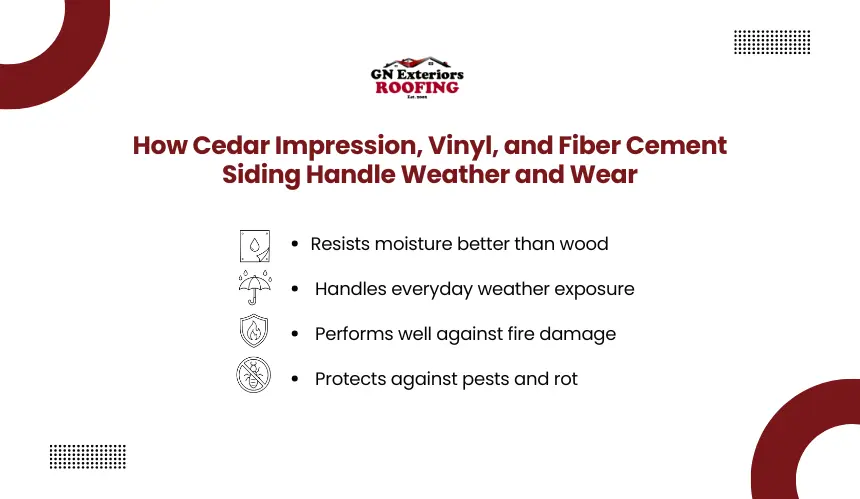
Cedar impression siding, vinyl siding, and fiber cement siding handle weather differently because they are made from different materials. Cedar impression siding is built to give a cedar-shake look with less wood-related upkeep. Vinyl siding performs well for everyday weather protection, but can be more sensitive to heat and impact, and fiber cement is usually stronger against rot, pests, moisture, and fire.
This section looks at how each option reacts to outdoor exposure over time. Weather resistance is not only about rain; it also includes sunlight, temperature changes, wind, impact, moisture, insects, and how well the siding keeps its shape after years of use.
Cedar impression siding gives the look of cedar shakes without the same risk of natural wood rot. Since it is not real cedar, it does not absorb moisture the same way wood can, which makes it easier to maintain in damp or changing weather.
This makes it useful for homeowners who like the wood-shake look but do not want regular staining, sealing, or wood replacement. It can still face fading, impact damage, or panel issues over time, but it avoids many of the moisture problems linked with natural cedar siding.
Imp Info: Vinyl siding can expand and contract up to about 1/2 inch per 12 feet with temperature changes, making it more sensitive to heat and impact than many other materials while still providing solid general weather protection. |
Vinyl siding works well as a weatherproof exterior cladding, but it can expand and contract more with temperature changes than many other siding materials. It is made mainly from PVC resin, and vinyl siding is designed to imitate wood clapboard, board-and-batten, or shakes while protecting the exterior.
The main weakness is that vinyl can be affected by direct heat, hard impacts, and poor installation spacing. Grills, reflected window heat, and extreme temperatures can cause warping or distortion, while hail, ladders, and strong impacts may crack or dent thinner panels.
Fiber cement siding is usually stronger against weather and wear because it is made from cement reinforced with cellulose fibers. It is known for resisting termites, rot, impact, and fire better than many wood-based siding materials.
This makes fiber cement a strong option for homeowners who care more about long-term durability than lightweight installation. It can handle moisture and pests well, but it still needs proper installation, caulking, painting, and edge protection to perform as expected over time.
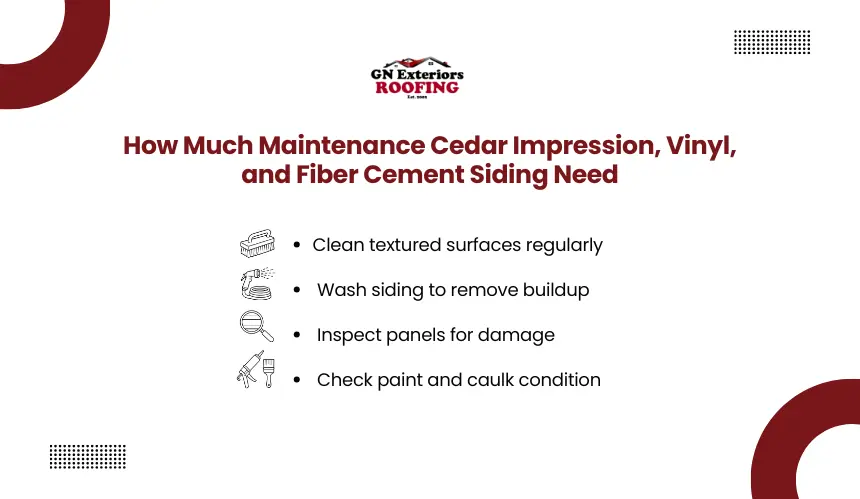
Cedar impression siding, vinyl siding, and fiber cement siding all need less maintenance than natural wood, but they do not need the same type of care. Cedar impression siding usually needs routine cleaning to protect its textured look, vinyl siding needs simple washing to remove dirt and mildew, and fiber cement may need paint, caulk, and joint checks over time.
Maintenance matters because siding problems often start small. Dirt buildup, loose caulk, fading, cracked panels, moisture entry, or open joints can affect the appearance and performance of the exterior if they are ignored for too long.
Cedar impression siding is easier to maintain than real cedar because it does not need regular staining or sealing like natural wood. Its main maintenance need is keeping the textured surface clean so dirt, mildew, and debris do not settle into the grooves.
Because cedar impression siding has a shake-style profile, the surface can collect more visible dust or buildup than smoother siding. Homeowners should inspect corners, seams, and shaded areas because moisture and grime can stay longer in those spots.
Vinyl siding is usually one of the easiest siding options to maintain because it does not need painting, staining, or sealing. Most upkeep involves washing the siding with water and a mild cleaning solution to remove dirt, pollen, mildew, or algae. The Vinyl Siding Institute recommends cleaning with a soft cloth or long-handled soft-bristle brush and working from the bottom up to avoid streaking.
That does not mean vinyl is maintenance-free. Homeowners still need to watch for cracked panels, loose sections, warped areas, and buildup around shaded walls or landscaping. Small damaged sections should be repaired early because loose or broken siding can let moisture get behind the wall.
Fiber cement siding is low-maintenance, but it still needs periodic care to protect seams, edges, and painted surfaces. James Hardie recommends washing exterior surfaces every 6 to 12 months with a garden hose or low-pressure water spray, plus a soft brush or cloth for dirt and debris.
Caulk joints, trim gaps, and paint finish should also be checked as the siding ages. Fiber cement can resist rot and pests well, but exposed edges, failed caulk, or worn paint can still allow moisture problems if they are not maintained.
Pro tip: Homeowners who repaint fiber cement every 10 to 15 years often see the longest color life and lowest risk of edge moisture problems, while vinyl and cedar impressions typically rely on their factory colors and only need cleaning. |
Vinyl siding is usually the easier and more budget-friendly siding option, while cedar impression siding often costs more because it has a more detailed shake-style profile. Fiber cement siding can also cost more because the material is heavier, harder to cut, and more labor-intensive to install.
This section focuses on what homeowners should expect before comparing quotes. Cost is not only about the siding panel itself; it also depends on wall size, trim details, removal of old siding, labor, fasteners, flashing, waste, and how complex the exterior layout is.
Vinyl siding is often the most affordable option because it is lightweight, widely available, and easier for crews to install. Basic vinyl panels usually cost less than decorative shake-style siding or fiber cement, which helps keep the total project cost lower.
Vinyl can also reduce labor time because panels are easier to handle, cut, and place compared with heavier siding materials. However, the final price can still rise if the home has many corners, gables, trim details, repairs, or old siding that must be removed first.
Key fact: Because vinyl is lighter and comes in wider panels, installers can often cover a typical 1,500 to 2,000 sq ft exterior in fewer days than with fiber cement or detailed cedar impression, which can materially reduce on-site labor costs. |
Cedar impression siding usually costs more than basic vinyl because it is designed to create a more detailed cedar-shake look. The textured panels, staggered patterns, and accent-style installation can add more material cost and labor time than standard horizontal vinyl siding.
Homeowners often use cedar impression siding on gables, dormers, upper sections, or accent walls to control cost while still improving curb appeal. Full-home installation usually costs more because the detailed siding profile requires more careful layout, cutting, and alignment.
Fiber cement siding can cost more to install because it is heavier and more difficult to handle than vinyl. Fiber cement cladding often requires two people to carry and install sheets, and cutting thicker pieces may require a saw with a masonry or diamond blade.
The extra labor matters because siding installation is not just placing panels on a wall. Fiber cement may require careful cutting, fastening, caulking, edge protection, dust control, and finish work, which can make installation slower and more expensive than lighter siding options.
The right siding option depends on how much of the home is being updated, where the siding will be installed, and what problem the homeowner is trying to solve. A full exterior replacement, a front-facing accent upgrade, and a repair-focused siding project can all point to different material choices.
This section looks at the decision from a project-planning angle. Instead of repeating appearance, maintenance, and durability, it explains how homeowners can choose based on scope, placement, and long-term exterior goals.
A full exterior replacement usually needs a siding option that balances cost, availability, installation speed, and long-term maintenance. Vinyl siding often works well for larger projects because it is widely available, lighter to install, and commonly used across residential construction.
Fiber cement may be a stronger fit when the homeowner wants a heavier exterior material and is planning for long-term performance. Cedar impression siding can also be used across the full exterior, but it is often better suited when the homeowner specifically wants a shake-style look throughout the home.
Cedar impression siding is often most useful when the goal is to add character to selected parts of the home. Gables, dormers, entry walls, porch peaks, and upper façade sections can benefit from the texture without requiring the same material across every wall.
This approach helps homeowners add visual interest while controlling the project scope. Instead of treating the siding choice as all-or-nothing, cedar impression panels can be used where they create the most design impact.
Long-term siding decisions should consider future repairs, repainting, replacement sections, and how easy it will be to match materials later. Vinyl siding may be easier to match and replace in small areas because it is widely used, but color fading can make older panels harder to blend perfectly.
Fiber cement may be better for homeowners who want a more permanent exterior upgrade, but repairs and installation usually need more careful handling. Cedar impression siding works best when the homeowner wants the cedar-shake style to remain part of the home’s exterior identity over time.
Yes, cedar impression siding can be mixed with lap siding, board-and-batten, or other exterior profiles. Homeowners often use it on gables, dormers, or front-facing sections while using simpler siding on larger walls. This creates contrast without making the full exterior look too busy.
Yes, but siding alone is not the main source of insulation. Standard vinyl, cedar impression, and fiber cement siding provide exterior coverage, but insulated siding includes foam backing that can improve thermal performance. Insulated siding products are commonly available as vinyl siding systems.
Yes, both can be painted, but the process is different. Vinyl siding needs the right paint type and color choice because very dark colors may absorb heat and cause warping. Fiber cement siding may come pre-painted or be painted after installation.
Insulated siding may help reduce outside noise because the foam backing adds another layer behind the siding panel. Standard siding materials can reduce some sound, but noise control usually depends more on wall assembly, insulation, windows, and gaps around the home.
Yes, fiber cement siding needs careful handling because it is heavier than vinyl and can produce silica dust when cut. Proper cutting methods, ventilation, fastening, and edge protection matter during installation so the siding performs well and installers stay safe.