
Key Takeaways
|
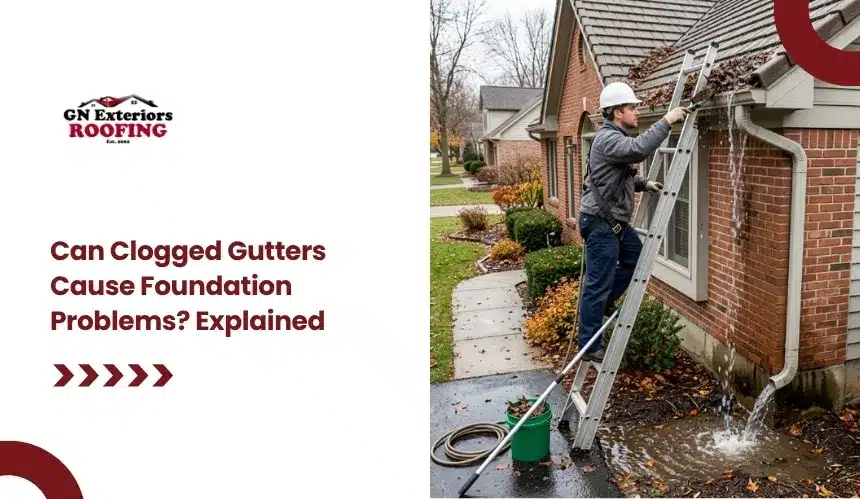
Clogged gutters can become a foundation risk when roof runoff is not directed away from the home correctly. In Randolph, seasonal rain, tree debris, and winter buildup can block gutter systems and force water toward lower exterior walls. When moisture continues collecting around the foundation perimeter, it can create drainage conditions that lead to structural and moisture-related problems over time.
For homeowners, the main concern is not one overflow event, but an ongoing drainage failure that remains unnoticed.
Do You Know? Massachusetts receives about 45 to 55 inches of average annual precipitation, according to the NOAA-backed State Climate Summaries. That means Randolph homeowners are not dealing with rare moisture exposure. Gutters, downspouts, grading, and foundation drainage have to manage water throughout the year, not only during major storms. |
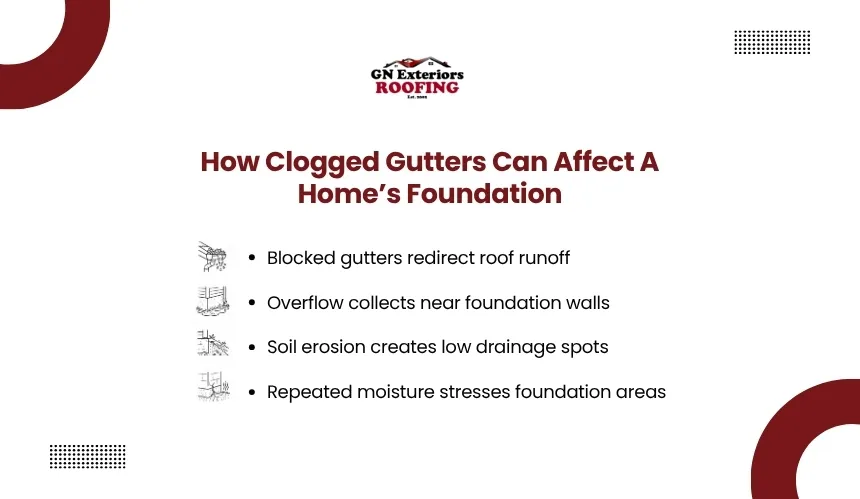
The foundation risk begins when the gutter system stops controlling roof runoff. Instead of moving water through downspouts and away from the structure, blocked gutters allow concentrated water flow to land along the foundation perimeter.
Do You Know? EPA explains that stormwater runoff forms when rain or snowmelt flows over surfaces such as building rooftops instead of soaking into the ground. This matters because a clogged gutter changes the roof from a controlled drainage surface into a source of concentrated runoff near the home. |
A clogged gutter interrupts the normal drainage path from the roof to the downspout. Leaves, twigs, pine needles, shingle grit, and compacted debris can slow or stop water movement inside the gutter channel. Once the gutter fills, rainwater spills over the edge and falls close to the foundation wall.
This creates a concentrated drainage problem. Roof runoff can release a large volume of water during heavy rainfall. If that water keeps landing along the same side of the home, it can wash out mulch, erode soil, flood planting beds, and form low spots that retain water after storms. In Randolph neighborhoods with mature trees near rooflines, this overflow pattern can become more common during fall and spring weather.
Homes in Randolph can face gutter drainage issues when leaves, roof grit, and seasonal debris collect along the roofline and prevent water from moving away properly. Around North Randolph and New Dublin, where older homes and mature trees can add more debris near the gutters, Gutters & Gutter Protection in Randolph helps reduce recurring blockages and keeps runoff moving through the downspouts instead of spilling near basement walls or foundation edges.
This type of exterior water-control service is especially useful for properties near Goose Corner or West Street, where yard slope, roof drainage, and storm runoff can affect how water settles around the home. By keeping gutters clearer and directing water away from lower exterior walls, homeowners can reduce moisture buildup, protect siding and trim, and lower the risk of foundation-related drainage problems.
Do You Know? According to Cornell Cooperative Extension 1-inch rainfall on a 1,000-square-foot roof can produce about 623 gallons of water. That volume explains why a clogged gutter can create a serious drainage issue quickly. Even a moderate storm can send hundreds of gallons toward the same foundation edge if the gutter system is blocked. |
Foundation stability depends heavily on the condition of the surrounding soil. When excess water collects along the footing area, the soil can become saturated and lose part of its load-bearing strength. Poor drainage may also cause certain soils to expand, soften, compact, or shift unevenly.
For basement and crawl space foundations, saturated soil can create hydrostatic pressure. This means water-loaded soil pushes against the foundation from the outside. Over time, that pressure can exploit weak points in concrete, masonry joints, basement walls, and foundation seams. The result may include seepage, wall cracks, damp corners, or moisture entering through small openings.
Clay-heavy or slow-draining soil increases the risk because it holds water longer. When clogged gutters continue feeding runoff into the same area, the foundation is exposed to recurring moisture stress instead of stable drainage conditions.
Around Crawford Square and nearby residential streets, roof condition can also affect how efficiently rainwater reaches the gutter channels. In Randolph, Asphalt Shingle Roofing plays an important role because a well-maintained shingle roof helps direct rainfall toward the drainage system instead of allowing water to spill unevenly over edges, valleys, or damaged roof sections. For Randolph homeowners, keeping the roof and gutters working together can reduce overflow, protect siding and trim, and limit moisture buildup near the foundation.
Do You Know? The University of Minnesota Extension notes that a 1-inch rain on a 2,000-square-foot house roof equals about 1,250 gallons of water. It also explains that without proper grading, gutters, and downspouts, some of that water can move into the basement. This shows why gutter drainage is directly connected to basement moisture control. |
Foundation movement can develop when the soil under or around a home no longer supports the structure evenly. Clogged gutters may contribute to this problem by directing heavy runoff toward one area, which can cause erosion, soil softening, or uneven compaction.
Wet-dry soil cycles add another layer of stress. Wet soil may expand or loosen, while dry soil may shrink or pull away from the foundation. When this pattern continues, the foundation can experience gradual movement.
Early signs may include stair-step cracks in masonry, gaps around windows, sticking doors, uneven floors, or separation between trim and walls. In Randolph homes with older foundations or sloped lots, poor gutter drainage should be corrected early because minor water control issues can turn into larger structural concerns.
Do You Know? Building America guidance recommends sloping permeable surfaces away from the house by at least 0.5 inch per foot for 10 feet. It also notes that good water management, including gutters, perimeter drains, and free-draining soils, helps protect foundations from water saturation. |
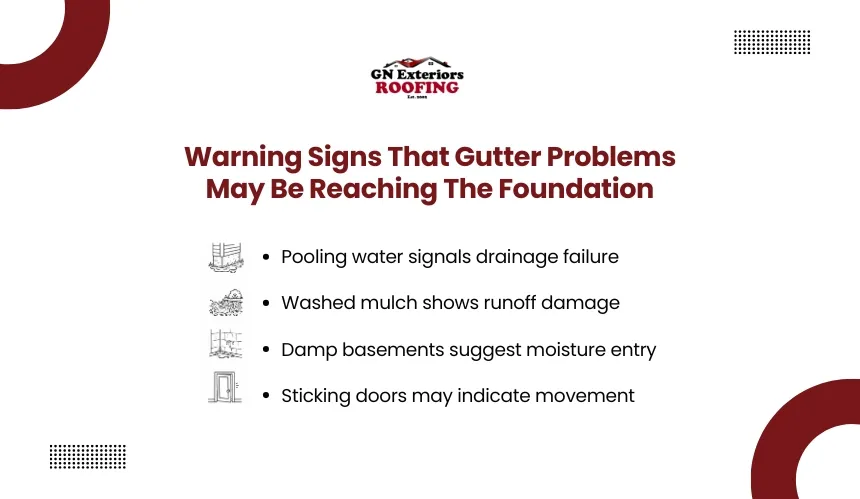
Gutter-related foundation problems usually leave visible clues before major damage appears. These signs often begin outside along the drainage path, then may appear inside the home as moisture intrusion or structural movement becomes more noticeable.
Exterior warning signs often appear where roof runoff is escaping or collecting. During rainfall, water may pour over the gutter edge instead of exiting through the downspout. After the storm, the ground beside the home may remain wet longer than surrounding areas.
Common exterior signs include:
These signs point to a runoff control problem. If water keeps collecting beside the home after rainfall, the foundation area may already be under unnecessary moisture stress.
In areas around Randolph Center and the North Main Street corridor, water spilling from clogged gutters can leave stains, streaks, and moisture marks along exterior walls. Vinyl Siding in Randolph fits naturally here because siding is one of the first surfaces affected when roof runoff does not move through the gutter system correctly. Overflow can run down panels, collect behind trim, or leave dirt lines near windows, corners, and lower wall sections.
Near Highland Avenue and residential streets close to Powers Farm, homes with mature trees may deal with more leaf debris and seasonal gutter buildup. When gutters overflow repeatedly, vinyl siding can help shield exterior walls from direct moisture exposure, but it still depends on proper drainage to prevent water from collecting around the foundation. Keeping siding, gutters, and downspouts working together helps protect the home’s exterior and reduce long-term moisture risks.
Interior symptoms may develop when exterior drainage problems begin affecting the lower structure of the home. Moisture can enter through small cracks, porous concrete, basement wall joints, or gaps around utility penetrations.
Possible warning signs include damp basement walls, musty odors, mildew growth, water stains, floor gaps, drywall cracks, sticking windows, or doors that no longer close properly. These symptoms do not always mean clogged gutters are the only cause, but they do show that water management around the home needs inspection.
In Randolph homes with basements, gutter overflow deserves quick attention because moisture can spread behind finished walls, under flooring, or around foundation edges before obvious structural damage becomes visible.
If clogged gutters are causing water to collect near your home, GN Exteriors can help protect your roofline, drainage system, and foundation before the problem becomes costly. Their team can inspect gutter performance, identify weak drainage points, and recommend exterior solutions that keep runoff moving away from the property. For homeowners in Randolph, timely gutter and exterior maintenance from GN Exteriors can reduce moisture risks, improve water control, and help preserve the long-term stability of the home.
Gutters should be checked at least twice a year, usually in spring and fall, but homes near trees may need more frequent inspections. After heavy storms, homeowners should also look for overflow, loose sections, or blocked downspouts because drainage problems can develop quickly when debris collects inside the gutter system.
Gutter guards can reduce leaves, twigs, and larger debris from entering the gutter system, but they do not eliminate every drainage risk. Small particles, roof granules, seed pods, and ice buildup can still affect water flow. They work best when combined with routine inspection, proper downspout placement, and good yard grading.
Downspouts should direct water several feet away from the foundation so runoff does not soak the soil along the home’s perimeter. Extensions, splash blocks, or underground drainage lines may be needed when water collects near basement walls, walkways, or low areas after rainfall.
Yes, homes without basements can still experience foundation and moisture problems from clogged gutters. Slab and crawl space foundations can be affected by soil movement, erosion, standing water, or moisture buildup beneath the structure. The risk depends on drainage patterns, soil type, grading, and how often runoff collects near the home.
Coverage depends on the policy and the cause of damage. Insurance may not cover foundation problems caused by long-term maintenance issues, neglected gutters, or gradual water intrusion. Homeowners should review their policy and document gutter maintenance, drainage repairs, and inspections to reduce disputes if water-related damage occurs.
A professional should be called when gutters overflow after cleaning, downspouts fail to move water away, basement moisture keeps returning, or cracks appear near foundation walls. Persistent drainage problems may require gutter repair, downspout extensions, grading correction, siding inspection, or a broader exterior water-management review.