
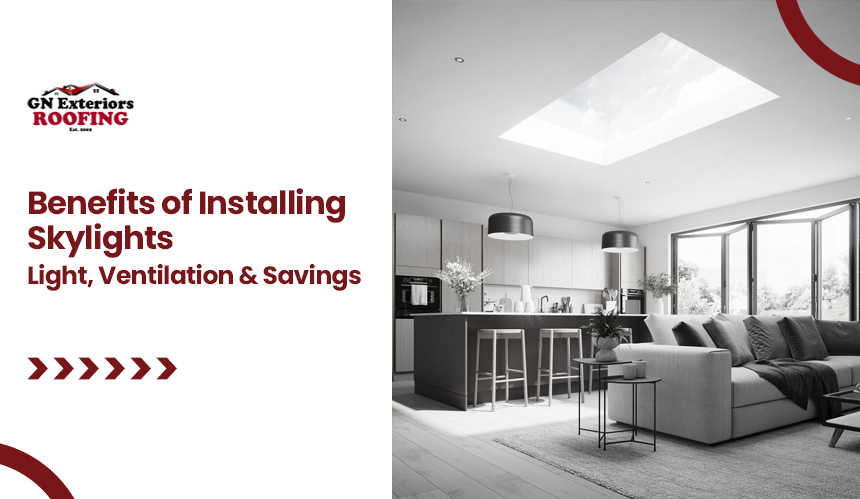
Skylights do more than just let sunlight in. They change the way a room feels, looks, and even functions. Unlike windows, skylights offer a private way to connect with the outdoors without compromising wall space or privacy.
Beyond lighting, skylights can contribute to better air circulation when installed with venting options. This passive airflow helps reduce indoor humidity and stale air, especially in moisture-prone areas like kitchens and bathrooms.
In this blog, you’ll learn about the core features of skylights, how they affect your indoor environment, and the practical benefits they bring to both your daily living and long-term home value.
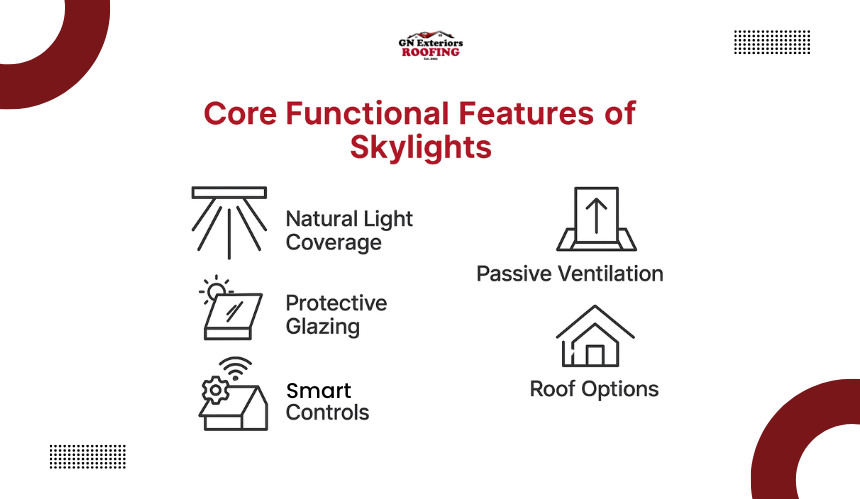
Skylights are built to serve more than one purpose, and their features reflect that. When chosen and installed correctly, they offer functional value that extends far beyond illumination. Below are the five main functional benefits skylights offer.
Skylights introduce sunlight from a vertical angle, enabling illumination of spaces that side windows can’t reach. This directional light fills interiors more uniformly, especially in deep or centrally located rooms. It enhances surface visibility during daylight hours and reduces the need for wall-facing light fixtures.
Vented skylights create a vertical escape route for rising warm air and indoor moisture, driven by natural convection. These units come in manual, electric, or solar-powered models and allow precise control over ventilation. Their structure supports heat release without mechanical fans, easing the load on HVAC systems during temperate months.
Modern skylights feature glazing technologies that block ultraviolet radiation while maximizing visible light. Some models use low-emissivity coatings, double or triple-pane glass, or heat-reflective layers to manage solar gain.
From narrow tubular units to large vented designs, skylights come in forms compatible with flat and pitched roofs. Deck-mounted models are ideal for low-profile installations, while curb-mounted versions offer elevation and drainage benefits.
Advanced skylights now integrate rain sensors, programmable blinds, and remote operation. These smart features allow the skylight to respond to outdoor conditions in real time. They close automatically in bad weather and adjust light levels based on sun intensity.
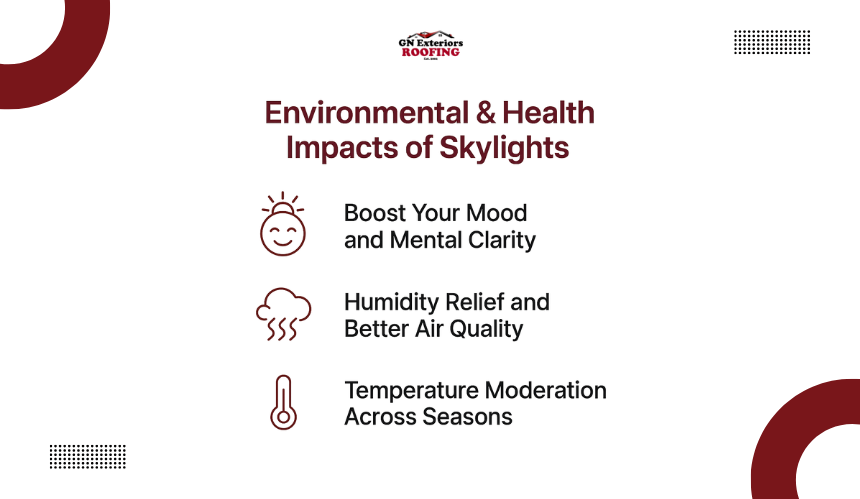
Skylights do more than enhance how your home looks. They also shape how it feels, functions, and supports your well-being. Three major environmental and health benefits of skylights are described below:
Natural daylight is strongly associated with better emotional regulation, focus, and cognitive alertness. By bringing in consistent and widespread light exposure, skylights help stabilize your circadian rhythm and elevate mood, especially during the darker months. This can lead to improved productivity and reduced symptoms of seasonal affective disorder.
The upward air escape path provided by vented skylights plays a key role in regulating indoor moisture levels. This helps minimize condensation on surfaces and reduces the buildup of mold and mildew in areas like bathrooms or kitchens. It also supports a healthier indoor environment by aiding the removal of pollutants, allergens, and stale air.
Well-placed skylights contribute to indoor thermal balance. In winter, they allow passive solar heat to enter the home. During summer, advanced glazing technologies reflect excess heat, keeping interiors cooler. This natural adjustment helps stabilize indoor temperatures and reduces the need for artificial heating or cooling.
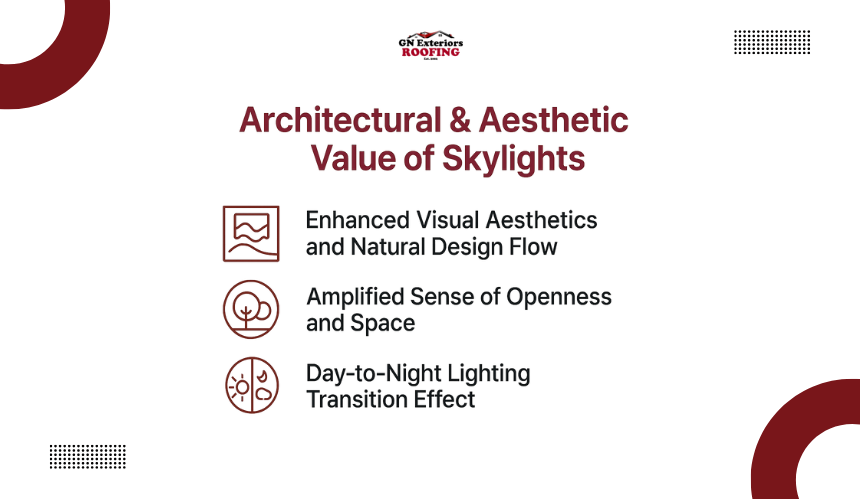
Beyond performance and environmental benefits, skylights also serve as architectural assets. They shape how a space is perceived, enhance visual appeal, and even influence how others value your home. Below are the five major architectural benefits of skylights:
Skylights introduce an organic light source that transforms interiors from plain to vibrant. This vertical light casts soft, shifting shadows throughout the day, adding natural rhythm to the visual composition of your room. The result is a more dynamic and immersive design experience that artificial light can’t replicate.
Even without increasing square footage, skylights make interiors feel larger. By drawing the eye upward and illuminating ceiling planes, they create a vertical dimension that adds spatial depth. In small rooms, this overhead light removes the boxed-in feeling often caused by low ceilings or lack of natural illumination.
Fixed and operable skylights provide uninterrupted views of the sky, treetops, or passing clouds, bringing elements of nature indoors. This upward view expands the visual field and adds a calming presence to bedrooms, bathrooms, or living rooms.
As natural light changes throughout the day, skylights introduce a gradual shift in interior lighting. Morning light feels crisp and energizing, while afternoon sun adds warmth and saturation. By night, moonlight and ambient street glow can softly illuminate the room.
Homes with skylights often stand out in real estate listings due to their upscale, light-filled interiors. Buyers view them as luxury upgrades that suggest better energy performance, modern architecture, and thoughtful design.
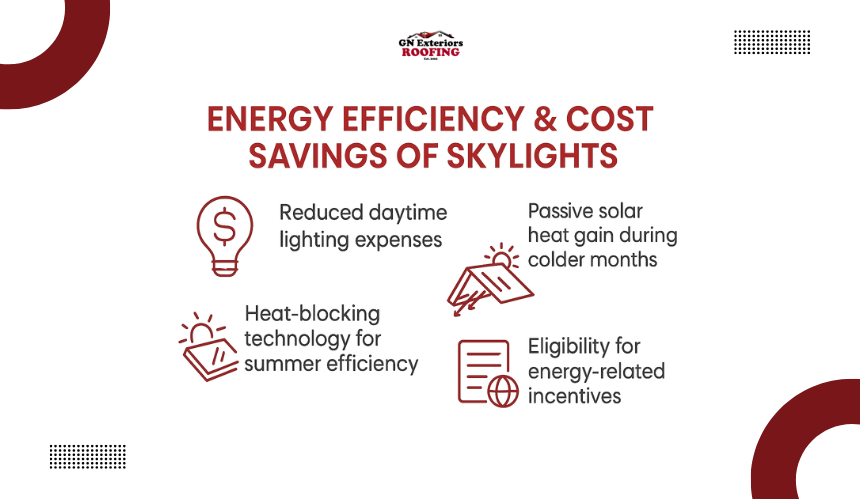
Well-designed skylights do more than enhance lighting; they contribute directly to household energy performance and offer real financial advantages over time. Below are five ways skylights help reduce energy consumption and long-term utility costs.
By delivering consistent natural light during daylight hours, skylights minimize the need for artificial lighting in main living areas, hallways, and workspaces. This cuts electricity usage significantly, especially in homes where lights are routinely left on during the day.
Skylights help warm interior spaces naturally, reducing the demand on central heating systems. South- or west-facing skylights are particularly effective in capturing sunlight and distributing warmth throughout the room.
Skylights with low-E coatings, thermal breaks, or multi-layer glazing help block excessive solar heat during warmer months. This prevents overheating and lowers the strain on air conditioning systems. Some models also include venting features that release trapped hot air, helping interiors remain cooler without active cooling systems running constantly.
Many modern skylights are equipped with solar-powered blinds, motors, and sensors that operate independently from your home’s electrical grid. These systems open, close, or adjust based on lighting conditions and weather. This improves indoor comfort and eliminates the need for wired installations, reducing energy costs.
Certain energy-efficient skylight models may qualify for regional or federal tax credits, rebates, or green energy incentives. Products certified by ENERGY STAR or equivalent programs often meet criteria for partial reimbursement under home improvement or sustainability schemes.
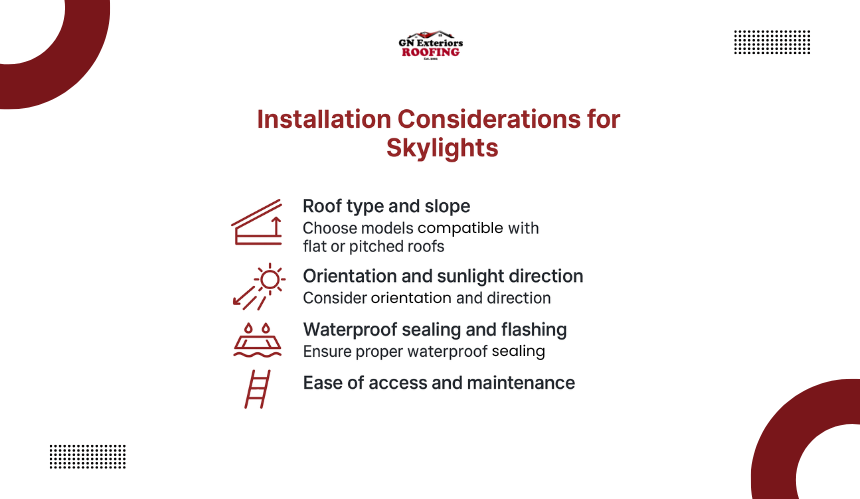
Proper skylight performance starts with thoughtful installation. Here are the key factors to evaluate before adding one to your home:
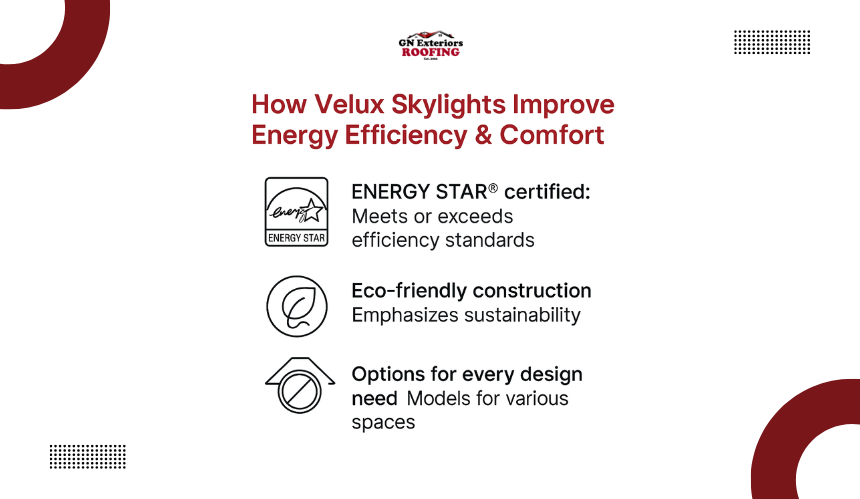
Velux is a globally trusted brand known for high-performance skylight systems engineered for energy savings, sustainability, and design flexibility.
For those planning a skylight installation, GN Exteriors delivers certified expertise and seamless service. As Certified VELUX skylight installation experts, the team ensures each system is installed with precision, durability, and performance in mind.
Skylights with low-emissivity glazing, insulated frames, and ENERGY STAR certification typically offer the best energy efficiency. These features help reduce unwanted heat loss in winter and excess heat gain in summer. Proper orientation and placement also improve performance.
Yes, skylights can be installed on flat or low-slope roofs using curb-mounted models designed for proper drainage. With correct flashing and installation, they can function as effectively as those installed on pitched roofs.
Leaks are uncommon when skylights are installed correctly. Using proper flashing, waterproof barriers, and sealing materials prevents most water intrusion issues. Regular inspections help catch wear early.
Most quality skylights last between 15 to 20 years. Lifespan depends on the product material, roof conditions, and installation quality. Occasional maintenance can help extend that life.
Yes. Annual inspections are recommended to check for seal integrity and flashing condition. Cleaning the glass and removing debris helps maintain clear light and reduces the risk of water-related damage.
Without protective glazing, direct sunlight may fade fabrics or increase indoor temperatures. Skylights with UV-filtering glass and heat-control coatings help prevent these issues. Placement and shading accessories also improve comfort.