
Key Takeaways:
|
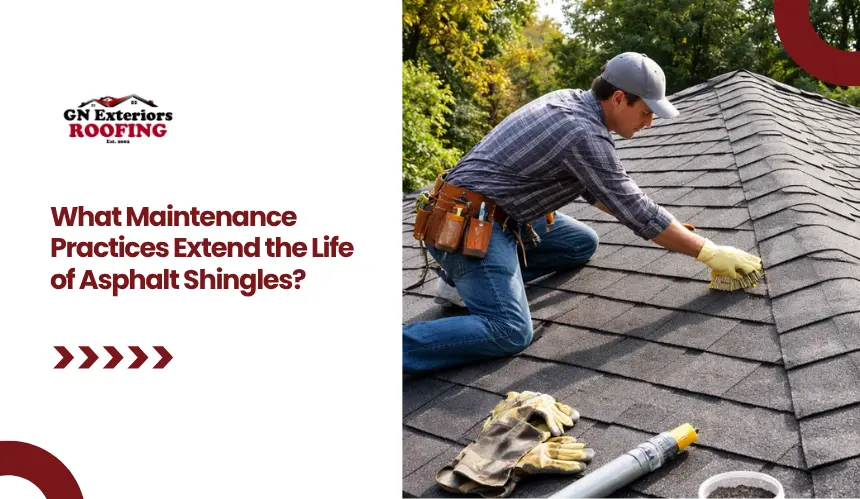
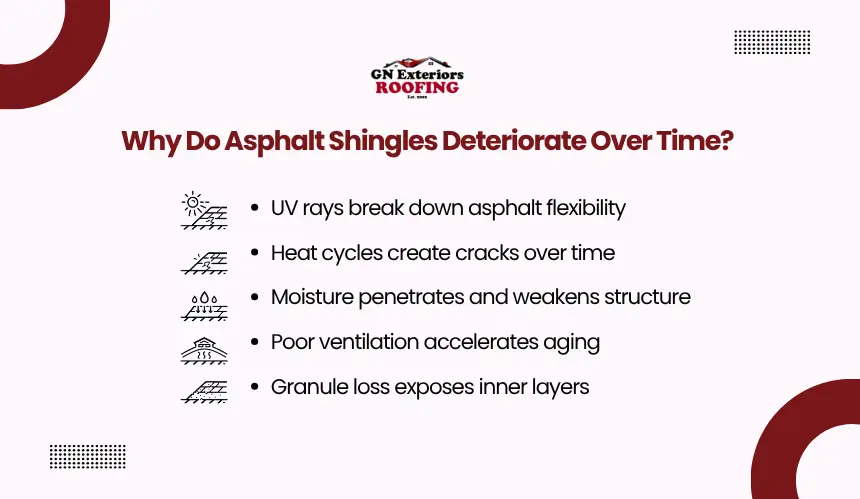
Asphalt shingle roofs typically last between 20 to 30 years under proper installation and consistent maintenance conditions. This lifespan, however, is highly dependent on how effectively external stress factors and internal roof system conditions are managed over time.
Without targeted upkeep, multiple degradation mechanisms begin to shorten this lifespan significantly, often years earlier than expected.
Inadequate attic ventilation traps heat beneath the roof deck, increasing shingle surface temperatures beyond optimal thresholds. This accelerates asphalt oxidation and reduces elasticity, making shingles more prone to cracking.
Moisture buildup from poor airflow also creates condensation, which compromises the underside of the roofing system and weakens overall structural integrity.
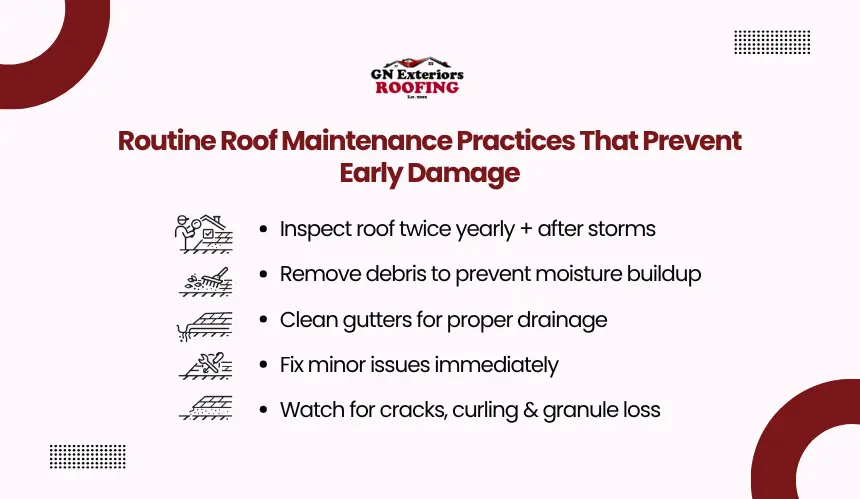
A roof should be inspected at least twice a year, typically in spring and fall, along with additional checks after major storms. The inspection should focus on:
Identifying these indicators early allows for localized repairs before widespread failure develops.
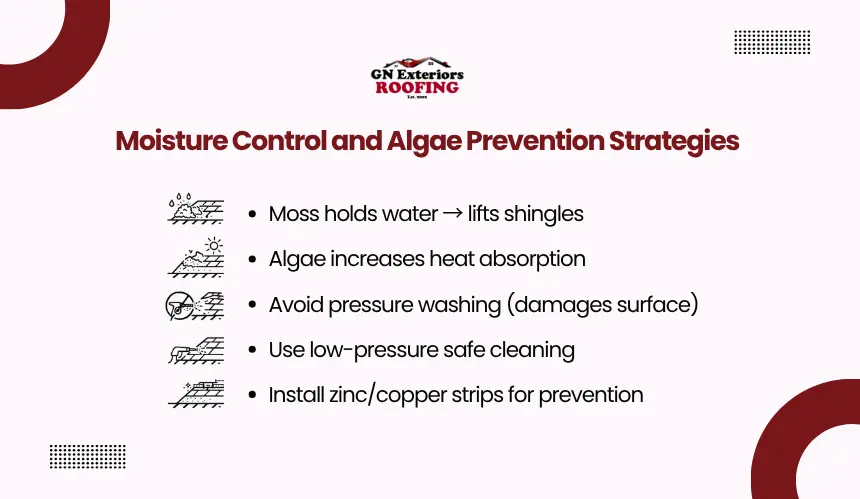
Moisture is one of the most destructive forces acting on asphalt shingles because it accelerates both chemical breakdown and surface-level damage.
When combined with algae or moss growth, it creates sustained exposure conditions that significantly reduce shingle performance and lifespan.
High-pressure washing should be avoided because it dislodges protective granules and reduces shingle lifespan. Instead, low-pressure rinsing combined with manufacturer-approved cleaning solutions is recommended.
These solutions break down organic growth without damaging the asphalt layer. Application should follow a downward flow to prevent water from penetrating beneath shingles.
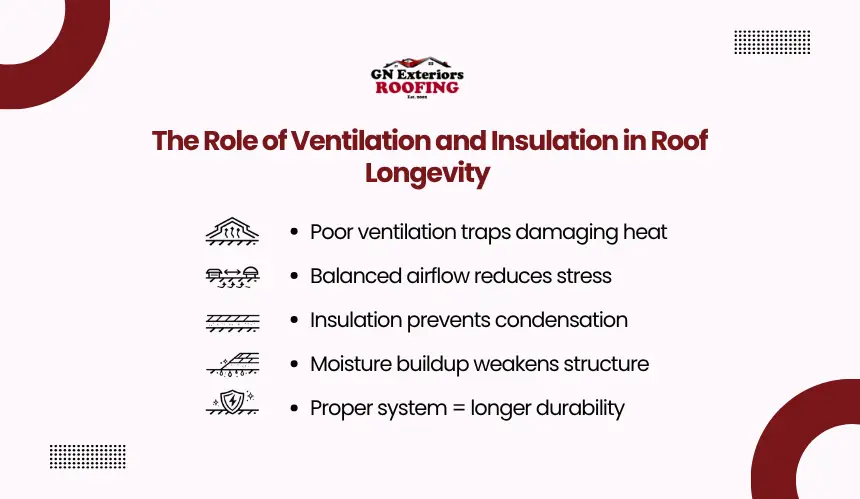
Shingle performance is not determined by external exposure alone. Internal roof conditions, particularly airflow and thermal balance, directly affect how quickly materials age.
Poor ventilation and insulation create heat and moisture imbalances that accelerate chemical degradation and reduce structural stability.
Inadequate ventilation traps hot air in the attic, raising roof deck temperatures well above ambient conditions. This sustained heat exposure speeds up asphalt oxidation, causing shingles to harden and lose flexibility. As elasticity declines, shingles become more prone to cracking, curling, and premature failure under normal weather stress.
A U.S. Department of Energy guide notes that improper attic ventilation can lead to moisture buildup severe enough to cause mold, ruin insulation, and damage wood. That makes ventilation a roof-longevity issue, not just a comfort or energy-efficiency concern.
An effective system maintains continuous airflow through a combination of intake and exhaust vents. Soffit vents allow cooler air to enter at the lower roof edge, while ridge or roof vents release hot air from the top. This balance prevents heat accumulation and stabilizes temperature across the roof surface, reducing stress on shingle materials.
Proper insulation regulates indoor-to-attic temperature differences, minimizing the risk of condensation forming beneath the roof deck. When warm indoor air meets a cold roof surface, moisture accumulates and can weaken decking materials over time.
Controlled insulation reduces this temperature differential, limiting moisture buildup and preserving the integrity of the entire roofing system.
Asphalt shingle performance varies significantly with climate exposure. Maintenance strategies should be adjusted based on seasonal stress patterns to prevent damage that standard routines may not address.
In hot climates, prolonged UV exposure accelerates asphalt oxidation and reduces shingle flexibility. Maintenance should include more frequent visual inspections for surface cracking and early granhy Are Post-Storm Inspections Critical For Roof ule loss. Reflective coatings or cool-roof treatments can be considered to reduce heat absorption, especially in regions with consistent high solar intensity.
| The Department of Energy notes that conventional roofs can reach 150°F or more on a sunny summer afternoon, which helps explain why repeated heat exposure speeds up asphalt oxidation and surface aging. In high-solar climates, inspection intervals often need to be tighter because thermal stress is not occasional. |
Overhanging trees alter roof exposure conditions by increasing shade, reducing drying time, and introducing continuous debris accumulation. Shaded roof sections retain moisture longer after rainfall, creating favorable conditions for moss and algae growth.
Branches that come into contact with shingles during wind events cause repeated surface abrasion, gradually dislodging protective granules. Falling leaves and organic debris also contribute to clogged drainage paths, increasing the risk of water retention and edge deterioration.
Routine trimming of nearby trees improves sunlight exposure, airflow, and water runoff efficiency, all of which directly support longer shingle durability under varying seasonal conditions.
Wind, hail, and heavy rainfall introduce sudden mechanical stress that may not be immediately visible. High winds can loosen shingles, while hail impact can fracture the protective granule layer. Conducting targeted inspections after storms allows for early detection of localized damage, reducing the risk of progressive failure across the roofing system.
| FEMA guidance notes that hail-damaged shingles become more susceptible to later wind damage, which means a roof can look stable immediately after a storm and still be structurally more vulnerable in the next severe weather event. That is why post-storm inspections are most valuable before secondary failure begins. |
Roof performance across Greater Boston and the South Shore is shaped by a combination of coastal humidity, salt-laden air, and rapid seasonal shifts. In areas like Quincy, Weymouth, and Hingham, proximity to the Atlantic increases surface moisture exposure and introduces fine salt particles that gradually wear down shingle granules.
Roof sections facing prevailing coastal winds often show faster aging due to repeated wet-dry cycles and wind-driven rain, especially during nor’easter events.
Inland and slightly elevated areas such as Randolph, Milton, and Hanover experience more pronounced freeze-thaw cycles during winter. Water entering minor surface cracks expands when frozen, gradually widening fractures and weakening shingle adhesion.
Snow accumulation followed by uneven melting commonly leads to ice dams along roof edges, particularly on homes with inconsistent attic insulation or older ventilation systems.
In these locations, maintenance should be adjusted to match these conditions. Coastal homes benefit from more frequent inspections for granule loss and algae formation, while inland properties require stronger focus on insulation, ventilation balance, and ice dam prevention before winter.
Seasonal gutter cleaning, timely debris removal, and post-storm inspections after nor’easters are essential to prevent localized damage from escalating into structural issues.
Extending roof life comes down to catching issues before they turn into costly failures. GN Exteriors helps homeowners across Greater Boston and the South Shore stay ahead with precise inspections, targeted maintenance, and practical solutions built for real conditions.
If the goal is to protect long-term performance, now is the right time to have the roof evaluated by professionals who understand how to preserve it.