
Key Takeaways
|
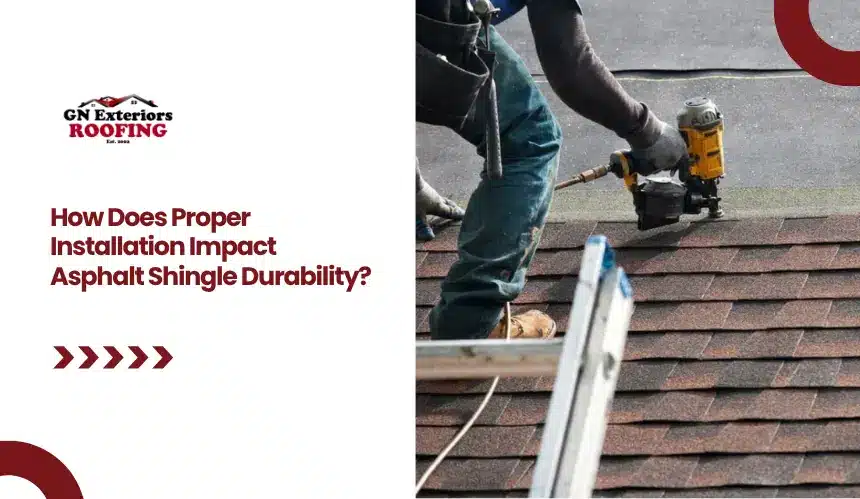
Asphalt shingles are engineered to withstand weather, temperature shifts, and long-term exposure, but their durability depends heavily on how they are installed. Many premature roof failures are not caused by material defects, but by incorrect fastening, poor ventilation, or weak structural preparation. Even high-grade shingles can deteriorate quickly when installation standards are not met.
Understanding how installation directly influences performance helps prevent costly repairs, early replacements, and warranty issues. This article explains how proper installation practices determine the real lifespan of asphalt shingles.
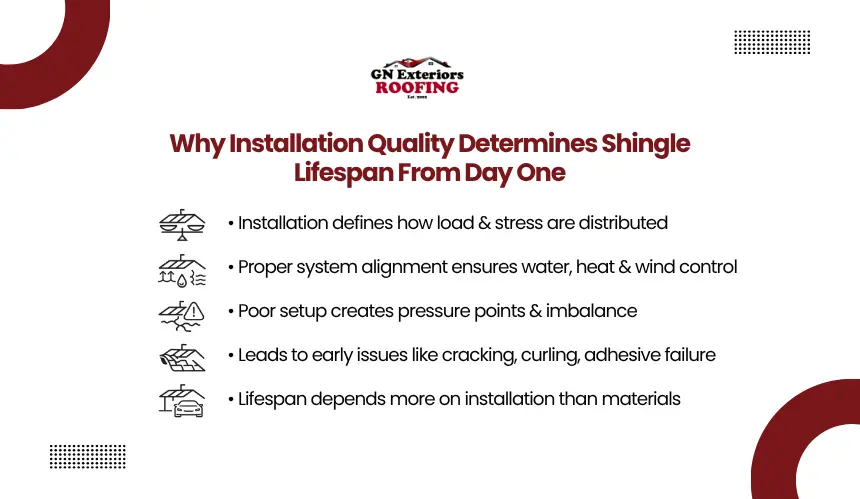
Installation sets the baseline performance conditions for asphalt shingles. From the moment the system is installed, every structural and environmental load is either properly distributed or unevenly absorbed, directly influencing how long the roof can perform without failure.
Asphalt shingles function as part of an integrated roofing system that includes decking, underlayment, fasteners, and ventilation pathways. When these components are aligned correctly, the system manages water shedding, thermal expansion, and wind resistance as designed. If installation disrupts this alignment, stress begins accumulating at specific points rather than dispersing evenly across the surface.
Early-stage degradation often originates from these imbalances. Improper fastening can create localized uplift pressure, weak deck preparation can introduce flex and micro-movements, and poor sealing can allow moisture intrusion beneath the shingle layer. These issues do not remain isolated; they compound over time, accelerating wear patterns such as curling, cracking, and adhesive failure.
The distinction between material failure and system failure is critical. In most cases, shingles do not fail because of manufacturing limitations, but because the installation process prevents them from operating within their designed performance parameters.
As a result, lifespan is determined less by the shingle itself and more by how precisely the system was installed on day one.
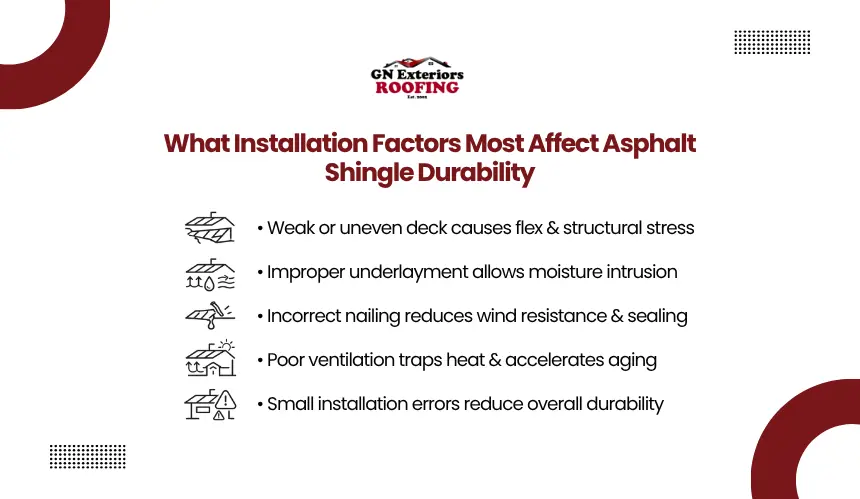
Durability is controlled by a set of installation variables that define how the roofing system handles load, moisture, and temperature changes. Each factor influences a specific failure pathway, and even minor deviations can reduce the overall service life of asphalt shingles.
The roof deck acts as the load-bearing foundation for shingles. If the surface is uneven, soft, or moisture-damaged, it introduces flex under weight and thermal expansion. This movement transfers stress directly to the shingles, leading to cracking, misalignment, and premature fatigue along weak points.
Underlayment functions as the secondary water-shedding layer beneath shingles. Incorrect installation, gaps, or improper layering create pathways for water intrusion during wind-driven rain or ice dam conditions. Once moisture penetrates below the shingles, it compromises adhesion, accelerates material breakdown, and increases the risk of hidden structural damage.
Fastener accuracy determines how well shingles resist wind uplift and remain sealed over time. Nails driven too deep cut into the shingle mat, reducing holding strength, while underdriven nails prevent proper sealing. Misaligned placement outside the designated nailing zone weakens attachment points, making shingles more susceptible to displacement and tearing under stress.
Roof ventilation regulates heat and moisture levels within the attic space. Without proper intake and exhaust airflow, heat buildup accelerates asphalt aging, causing shingles to dry out, lose flexibility, and curl. Trapped moisture also leads to condensation beneath the roof deck, weakening the system from below and shortening its effective lifespan.
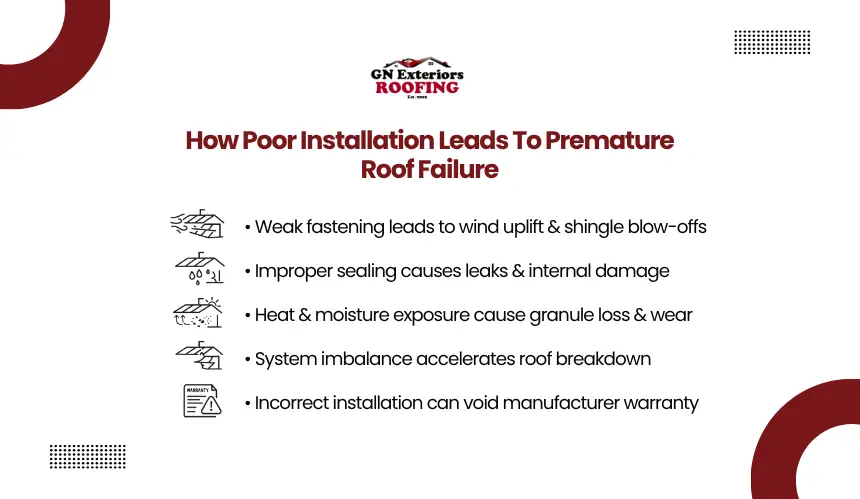
When installation errors disrupt system performance, failure does not occur randomly. It follows predictable patterns based on where structural, moisture, or fastening weaknesses exist. These failures often appear within a few seasons, well before the expected lifespan of asphalt shingles.
Improper nail placement or insufficient fastening reduces resistance to uplift forces. In regions like Massachusetts, especially across Greater Boston and the South Shore, roofing systems are regularly exposed to strong coastal winds, nor’easters, and seasonal storm pressure. These conditions amplify the impact of installation errors.
When shingles are not secured within manufacturer-defined nailing zones or lack proper sealing, wind pressure penetrates beneath the surface, breaking adhesive bonds and lifting edges. Once uplift begins, surrounding shingles lose support and detach progressively, often resulting in visible sections of missing roofing after a single storm event.
Incorrect flashing installation around valleys, chimneys, and roof penetrations creates direct entry points for water. Misaligned underlayment or poorly sealed edges allow moisture to travel beneath the shingle layer. Over time, this leads to deck rot, insulation damage, and interior leaks that are often detected only after structural impact has begun.
Improper ventilation and moisture exposure accelerate the breakdown of the protective granule layer on shingles. Excessive heat causes asphalt to dry and release granules prematurely, reducing UV protection. This exposes the underlying mat, speeding up material degradation and reducing resistance to environmental stress.
Manufacturers specify precise installation requirements to validate product warranties. Deviations such as incorrect nailing patterns, inadequate ventilation, or missing underlayment layers can void coverage entirely. In such cases, even legitimate material issues may not be eligible for claims, shifting full replacement costs to the property owner.
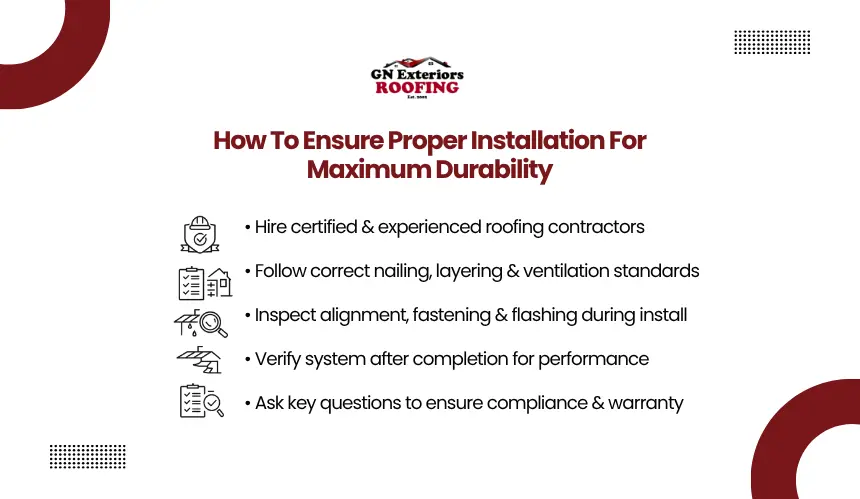
Achieving long-term durability requires controlling installation quality through verifiable standards, not assumptions. The focus should be on measurable indicators that confirm the roofing system has been installed to perform under real environmental and structural conditions.
Contractor selection directly influences installation accuracy. Certified asphalt shingles installers are trained to follow manufacturer-specific requirements, including nailing zones, ventilation ratios, and flashing methods. Licensing, insurance coverage, and documented project history reduce the risk of non-compliant work that leads to early system failure.
Durability depends on adherence to defined installation protocols. These include correct nail placement within the designated strip, proper overlap and alignment of shingles, accurate underlayment layering, and code-compliant ventilation setup.
Manufacturer guidelines and local building codes act as benchmarks to ensure the system performs as intended under load and weather exposure.
System performance should be validated at multiple stages. During installation, alignment consistency, fastening patterns, and flashing integration must be visually confirmed. After completion, inspection should verify seal integrity, ventilation openings, and edge detailing. Identifying deviations early prevents latent defects that would otherwise emerge under stress.
Clear technical communication ensures accountability. Key questions should address how ventilation requirements are calculated, what fastening pattern is used for specific wind ratings, and how moisture protection is handled in vulnerable areas.
Post-installation, verification should include confirmation that all manufacturer specifications were followed to maintain warranty eligibility and long-term durability.
If durability, performance, and long-term value matter, installation quality cannot be left to chance. GN Exteriors focuses on precision-driven roofing systems that are built to perform under real conditions. Get expert guidance and ensure your asphalt shingles are installed for maximum lifespan, not early failure.
Post-installation problems usually appear through uneven shingle lines, exposed nail heads, lifted edges, inconsistent overhangs, or flashing that looks loose around chimneys and valleys. Inside the home, early warning signs include attic moisture, temperature imbalance, or minor ceiling stains. A post-installation roof inspection often identifies defects before they develop into active leaks.
Many roofing defects remain concealed until weather conditions expose them. Incorrect underlayment laps, weak flashing transitions, and ventilation imbalances can stay unnoticed through mild seasons, then fail during wind-driven rain, freeze-thaw cycles, or prolonged moisture exposure. Hidden installation errors often damage roof decking and insulation before visible interior symptoms appear.
Architectural shingles usually offer better thickness, dimensional stability, and wind ratings, but they are not more tolerant of poor workmanship. Incorrect nail placement, bad sealing alignment, or ventilation deficiencies still reduce service life. Premium roofing materials improve resistance only when the installation meets manufacturer specifications and the full roofing system is assembled correctly.
Failure usually starts at roof valleys, step flashing areas, ridge lines, eaves, and penetrations such as vents or chimneys. These transition points handle the highest water concentration and wind exposure. When installation is imprecise in these zones, moisture intrusion, seal breakdown, and localized shingle loss tend to occur before field shingles show widespread wear.
Warranty eligibility depends on compliance, not product price alone. Manufacturers typically require correct fastening patterns, approved underlayment, proper attic ventilation, and code-aligned installation methods. If workmanship violates those conditions, the enhanced shingle warranty may offer little practical protection, leaving the property owner responsible for labor, tear-off, and replacement costs.
Regional climate heavily influences how strict installation precision needs to be. In Massachusetts, Greater Boston, and the South Shore, coastal wind exposure, storm-driven rain, salt air, and winter freeze-thaw movement place more stress on fastening, sealing, and flashing details. A roof installed for mild conditions may underperform quickly in a harsher weather cycle.
An independent inspection adds value when the goal is long-term roof performance rather than basic project completion. It can verify nailing accuracy, flashing integration, ventilation setup, and workmanship quality before defects become expensive. For homeowners investing in a full roof replacement, third-party review often protects both warranty standing and service life.