
Key Takeaways
|
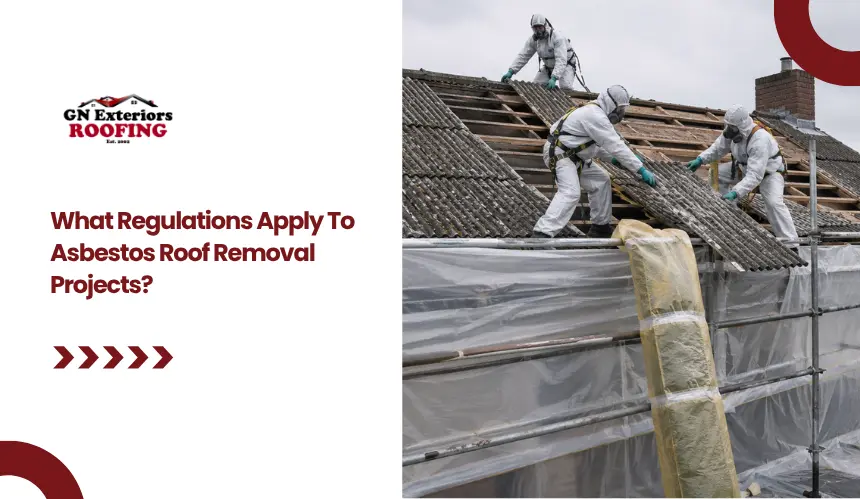
Asbestos roof removal in Hanover requires careful compliance because older roofing systems can contain hidden asbestos in shingles, felt, mastics, coatings, or built-up layers. Once these materials are disturbed, the project may fall under safety, environmental, notification, and disposal rules that must be addressed before removal begins.
A compliant approach helps property owners avoid unsafe exposure, work delays, and legal problems during roof replacement or demolition.
Asbestos roof removal projects are regulated through several overlapping authorities. The main rules usually involve environmental protection, worker safety, local filing requirements, and controlled waste disposal.
For Hanover property owners, the main compliance issue is knowing which rules apply before the roof is cut, lifted, scraped, or removed. A compliant project begins with material identification, proper notification, controlled removal, and legal disposal.
Do You Know? EPA treats asbestos roof work differently depending on whether the project is classified as renovation or demolition. This distinction matters because demolition projects can trigger asbestos review even when no asbestos is visibly present, while renovation projects depend more heavily on the amount and condition of regulated asbestos-containing material. |
Asbestos roof removal in Hanover may fall under several legal layers at the same time. The applicable requirements depend on the building type, asbestos material condition, removal method, project size, and local enforcement authority.
Older roofing systems around Hanover Center, Washington Street, Broadway, and the Route 139 corridor may contain asbestos in shingles, felt, mastics, coatings, adhesives, or built-up roof layers.
This is why the service exists in Hanover as a regulated safety solution, especially for older homes, commercial properties, and public-facing buildings where roof work must be handled without creating airborne contamination.
For property owners near North Hanover, South Hanover, Assinippi, and the Route 53 commercial area, asbestos roof removal in Hanover provides a controlled way to replace aging roof materials while following inspection, worker protection, removal, disposal, and documentation requirements.
The service is necessary because Hanover has a mix of older structures, active business corridors, and residential neighborhoods where improper asbestos disturbance can create health risks, project delays, and legal liability.
EPA asbestos NESHAP rules apply to many demolition and renovation projects involving asbestos-containing materials. For institutional, commercial, or industrial buildings, EPA states that asbestos NESHAP applies to demolition or renovation operations, and at minimum, a thorough inspection requirement applies.
In Hanover, this matters because a roof replacement on a regulated building may need asbestos review before removal begins. If the roof contains regulated asbestos-containing material, the project may also require notification and specific handling controls.
OSHA regulates asbestos roof removal from the worker protection side. Its construction asbestos standard requires asbestos-containing roofing material to be removed intact where feasible, and it requires wet methods when roofing materials are not intact or will become non-intact during removal.
For Hanover roofing contractors, OSHA compliance affects how crews cut, detach, clean, and handle asbestos roofing. The rule is focused on limiting worker exposure during the actual construction activity.
Federal rules create the baseline, but Hanover projects may also be subject to state, county, or local asbestos program requirements. These rules can involve contractor licensing, asbestos abatement permits, notification forms, inspection records, disposal approvals, or revised filings if the project scope changes.
This layer is important because Hanover property owners may need to deal with more than one authority. A project can meet federal requirements but still be delayed if local notification or licensing rules are missed.
Asbestos compliance is not only the contractor’s responsibility. EPA uses an “owner or operator” framework for regulated demolition and renovation activities, which means the building owner, project manager, or contractor may have duties before work begins.
For Hanover buildings, this means responsibility starts before the first roofing layer is disturbed. The owner or operator must know whether suspect materials are present, whether the work is covered by asbestos rules, and whether proper notifications or controls are required.
Asbestos roofing is classified by material type, asbestos content, and physical condition. The classification affects whether the material can be handled as intact roofing or whether it creates a higher fiber-release risk.
Older roof systems may contain asbestos in shingles, roofing felt, asphalt roofing products, mastics, adhesives, coatings, flashing compounds, and built-up roofing layers. EPA identifies roofing shingles among building materials where asbestos was historically used because of its strength and heat resistance.
In Hanover, this is especially relevant for older commercial, municipal, industrial, and multi-unit buildings. A roof that looks like ordinary asphalt or felt may still contain asbestos in one or more layers.
Do You Know? Electronic Code of Federal Regulations, eCFR , notes, asbestos is not always visible in roofing materials. Two roof layers can look similar from the surface, but only one may contain asbestos because fibers were often mixed into binders, coatings, or backing materials during manufacturing. This is why visual inspection alone is not enough for older roof systems. |
Friable asbestos-containing material can be crumbled, pulverized, or reduced to powder by hand pressure. Non-friable asbestos material holds fibers within a stronger binder, such as asphalt or cement, and usually presents a lower release risk when left intact.
This distinction matters because many asbestos roofing products are treated differently from loose insulation or sprayed fireproofing. However, non-friable roofing can become a greater exposure concern if the removal method breaks, saws, sands, or crushes the material.
A Hanover roof with brittle, cracked, water-damaged, delaminated, or storm-worn materials may not behave like intact roofing during removal. Once asbestos roofing breaks apart, the project can shift from controlled removal of bonded material to a higher-risk disturbance.
Cutting, grinding, scraping, or aggressive tear-off methods can also change the risk level. OSHA specifically addresses roofing material that is not intact or will be rendered non-intact during removal, which is why the planned removal method matters as much as the material itself.
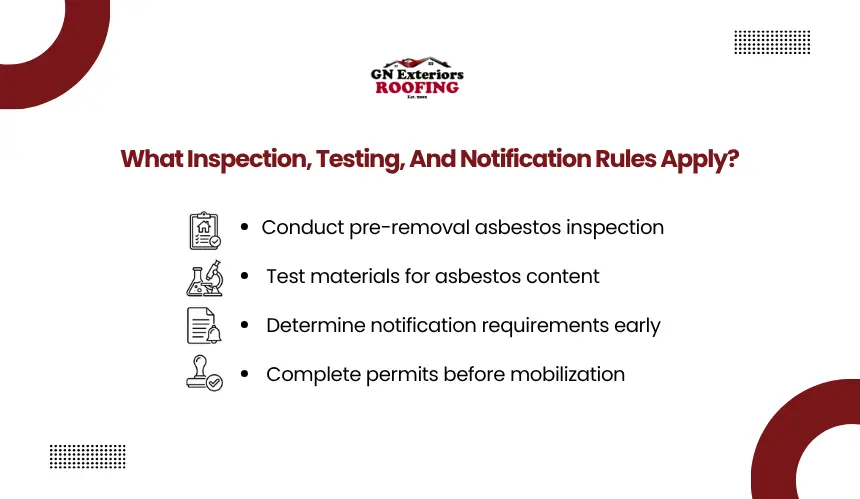
Inspection, testing, and notification rules determine whether the Hanover project is regulated before removal begins. These steps identify asbestos-containing materials and confirm which agency filings are required.
A pre-removal asbestos inspection evaluates the roof area and related building components before demolition or renovation starts. EPA states that asbestos NESHAP requires a thorough inspection before covered demolition or renovation begins.
For Hanover roof projects, the inspection should cover visible and hidden roof layers that may be disturbed. This may include felt, shingles, mastics, coatings, insulation, flashing areas, and built-up roofing sections.
Suspect roofing materials are typically sampled and tested by a qualified professional to confirm whether they contain asbestos. If sampling is not performed, the safer compliance approach is often to treat the suspect material as asbestos-containing and follow applicable asbestos rules.
Testing protects the project from incorrect assumptions. Without material verification, Hanover contractors may accidentally handle asbestos roofing as ordinary debris, which can create worker exposure, regulatory violations, and disposal problems.
Notification requirements depend on whether the project is a renovation or demolition and whether asbestos material meets regulatory thresholds. EPA explains that notification requirements apply to any demolition and to renovations over certain threshold amounts of regulated asbestos-containing material.
For covered work, asbestos NESHAP notification is commonly required at least 10 working days before regulated demolition or renovation activity begins. In Hanover, this timing should be confirmed before scheduling roofing crews, dumpsters, or demolition work.
Hanover asbestos roof removal may require local or state filings in addition to federal notification. These may include asbestos abatement applications, project start-date notices, contractor license verification, emergency renovation documentation, or disposal facility information.
This step should happen before mobilization. Filing late can delay the roof removal, trigger enforcement review, or force the project team to reschedule work after equipment and labor have already been arranged.
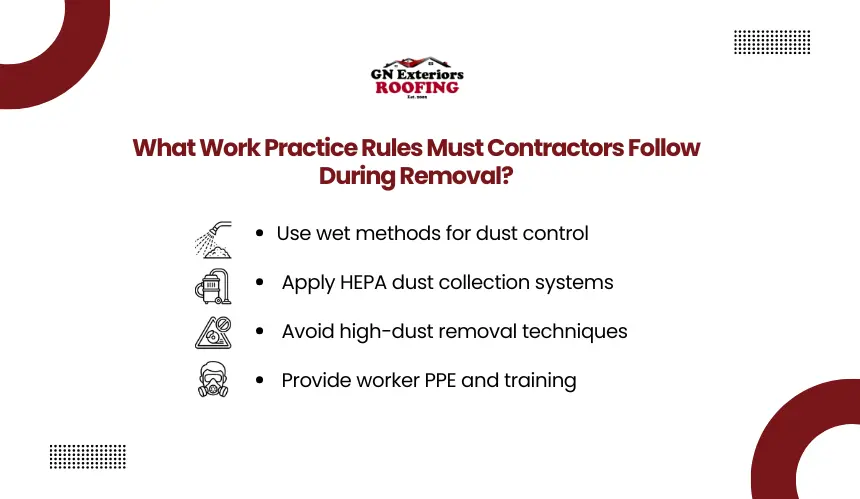
Work practice rules control how asbestos roofing is removed at the jobsite. These rules focus on preventing dust generation, fiber release, and worker exposure during roof disturbance.
Wet methods reduce airborne fibers by keeping asbestos-containing material damp during removal. OSHA requires wet methods for asbestos-containing roofing materials that are not intact or will become non-intact, unless wetting is not feasible or creates a safety hazard.
For Hanover projects, this is especially important when roofing layers are brittle, weathered, or difficult to lift cleanly. Moisture control helps prevent dust from spreading across the roof deck, gutters, access areas, and nearby surfaces.
When cutting or mechanical disturbance is required, dust control must match the exposure risk. OSHA states that cutting machines used on asbestos-containing roofing material must be continuously misted during use unless a competent person determines that misting would substantially reduce worker safety.
HEPA vacuums and dust collection methods may also be used to capture asbestos-containing debris at the source. Standard shop vacuums are not suitable for asbestos dust because they can exhaust fine fibers back into the work area.
Dry sweeping, uncontrolled grinding, sanding, crushing, and aggressive tear-off methods increase the chance of airborne asbestos exposure. OSHA’s roofing provisions require asbestos-containing roofing material to be removed intact to the extent feasible.
For Hanover contractors, this means the safest removal plan is one that minimizes breakage. If intact removal is not practical, the job needs stronger controls, closer supervision, and asbestos-specific cleanup procedures.
Workers involved in asbestos roof removal must understand hazard recognition, regulated work practices, exposure controls, and cleanup procedures. OSHA’s asbestos standard covers construction work involving asbestos, including demolition, removal, repair, alteration, maintenance, cleanup, transportation, disposal, and storage.
Respiratory protection must be selected based on the exposure conditions. Disposable dust masks are not an acceptable substitute for properly selected asbestos respiratory protection when respirators are required.
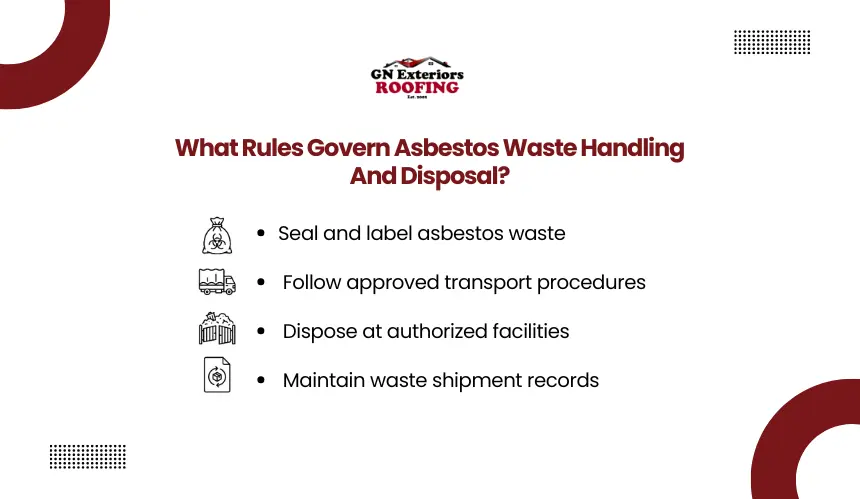
Asbestos compliance continues after the roofing material leaves the roof surface. Waste rules control how debris is packaged, labeled, transported, documented, and delivered to an approved disposal site.
Asbestos-containing waste must be contained so fibers do not escape during handling. EPA NESHAP waste rules require asbestos waste shipment records and address asbestos-containing waste material that is not sealed in leak-tight containers.
For Hanover roof debris, smaller material may be placed in sealed asbestos waste bags or drums. Larger sections may require leak-tight wrapping, proper warning labels, and identification of the waste generator when required.
Transport procedures must prevent visible emissions during loading, hauling, and unloading. Asbestos roofing waste should remain sealed, covered, and protected from tearing or impact while it moves from the Hanover jobsite to the disposal facility.
Transport planning should also account for route timing, container condition, vehicle marking where required, and acceptance rules at the receiving facility. Improper hauling can turn a contained roof removal into a broader contamination issue.
Regulated asbestos roofing waste cannot be placed in ordinary construction debris streams unless the receiving facility is authorized to accept that waste type. EPA’s asbestos NESHAP includes standards for waste disposal sites and addresses asbestos-containing waste from demolition and renovation activities.
For Hanover property owners, the disposal facility should be confirmed before removal begins. If the landfill or transfer facility rejects the load, the project can face added handling costs, storage issues, and compliance documentation problems.
Waste shipment records create the paper trail from the project site to final disposal. EPA NESHAP requires waste shipment records for asbestos-containing waste material transported off the facility site and includes generator, transporter, quantity, and disposal information.
These records protect the Hanover property owner and contractor by proving where the asbestos waste went. Missing or incomplete documentation can become a major issue during audits, complaints, property transfers, or enforcement reviews.
Do You Know? EPA asbestos NESHAP rules require asbestos-containing waste material to be properly sealed, labeled, transported, and documented. Transportation vehicles and asbestos landfills also have special labeling and waste shipment recordkeeping requirements, which helps track asbestos waste from the project site to final disposal. |
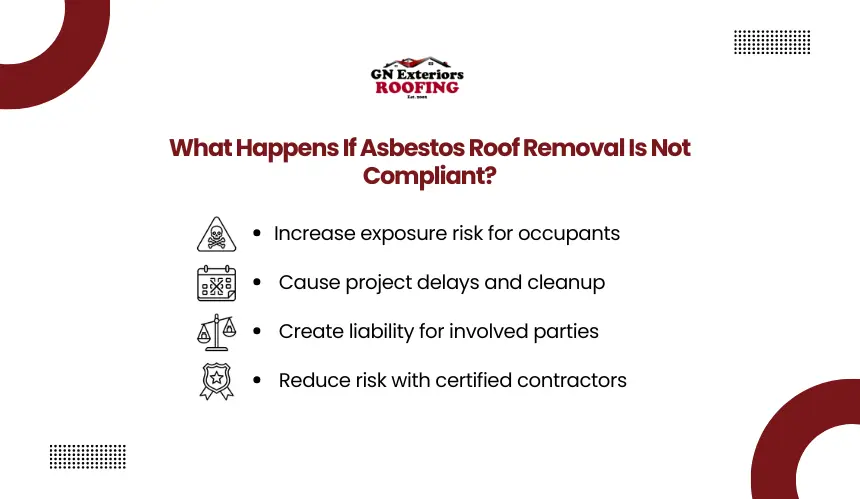
Non-compliant asbestos roof removal can create exposure risks, legal penalties, project shutdowns, and cleanup costs. The consequences often extend beyond the roofing contractor.
Improper asbestos roof removal can release fibers into dust, tools, clothing, roof openings, attic spaces, and nearby work areas. OSHA regulates asbestos because worker exposure can occur during removal, renovation, repair, cleanup, disposal, and related construction activity.
In Hanover, this risk can affect roofers, building occupants, maintenance staff, neighboring trades, and anyone who enters contaminated areas after the work is done.
A non-compliant asbestos project may be stopped until the site is inspected, stabilized, cleaned, and properly documented. Corrective work may involve revised notifications, specialized cleanup crews, disposal verification, air monitoring, or additional sampling.
These delays are often more expensive than proper pre-planning. Once asbestos debris spreads outside the intended work area, cleanup becomes harder to control and easier for regulators or occupants to challenge.
Liability can fall on more than one party. EPA asbestos NESHAP focuses on owners and operators, while OSHA places duties on employers responsible for worker protection.
For Hanover projects, this means the building owner, roofing company, abatement contractor, employer, transporter, or waste generator may be responsible depending on what went wrong. Common triggers include failure to inspect, failure to notify, unsafe disturbance, improper disposal, and missing records.
Certified asbestos contractors help Hanover property owners manage asbestos roof removal safely and legally. They reduce risk by handling inspection, notification, worker protection, removal methods, waste records, and disposal requirements before the roof is disturbed.
Older buildings near Hanover Center, Washington Street, Route 53, and Hanover Crossing often have flat or low-slope roof sections where standard shingles may not provide the right waterproofing performance. These areas can include commercial buildings, additions, porches, garages, and rear roof sections that collect rainwater more easily. That is why rubber roofing in Hanover is a practical option for properties that need a flexible, water-resistant roofing system designed for low-slope surfaces.
For property owners near Broadway, Main Street, Whiting Street, and the Route 139 corridor, this service supports better protection against ponding water, seam leaks, freeze-thaw movement, and drainage-related roof wear. Hanover properties face seasonal rain, snow, and temperature changes, so rubber roofing helps create a durable membrane barrier where asphalt shingles or metal panels may not be the best fit.
Protect your property with roofing work that matches the structure, slope, and long-term needs of your home or commercial building. GN Exteriors provides reliable roofing solutions for Hanover property owners, including roof replacement, weather-resistant materials, and professional installation support. Whether the project involves aging roof materials, low-slope sections, or a need for durable rubber roofing in Hanover, their team can help plan the right solution with care, precision, and lasting protection in mind.
In some cases, limited occupancy may be possible, but it depends on the roof layout, access points, containment plan, and whether interior areas could be affected. Property owners in Hanover should ask the contractor how the work zone, entrances, ventilation points, and occupied spaces will be separated before the project begins.
The timeline depends on the roof size, material condition, weather, access difficulty, inspection results, and required filings. A small controlled removal may take less time, while larger commercial or multi-layer roofing projects in Hanover may require extra planning, staging, removal, cleanup, and documentation before replacement work can continue.
Before work starts, property owners should clear access areas, move vehicles, protect nearby outdoor items, confirm building access, and review the project schedule with the contractor. For Hanover properties near busy residential or commercial streets, planning access and staging areas can help reduce disruption during roof removal.
Insurance coverage depends on the policy, the cause of the roof damage, and whether asbestos removal is connected to a covered event. Many policies limit or exclude pollution-related costs, so Hanover property owners should review their policy and speak with their insurer before assuming asbestos removal will be covered.
A new roof can usually be installed after the asbestos material is removed, the work area is cleared, and the roof deck is ready for replacement. If damage, moisture, or structural issues are found underneath, the contractor may need to repair the substrate before installing shingles, metal roofing, or rubber roofing.
Yes. Rooftop equipment can affect access, staging, removal sequence, and safety planning. Solar panels, vents, HVAC units, antennas, and mechanical supports may need to be removed, protected, or worked around before asbestos roofing materials can be handled safely on Hanover properties.