
Key Takeaways:
|
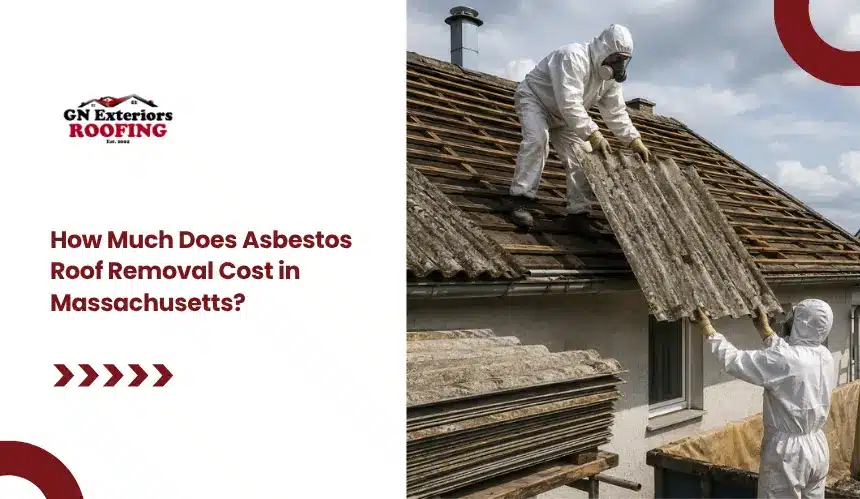
Asbestos roof removal in Massachusetts can be a serious project because older roofing materials may contain hazardous fibers that need careful handling. Homeowners often want a clear idea of cost before starting, but pricing can vary based on the roof, the material condition, and the work required to remove it safely. Understanding the expected cost helps homeowners plan the project properly and avoid unsafe or incomplete removal work.
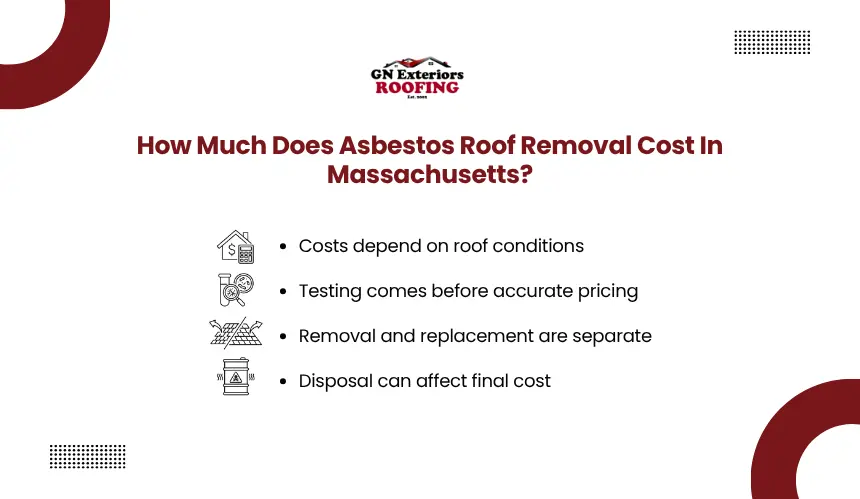
Asbestos roof removal in Massachusetts does not have one fixed price because the cost depends on roof size, asbestos condition, access, removal method, disposal, and whether roof replacement is included. Homeowners should separate the cost into three parts: testing, asbestos roof removal, and new roof installation.
Older homes in Hanover may have aging roof materials that become risky during leaks, storm damage, or replacement work. Asbestos Roof Removal in Hanover is done when testing confirms asbestos-containing shingles and the roof needs safe, controlled removal before a new roofing system is installed. This helps protect workers, the home, and nearby property from unsafe asbestos exposure.
Do You Know? The EPA lists roofing and siding shingles among building materials where asbestos may be found. The agency also explains that asbestos fibers can be released when asbestos-containing materials are disturbed during demolition, repair, remodeling, or maintenance work.
Roof Area | Low Estimate At $50/Sq. | High Estimate At $150/Sq. Ft. |
500 sq. ft | $25,000 | $75,000 |
1,000 sq. ft | $50,000 | $150,000 |
1,500 sq. ft. | $75,000 | $225,000 |
2,000 sq. ft. | $100,000 | $300,000 |
These numbers are planning estimates, not fixed contractor quotes. A smaller asbestos-cement roof area may fall below these totals, while a complex full-roof abatement project can become expensive because the work involves regulated removal, protective setup, controlled handling, approved disposal, and final cleanup.
Some Massachusetts asbestos roof removal projects cost more because roof conditions increase labor time, safety controls, and disposal work. For example:
The price can also increase when the contractor must remove layered materials, separate asbestos-containing shingles from other debris, use more containment controls, or spend extra time preventing breakage during removal. Older Massachusetts homes may also have hidden roof damage under the asbestos material, which can change the project scope after inspection.
Asbestos roof removal and roof replacement should be priced as two separate parts of the project. Removal covers the regulated work needed to take off asbestos-containing material, while replacement covers the new roofing system installed after the hazardous material is gone.
Typical cost separation may look like this:
Homeowners should ask whether the estimate is for removal only or removal plus replacement. A removal-only quote may look lower at first, but it may not include the new roofing material, underlayment, flashing, labor, or repairs needed to make the roof complete again.
Hanover homes need durable roofing because seasonal rain, snow, wind, and temperature changes can wear down older roof surfaces over time. Asphalt Shingle Roofing in Hanover is important when homeowners want a practical replacement option that protects the home, improves curb appeal, and helps prevent leaks after damaged or outdated roofing is removed.
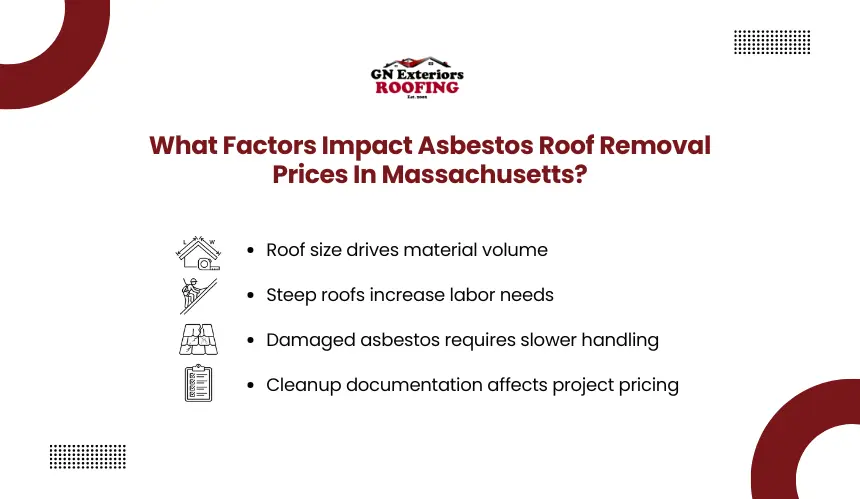
Asbestos roof removal quotes vary because each roof creates a different labor, safety, access, and disposal workload. In Massachusetts, regulated handling also affects the final price because asbestos materials cannot be removed like standard roofing debris.
Roof size has the strongest effect on cost because it controls the amount of asbestos-containing material that must be removed, packaged, hauled, and disposed of. A small porch roof, shed roof, or garage roof may require fewer labor hours and less disposal volume than a full residential roof.
A larger roof increases the number of shingles handled by the crew. It also adds more setup time, more protective materials, more disposal bags or containers, and more cleanup work. This is why a partial asbestos roof removal can cost much less than a full-home asbestos roof abatement project.
A low-slope, single-story roof is usually easier to access and remove. A steep roof, tall structure, or multi-level roofline increases the amount of time needed to work safely. Crews may need more fall protection, staging, ladders, lift access, or controlled work zones.
Access around the home also affects pricing. Tight driveways, landscaping, fences, nearby structures, and limited space for containers can slow removal and debris handling. When workers need more time to move materials safely from the roof to the disposal area, the quote usually increases.
The condition of the asbestos roofing affects removal speed and risk control. Intact asbestos cement shingles may be removed more carefully in sections. Broken, loose, brittle, or heavily weathered shingles require slower handling because damaged material can release more dust and debris.
Deteriorated roofing can also create hidden problems. Contractors may find damaged decking, old underlayment, moisture issues, or multiple roof layers beneath the asbestos material. These conditions can expand the work beyond basic removal and change the final project cost.
Testing confirms whether the roof contains asbestos before any removal work begins. In Massachusetts, asbestos projects may also require proper notification, regulated disposal, controlled work methods, and cleanup documentation.
These steps affect the final price because they add more than standard roofing labor. A complete quote should show whether lab testing, notification, disposal fees, waste handling, cleanup, and documentation are included or billed separately.
Do You Know? MassDEP requires asbestos removal notification 10 working days before asbestos abatement, removal, or disposal work starts. This waiting period can affect project scheduling, especially when homeowners are planning roof removal and replacement together.
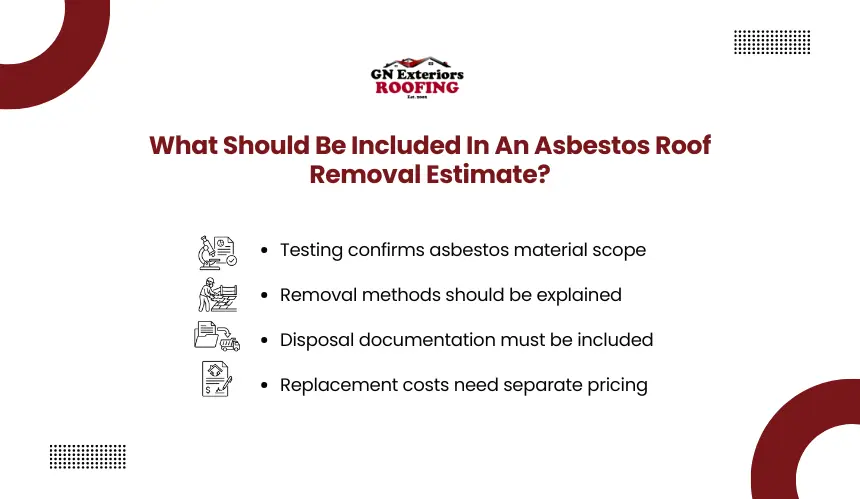
A complete asbestos roof removal estimate should show exactly what the contractor is pricing. Clear scope details help homeowners compare quotes fairly and avoid missing costs after work begins.
The estimate should state whether asbestos testing is included or billed separately. Testing matters because older roofing materials can look similar, and the project scope should be based on confirmed asbestos-containing material rather than assumption.
The contractor should identify which roof areas are included in the quote. A clear estimate should explain whether the work covers one roof section, a detached garage, a porch roof, or the full roofing system. This prevents confusion between partial abatement and full asbestos roof removal.
The estimate should describe how the crew will remove the asbestos roofing. Asbestos-containing shingles should not be handled like normal asphalt shingles because breakage, dust, and debris must be controlled during removal.
A proper quote should account for labor, protective equipment, controlled work zones, wet handling where needed, fall protection, and site protection. These details explain why asbestos roof removal costs more than a standard roof replacement tear-off.
Do You Know? OSHA’s asbestos fact sheet lists roofing and siding shingles as materials that may contain asbestos. OSHA also sets the asbestos permissible exposure limit at 0.1 fiber per cubic centimeter of air as an 8-hour time-weighted average, with an excursion limit of 1.0 asbestos fiber per cubic centimeter over 30 minutes.
The estimate should include regulated waste handling and disposal. Asbestos debris must be packaged, labeled, transported, and disposed of through appropriate channels rather than mixed with ordinary construction waste.
Homeowners should ask whether cleanup, disposal fees, waste documentation, and final site clearing are included. These items matter because a low estimate may appear cheaper only because disposal or documentation has been left out.
The estimate should show asbestos removal and roof replacement as separate line items. This allows homeowners to compare abatement costs and roofing installation costs without mixing two different project phases.
A clear quote should identify the cost of removal, disposal, roofing materials, installation labor, flashing, underlayment, ventilation, and any decking repairs. This makes the final budget easier to understand before work starts.
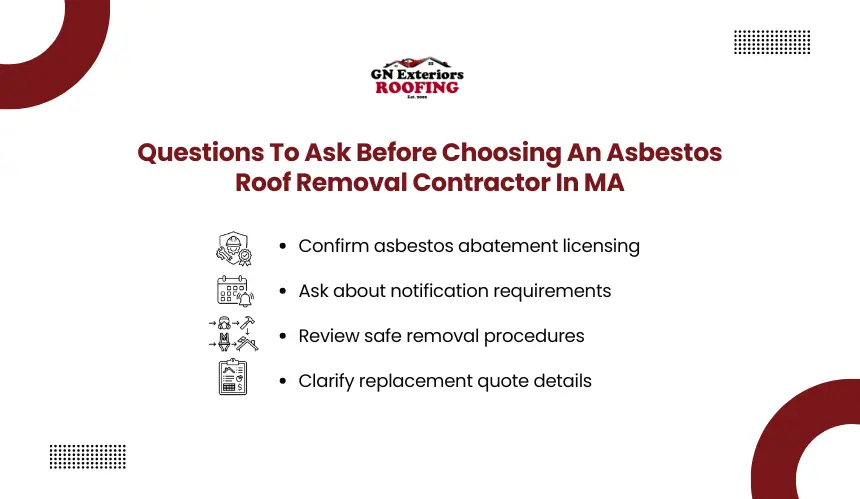
The right contractor should explain the process clearly before work begins. Homeowners should focus on licensing, scope, safety controls, disposal, and whether the company can coordinate the roofing work after abatement.
Homeowners should ask whether the contractor is licensed for asbestos abatement in Massachusetts. General roofing experience is not enough when the project involves asbestos-containing roofing material.
The contractor should understand asbestos regulations, worker protection, disposal rules, and required project documentation. A qualified asbestos contractor can explain the removal process in practical terms instead of treating the job like a standard roof tear-off.
A homeowner should ask exactly what the quote includes before comparing prices. A lower price may not include asbestos testing, required notification, disposal costs, cleanup, or documentation.
The estimate should identify whether the contractor handles the full asbestos process or expects the homeowner to arrange certain steps separately. This question helps reveal the true project cost before work begins.
The contractor should explain how the crew will control breakage, dust, debris, and jobsite exposure. The answer should include removal method, protective setup, worker safety measures, roof access, debris handling, and cleanup steps.
A vague answer is a warning sign. Asbestos roof removal requires a controlled process because the risk comes from disturbing asbestos-containing material without proper handling.
Some contractors only perform asbestos abatement. Others coordinate both removal and new roof installation. Homeowners should ask whether the final price includes the new roof or only the removal of asbestos-containing material.
This question prevents budget gaps. If replacement is separate, the homeowner should request a second quote for asphalt shingles, rubber roofing, metal roofing, decking repairs, flashing, gutters, or any other roof system components needed after removal.
Homeowners should build the budget around confirmed testing, not guesswork. Once the roofing material is verified, they can compare itemized estimates that separate abatement, disposal, cleanup, and replacement costs.
A smart budget should also include extra room for hidden roof damage. Older Massachusetts homes may have worn decking, moisture damage, outdated flashing, or layered materials beneath the asbestos shingles. Planning for these conditions helps reduce surprise costs after removal begins.
Asbestos roofing is not a project to delay, guess through, or hand to the wrong crew. GN Exteriors helps Massachusetts homeowners move from uncertainty to a safer, clearer roofing plan with careful asbestos roof removal support and reliable roof replacement solutions. From inspection guidance to a complete exterior upgrade, the team focuses on safe handling, clean execution, and long-term protection.
A homeowner should not treat asbestos roof shingles like regular roofing debris. Massachusetts asbestos work may require licensed abatement contractors, proper notification, regulated handling, and approved disposal. A licensed asbestos contractor can confirm the material, manage the removal process, and reduce exposure risk during the project.
The physical removal may take a few days for smaller projects, but the full timeline can be longer because MassDEP requires asbestos removal notification 10 working days before abatement work begins. Roof size, weather, access, inspection, disposal scheduling, and replacement planning can also affect the project timeline.
No. An old roof does not automatically contain asbestos. The EPA explains that asbestos-containing materials cannot usually be identified by appearance alone unless they are labeled. Testing by a trained professional is the reliable way to confirm whether roofing material contains asbestos.
Asbestos roofing waste must be handled separately from standard construction debris. In Massachusetts, asbestos waste must go to an approved disposal facility and cannot be sent to a combustion facility or ordinary construction and demolition material processor.
Asbestos roof removal costs more because crews must control fiber exposure, prevent unsafe breakage, use protective work practices, package waste correctly, and follow disposal rules. OSHA regulates asbestos work during demolition, repair, renovation, and removal because disturbed asbestos materials can create airborne exposure risks.
Yes, but the work should be priced in separate phases. Asbestos removal comes first, then the roof can be rebuilt with new materials such as asphalt shingles, rubber roofing, or metal roofing. Separating abatement from replacement helps homeowners compare quotes and avoid missing costs.