
Key Takeaways
|
Choosing the right roofing material often comes down to a few critical concerns: cost, durability, appearance, and long-term maintenance. For many homeowners across Greater Boston and the South Shore, where coastal moisture, winter snow loads, and seasonal temperature swings all impact roof performance, asphalt shingles stand out as a practical and widely adopted solution.
This article breaks down the real, performance-driven advantages of asphalt shingles so homeowners can evaluate whether they align with their specific roofing needs and long-term expectations.
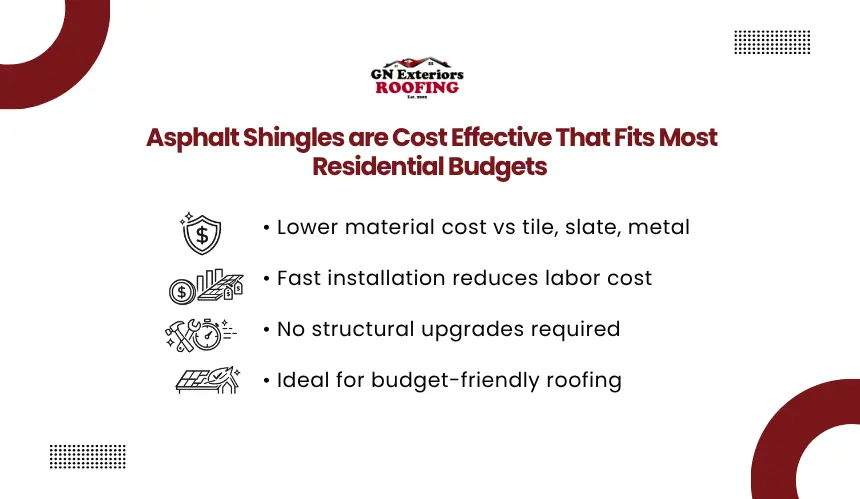
Roofing decisions often begin with a simple concern: how to achieve reliable protection without overextending the budget. Asphalt shingles consistently meet this expectation by offering a strong balance between initial affordability and practical long-term value, making them a common choice across residential neighborhoods.
One of the primary reasons asphalt shingles remain budget-friendly is their efficient production and widespread availability. Unlike slate or clay systems that involve specialized sourcing, asphalt shingles are readily stocked by regional suppliers, which keeps material costs stable and predictable.
Installation efficiency further reduces total expenses. Because asphalt shingles are lightweight and easy to handle, roofing crews can complete projects faster without requiring structural reinforcement.
This is especially relevant in areas like Dorchester, where many older homes have existing framing that benefits from lighter roofing loads, avoiding costly upgrades during replacement.
Key cost advantages include:
These factors make asphalt shingles a practical option for homeowners who want dependable coverage without the financial strain of premium roofing systems.
Beyond the initial savings, asphalt shingles provide consistent value through their service life and manageable upkeep. Modern fiberglass shingles are designed to perform reliably for 20 to 30 years under typical residential conditions, offering a solid return on investment for most homeowners.
This value becomes particularly relevant in coastal-influenced areas like Hingham, where salt air and seasonal moisture can accelerate wear on certain roofing materials. Asphalt shingles with protective granule coatings help resist these everyday environmental factors without requiring specialized maintenance routines.
From a long-term perspective, homeowners benefit from:
For properties in active housing markets such as Quincy, where resale preparation often focuses on cost control and visual condition, asphalt shingles offer a practical solution that supports both structural reliability and market readiness without excessive investment.
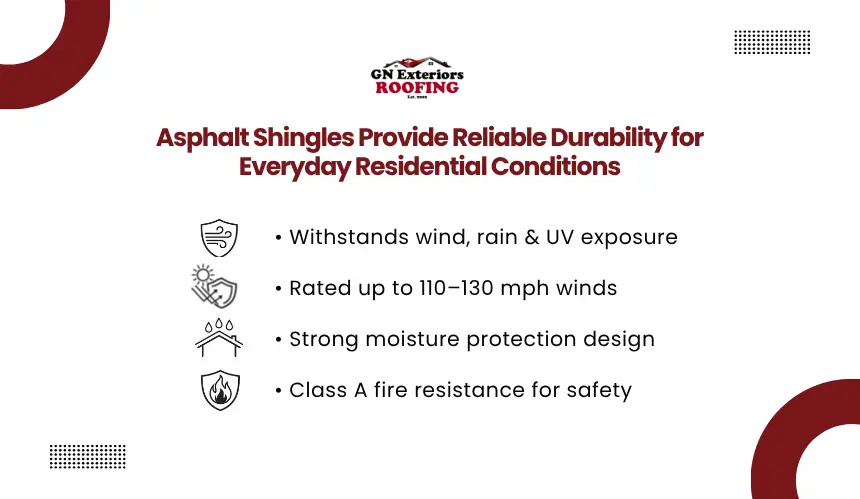
Durability is not just about how long a roof lasts, but how consistently it performs under daily environmental stress. Asphalt shingles are engineered to handle common residential weather patterns without requiring specialized materials or complex structural systems, which makes them dependable for typical housing conditions.
Modern asphalt shingles, especially fiberglass-based variants, are designed to resist multiple environmental factors that affect roof longevity. Their layered construction, combined with protective mineral granules, helps shield against ultraviolet radiation, moisture penetration, and wind uplift.
In regions like the South Shore, where coastal storms can bring strong winds and heavy rain, many asphalt shingles are rated to withstand winds up to 110 to 130 mph when properly installed. This makes them suitable for handling seasonal weather variations without frequent failure.
Performance advantages include:
These features allow asphalt shingles to maintain structural integrity under everyday conditions that most residential roofs face throughout the year.
Safety is a critical but often overlooked factor when selecting roofing materials. Asphalt shingles are commonly manufactured with Class A fire ratings, which is the highest level of fire resistance available for roofing systems.
This rating indicates that the material can effectively resist flame spread and provide an added layer of protection in case of external fire exposure. For homes located in denser residential settings such as Quincy or Braintree, where properties are built closer together, this fire-resistant quality becomes especially important for reducing risk.
Additional safety-related benefits include:
By combining weather resistance with certified fire safety standards, asphalt shingles offer a dependable level of protection that aligns with the everyday safety expectations of residential homeowners.
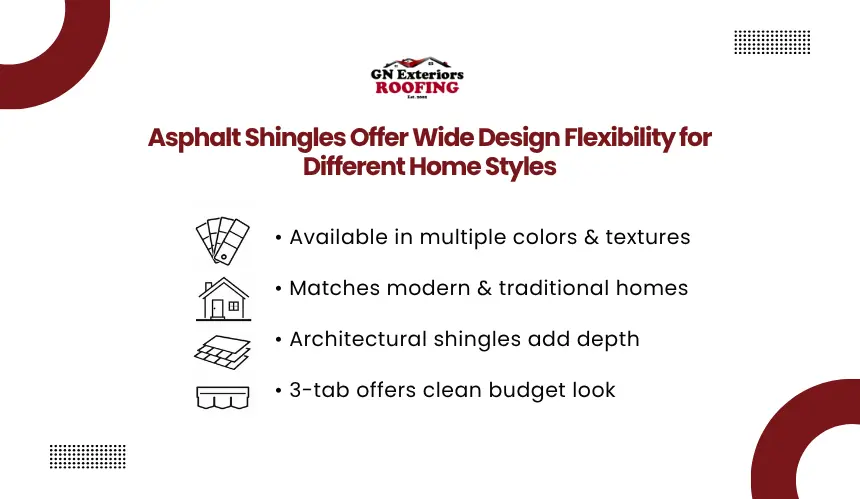
Beyond performance, roofing plays a visible role in how a home is perceived. Asphalt shingles offer a level of design flexibility that allows homeowners to align their roof with architectural style, neighborhood character, and resale expectations without moving into high-cost material categories.
Asphalt shingles are available in a wide range of colors, textures, and profiles, making them adaptable to different home exteriors. Whether a property features traditional siding, brick facades, or modern finishes, shingles can be selected to complement the overall visual composition.
Manufacturers now produce shingles in tones such as charcoal, weathered wood, slate gray, and earth blends, which are commonly used to match regional housing aesthetics. This variety allows homeowners to enhance curb appeal without needing custom roofing materials.
Key design advantages include:
This flexibility makes asphalt shingles suitable for both newer constructions and older homes undergoing exterior upgrades.
Not all asphalt shingles offer the same visual impact. The two most common types, 3-tab shingles and architectural shingles, differ significantly in how they affect a home’s exterior look.
3-tab shingles provide a flat, uniform appearance with evenly spaced cutouts. They are typically used in budget-focused projects where simplicity is preferred. In contrast, architectural shingles are thicker and layered, creating a dimensional look that adds depth and shadow lines across the roof surface.
This distinction becomes particularly relevant in areas like Milton, where many homes reflect Colonial and Federal architectural influences. These styles often benefit from the added texture and depth of architectural shingles, which help maintain a more authentic and visually balanced appearance.
From a design perspective:
By offering both basic and enhanced aesthetic options, asphalt shingles give homeowners the flexibility to choose a roofing style that aligns with both their budget and the architectural identity of their home.
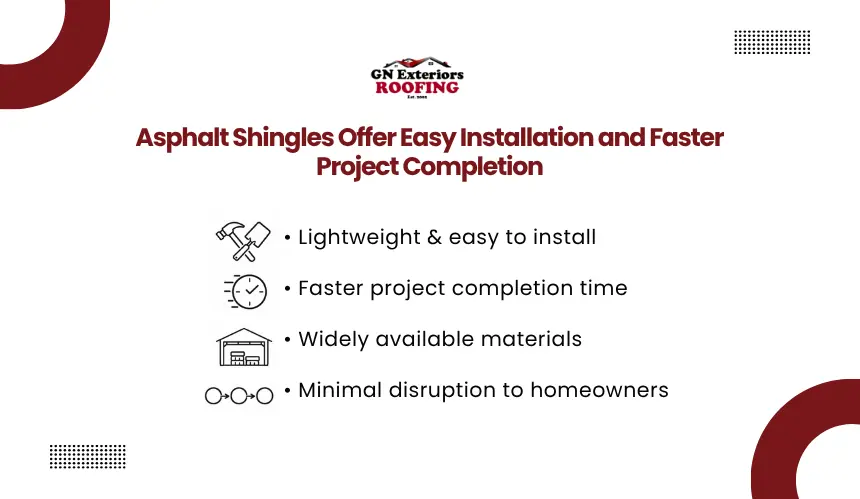
Installation efficiency often has a direct impact on both project cost and homeowner convenience. Asphalt shingles simplify the roofing process by reducing labor complexity and minimizing the time a home remains exposed during replacement or repair.
Asphalt shingles are designed for straightforward installation using standardized methods that most roofing crews are trained to execute efficiently. Their lightweight composition allows for easier handling, quicker alignment, and faster coverage compared to heavier materials like slate or concrete tiles.
This becomes especially important in regions like Weymouth, where coastal weather patterns can shift quickly. A faster installation window reduces the risk of unexpected rain exposure during roof replacement, helping protect the underlying structure during active work.
Key installation advantages include:
Because of these factors, many asphalt shingle projects can be completed within one to two days, depending on roof size and condition.
Another factor that contributes to faster project completion is the widespread availability of asphalt shingles. Unlike niche roofing materials that may require special ordering or extended delivery timelines, asphalt shingles are stocked by most local suppliers.
This consistent availability reduces scheduling delays and allows contractors to begin projects sooner. In active residential areas such as Randolph, where roofing demand can increase after seasonal storms, having readily available materials helps homeowners avoid long waiting periods.
Additional timeline benefits include:
By combining ease of installation with reliable material access, asphalt shingles allow homeowners to complete roofing projects efficiently, with minimal disruption to daily living.
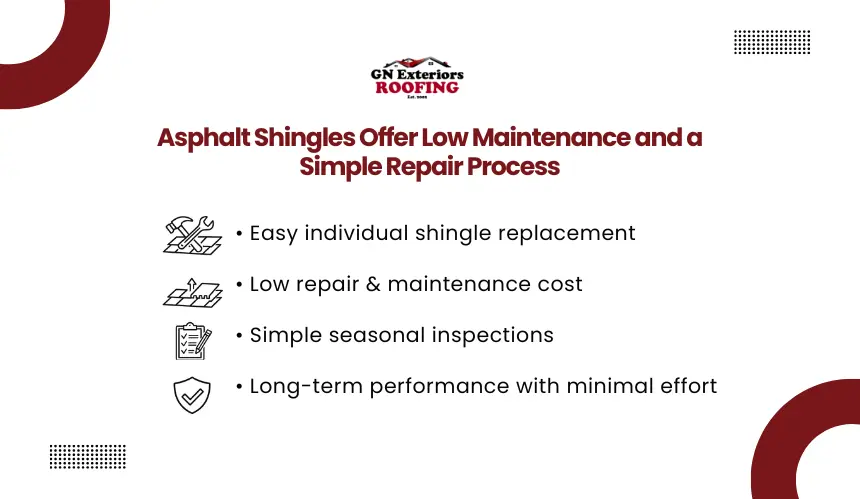
Long-term upkeep is often where roofing decisions begin to show their real impact. Asphalt shingles are designed to keep maintenance simple and repairs manageable, which helps homeowners avoid complex interventions and unpredictable costs over time.
One of the most practical advantages of asphalt shingles is their ability to be repaired in isolated sections. Unlike roofing systems that require large panel or tile removal, asphalt shingles allow contractors to replace only the damaged pieces without disturbing the surrounding structure.
This is particularly useful after localized weather events. For example, in Braintree, where seasonal storms and falling tree debris from older residential areas can cause minor roof damage, homeowners often deal with limited shingle loss rather than widespread failure.
Repair-related benefits include:
This targeted repair approach helps extend the overall lifespan of the roof while keeping maintenance straightforward.
Asphalt shingles do not demand intensive maintenance routines, but periodic care is still important to preserve performance. Most upkeep revolves around basic inspection and environmental management rather than structural intervention.
In areas like Hanover, where tree-lined neighborhoods can lead to leaf buildup and moisture retention on roofs, simple maintenance steps such as debris removal and gutter cleaning play a key role in preventing premature wear.
Typical maintenance practices include:
Because these tasks are relatively simple and infrequent, asphalt shingles remain one of the most low-maintenance roofing options available, making them suitable for homeowners who prefer predictable and manageable upkeep.
Not every home is built to support heavy or complex roofing systems. Structural compatibility becomes a key factor, especially in residential areas where existing framing, roof pitch, and design limitations must be considered. Asphalt shingles offer flexibility that allows them to work across a wide range of roof types without requiring major structural changes.
Asphalt shingles are designed to perform effectively on most standard residential roof pitches. Their layered installation system allows water to shed efficiently, which makes them suitable for common roof styles such as gable, hip, and dormer configurations.
This adaptability is particularly relevant in areas like Dorchester, where housing stock includes a mix of triple-deckers, older pitched roofs, and renovated structures. These homes often have varying roof angles, and asphalt shingles can be installed without needing custom material adjustments.
Key structural advantages include:
Because of this, asphalt shingles remain a practical option for both traditional and modified residential designs.
One of the major benefits of asphalt shingles is their lightweight composition. Compared to materials like clay tiles or slate, which can significantly increase roof load, asphalt shingles place minimal stress on the underlying structure. Asphalt shingles help avoid costly structural reinforcement or engineering modifications.
Structural efficiency benefits include:
By eliminating the need for structural upgrades while maintaining reliable performance, asphalt shingles provide a versatile solution that fits a wide range of residential construction scenarios.
Energy performance has become an important consideration for homeowners looking to reduce cooling costs and improve indoor comfort. Asphalt shingles have evolved beyond basic protection, now offering features that support better thermal regulation when combined with proper roofing systems.
Modern asphalt shingles are available with reflective granule technology, often referred to as cool roof shingles. These granules are designed to reflect a portion of solar radiation rather than absorbing it, which helps reduce heat transfer into the attic space.
The U.S. Department of Energy notes that under the same conditions, a reflective roof can stay more than 50°F cooler than a conventional roof.
This becomes particularly relevant in areas like Randolph, where summer temperatures combined with humidity can increase indoor heat buildup. Reflective shingles help stabilize attic temperatures, which reduces the workload on HVAC systems.
The EPA also notes that, in air-conditioned residential buildings, cool roofs can reduce peak cooling demand by 11% to 27%.
Energy-related benefits include:
When paired with proper insulation, reflective shingles contribute to a more energy-efficient roofing system without requiring major upgrades.
Energy efficiency is not only about reflection but also about airflow. Asphalt shingles work effectively with standard attic ventilation systems, allowing heat and moisture to escape rather than becoming trapped beneath the roof deck.
Proper ventilation helps:
Because asphalt shingles integrate easily with ridge vents, soffit vents, and attic exhaust systems, they support a balanced roofing environment that enhances both performance and longevity.
Asphalt shingles are particularly well-suited for homeowners who prioritize practicality and cost control without sacrificing essential performance.
They are ideal for:
In suburban communities like Braintree, where many homes follow conventional residential designs and periodic upgrades are common, asphalt shingles align well with both functional and financial expectations.
While asphalt shingles offer many advantages, they may not be the best fit in certain scenarios.
Limitations include:
For homeowners seeking multi-generational durability or highly specialized architectural finishes, alternative materials such as metal roofs may offer better long-term performance.
Roofing decisions shape how a home performs, protects, and presents itself over time. If you’re considering asphalt shingles and want guidance that reflects real conditions across Greater Boston and the South Shore, GN Exteriors brings the expertise needed to help you choose with confidence and get it done right.
Asphalt shingles generally last between 20 and 30 years, depending on the type, installation quality, and local weather exposure. Architectural shingles tend to last longer than 3-tab shingles due to their thicker construction and better resistance to wind and moisture.
Asphalt shingles perform well in coastal and humid areas when installed with proper ventilation and underlayment. Their protective granule layer helps resist moisture and UV damage, which is important in regions affected by salt air and seasonal humidity.
A well-installed asphalt shingle roof can enhance curb appeal and buyer confidence. In many cases, a newer roof reduces perceived future expenses, which can positively influence property value during resale.
Roof inspections are typically recommended once or twice per year, along with additional checks after major storms. Regular inspections help identify early signs of wear, such as loose shingles or flashing issues, before they lead to costly damage.
Architectural shingles offer greater durability, longer lifespan, and improved visual depth compared to 3-tab shingles. While they cost more upfront, they often provide better long-term value due to enhanced performance and reduced replacement frequency.