
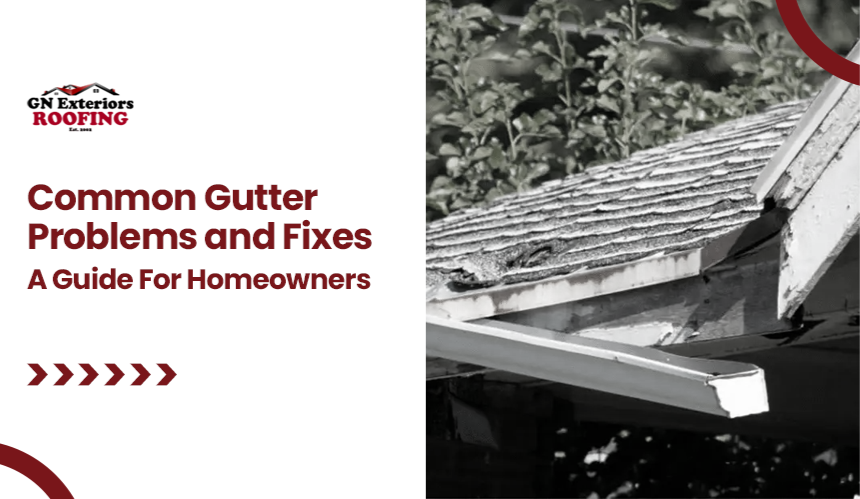
When your gutter system fails to channel rainwater away from your roofline and foundation, it triggers a chain reaction: fascia boards begin to rot, basement walls become damp, and landscaping erodes from uncontrolled runoff.
The best way to avoid common gutter problems is through routine cleaning, seasonal inspections, and timely repairs using the right materials and hardware. Most issues like clogs, sagging, leaks, and poor drainage develop when gutters are neglected or improperly installed. They can lead to serious damage to your roof, siding, and foundation.
| Did you know? 99% of gutters will fail at some point, even if properly installed, underscoring the critical importance of regular maintenance and timely repairs to extend their lifespan and prevent costly damage. |
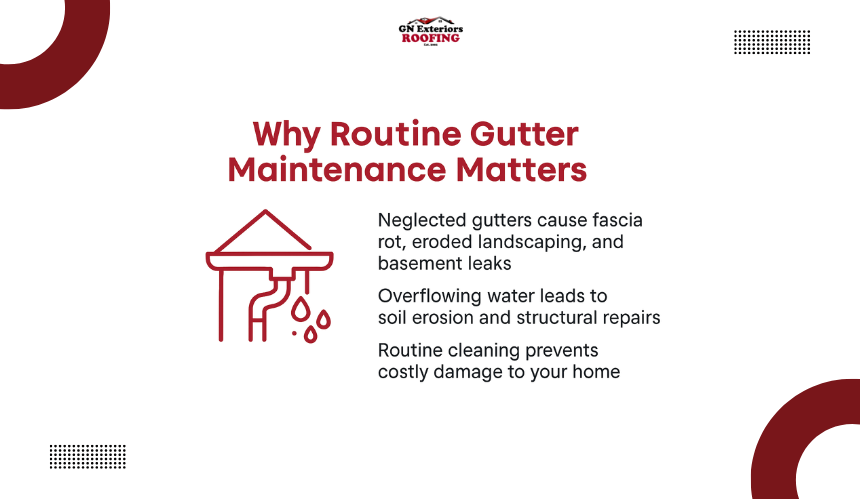
Gutters are not just decorative trim along your roofline, they are your home’s first line of defense against water damage. When working properly, they capture rainwater and direct it safely away from your siding, foundation, and landscaping. But when neglected, even a minor gutter issue can spiral into thousands of dollars in structural repairs.
Poorly maintained gutters often lead to:
The cumulative effect of these problems is not just cosmetic. Over time, saturated soil weakens foundations, mold grows behind damp siding, and water-stained ceilings become common in upper rooms.
| Interesting info: Clogged gutters are a leading cause of water damage to homes. About 40% of homeowners report damage caused by clogged gutters, and 45% list clogging from leaves and debris as their top concern. |
Why it’s happening:
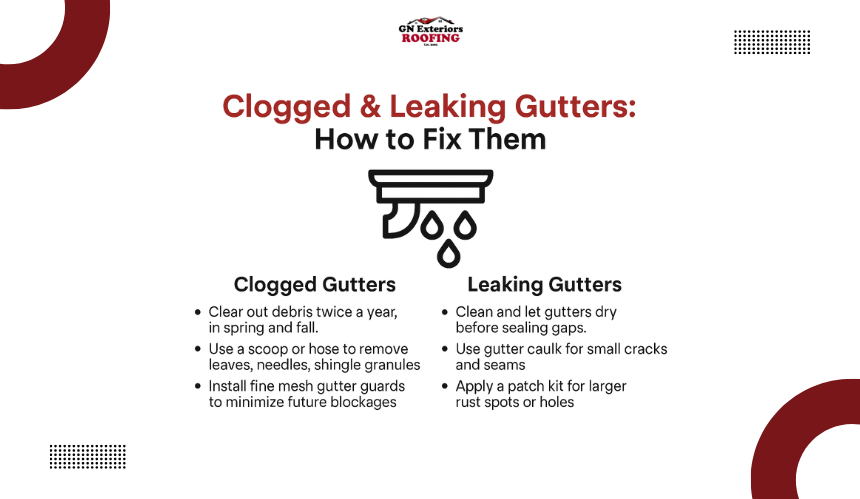
Leaves, pine needles, shingle granules, and even small nests can block the flow of water, especially if the gutters haven’t been cleaned in a while. Wind can carry debris even if no trees are directly overhead.
How to fix it:
Clean your gutters at least twice per year, ideally in early spring and late fall. Use a gutter scoop or power washer to remove debris, and flush the system with a hose to check for smooth drainage. To reduce future clogging, install micro-mesh gutter guards that let water in but keep fine debris out.
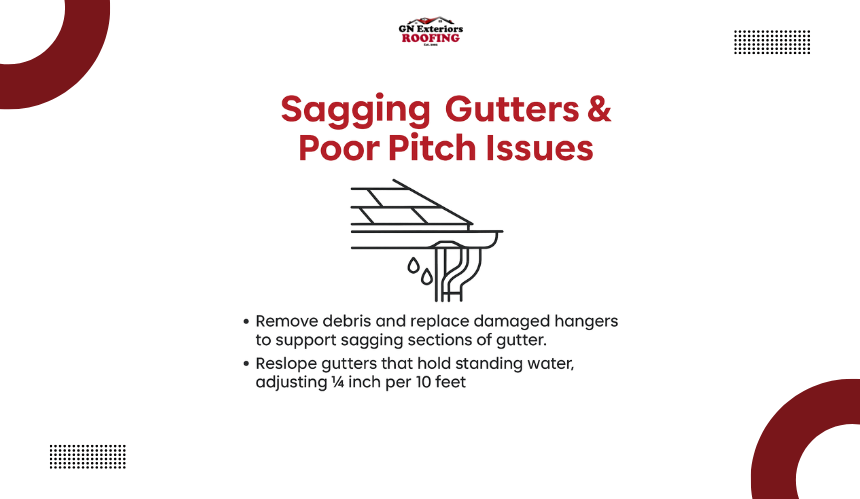
If sections of your gutter are bowing downward or pulling away from the fascia, you are likely dealing with sagging gutters. It is an issue that disrupts drainage and causes water to collect or overflow in the wrong places.
Why it’s happening:
This is typically due to excess weight from debris or standing water, often combined with loose or corroded gutter hangers that can’t hold the system up properly.
How to fix it:
First, remove all debris to lighten the load. Inspect your hangers and replace any that are rusted, bent, or detached. Make sure hangers are spaced no more than 24 inches apart and that the gutter maintains a proper slope of ¼ inch for every 10 feet.
Noticing water dripping from the middle of your gutter or along the seams during a rainstorm? That’s a sign your gutters are leaking, and even a small leak can cause big trouble over time.
Why it’s happening:
Gutters can develop leaks at joints, corners, or through pinholes caused by corrosion or age. In many cases, the original gutter sealant has worn out or seams have separated slightly.
How to fix it:
Thoroughly clean and dry the affected area. Apply gutter caulk or waterproof seam sealant to small gaps and cracks. For larger holes, use aluminum patching tape or a metal patch kit. Seamless gutters can also be inspected annually for early signs of weakness.
If water doesn’t seem to flow toward the downspout or if it just sits in the middle of the gutter, then your system likely has a pitch problem.
Why it’s happening:
Gutters must be installed with a slight angle (about ¼ inch per 10 feet) so that gravity can do its job. Over time, heavy storms, foundation settling, or poor installation can disrupt this slope.
How to fix it:
Use a level to check the pitch along the gutter run. If it’s flat or tilted the wrong way, detach the affected section and adjust the hangers to restore the correct slope. Make sure the system is securely fastened and evenly supported to prevent future shifting.
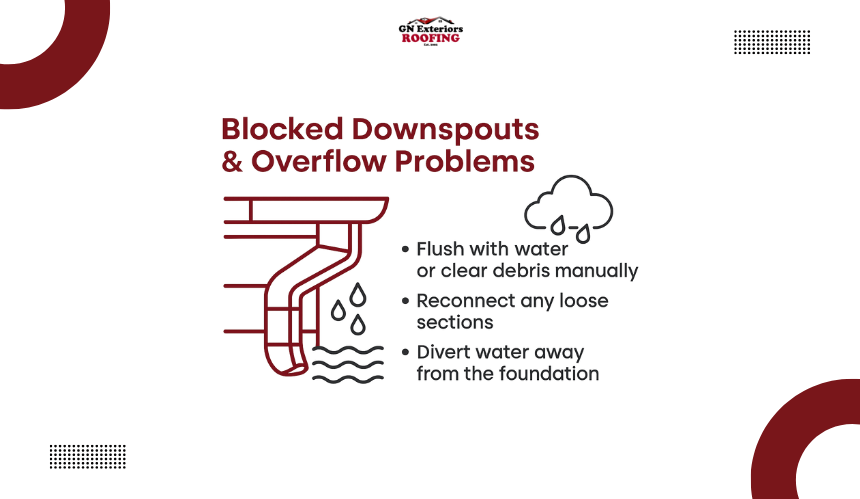
Sometimes the gutters themselves look fine, but rainwater still overflows. The issue may lie in the downspouts, which are essential for carrying water safely away from the structure.
Why it’s happening:
Downspouts can get clogged with debris or freeze in winter, especially at bends or elbow joints. In some cases, they may become disconnected or separated from the gutter due to movement or wear.
How to fix it:
Flush the downspout with water from the top and bottom. If it remains clogged, disconnect the elbow section and clear it manually with a plumbing snake. Reconnect any loose joints and install a downspout extender or splash block to divert water at least 4–6 feet from the home’s foundation.
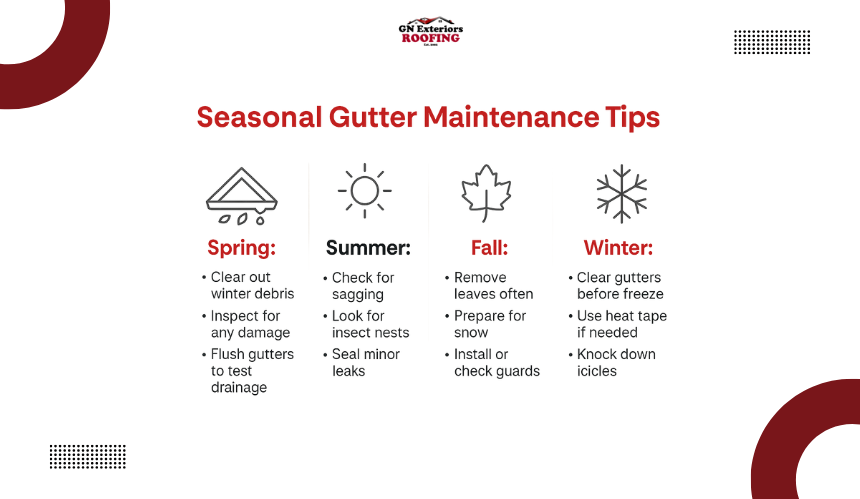
Each season brings specific risks to your gutter system, whether it’s spring storms, autumn leaves, or winter freeze-thaw cycles. Knowing what to do, and when, can keep your gutters flowing properly year-round and save you from expensive water damage.
Here’s a breakdown of what to focus on during each season:
Gutter maintenance in summer prevents overflow during storms and prepares your system for heavy leaf fall ahead.
Use fall cleanup to embed micro terms like leaf accumulation, downspout clogs, gutter slope adjustment, and gutter leaf guard systems.
Ice buildup in gutters can crack seams, loosen hangers, and cause overflow behind siding. This leads to hidden water damage and mold growth.
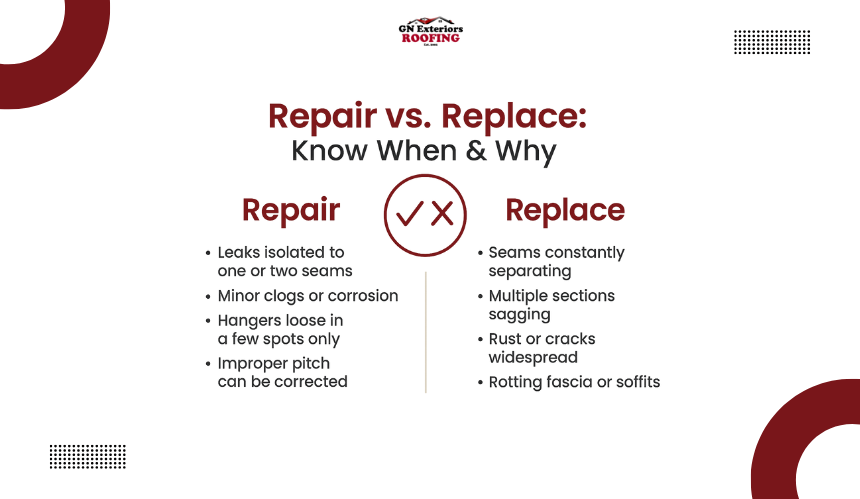
Quick fixes like resealing joints, replacing brackets, or patching holes can extend the life of a functional system, especially if the gutter material is still in good shape.
Quick reference: Aluminum gutters last around 20 years, vinyl around 10–15, and copper up to 50. But lifespan shortens dramatically without regular maintenance.
Taking care of your gutters can feel overwhelming, but with the right system, maintenance becomes easier and more effective. At GN Exteriors, they craft seamless gutters that fit your home perfectly and install gutter covers that help keep debris out.

Yes. When gutters overflow due to clogs, water can back up under roof shingles, causing them to lift or rot prematurely. This shortens the lifespan of your roof and can lead to leaks inside your home.
Materials like aluminum offer rust resistance and are great for most climates, while copper lasts longer but costs more. Vinyl is affordable but less durable in extreme heat or cold. Choosing the right material depends on your local weather patterns and maintenance willingness.
Fascia boards provide structural support to your gutters, while soffits help ventilate your attic. Damaged fascia can cause gutters to loosen or sag, and poor soffit ventilation can increase moisture buildup that leads to wood rot.
Absolutely. Overflowing gutters can direct water to areas not designed for drainage, leading to soil erosion, plant root damage, and standing water that attracts pests.
Yes. Some newer gutter guard systems include sensors that monitor clogging levels and send alerts. Additionally, robotic gutter cleaners are emerging, helping automate debris removal, though these are more common in commercial applications.