
Covered rain gutters vs. open Roof gutters | Which is Good for Your House
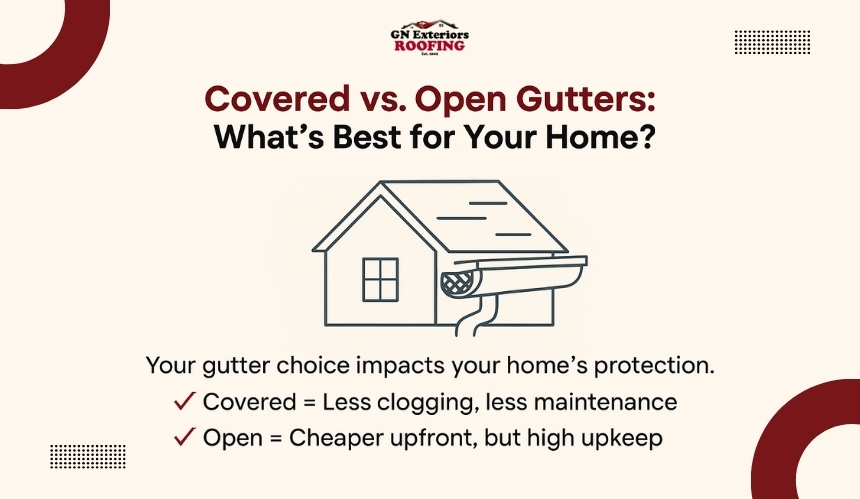
When it comes to protecting your home from water damage, your rain gutter system plays a critical role in directing roof runoff away from the foundation, siding, and landscaping. But homeowners are often faced with a key decision: Should you choose covered rain gutters or stick with traditional open roof gutters?
Covered rain gutters, also known as leaf guard systems, offer better protection against clogging and require less frequent cleaning, making them a smart choice for homes in areas with dense foliage or heavy rainfall. Open roof gutters, while more affordable to install, are prone to debris buildup and typically demand regular maintenance.
What Are Covered Rain Gutters?

Covered rain gutters, also known as gutter guard systems or gutter covers, are designed to block debris while allowing rainwater to flow freely into the gutter channel.
These systems typically feature a solid or perforated cover, made from aluminum, stainless steel, vinyl, or mesh, that sits on top of the gutter to keep out leaves, twigs, and roof grit.
As water flows off the roof, it follows the curve or mesh of the cover and drains into the gutter, while debris is diverted away. This design helps in preventing clogs, overflows, and ice dam formation, especially in homes surrounded by trees.
Covered gutters are popular among homeowners who want to minimize seasonal cleaning and prevent water damage caused by blocked drainage.
Though they come at a higher initial cost than open systems, they often provide long-term value by lowering maintenance needs and extending gutter lifespan. The covers provide gutter protection, which makes gutters capable of blocking large debris.
Types of Covered Roof Gutters

1. Mesh Gutter Guards (Micromesh)
Micro mesh gutter guards use a super-fine mesh that blocks even tiny stuff like pine needles and roof grit. They’re a bit pricier but great if you want minimal cleaning and maximum protection.
2. Screen Gutter Guards
3. Reverse Curve Gutter Guards (Surface Tension)
4. Foam Gutter Guards
5. Brush Gutter Guards
What Are Open Roof Gutters?

Open gutters lack any protective covering and allow water to flow in freely but also tend to accumulate leaves, pine needles, shingle debris, and dirt. This makes them more prone to clogging and overflow, especially in areas with overhanging trees or high winds.
They are available in various profiles such as K-style and half-round, and are generally more affordable and easier to install than covered systems. However, they require frequent cleaning and seasonal maintenance to function properly and prevent drainage issues.
While open gutters are a cost-effective solution, they are only suited for homes in low-debris environments or for homeowners prepared to maintain them regularly.
Water Flow Efficiency: Which System Handles Rain Better?

1. Open Gutters: Maximum Intake, Conditional Efficiency
Open roof gutters offer maximum water intake because the channel is fully exposed. This design allows large volumes of rainwater to enter quickly, making it effective during heavy downpours, as long as the gutter is clear of debris.
However, when clogged with leaves or sediment, open systems lose efficiency rapidly, leading to overflow, fascia board damage, and foundation pooling.
2. Covered Gutters: Controlled Flow, Reliable Protection
In contrast, professionally installed gutter guards use surface tension and controlled inlet points, typically through small perforations or a curved hood, to regulate water entry. While this slows down intake slightly, it is engineered to manage rainfall efficiently without debris blockages.
Micromesh and solid-cover designs can handle steady to heavy rainfall, but in extreme storms, poorly installed or low-quality covers may result in runoff spilling over the edge
Downspout Placement and Capacity
Another important factor is downspout placement and capacity. Proper downspout spacing ensures efficient water evacuation, preventing pooling or overflow.
Covered systems often include optimized outlet spacing to maintain pressure and prevent bottlenecks, whereas open gutters depend heavily on well-placed downspouts and frequent clearing of debris to avoid backups.
In short, open gutters provide faster water intake in ideal (clean) conditions, but covered gutters deliver more reliable performance during real-world weather events, especially in environments where clogging is common.
Another important factor is downspout placement and capacity. Proper downspout spacing ensures efficient water evacuation, preventing pooling or overflow.
Covered systems often include optimized outlet spacing to maintain pressure and prevent bottlenecks, whereas open gutters depend heavily on well-placed downspouts and frequent clearing of debris to avoid backups.
In short, open gutters provide faster water intake in ideal (clean) conditions, but covered gutters deliver more reliable performance during real-world weather events, especially in environments where clogging is common.
Debris Accumulation and Clogging Risks
One of the most significant factors influencing gutter performance is the risk of debris accumulation and the resulting clogging. Even the smallest debris can affect the performance of your gutter system.
How each system handles leaves, twigs, dirt, and other organic matter directly affects maintenance frequency and water flow efficiency. Let’s discuss the efficiency of both systems in detail.
1. Open Gutters: High Vulnerability to Clogs
Open roof gutters have no protective barrier, making them highly susceptible to debris buildup. Leaves, pine needles, seed pods, and roof granules accumulate inside the gutter channel. Over time, this can lead to partial or complete blockages that prevent water from draining properly.
Open gutters clogged with accumulated debris increase the risk of water overflow, which can damage fascia boards, erode soil near the foundation, and create conditions conducive to mold growth.
Frequent cleaning, often twice yearly, especially during fall and spring, is essential to avoid these problems.
2. Covered Gutters: Reduced Clogging but Not Maintenance-Free
Covered rain gutters are designed to minimize debris entry by diverting leaves and large particles away from the channel. Micromesh and solid covers effectively block most organic matter while allowing water to flow through small perforations or along curved surfaces.
While these systems greatly reduce clogging, they are not entirely maintenance-free. Fine debris like dust, pine pollen, or small seeds can accumulate on top of the covers or in micro openings, occasionally requiring cleaning or brushing to maintain optimal performance.
3. Environmental Impact on Clogging Risk
The extent of clogging depends heavily on environmental factors:
- Homes surrounded by mature trees experience more debris, increasing the risk of clogs or open gutters.
- Areas with high pollen or dust may require more frequent cleaning, even for covered systems.
- Seasonal weather changes, such as heavy leaf fall or spring storms also affect maintenance schedules.
Durability and Weather Resistance
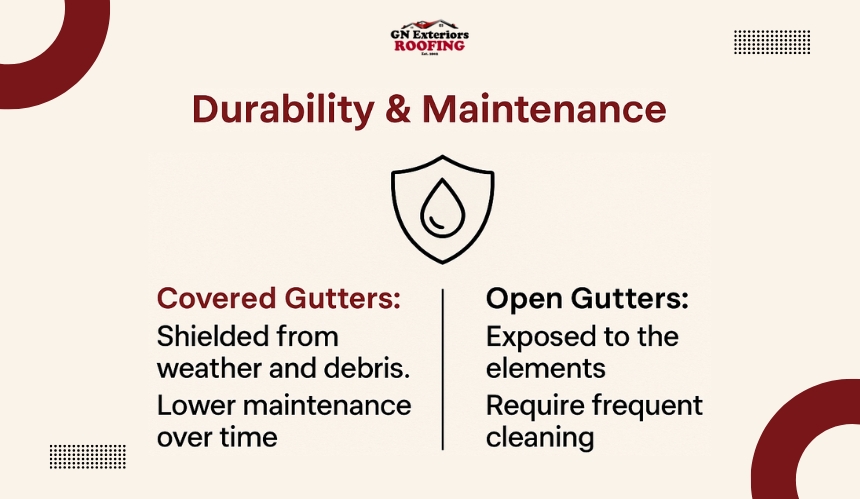
The durability of your gutter system significantly impacts its lifespan and maintenance requirements, especially under various weather conditions.
1. Open Gutters: More Exposure Means More Wear
Open gutters face constant exposure to water, debris, and weather elements, making them vulnerable to faster corrosion and rust, especially in metal variants like galvanized steel.
Their open design also leaves them prone to damage from hail and less compatible with snow guards, increasing the risk of weather-related wear and tear.
2. Covered Gutters: Built to Withstand the Elements
Covered gutters protect against UV degradation and minimize water retention, which helps prevent ice dams and freeze damage.
Their durable materials and design extend gutter lifespan by shielding the channel from debris and harsh weather, making them ideal for climates with heavy sun, snow, or ice.
Installation Cost and Lifetime Value
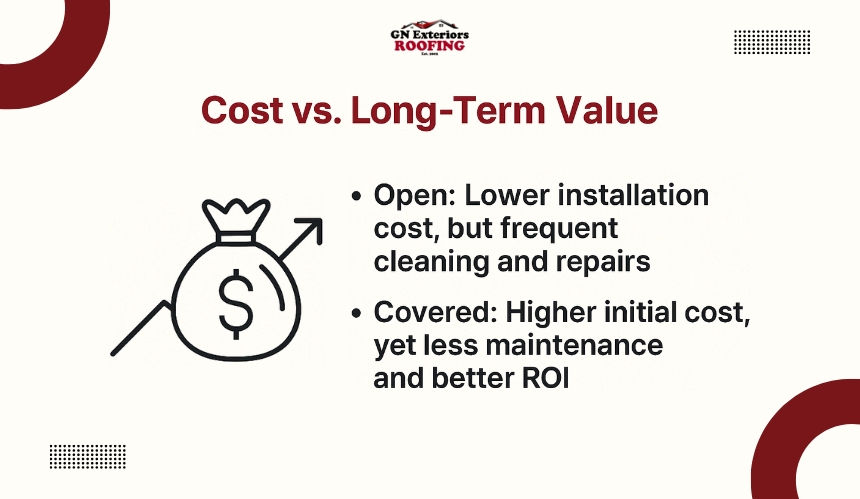
When planning your gutter installation, understanding the cost structure and lifetime value is crucial for an informed investment.
1. Open Gutters: Budget-Friendly but Maintenance-Heavy
Open gutters offer a lower upfront cost, typically between $5 and $15 per linear foot, making them attractive for budget-conscious homeowners.
However, frequent cleaning, potential clogs, and occasional retrofits can result in costly repairs and add to the overall maintenance burden.
2. Covered Gutters: Higher Investment, Greater Returns
With installation costs ranging from $15 to $30 per linear foot, covered gutters require a bigger initial outlay. Yet, their ability to reduce cleaning frequency and prevent damage often results in better home improvement ROI and long-term savings on maintenance and repairs.
The table below compares covered gutters vs. open gutters across key performance areas such as flow efficiency, clog resistance, durability, cost, and climate suitability.
The category column lists the comparison criteria, the second outlines how open gutters perform, and the third shows how covered gutters measure up.
Category | Open Gutters | Covered Gutters |
Water Flow Efficiency | Fast water intake when clean; prone to overflow when clogged | Controlled flow; consistent performance even with some debris |
Clogging Risk | High clog potential; requires frequent cleaning | Low clog risk; blocks most debris but may need light surface cleaning |
Durability & Weather Resistance | Exposed to UV and corrosion; vulnerable to hail and snow buildup | Resistant to UV, rust, and ice dam formation; durable in harsh weather |
Installation Cost | $5–$15 per linear foot; low initial cost | $15–$30 per linear foot; higher upfront investment |
Maintenance Requirements | High—requires cleaning 2–4 times per year | Low—typically needs only annual inspection or light cleaning |
Suitability by Climate | Best in dry, low-debris regions | Ideal for wet climates, wooded areas, and homes with limited roof access |
Roof Type Compatibility | Suitable for flat or low-slope and metal roofs | Well-suited for steep-slope roofs and complex architectural designs |
Long-Term Value | Lower upfront cost, but higher ongoing maintenance and potential repair costs | Higher ROI through reduced repairs and improved home resale appeal |
Which Gutter System Is Best for Your House?
If your home is surrounded by trees, experiences seasonal leaf fall, or lies in a region with frequent rain, the choice is clear: covered gutters offer the best long-term performance.
Unlike open gutters, which may work well only when perfectly clean, covered systems are designed to operate under real-world conditions, where debris, wind, and runoff are constant variables.
Covered gutter systems significantly reduce the risk of fascia board rot, foundation pooling, and overflow during storms. They also protect against pest intrusion, such as birds nesting inside open gutters or mosquitoes breeding in stagnant water.
Still unsure how these factors apply to your property? It’s worth speaking with a local expert because professional installation increases the efficiency of your gutter system.
At GN Exteriors roofing, we assess your home’s roof design, drainage challenges, and local climate to recommend and install the most efficient leaf guard gutters for your specific needs.
Frequently Asked Questions (FAQs)
Can gutter guards (covered systems) handle heavy rainfall without overflowing?
Yes, high‑quality micromesh and solid‑hood covers are engineered for heavy rain and effectively channel water, even in downpours. However, less robust covers or poor installation may result in overflow during extreme storms.
Do gutter guards actually help prevent ice dams in winter?
Covered systems reduce ice dam formation by keeping debris out and promoting consistent water flow, which prevents water pooling and freezing. Still, proper attic insulation and ventilation are also essential for full ice dam prevention.
Can fine debris like pollen and pine needles still clog covered gutters?
Yes, micro‑debris such as pollen, roof grit, or small needles can accumulate on top of micromesh guards. While much less frequent than with open gutters, occasional cleaning or brushing may still be needed.
Are gutter covers worth the investment long-term?
Although initial costs are higher, gutter covers reduce cleaning frequency, lower maintenance expenses, and help prevent water/foundation damage. They often pay for themselves over several years of use.
Will gutter covers complicate downspout cleaning?
Some homeowners report that guards make internal access more difficult, requiring occasional removal to clear clog-prone downspouts. However, proper installation and added downspout cleanouts can prevent most issues.
How long do covered roof gutters typically last?
Covered gutter systems can last 20 to 30 years or more, depending on the material (e.g., aluminum, stainless steel), installation quality, and local weather conditions.
Their protective design helps reduce corrosion and physical damage, often outlasting standard open gutters by several years.
Can I add gutter covers to my existing gutters?
Yes, in most cases, you can install gutter covers on old gutters without replacing the entire system. Just make sure your gutters are in good shape and properly aligned. A professional can help match the right cover type to your setup for best performance.