
Key Takeaways
|
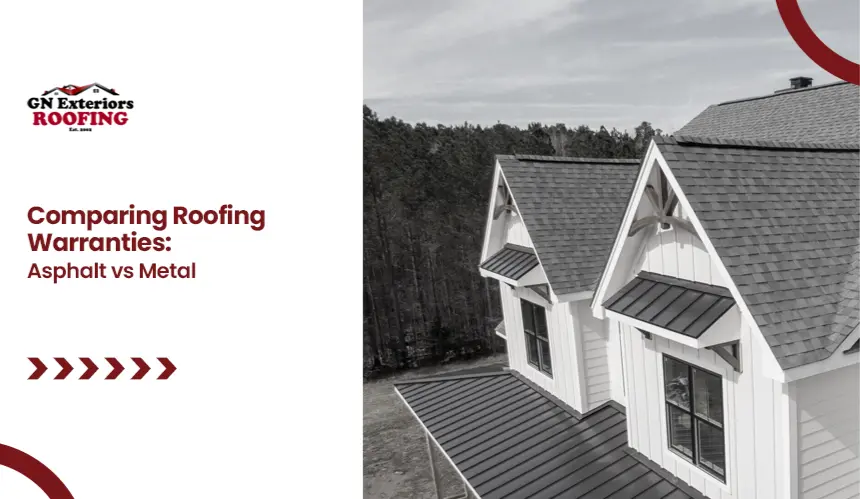
Choosing between asphalt shingles and metal roofing is not just a decision about appearance or cost. It is often a decision about long-term protection, risk exposure, and what happens if something fails. Roofing warranties can look similar at first glance, yet the structure behind them varies significantly depending on the material.
When comparing roofing warranties for asphalt vs metal systems, homeowners are typically trying to understand three things: how long coverage truly lasts, what defects are actually protected, and what conditions could void that protection.
This guide breaks down how roofing warranties are structured, what asphalt shingle warranties usually include, how metal roofing warranties differ, and where the real long-term value lies.

Before evaluating asphalt shingles against metal panels, it is essential to understand how roofing warranties are structured. Many homeowners compare only the number of years listed on the document, yet duration alone does not determine real protection. Coverage type, exclusions, and compliance requirements often matter more than the headline term.
Roofing warranties generally fall into two primary categories: manufacturer warranties and workmanship warranties. Each serves a distinct purpose, and misunderstanding the difference can lead to denied claims or unexpected repair costs.
A manufacturer’s warranty covers material defects. This means the roofing product itself must fail due to a flaw in manufacturing, not because of installation errors, storm impact, or structural movement. For asphalt shingles, this typically includes defects such as premature cracking, granule loss unrelated to normal wear, or adhesive strip failure. For metal roofing, it may include panel integrity issues, coating failure, or corrosion under qualifying conditions.
A workmanship warranty, on the other hand, is issued by the contractor. It protects against installation errors such as improper flashing, incorrect fastener placement, inadequate underlayment installation, or ventilation misconfiguration.
Even the strongest manufacturer’s warranty can become void if the roofing system is not installed according to specifications. Certified installer programs often strengthen warranty validity by ensuring compliance with manufacturer-approved installation standards.
Understanding this distinction clarifies an important reality: a long material warranty does not automatically protect against labor-related defects.
Roofing warranty language often contains technical clauses that directly impact long-term value. One of the most significant distinctions is between prorated and non-prorated coverage. During a non-prorated period, the manufacturer may cover the full replacement cost of defective materials. Once the warranty becomes prorated, reimbursement typically decreases over time based on the roof’s age.
Another commonly misunderstood phrase is limited lifetime warranty. In roofing, “lifetime” usually refers to the expected service life of the product under specific ownership conditions, not the homeowner’s lifetime. Coverage may also change if the property is sold, as transferable warranty clauses often limit duration for secondary owners.
Wind resistance ratings and corrosion warranties also vary by material. Asphalt shingles typically include wind coverage up to a specified miles-per-hour threshold, provided installation meets fastening requirements. Metal roofing may include separate rust-through guarantees and paint finish warranties addressing fade and chalk resistance.
Finally, exclusions play a decisive role. Improper attic ventilation, unapproved modifications, neglect, or failure to register the warranty within a specified timeframe can all affect eligibility.
Evaluating these structural elements first ensures that any comparison between asphalt and metal roofing warranties is based on real coverage mechanics rather than surface-level marketing claims.

Asphalt shingles remain one of the most widely installed residential roofing materials, and their warranty structures are designed around mass production, standardized installation systems, and expected service life performance.
While many asphalt products advertise long-term coverage, the protection framework often follows a defined lifecycle pattern that affects how claims are valued over time.
Most architectural asphalt shingles carry a 20- to 30-year warranty, with many manufacturers labeling premium lines as limited lifetime warranties. However, the structure behind that duration typically includes two phases: an initial non-prorated period followed by a prorated phase.
During the non-prorated period, which often lasts between 5 and 15 years depending on the product tier, manufacturers may provide full material replacement if a qualifying defect occurs.
After this period, coverage becomes prorated, meaning reimbursement decreases incrementally as the roof ages. The longer the roof has been in service, the smaller the percentage of material cost that may be covered under a claim.
This lifecycle-based structure reflects how asphalt shingles naturally degrade through UV exposure, thermal cycling, and granule erosion.
Asphalt manufacturer warranties primarily focus on defects in material composition. This includes premature cracking, excessive granule loss beyond normal weathering, adhesive strip failure affecting wind resistance, and structural shingle distortion.
Many architectural shingles also include algae resistance coverage, particularly in humid or shaded environments. These warranties may guarantee protection against visible staining for a defined number of years, provided the shingles contain copper-infused or algae-resistant granules.
Wind coverage is another key element. Most asphalt shingle warranties specify maximum wind speed ratings, often tied to proper fastening patterns and installation methods. If shingles detach below the rated threshold and installation guidelines were followed, the claim may qualify under wind warranty protection.
Despite strong marketing language, asphalt warranties contain structured limitations. Labor costs are frequently excluded unless upgraded through enhanced warranty programs. Even then, extended labor coverage often requires installation by manufacturer-certified contractors.
Ventilation compliance is another major condition. Improper attic airflow can accelerate shingle deterioration, and manufacturers may deny claims if intake and exhaust ventilation ratios do not meet building code or product requirements.
Impact resistance from hail is typically not standard coverage unless the shingles are specifically rated under impact classification systems. Additionally, cosmetic issues that do not affect water-shedding performance may not qualify as defects.
The overall pattern with asphalt shingle warranties is predictable: strong early protection during the non-prorated phase, followed by gradually declining material reimbursement.
Understanding this progression is essential when comparing it to metal roofing warranty structures, which often maintain value differently over time.

Metal roofing warranties are structured around durability, coating performance, and long-term material stability. Unlike asphalt shingles, which are petroleum-based composite products designed for layered water shedding, metal roofing systems rely on panel integrity, protective coatings, and mechanical fastening systems. As a result, their warranty framework reflects different performance expectations.
Most residential metal roofing systems carry warranties ranging from 30 to 50 years. These warranties often separate coverage into two categories: substrate integrity and finish performance.
Substrate warranties typically protect against structural failure, such as rust-through or panel perforation. Finish warranties address paint adhesion, excessive fading, and chalking under normal environmental exposure. High-performance coatings such as PVDF-based systems are frequently backed by extended color retention guarantees.
A key structural difference is that metal warranties often maintain longer non-prorated periods compared to asphalt shingles. This means coverage may retain higher reimbursement value deeper into the roof’s service life. The warranty model reflects the slower degradation curve of properly coated steel or aluminum panels.
Corrosion resistance is central to metal roofing warranties. Many systems include rust-through guarantees that protect against perforation caused by oxidation. In coastal or high-humidity environments, warranty terms may reference saltwater exposure conditions and protective coating classifications.
Paint finish warranties commonly guarantee resistance to excessive fading or chalking, particularly when panels use advanced coating technologies. These finish warranties are separate from structural warranties but play a critical role in long-term aesthetic performance.
Unlike asphalt shingles, where granule loss primarily affects UV protection, metal roofing depends on coating systems to prevent corrosion and maintain reflectivity. As a result, warranty coverage often ties directly to coating durability and environmental resistance.
Metal roofing warranties place strong emphasis on installation accuracy. Fastener placement, panel alignment, underlayment compatibility, and expansion allowance are all factors that can influence warranty validity. Systems such as standing seam panels may include concealed fastener requirements that reduce penetration points and improve long-term performance.
Manufacturers may require installation by approved contractors to maintain full coverage eligibility. Improper attachment methods or incompatible substrates can void warranty protection, particularly in high-wind or snow-load regions.
Overall, metal roofing warranties are structured around long-term system stability. Rather than declining sharply after an early non-prorated period, coverage often maintains value for a longer portion of the roof’s service life. This structural distinction becomes clearer when placed side by side with asphalt shingle warranty models in a direct comparison.

After understanding how each material structures its warranty coverage, the differences become more measurable. The comparison is not simply about which warranty lasts longer. It involves evaluating coverage value over time, performance guarantees, and how each system handles environmental stress.
Asphalt shingles are built around layered protection and material replacement cycles. Metal roofing systems are built around panel integrity and coating durability. These structural differences influence warranty duration, proration schedules, and long-term reimbursement potential.
Below is a simplified side-by-side snapshot to clarify how asphalt and metal roofing warranties typically compare across key protection categories.

Warranty Factor | Asphalt Shingles | Metal Roofing |
Typical Length | 20–30 years, limited lifetime options | 30–50 years standard |
Non-Prorated Period | Often 5–15 years | Frequently longer initial coverage periods |
Proration Structure | Material value declines steadily after the early phase | Slower depreciation structure in many systems |
Wind Coverage | Typically 60–130 mph (higher tiers require enhanced fastening) | Often 120–180+ mph, depending on panel engineering |
Corrosion Protection | Not applicable | Rust-through and substrate integrity warranties |
Finish Protection | Granule retention focus | Paint fade and chalk resistance warranties |
Labor Coverage | Often limited or requires upgrade | More commonly included in premium manufacturer programs |
Transferability | Usually limited for secondary owners | More commonly included in premium manufacturer programs |
From a lifecycle perspective, asphalt warranties provide strong early protection but often shift to prorated reimbursement as the roof ages. Metal roofing warranties, by contrast, frequently maintain higher structural value for a longer duration due to extended non-prorated terms and corrosion-resistant materials.
However, warranty strength should not be evaluated in isolation. Installation compliance, ventilation standards, environmental exposure, and manufacturer certification programs directly influence eligibility for both materials.
Choosing the right roofing system means understanding more than just materials. It means evaluating long-term protection, warranty structure, and installation quality.
If you want expert guidance tailored to your home and climate conditions, the team at GN Exteriors can help you compare options with clarity and confidence. Reach out today to make a roofing decision backed by knowledge, not guesswork.
Reliability depends on how each material performs under environmental stress. Metal roofing systems are engineered for structural stability and coating durability, while asphalt shingles rely on a layered water-shedding design. The difference typically reflects material longevity and resistance to weather exposure rather than warranty wording alone.
Yes, minimum slope requirements are often specified by manufacturers. Low-slope roofs may require specialized underlayment systems or installation methods to maintain compliance. If slope guidelines are not followed, warranty eligibility can be affected.
Temperature fluctuations influence materials differently. Metal panels are designed to accommodate expansion and contraction, while asphalt shingles gradually age under thermal cycling. Climate-related stress may influence how performance issues are evaluated during a claim review.
Extended warranties may include longer non-prorated coverage or additional labor protection. These upgrades typically require certified installation and full system compliance. Their value depends on ownership duration and risk tolerance.
Yes, warranty value aligns with how long the property owner plans to keep the roof. Early ownership years often benefit most from coverage strength, while resale timing may depend more on transfer eligibility and documentation compliance.